
Feature
Vache Baroque summer magic
Jonathan Darbourne on a season of operatic discoveries
Share this

BY SIMON MUNDY | FIRST PUBLISHED 24 JUNE 2026
𝄞 Why not accompany your reading with our playlist, Baroque Operas by Women Composers?
Vache Baroque has nothing to do with French cows; it is the name, instead, of the ensemble set up six years ago to stage productions in the grounds of a once-manorial estate, called The Vache, just outside Chalfont St Giles in Buckinghamshire, not far from the Wormsley estate that hosts Garsington Opera.
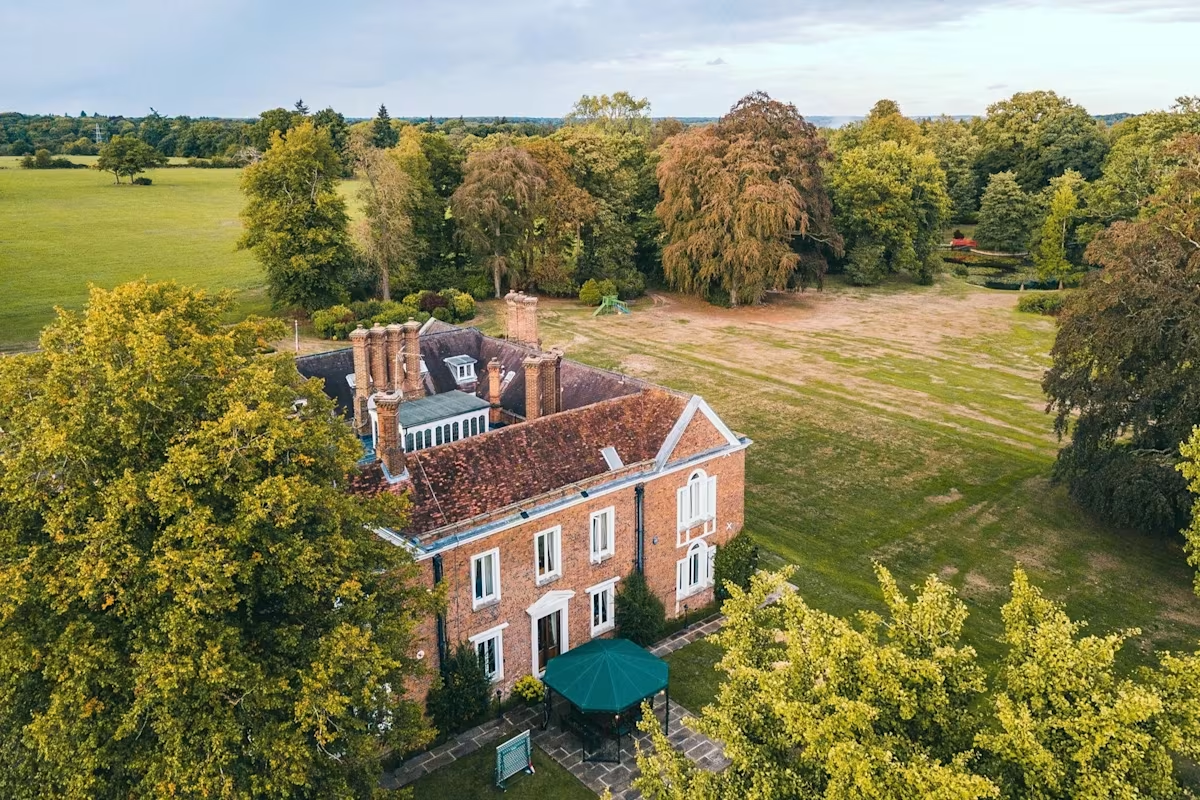
Vache Baroque started in 2020 in the middle of the global pandemic. Jonathan Darbourne, its co-founder (alongside Betty Makharinsky) and Artistic Director, told me: ‘I was a choral scholar at Magdalen, but it was studying in Basel that was really the catalyst for my focus on Early Music. There was constant historical investigation and lovely warm open conversations.
‘We started Vache Baroque by staging Dido & Aeneas in the September gap between lockdowns when there was a solid market for open air performances. As a countertenor with no singing work, I dealt with the early months of Covid by getting a harpsichord and practising a lot. The family at The Vache took a punt on us, and as we take over half their house for dressing rooms and props for each production, two weeks each year is enough!’
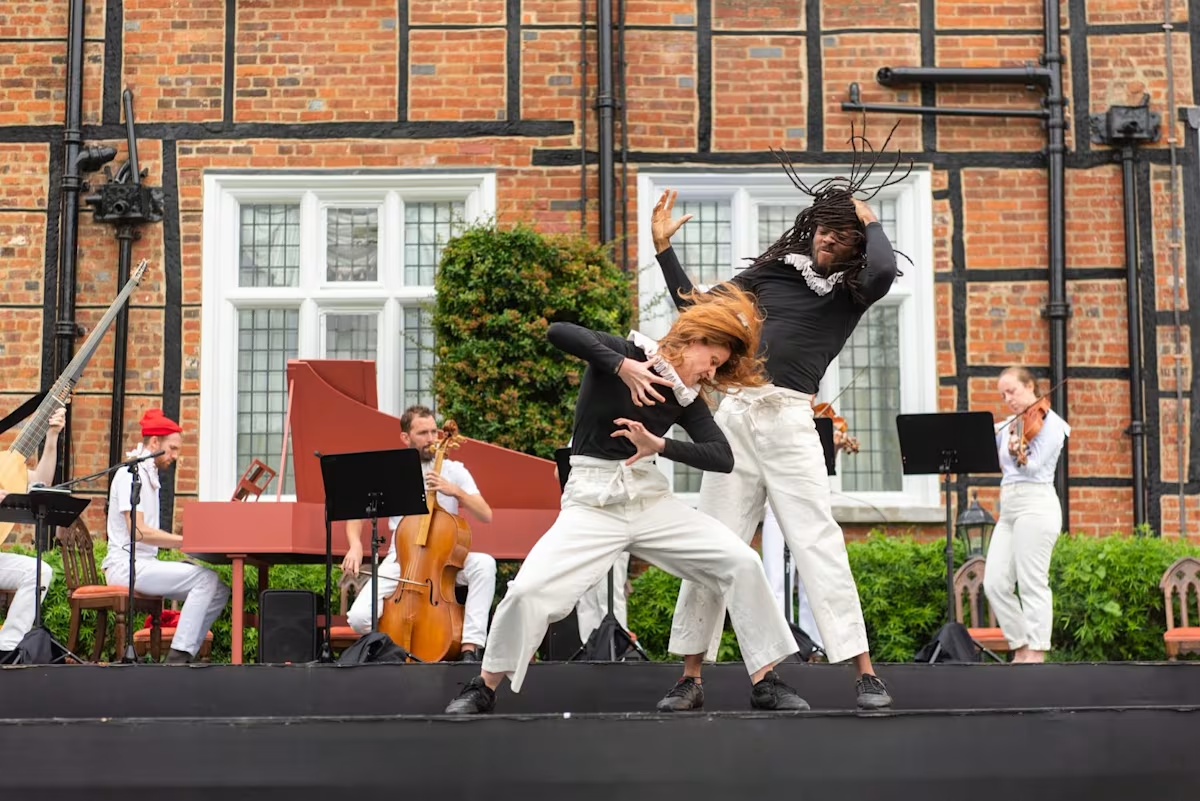
This year, they are the Ensemble-in-Residence at the Buxton International Festival in Derbyshire (at Pavilion Arts Centre, 15–21 July), presenting the first known opera by a woman to be staged, ‘La liberazione di Ruggiero’ – from Alcina’s island – by Francesca Caccini, mounted in Florence in 1625, described as a comedy-ballet. It so pleased Prince Władysław of Poland, for whose visit to the Medici court it had been written, that he had it performed in Warsaw three years later. Francesca was the daughter of one of the first opera pioneers, Giulio Caccini, and, unlike most women performers of the time, she was fully professional: an exceptionally well-paid employee at the Medici court. ‘Francesca Caccini and her sister Settimia were top class singers,’ Darbourne says, ‘and they had the alchemy of (we can assume) theoretical training from their father which they could put into practice.’ Francesca’s career was ‘slightly derailed by her two marriages’, but neither husband survived very long and she resumed her career almost as soon as she was independent again.'
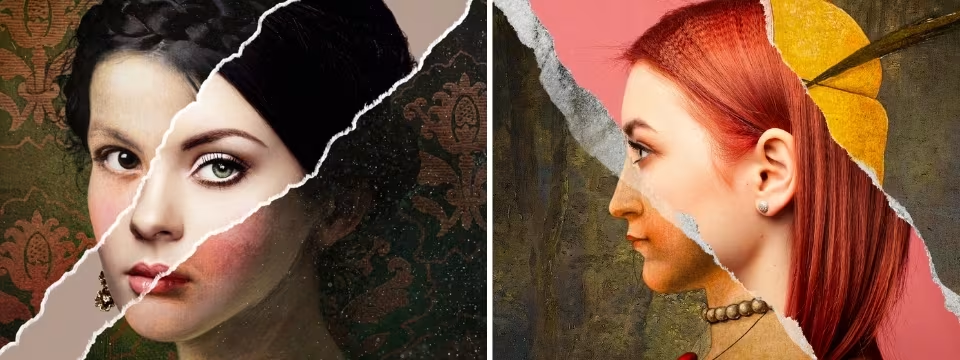
For those coming to the opera, he explains that the style of singing is not the same as one would expect later in the 17th century from, say, Legrenzi. ‘Francesca Caccini’s music is very fast moving and witty, delivering the text with the sort of panache that would have entertained the Medici court. Various writings and treatises from the time tell us that vocal “sound” was not a top priority in sung drama. Singers were not asked to be flamboyant, but instead – with the help of the composer – to imitate the rhetoric of acted speech. They were using the speaking rhythms notated on the page – not approximations. A lot of singers now, with modern training, aren’t taught that it is a very different technique. In Caccini’s opera, the tessitura is set at a point in all the voices that is conversational, not showy.’ The Buxton run, four performances in total, has been awarded a grant from Continuo Foundation.
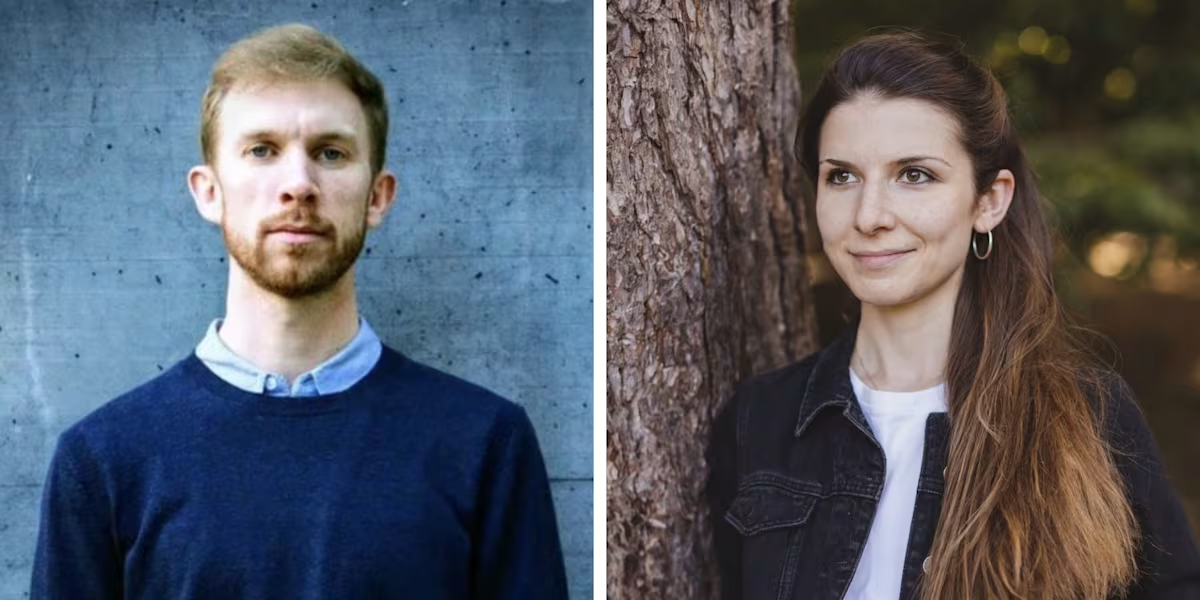
Later in the summer, Vache Baroque will give its regular Summer Festival (28 Aug–6 Sep) where the main offering will be ‘The Tempest’ – a hybrid production between Shakespeare’s play and the music written for its re-workings between 1667 and 1674 by John Dryden, William D’Avenant and (more operatically) Thomas Shadwell. None of their play texts will be heard in this production, though.
‘We are keeping Shakespeare’s text. We’re paying homage to the Restoration version with Purcell’s overture and pieces by Pelham Humfrey and Matthew Locke. But we’re also adding in a masque and other drink-related Purcell songs for Stephano and Trinculo, music by Marin Marais, and a piece by Couperin written for King Louis XIV’s bedchamber to help him go to sleep. We’ve kept the setting by Robert Johnson of Full Fathom Five from Shakespeare’s original 1611 production, and lute music by Dowland.’
To conjure up the magic of disembodied sound that is so important in Shakespeare’s play, Darbourne has called on the Martin Audio sound company, ‘who do many of the big rock music festivals. They will be putting 30+ speakers in our big top tent at The Vache, so that we can have prerecorded and live music played through the surround sound system for the music of Prospero’s island. We will have the tent open behind the stage so that you can see across the water of the lake to the woodland beyond.’

‘Our mission to spread Baroque music to as many people as possible is strong as ever. All connected to The Tempest, we’ll be running magic-themed sensory workshops for children with profound and multiple learning disabilities at two local SEND schools, including CPD training for their teachers and carers; a week-long singing summer camp for children at The Vache, culminating in a public performance on our stage; craft-music sessions for beneficiaries of Wycombe Refugee Partnership; workshops and curated Tempest screenings in local care homes; and a “Young Ambassadors” scheme where 16-19 year-olds will shadow our creatives and also design pre-show installations in the grounds. Last but not least, we’ll be hosting a relaxed performance on the last Sunday morning (6 September) truly open to all, aimed at young families and those who would enjoy a shorter, accessible, and less formal performance. It’s called SPLASH! and will have scenes from The Tempest as well as other dramatic music and recordings by David Attenborough’s long-standing sound recordist Chris Watson.’
Vache Baroque will stage Francesca Caccini’s ‘La liberazione di Ruggiero’ on 15, 17, 19 & 21 July at Buxton International Festival. To see further details of the full Vache Baroque summer programme, visit their Continuo Connect profile.

Share this
Keep reading

Guitar Meets Square Piano: Nathaniel Mander and Declan Hickey
Continuo Connect talks to guitarist Declan Hickey and harpsichordist Nathaniel Mander about their upcoming “Dukatenkonzert” in London and the instruments they will be playing.
Sam Brown on Dowland and filtering history through a modern lens
Lutenist Sam Brown of Dowland's Foundry chats with Simon Mundy about how we interpret John Dowland, the formation of the ensemble around Emma Kirkby's kitchen table, and an exciting recording project in the pipeline.
Jordi Savall & Le Concert des Nations | Le concert spirituel
Jordi Savall and his orchestra Le Concert des Nations held this special 'Concert spirituel' during the 2010 Festival Musique et Histoire in Fontfroide Abbey, in Narbonne, France.