

Feature
The Salt Road
Bach’s epic walk to Lübeck to hear Buxtehude
Share this

BY LINDSAY KEMP | FIRST PUBLISHED 11 JUL 2026
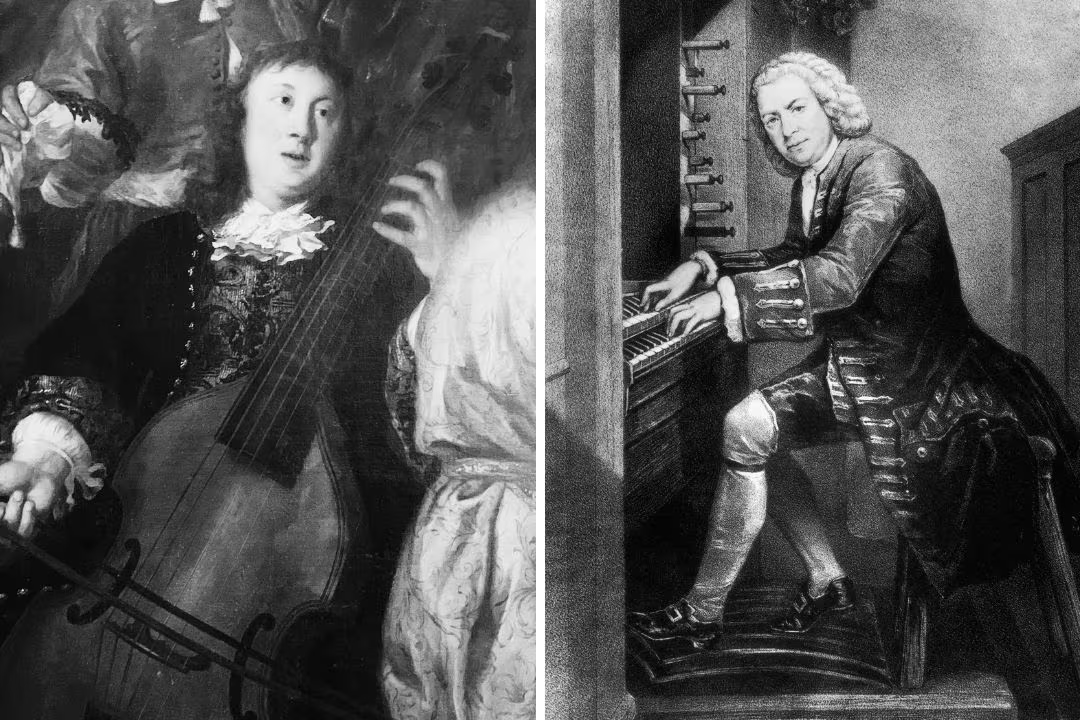
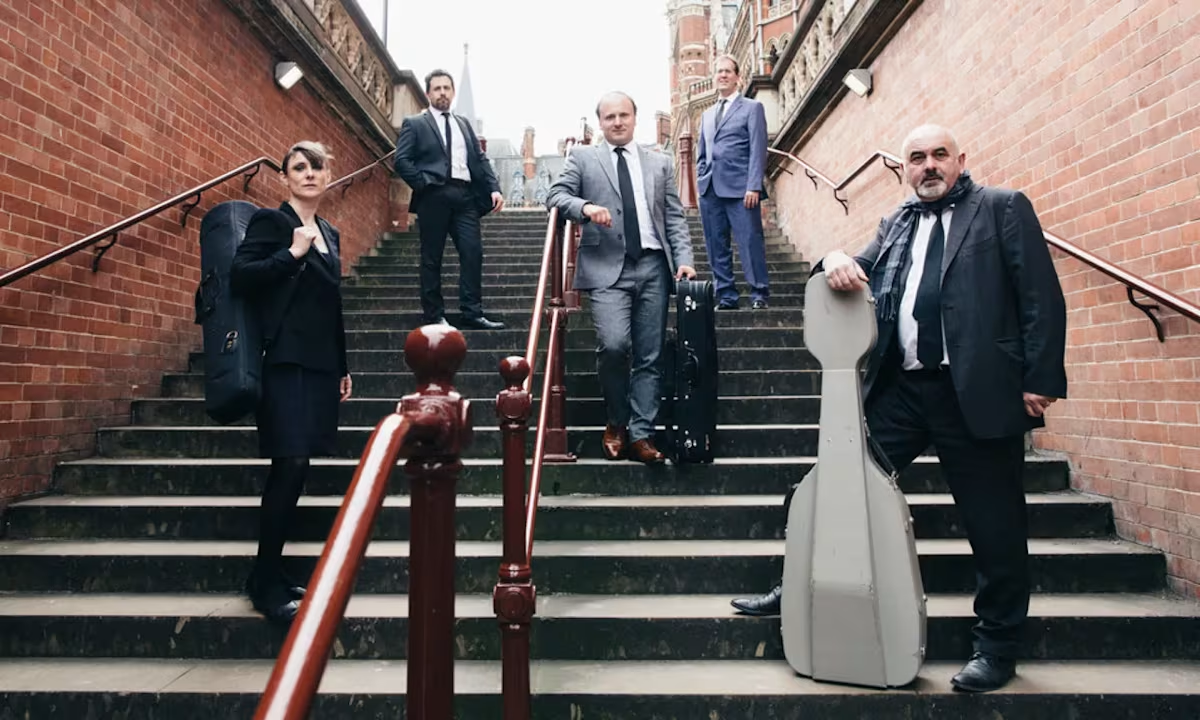
In 1705, the 20-year-old Bach walked 270 miles from Arnstadt to Lübeck to sit at the feet of his hero Dieterich Buxtehude – one of music history’s great pilgrimages. In 2017, BBC Radio 3 producer Lindsay Kemp was part of the team that retraced those footsteps with writer and broadcaster Horatio Clare. This resulted in the Radio 3 series, ‘Bach Walks’, and Clare’s subsequent book, ‘Something of His Art’ (2018). Here, Kemp reflects on that remarkable journey, focusing on the ancient Salt Road between Lüneburg and Lübeck — explored by the ensemble In Echo in its Continuo-supported tour of the same name which starts at the Ryedale Festival, with Horatio Clare joining the musicians to read excerpts from his book.
𝄞 Why not accompany your reading with Dieterich Buxtehude: A Playlist?
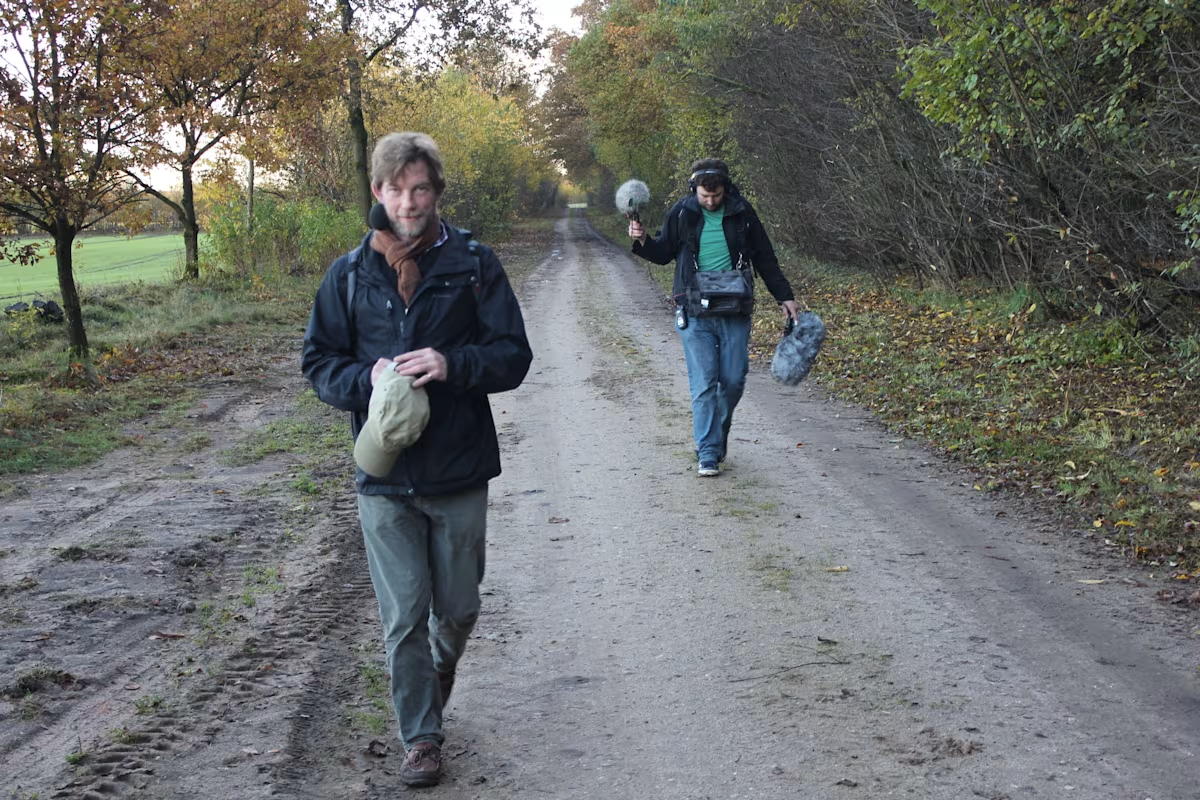
We’ve walked a couple of hours so far today, but now there is a change underfoot. Up till now a warm November morning has seen us from the village of Roseburg, with its neat houses and mow-botted lawns, through an untidy pine forest, up and over an Autobahn (the crescendo and diminuendo of traffic mimicking the rise, peak and fall of our passage over the concrete footbridge), and then beside fields bounded by lines of trees and a sandy track. Trains to and from Hamburg glide by way over to our right, streaks of red and silver barely disturbing the autumnal peace as they go about their business while we go about ours, amid the birdsong and the red, gold and yellow hues of the season. Our footsteps have made small sound in the soft sand, but as we turn a bend, our feet start to hit something hard. Chunky cobblestones have been laid into the earth in loose pattern, half-and-half with the soil. It is the first real reminder that we are on what was once a major thoroughfare.
The via regia (royal road) is the ancient route from the north German city of Lüneburg to the Hanseatic port of Lübeck, crossing the mighty Elbe river along the way. No heavy traffic moves along it now, but it is commemorated in the form of a tourist hiking route whose name, Die alte Salzstrasse (old salt road), reflects the fact that in the 13th and 14th centuries it was used to transport salt from Lüneburg, where it was mined, to Lübeck, from where it was distributed throughout the Baltic region. We are on it now as a further act of remembrance, for there is a strong possibility that footfalls were once made across it by none other than Johann Sebastian Bach.
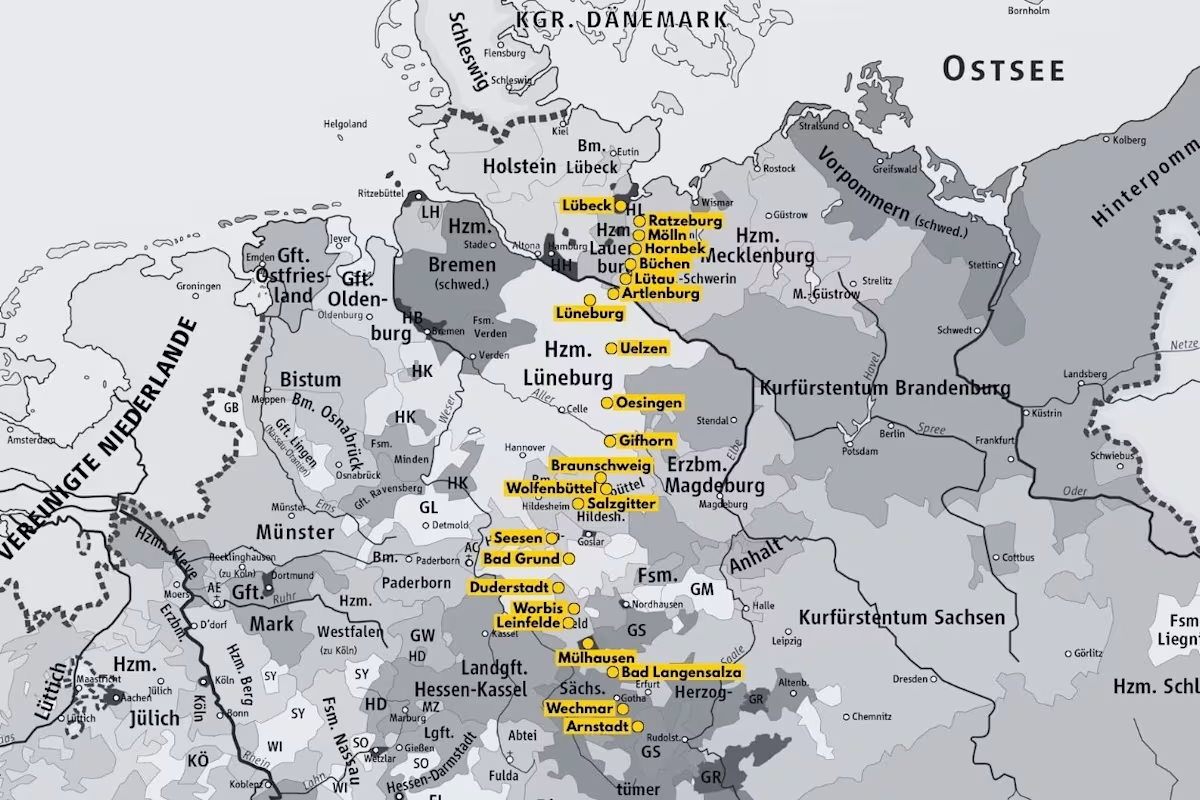
‘We’ are the writer and broadcaster Horatio Clare, sound engineer Rich Andrews, and me, Lindsay Kemp, a BBC Radio 3 producer, and over the course of a week in 2017, we have been doing a sequence of walks through the heart of Germany in an attempt to get closer to Bach through imitation. In the autumn of 1705, the 20-year-old Bach made the 270-mile walk from his home in the Thuringian town of Arnstadt, where he was organist at the Neuekirche, to Lübeck, where he hoped to sit at the feet of one of his heroes, the great organist of the Marienkirche, Dietrich Buxtehude. And by walking sections of what we imagine to have been his route, we hope to deepen our human relationship with him, achieve a sense of greater identification and understanding.
We’ve had our moments: walking direct north out of Arnstadt along the River Gera; catching first sight of the church spire as we approach Wolfenbüttl, a town where Michael Praetorius had once been Kapellmeister and where Bach could (if he had walked that way) have called for the night on one of his own numerous musical cousins; actually overhearing a rehearsal of a Bach motet as we pass the open window of an 18th-century palace; keeping step to one of his tunes as we whistle it under our breath; or the simple fact of getting sore feet. But all have been brought about by speculation and guesswork. Only when we hit the cobbles of the Salt Road, a couple of miles south of the town of Mölln, do we feel that yes, this must have been where Bach actually walked. As a young teenager he had been to school in Lüneburg, so surely he would have stopped there on his long journey. And just as surely, he must have taken the via regia, the main road from there to Lübeck. Circumstantial thinking maybe, but strong, strong enough even to overcome the knowledge that the cobbles were only laid last century to give an idea of how the road once was.
The ‘Bach Walks’ programme was born in one of those brainstorming meetings where the daftest ideas are aired, and many come to nothing. I had my doubts at first that smashing together the concept of ‘slow broadcasting’ – the kind of thing where the camera looks out of the front of a narrow boat as it chugs along, or you follow a reindeer trek, or a man walks through some woods and describes what he sees – with a programme for an upcoming ‘Spirit of Bach’ season on Radio 3 for Christmas 2017 – was ever going to work. We didn’t know enough for sure about his route, whether or not he walked the whole way, or even (to be frank) if he actually got to Lübeck and met Buxtehude at all. But gradually the concept grew on me when I realised that this was never going to be a documentary, but instead an act of imagination, one that would enable us to consider Bach in a way that did not start with his music, or his towering role in Western music, but as a young man walking through a landscape, wondering what his life had in store for him, whether he had enough food in his pack, or how he was going to find a bed for the night.
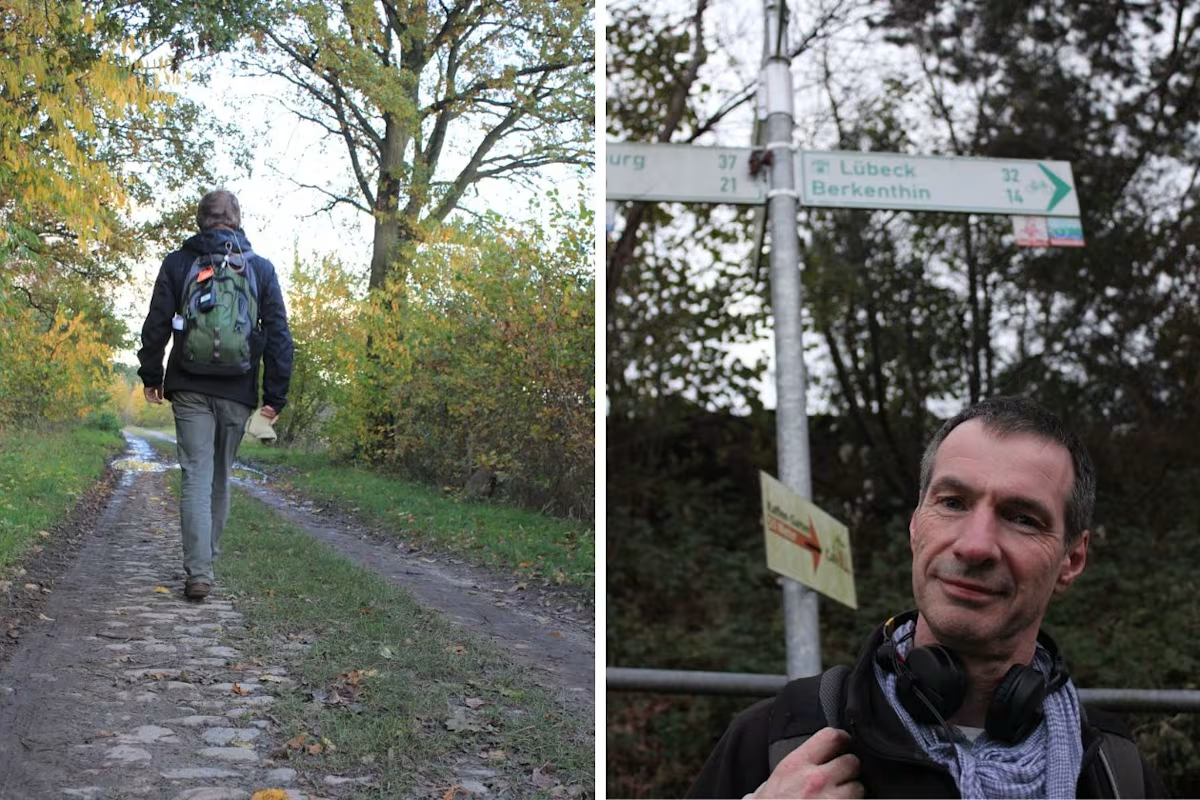
But even though I say this now, it was only when we started recording on the first day that I fully realised it – only when Horatio began to speak into the headset radio microphone Rich had kitted him out with, while Rich and I followed on 20 yards behind, listening in. Before ‘Bach Walks’ he had already presented a slow radio programme for Radio 3, consisting of a walk through the Cotswolds to the Hay Festival, in which his eye for detail, knowledge of the natural world, and soft-toned poetic turns of phrase had captured the ear. He is not a musician, and by no means a Bach expert, but my fears that I would have to be feeding him information were quickly dispelled – he could talk engagingly about anything he saw, note the birdsong, remember a funny story, smell the wet vegetation after a rain shower, marvel in a cloudscape, say hallo to a horse in a field, pick up a snail crossing the path and put it down safely on the other side. His words mixed practical concerns and speculations with the deftest observation. And who’s to say Bach didn’t do the same?
But I had my own thoughts about Bach, too. Back in Arnstadt, Bach had had a fractious relationship with the town musicians, even having a brawl with one of them in the public square, and been ticked off by the church authorities. It was not long after that he obtained four weeks’ leave to go on his travels and ‘learn something of his art’ – a common enough thing for a young professional to do in those days with the approval of their employers. But I imagine him embarking on the trip as a way of taking a break, clearing his head, working out, walking out, his priorities. Many would have done the same before him, and many after. I visualise him starting out stiffly, perhaps even stompily, a man with the hump and his eyes fixed on the road. And I see him easing into the walk as he gets further into it, looking about him more, turning his eyes to the sky, singing to himself, perhaps even working out fugal expositions in his head. By the time he is approaching the little town of Mölln the weight has lifted. The church in Mölln has a fine organ that perhaps he might play, and Lübeck and Buxtehude lie not far ahead.
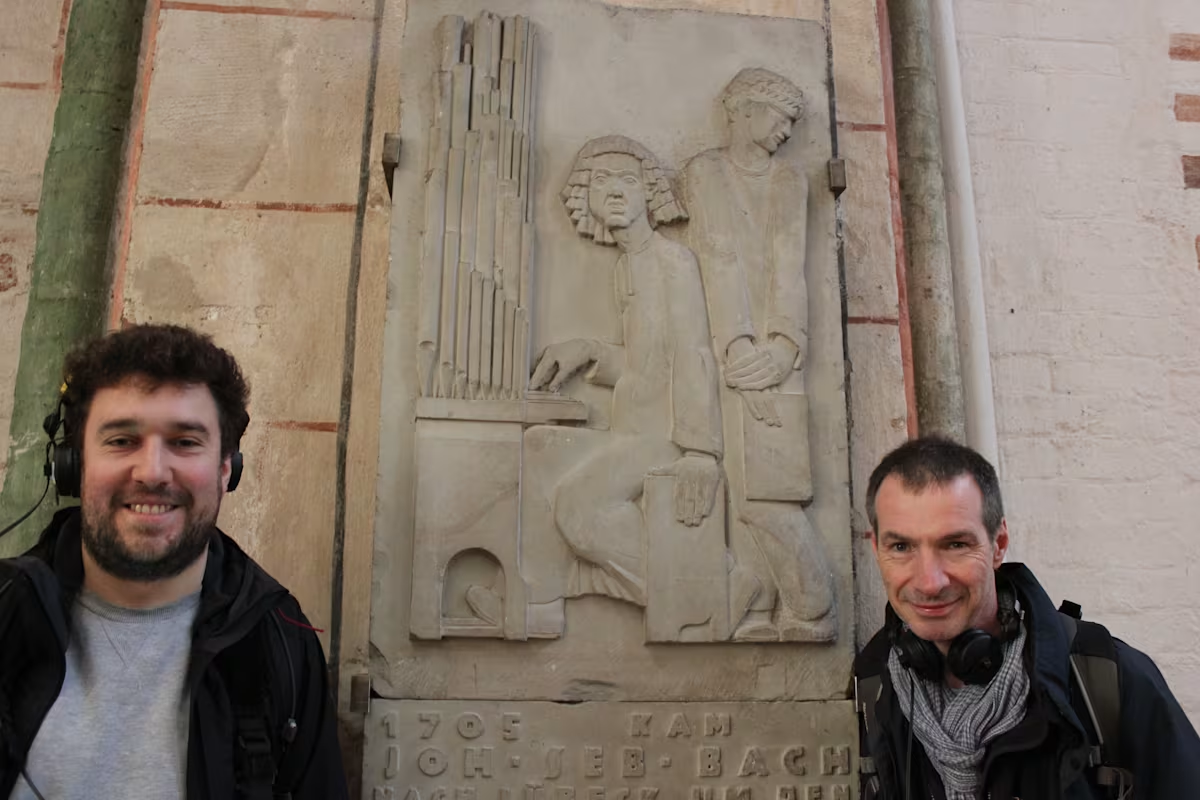
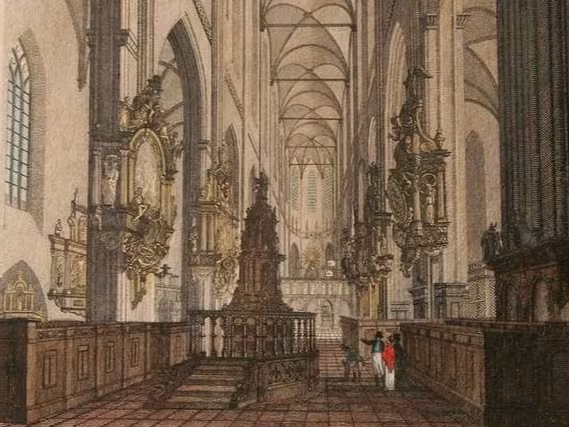
For us, as much perhaps as for Bach, the actual entry into Lübeck was a moment of excitement and fulfilment. The twin red-brick spires of the Marienkirche soaring like spikes, surrounded by a host of tributary spires and towers, also in brick, all seemed to exalt in our arrival to celebrate the meeting of these two great composers and organists. It was a feeling movingly reflected in Horatio’s animated commentary as we hurried through the streets leading up to the church, the wooden door opened and we passed into the tall, echoing building – ‘a holy citadel’, as Horatio put it. As the voices around fell away, Horatio’s tones dropped into a hallowed hush and, as if pre-ordained, we discovered a 1920s stone relief showing Bach and Buxtehude together at an organ console. Our Bach pilgrimage was done.
Organist Hans Fagius playing JS Bach’s Passacaglia and Fugue in C minor, BWV 582, thought to have been composed in Arnstadt soon after Bach’s return from Lübeck
The music of Lüneburg and Lübeck is celebrated by In Echo in their Continuo-supported programme, 'The Salt Road', an evocative fusion of music and poetry, of journeys real and imagined, physical and spiritual (24 July, with further performances in Little Missenden, Brecon and Birmingham in October). The programme features Horatio Clare sharing reflections on walking in Bach's footsteps, alongside music by Bach, Buxtehude and others, including a world premiere by Silas Wollston in a piece written for cornetto, sackbut, strings and organ. To see the full concert details, visit In Echo's profile page.
Share this
Keep reading

Celebrating 300 years of Academy of Ancient Music
Three hundred years after the first Academy of Ancient Music was founded, its modern namesake is preparing a season that looks far beyond commemoration.
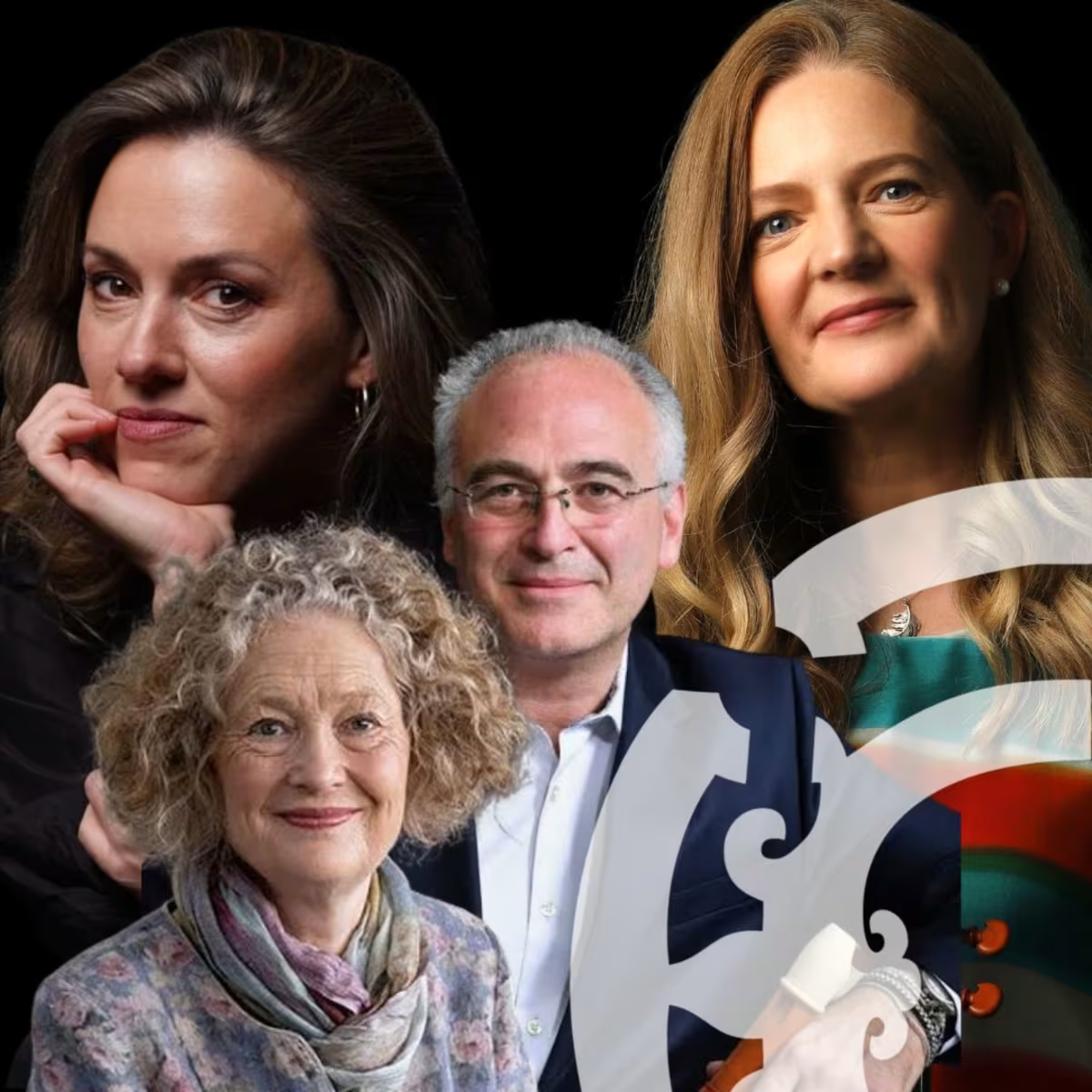
Playlist: Continuo Patrons
A playlist of tracks by Continuo Foundation Patrons Mary Bevan, Emma Kirkby, Rachel Podger and Ashley Solomon in celebration of the UN International Day of Charity.
Tallis: ‘Spem in alium’ – a forty-part motet
A favourite among choral fanatics, Tallis' 'Spem in alium' has a fascinating history and has more recently been used in an unexpected context.