

Sidetracks
Purcell: ‘I attempt from Love’s sickness to fly in vain’ from The Indian Queen
Share this


BY SIMON MUNDY | FIRST PUBLISHED 17 JULY 2026
SIDETRACKS: In this series, Continuo Connect takes the scenic route through the Early Music repertoire, exploring pivotal works and the surprising stories that travel with them.
If you want a story of dysfunctional West End music theatre, a good place to start is the 1694/95 revival of The Indian Queen by John Dryden and his brother-in-law Robert Howard, a Treasury official. Thirty years after its first success as a straight play, Henry Purcell was brought in to add music. The result was a production beset by furious rows and bitter rivalries.
London then had only one government-licensed theatre company: the United Company. It staged plays at the Theatre Royal, Drury Lane, and semi-operas, spectaculars, music and dance at the Dorset Garden Theatre by the reeking River Fleet. The company was anything but united. Artistic direction was led by the actor Thomas Betterton, while the autocratic lawyer Christopher Rich ran the administration. In 1695, after Rich cut their wages, Betterton and the leading actors walked out to start a rival theatre in Lincoln’s Inn Fields.
🎶 Want to see more like this? Sign up to our free fortnightly e-newsletter to receive the latest Early Music news, event listings, features and more, straight to your inbox.
Rich was left with a company without its stars. John Eccles went with Betterton, while Purcell stayed with Rich, who seems to have appreciated his more sophisticated style. Howard and Dryden also sided with Betterton. Amid the upheaval, Purcell wrote only some of the music intended for the new show. It may have been staged before his death in November 1695, aged just 36, but his brother Daniel Purcell supplied a concluding masque for later performances.
Soprano Carolyn Sampson sings 'I attempt from Love's sickness to fly in vain' on her 2007 all-Purcell album, Victorious Love.
The plot of The Indian Queen is a glorious Restoration muddle of imagined Aztecs and Incas, dynastic politics, vengeance, disguises and impossible love. Zempoalla, the Indian Queen of the title, is no sweetly suffering heroine, but a usurping Mexican queen: ambitious, volatile and used to being in command. Her undoing is love. She falls for Montezuma, the young warrior whose affections belong elsewhere. ‘I attempt from Love’s sickness to fly in vain’ tells us that Zempoalla can imprison enemies and manipulate a court, but she is incapable of governing her own heart.
The song was probably first performed by Letitia Cross, a singing actress aged around fourteen. She was quite a character. At sixteen, she spent a few months as the paid mistress of Tsar Peter the Great during his visit to London to study the navy, receiving £500 – around £90,000 today. She remained hugely popular on stage well into the 1720s.
🔎 Find a concert near you on our What's On page to experience the thrill of early opera for yourself. Try searching for 'Purcell'!
For her, Purcell wrote one of his most beautiful songs: a perfect expression of hopeless love in the same emotional world as Juliet and, later, Mozart’s Fiordiligi. It’s more than simply adolescent pining. Zempoalla is a proud woman, recognising that desire has made her powerless:
I attempt from love’s sickness to fly in vain,
Since I am myself my own fever and pain.
No more now, fond heart, with pride no more swell,
Thou can’st not raise forces enough to rebel.
For love has more pow’r, and less mercy than fate,
To make us seek ruin, and love those that hate.
The song was Purcell’s answer to the charge that he could not touch the popular heart as directly as John Eccles. In Restoration semi-opera, sung numbers often stand slightly aside from the spoken drama, giving voice to what cannot quite be said. Here, Purcell turns Zempoalla’s turmoil into something startlingly private: introspective and almost whispered.
DID YOU KNOW?
Purcell’s music has a habit of resurfacing. The score of his most famous semi-opera, The Fairy Queen, was rediscovered at the Royal College of Music in 1901. More than 1,500 pages were hand-copied by Gustav Holst and his students at Morley College for its first modern performance in 1911. In the mid-20th century, Benjamin Britten, a great champion of Purcell, turned the Rondeau from Abdelazer into The Young Person’s Guide to the Orchestra, introducing a postwar generation to the sound of the orchestra and ensuring the music of the English Baroque stays relevant to music education today.
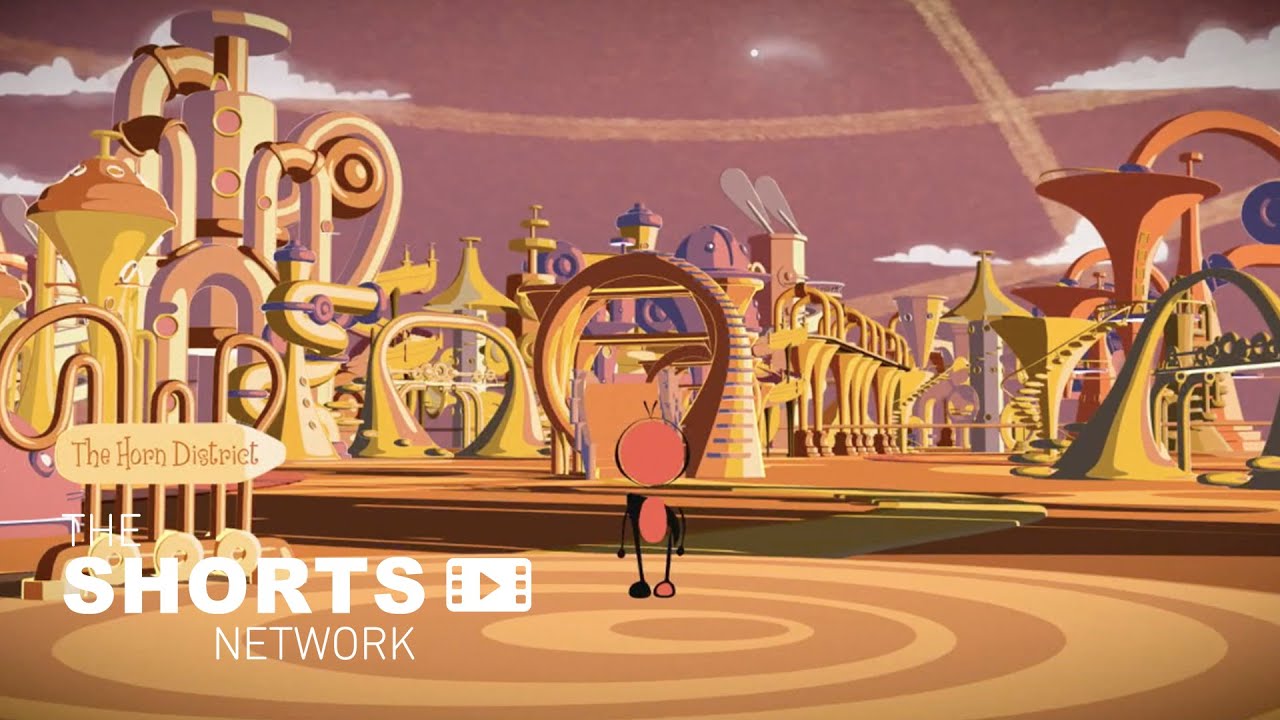 ▶
▶'Red & The Kingdom of Sound', a short animated film based on Britten’s The Young Person’s Guide to the Orchestra.
Cover video: Extracts from The Indian Queen on Operavision, performed by Julia Bullock and MusicAeterna. (Madrid, 2014).
Share this
Keep reading

In conversation: Samuel Ng
Continuo Connect catches up with Samuel Ng, cellist and gamba player with the newly formed Republic of Viols and Liturina.

JS Bach, and a cabinet of curiosities: Jorge Jiménez
Violinist, director and composer Jorge Jiménez talks to Simon Mundy about his latest album Curiosa: Lost & Found Tunes, his new Bach weekend in Ipswich, and his freelance career balancing life in rural Essex with regular work in Spain.

Celebrating 300 years of Academy of Ancient Music
Three hundred years after the first Academy of Ancient Music was founded, its modern namesake is preparing a season that looks far beyond commemoration.