

Sidetracks
Tallis: ‘Spem in alium’ – a forty-part motet
Share this


BY SIMON MUNDY | FIRST PUBLISHED 25 OCT 2026
SIDETRACKS: In this series, Continuo Connect takes the scenic route through the Early Music repertoire, exploring pivotal works and the surprising stories that travel with them.
Perhaps the greatest feat of musical ingenuity to emerge from Tudor England is Thomas Tallis’s 40-part motet Spem in alium. Probably composed around 1570, its origins remain tantalisingly uncertain. Tallis may have been responding to a similarly ambitious work by the Italian composer Alessandro Striggio, who visited London in 1567. Together, their vast vocal constructions represent the high point of musical Mannerism: a style delighting in virtuosity, elaborate interweaving lines and sudden moments of clarity, when a bewildering multitude of parts coalesces into a single, radiant whole. They are the musical equivalents of the paintings of Vasari or the sculptures of Giambologna.
The politics surrounding Spem in alium are almost as intricate as Tallis’s music. One early account claims that it was performed in the long gallery of Arundel House, the Thames-side London mansion of Henry Fitzalan, Earl of Arundel. It may also have been heard at Fitzalan’s magnificent Surrey residence, Nonsuch Palace, where a 1596 inventory records ‘a song of fortie partes, made by Mr Tallys’.
🎧 Why not enjoy this article while listening to our Tallis Scholars Playlist, which features the opening sections of 'Spem in alium'?
Fitzalan was a Catholic with connections to many of Tudor England’s most powerful families, including the Percys, Howards and Greys. Their shifting allegiances during the long struggle between Catholicism and Protestantism placed them close to the executions of Anne Boleyn, Lady Jane Grey and Mary, Queen of Scots. They were dangerous families to belong to, particularly if you were a young woman. Elizabeth I, Anne Boleyn’s daughter, understood that all too well.
Tallis nevertheless survived these upheavals, remaining a Gentleman of the Chapel Royal under four monarchs of violently different religious persuasions. That he lived to around 80, while continuing to write music associated with the old Catholic faith, testifies both to his discretion and to the esteem in which he was held.
The motet’s opening words perhaps reflect the longing for security in uncertain times: Spem in alium nunquam habui praeter in te, Deus Israel – ‘I have never put my hope in any other but you, God of Israel.’ In 1610 the music was adapted to an English text, Sing and glorify heaven’s high majesty, for the investiture of James I’s elder son Henry as Prince of Wales. Henry died, probably of typhoid, just two years later, aged 18.
🎶 Want to see more like this? Sign up to our free fortnightly e-newsletter to receive the latest Early Music news, event listings, features and more, straight to your inbox.
And so to the music itself: an astonishing scaffolding of voice upon voice, choir upon choir. The 40 independent parts are divided between eight five-part choirs. Beginning with a solitary voice, the music passes gradually around the ensemble as new lines enter and others fall silent. At crucial moments all 40 voices come together in great pillars of sound; elsewhere the choirs call to one another across the performing space.
Words are sometimes submerged beneath this teeming polyphony, yet Tallis maintains an extraordinary sense of direction and continuity. The listener is gradually surrounded and then held spellbound along an undulating tide of choral sound.
🔎 Find a concert near you on our What's On page to experience the thrill of early opera for yourself. Try searching for 'Tallis', or scroll to the bottom of this article to learn where you can see 'Spem in alium' performed live!
FORTY SHADES OF TALLIS
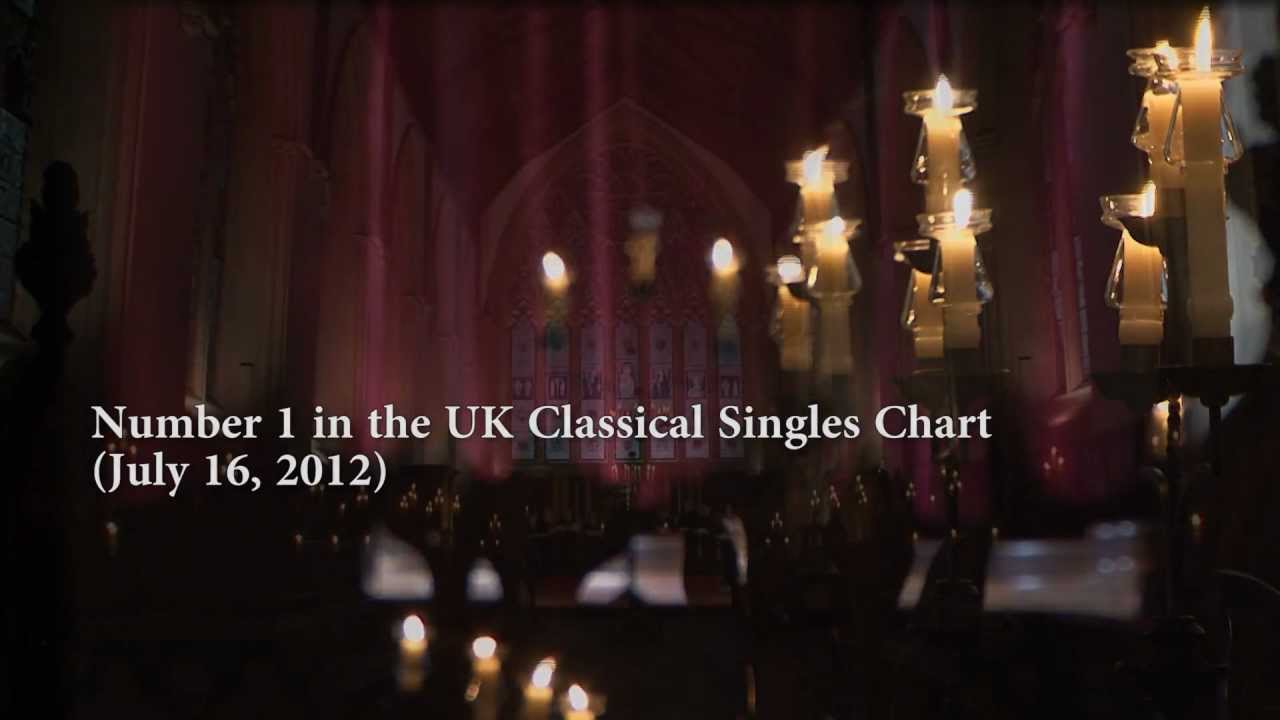
Thomas Tallis became an unlikely chart-topper more than four centuries after his death when 'Spem in alium' appeared in E L James’s bestselling novel Fifty Shades of Grey. Christian Grey includes the motet on his ‘playroom’ playlist, introducing thousands of readers to a work they might never otherwise have encountered. When the novel was published in 2012, downloads of the Tallis Scholars’ celebrated recording sent it to No 1 in the Official Classical Singles Chart, where it remained for two weeks – outselling recordings by some far more familiar classical celebrities. Its inclusion was certainly unexpected: a sacred Latin motet from Tudor England accompanying the erotic adventures of a modern billionaire. Yet perhaps the choice was not entirely incongruous. With 40 voices enveloping the listener, Tallis’s music offers an exceptionally intense and sensuous experience.
 ▶
▶There are lots of opportunities to see 'Spem in alium' live in concert around the UK. Ex Cathedra open founder Jeffrey Skidmore's final season as conductor with performances at Birmingham Town Hall (18 Oct) and St Martin-in-the-Fields, London (22 Oct), and it is also included in Armonico Consort's 'Supersize Polyphony' tour to Poole (1 Oct), Exeter (2 Oct), Great Malvern (6 Oct), Coventry (26 Jan), Ely (4 Feb), and Wells (4 Mar).
Share this
Keep reading

Sam Brown on Dowland and filtering history through a modern lens
Lutenist Sam Brown of Dowland's Foundry chats with Simon Mundy about how we interpret John Dowland, the formation of the ensemble around Emma Kirkby's kitchen table, and an exciting recording project in the pipeline.
Handel’s Messiah – the Salisbury connection
There is an oddly persistent local story that a performance of Messiah was given in the chapel room over St Anne’s Gate when Handel stayed in Salisbury in 1739 with his friend James Harris of Malmesbury House in the close.
Jordi Savall & Le Concert des Nations | Le concert spirituel
Jordi Savall and his orchestra Le Concert des Nations held this special 'Concert spirituel' during the 2010 Festival Musique et Histoire in Fontfroide Abbey, in Narbonne, France.