

Podcast
Singing from within: Paul McCreesh on Gabrieli Roar
Share this

BY CONTINUO CONNECT | FIRST PUBLISHED 23 OCT 2026
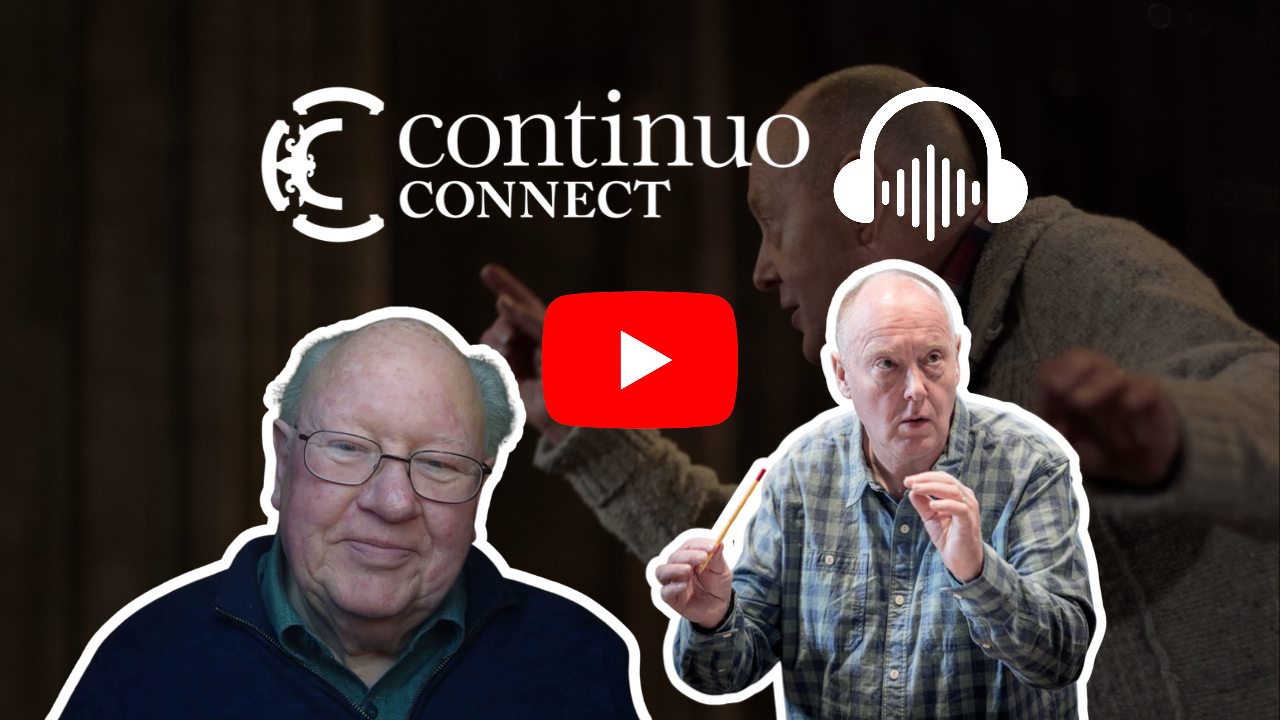
Conductor and Artistic Director Paul McCreesh talks to Simon Mundy about Gabrieli Roar – the youth choral project that puts thousands of young singers on stage alongside professional period-instrument musicians. This December, they will travel to 11 venues around England performing a 'new' oratorio to celebrate Christmas and introduce young people to some of Handel's greatest music, Mr Handel's Christmas Story.
Prefer to read this interview? View an edited transcript of this podcast below.
Simon Mundy: Paul, you've been part of my Early Music journey for as long as I can remember, as the begetter of Gabrieli – the wonderful group that has put on not just Gabrieli and the Venetian music, but over the years has mounted extraordinary reconstructions of fascinating events in Early Music history. Now it also has a biennial cathedral tour. Talk to me about what Gabrieli Roar is about.
Paul McCreesh: Well, where do we start? It's a unique project, although I always hesitate to use the word 'unique'. I'm absolutely passionate about music education, and, unlike a lot of my much-loved colleagues, I like to do things about it, not just talk about the challenges we face. It's no great surprise that music education has been under attack for 20, 30, 40 years now, in spite of some fantastic teachers. There was never a golden age, but I grew up in the 1960s, when many schools offered free instrumental tuition, and we had great youth orchestras and great choirs. That has largely been eroded over the last few decades.
Gabrieli Roar is about shamelessly introducing young people not just to singing or to classical music, but to the whole broader world of culture. We do it not by running a well-intentioned series of side events or school concerts, but by training young people – mainly teenagers, although we also work with advanced primary children – to perform as singers alongside the professional ensemble. They experience singing the masterpieces of music from within. It's not a question of listening to a great performance; it's being part of it.
And we quite shamelessly take on challenges. A little like our professional work, we're mad enough to go where other people fear to tread, and a great part of our work is in communities where the arts are very undernourished – areas of cultural deprivation but also social deprivation. The project has been going on for ten years now in various forms, and we're quickly becoming one of the largest youth choral projects in the UK. We work literally from Carlisle to Truro, from coastal Lincolnshire up to Durham in the north, and across the south of England too, so we're a truly national organisation. There's a huge amount of work to do: there are four and a half thousand secondary schools in the UK, many of which don't even have a specialist music teacher.
It's called 'Roar' because that was an idea the kids had many years ago. As you know, the symbol of Venice is the winged lion, and the kids liked the idea of roaring – but we're actually very good at singing piano as well!
SM: You're starting in Truro this year. It's a Christmas project focused on Messiah and Handel's music, but you go much further than that, don't you? You arrange things so that the youth choirs get to sing not just one work, but a whole series of Handelian experiences.
PM: Yes. I've created a piece we've called Mr Handel's Christmas Story, and I'm quite excited – almost a little proud of it, actually – because I think it's going to work really well. Over the years, two conversations came up all the time. The first was as a guest conductor, with orchestras saying, 'We'd really like Paul McCreesh to conduct Messiah, but it has to be cut to two hours,' or, even worse, 'We don't do anything after the Hallelujah Chorus. 'The first is impossible, and the second is simply unspeakable, so that never got beyond the agent's desk – and probably made me considerably poorer! But I won't cut it, because it's a fantastic work, and it needs to be done in its entirety.
The other conversation was more cheering. Many of our teachers and choir leaders said it would be really nice if their kids could sing Messiah or some of it. I said yes, it would, but some of Messiah doesn't really work. It's still one of Handel's most challenging works vocally – much harder than many of the other oratorios, as plenty of Continuo Connect readers who are singers will know.
So I suddenly thought: why do we perform Messiah at Christmas, when it's nothing to do with Christmas? It's not even really the life of Christ; it's very much a celebration of theological belief, and it's been slightly hijacked by the Christmas tinsel brigade. As we all know, there's maybe 15 minutes of prophecy music and barely ten minutes of Christmas music. The short section from Luke, with the angels and the shepherds, is the only part of the Christmas story that appears in Messiah. And I think what a lot of our young choir trainers really wanted was an excuse to sing the Hallelujah Chorus!
When I was thinking about this, two or three years ago, I was conducting Berlioz's great L'enfance du Christ. I think that piece is a complete masterpiece. For those who don't know it – it's not a particularly well-known work – it celebrates the Christmas story, but from the perspective of Herod, which is slightly weird. It's a beautiful piece, and absolutely worth getting to know.
So I had the idea of creating a work that would start with the prophecy music from Messiah and continue with its actual Christmas music. Then I'd go completely off-piste, using the 18th-century tradition of pasticcio. I'd write a beautiful manger scene, somewhat in the style of Berlioz, because there's a beautiful manger scene in L'enfance du Christ. Then there'd be a section on Herod and the Slaughter of the Innocents, which has always been a bizarre part of the Christmas story, but is there to contrast with the sweetness of the manger scene. And I'd finish with a section from the Book of Revelation, from which, of course, the text of the Hallelujah Chorus comes. So there were five scenes nicely brewing in my diseased mind.
It's shamelessly user-friendly: five scenes of 15 to 20 minutes each, so about 90 minutes of music – essentially Handel's greatest hits, dressed in a slightly different way. That's marvellous for our young people, who won't know Handel's music. They'll hear not just the great parts of Messiah, but also wonderful music from Solomon, Xerxes, Theodora and Saul – all the great oratorios. It's also a wonderful introduction for our audiences. Many of the people at our big tours are coming to classical music for the first time, so the slightly more recherché areas of Baroque music would be quite challenging for them. But this, I think, will bring them into Handel's world. If they don't love Handel's music at the end of this, there's no hope, because, as the kids would say, they're getting all the Handel bangers.
SM: You tour, of course, but the choirs don't. The choir at each cathedral is the local one, isn't it?
PM: Yes, and this is the beauty of the system. The Christmas tour takes place every two years and is becoming more and more oversubscribed. We have two choirs. There's a stage choir of kids who have a bit more experience of singing in parts, and a bigger choir of young teenagers who've never really sung before, or sometimes primary school children. They sing largely chorale- or hymn-based music, plus simple versions of some of the Handel choruses. As you say, we've got 11 cathedrals on this tour, and every day we start again with a new choir.
But it's not a come-and-sing Messiah. Every day from September until December, in some school in some part of the country, one of our Gabrieli Roar team will be doing preparation and coaching. We do a lot of teacher training so that teachers are empowered to train the kids to sing themselves. We will have somewhere between four and five thousand young people involved in this project in some shape or form. It's quite a logistical nightmare but tremendously exciting.
SM: And outside the Christmas period you have a summer school as well.
PM: Yes, the summer school is the top level of what we do. We take kids and young people away on a residential course, usually for five or six days, and take them through all the great oratorios. We've done Handel's Saul recently and Haydn's The Seasons, which I think is an absolute masterpiece. Verdi's Requiem comes up, of course, as do Elijah and Britten's War Requiem – all the pieces you'd want to sing as a young person.
This is the beauty of the human voice. If you want to play the violin in Haydn's Creation, you need quite a lot of talent, and you'll probably have to struggle and practise really hard for seven, eight, nine, ten years. You need a good teacher, a good instrument and a basic degree of talent to play those great masterpieces. But with the human voice, after two or three years' training, we can bring young people to sing these fantastic pieces by Haydn, Bach, Britten, whatever. That's why Roar focuses on the voice rather than on instruments: crudely speaking, for every pound we invest, we can involve thousands of young people. It would be much harder – I'd say almost impossible – to do that as an instrumental project.
SM: That's exactly why I joined choirs and decided not to pursue an instrument. It was far too much like hard work! Singing in choirs, I could get it second time round – much more satisfactory. But I wanted to talk about some of your other extraordinary projects, Paul, because you've done huge reconstructions of major events: the coronations and massive reconstructions of Medici events as well.
PM: Yes. I rather regard a lot of those projects as the sins of my youth now! As you say, they were an important strand of Gabrieli's early career, particularly all those Venetian projects and the Spanish repertoire. Since then, over the last 20 years, we've branched out way beyond what either I or certainly the public expected. We've now made major recordings of Britten's War Requiem and, recently, Elgar's The Dream of Gerontius, which won Gramophone and BBC Music Magazine awards. So we're very active right across the repertoire: Elijah, likewise, The Seasons, The Creation. These are all really major works, but we do connect them with the world of recreation, because they're often based on specific performances, which give us clues to performance styles, forces and so on.
I think it was a very good place to start. In sacred music in particular, those terribly erudite and beautiful recordings by the groups we all know and love – where you get bleeding chunks of polyphony after bleeding chunks of polyphony – never really interested me. I was much more interested in how you can create projects from those smaller parts. Then, about five years ago, we turned the wheel completely round, very self-consciously revisiting our first great success, A Venetian Coronation. We've actually recorded it twice, because we felt our knowledge of Venetian music had changed so much in the quarter of a century between the two recordings.
Then we turned the wheel right the way around and made An English Coronation, a fantasy coronation of all the great pieces from the coronations of the first half of the 20th century. That's very much a Gabrieli spectacular, with over 400 artists and, I think, 24 trumpets, so you can hear echoes of those old Renaissance recordings, but very much in 20th-century music.
SM: You didn't need to recreate the Archbishop being drunk at Edward VII's coronation!
PM: Well, it would be so difficult to find an archbishop who could possibly have been drunk! We didn't go that far, but we did have Simon Russell Beale as an undrunk Archbishop of Canterbury, which was a great privilege. He's a man who could read the telephone directory and draw you in – such a beautiful voice. So we did our best for the archbishop. Who the king was is still a secret, actually.
SM: Away from choral music, we first met when you were conducting Elgar's First Symphony in Wrocław Cathedral. How much of that sort of conducting do you do these days?
PM: It's always been the major part of my work, and the unseen part. My primary work is as a pretty busy freelance conductor of symphony orchestras. My career never quite got to the stage where I had the opportunity to record orchestral repertoire, which is a bit weird, because it's what I do most of my life. But maybe I just love the human voice so much: it's no accident that the 50-plus recordings I've made all have a singer on them in some shape or form.
I absolutely adore working with choirs, both small and big. I think the choral singing on some of our recordings is really quite exceptional – not just with Gabrieli, but with my other choral partners, particularly in Poland: the Wrocław Philharmonic Choir, which is now the NFM Choir, and the Polish National Youth Choir, which was one of my babies during my long period of work there. And indeed with Roar. I'm always trying to make a large choir sound like the best chamber choir you've ever heard, and I don't think that's impossible. If you can get the attention to shape and detail in a large choir that we get more readily in small choirs, you can create something really special.
So that's what I do. I've just been out to Poland conducting Tchaikovsky 6 and a Beethoven piano concerto, and I'm back there again in a week's time. Standard 19th- and 20th-century repertoire is my meat and drink – English repertoire particularly. We still have a slightly 'racist' approach to casting conductors, where you have to be at least Scandinavian to conduct Sibelius, but you can conduct as much Britten or Elgar as you like if you're British – or British-Irish, in my case.
But now that I've reached an age where I can no longer pretend to be young – even if I'm still a bit of an enfant terrible – a large part of my focus is on my work with young people in education. To me, it's the most important part of my work, and I hope it will be something of a legacy. We need to be really serious about creating a love of the cultural world, because it won't exist in the future as anything other than a very niche hobby unless we invest much more seriously in bringing the next generation into its beauties.
SM: Paul, thank you very much indeed. Everybody can catch the cathedral tour around England between now and Christmas, and I hope to catch you somewhere myself again soon.
PM: You must! It's going to be great fun. The tour dates are on Gabrieli's artist page. We do hit London a couple of times, but this is a golden opportunity to hear Gabrieli, hopefully in a community near you. We're really looking forward to it – it'll be a thrilling experience for everybody.
SM: Thank you very much.
PM: Thank you, Simon. A pleasure to talk to you.
Gabrieli Roar travels to 11 venues across England between 23 November and 9 December in a project supported in part by a grant from Continuo Foundation. Find all tour dates on Gabrieli's artist page and read more about Paul's career in music education in our 2024 interview Paul McCreesh: Always an Educator.

Share this
Keep reading
JS Bach, and a cabinet of curiosities: Jorge Jiménez
Violinist, director and composer Jorge Jiménez talks to Simon Mundy about his latest album Curiosa: Lost & Found Tunes, his new Bach weekend in Ipswich, and his freelance career balancing life in rural Essex with regular work in Spain.
LIFEM 2026: Interview with Eun Sol Lee
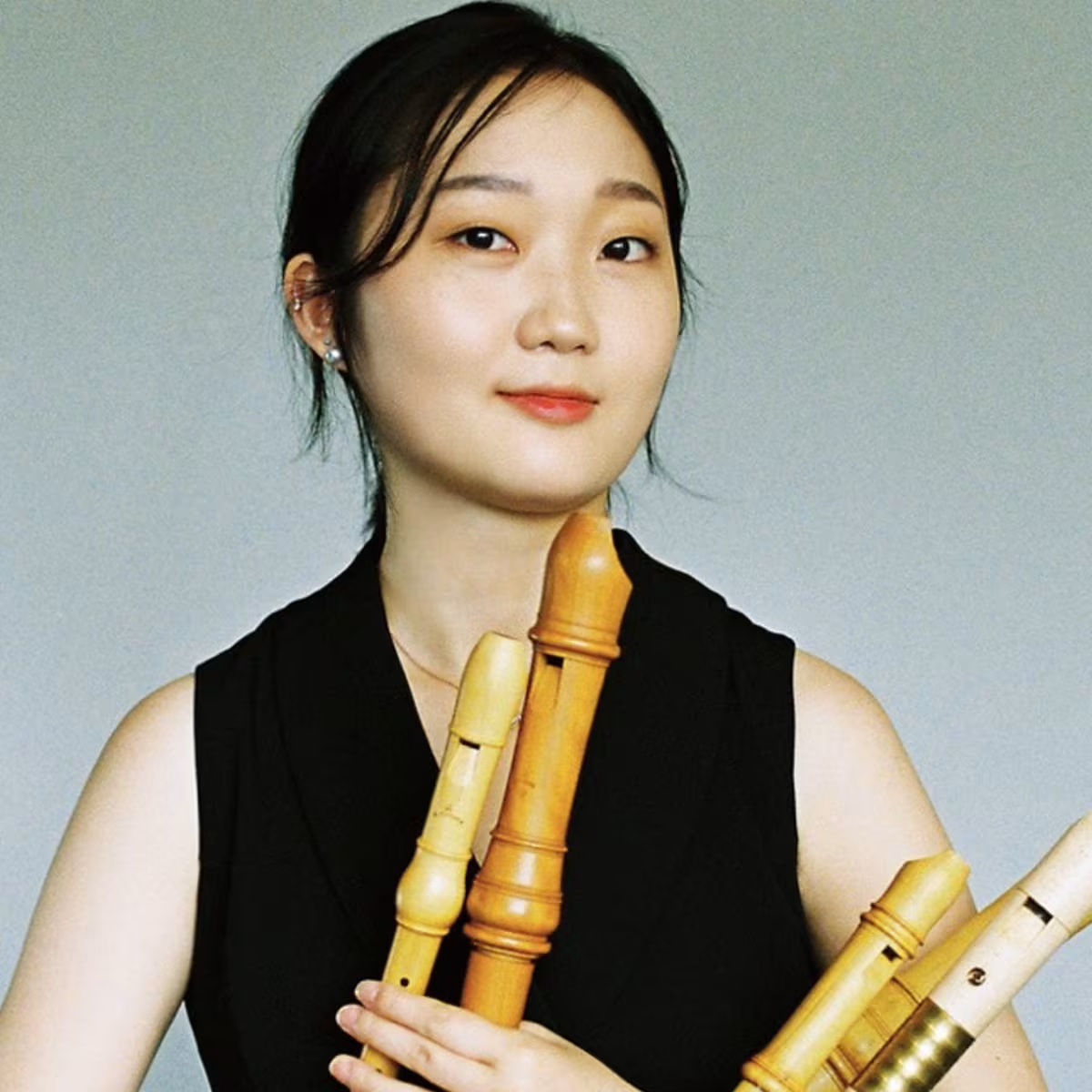
The Early Music Shop caught up with Sol to find out more about her year since she won the competition, and what we have to look forward to in her performance at LIFEM this year...
Handel’s Messiah – the Salisbury connection
There is an oddly persistent local story that a performance of Messiah was given in the chapel room over St Anne’s Gate when Handel stayed in Salisbury in 1739 with his friend James Harris of Malmesbury House in the close.