

Feature
Voices from a manuscript
Laurie Stras on unearthing the music of Florentine nuns | Part II
Share this

BY LAURIE STRAS | FIRST PUBLISHED 1 FEB 2026
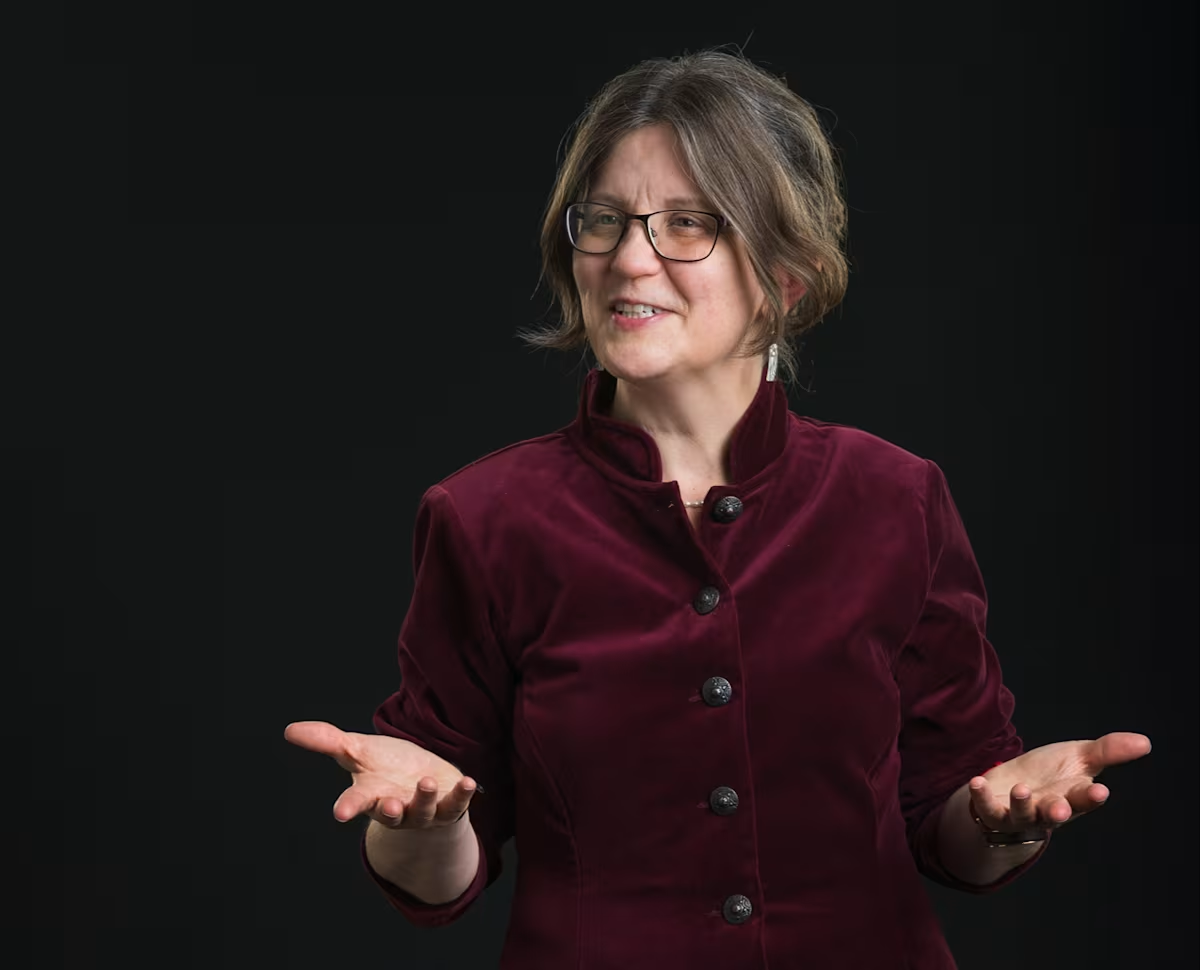
Laurie Stras is Professor Emerita of Music at the University of Southampton, and Director of Musica Secreta and Celestial Sirens. Alongside popular music, and music and disability studies, Stras is renowned for her pioneering work on Early Music. Her research on female musicians in 16th-century Italy has earned international recognition and major awards, and resulted in influential publications.
In this second part of our interview for Continuo Connect, Stras explores how the Biffoli–Sostegni manuscript preserves the daily lives, celebrations, and voices of Florentine nuns. She reveals how centuries-old scores can be brought back to life in performance, and shares the stories and fleeting musical moments that inspired Musica Secreta’s acclaimed recording, ‘Ricordanze: a record of love’.
Catch up on Part I of the interview, ‘Sisters of polyphony’, here.
Your album title, ‘Ricordanze’, is a reference to ‘memories’. What does this music tell us about the women who lived and worshipped at the convent of San Matteo?
It’s impossible to know for sure, of course, which works were already at the convent when the manuscript was copied and which were perhaps selected or curated by the copyist; and because the music is mostly anonymous it’s also difficult to date, and to determine whether any of it could have been composed by one or more nuns. What is clear, though, is that in 1560 the nuns had elaborate polyphony that could be sung at all the most important feast days of the regular calendar and at their own celebrations of Saint Clare, Saint Francis, and Saint Matthew.
But the book also contains very simple psalm settings, the most frequently used hymns, Italian-language spiritual song, and a couple of settings that suggest a shared repertoire with the boys at the Florentine cathedral of Santa Maria del Fiore. I got a sense from comparing the manuscript’s contents to the 16th-century account book of the annual cycle of feasts corresponding to an annual cycle of music, punctuated by new nuns’ professions or requiem masses for the convent’s dead. Their musical lives don’t seem that much different to those of nuns I’ve stayed with: they sing their daily services with efficiency and reverence; as the feasts of Clare and Francis approach, they begin preparing their special celebrations and rehearse the music; they have parties, skits, and games to mark the name days of community members.
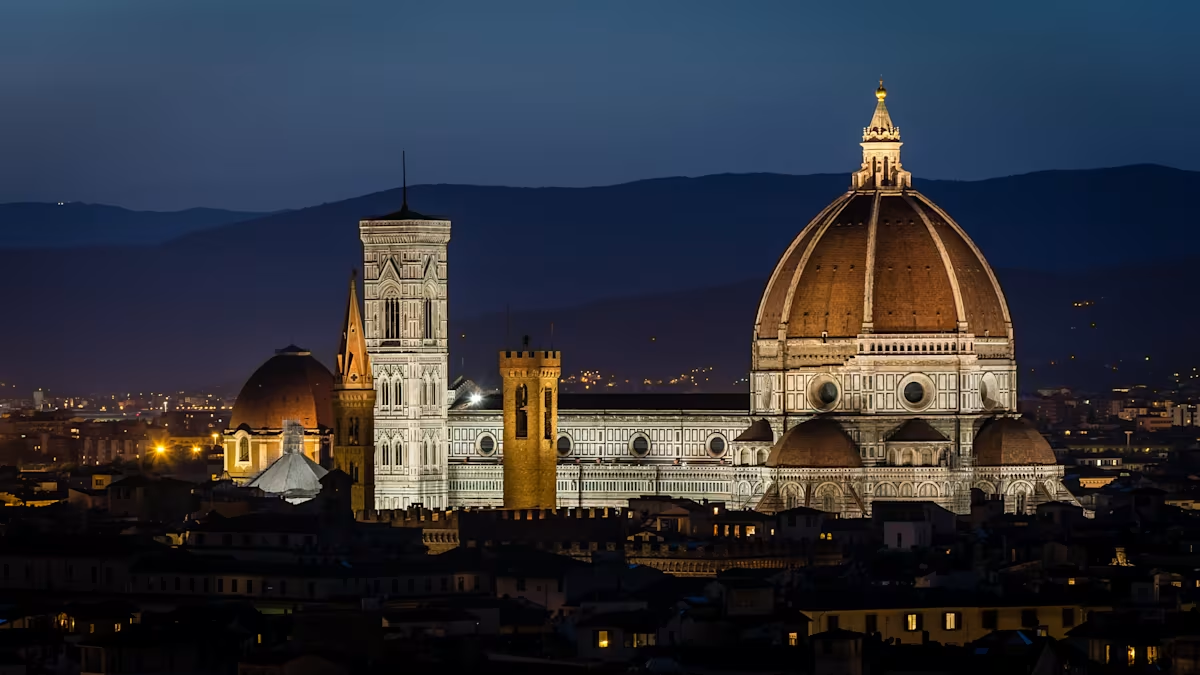
This sense of time and memory being held in the music is perhaps most acute in the Salva sponsa Dei – it is completely different to all the rest of the manuscript. It’s written in chant notation in four parts in a note-on-note ‘harmonisation’ that – because of the crossing of the parts – often sounds like strings of parallel sonorities. It is impossible to date: it certainly doesn’t sound like any other 16th-century music, and if you didn’t know its source you’d probably think it was either very, very early or written in the last hundred years. Including it in the manuscript alongside what are clearly contemporary (i.e. mid-16th-century) settings of all of the other music for Saint Clare seems like a deliberate act of preservation, recording a musical practice that had been in the convent for generations.
If you could time-travel and speak to one of the nuns who used the manuscript, what would you want to ask her?
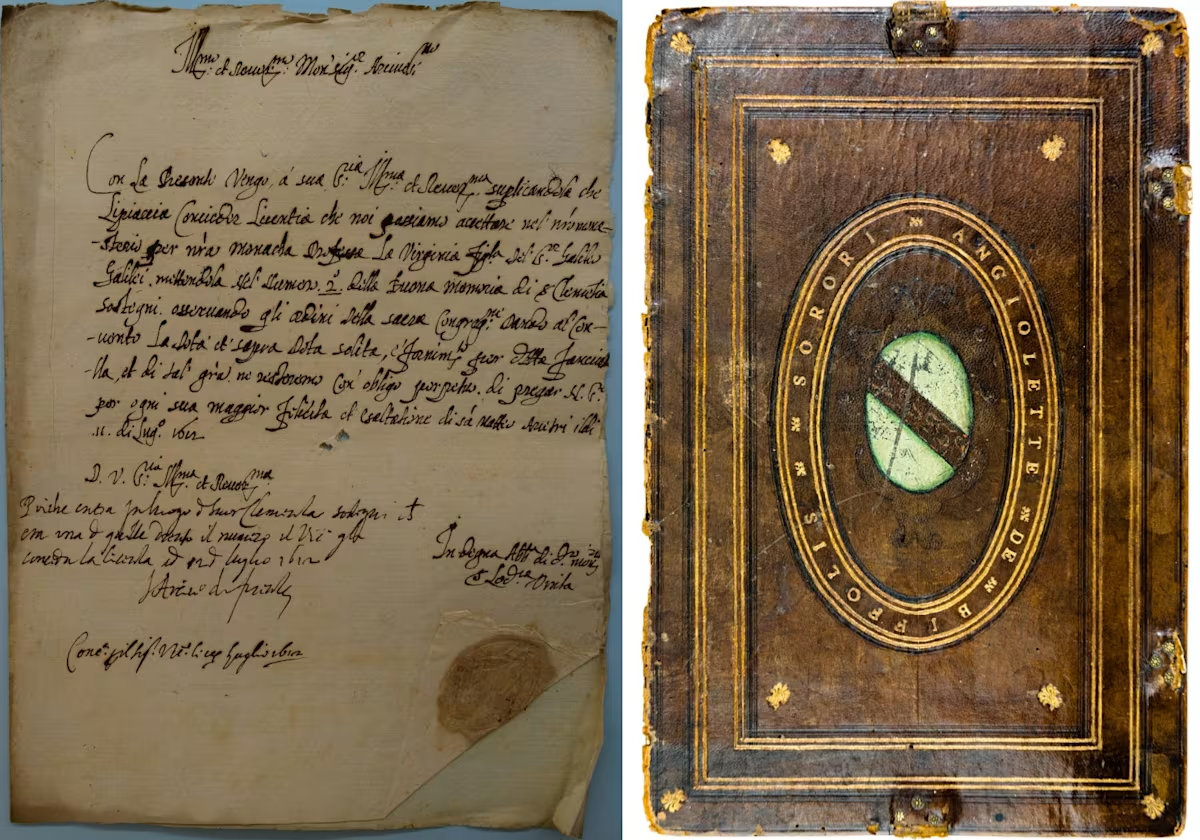
Ah, what a lovely question! I do feel close to these women, having studied their history and seen the sweet little portraits and inscriptions that decorate the manuscript – Moro sometimes draws a singing nun or inserts Suor Clemenzia and Suor Agnoleta’s initials in his filigree capital letters. First, I’d want to know how the book came into being – what did it commemorate? Who commissioned it? Where did the music come from? Who taught the nuns to read music? I’d want to ask Suor Maria Celeste whether she and her colleague Suor Maria Eletta (daughter of the famous singer, Vittoria Archilei) still used the manuscript when they were organising the convent’s music in the 1630s: I strongly suspect they did, but I’d like to know for sure. And I’d want to ask the last nun to hold the manuscript at San Matteo, who took it from the convent, when, and if she knew where it was going?
What guided your programming choices for this recording? What stories can we find in the pieces that you’ve selected?
As the album was conceived together with the online essay to be published by Cambridge University Press, and also because it was largely funded by a research grant, I felt freer to programme music that you wouldn’t normally find on a commercial recording. I really wanted to bring the sound of all convent music, not just the big elaborate mass settings or flashy motets. So we included Vespers music with the alternatim chant: there is something about hearing psalm verses chanted on the plain tones, and then getting the echoes of the psalm-tone in the polyphonic verses – they really pull you into a different kind of listening. And we included many of the tiny motets that barely last a minute or two – these fleeting moments of connection through sound and voice that may have been the highlight of a choir nuns’ day. Maybe they even sang them from memory, if they had been repeated over many years. They may not even have been part of the liturgy, as there is a record from later in the 18th-century of a tradition at the convent of the whole community singing to specific altars during the week: on Fridays to the Crucifix, on Saturdays to the Virgin, and on the 25th of every month to the Nativity.
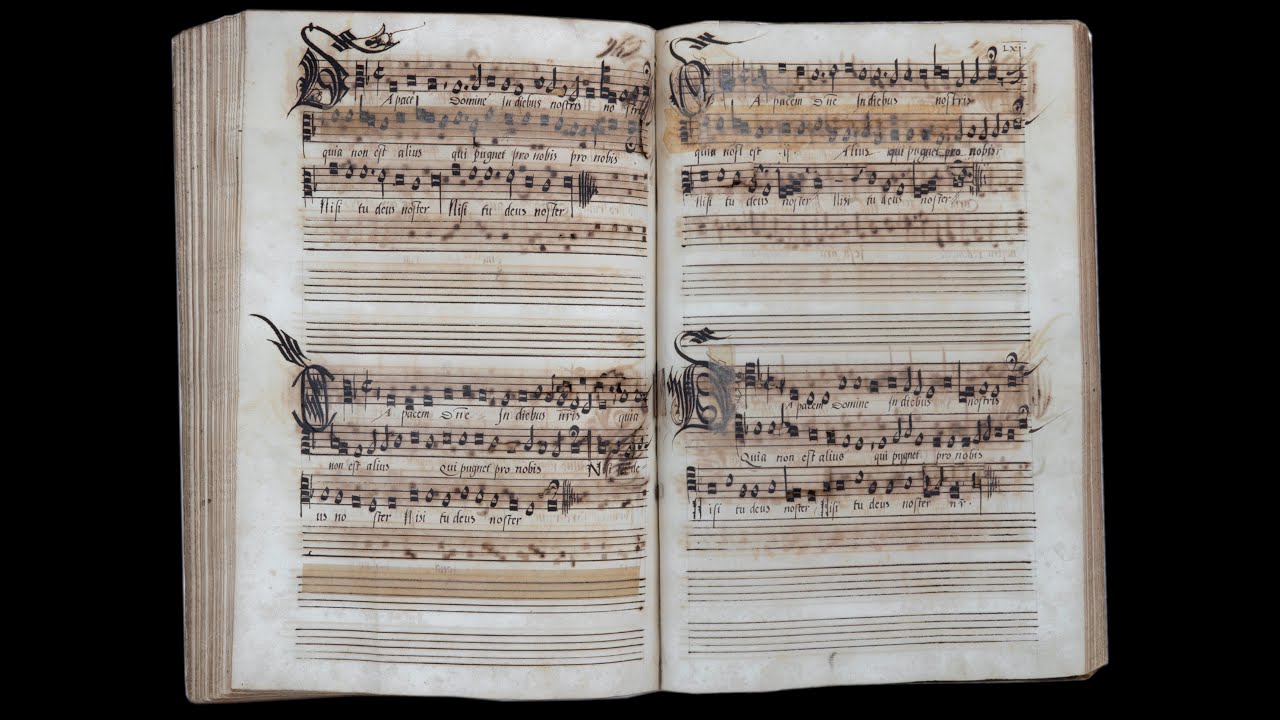 ▶
▶Laurie Stras delves into Da pacem Domine, one of the brief motets from the Biffoli-Sostegni Manuscript and featured on Musica Secreta’s latest album, Ricordanze: A Record of Love, in this video from the series created to raise funds to make the recording.
That being said, I also wanted to record the two masses in the book, not least because they are wonderful music, but also because they seem to pertain to the convent’s history in specific, extra-musical ways. The four-voice mass is based on the anonymous Recordare Virgo Mater, the offertory text for the Feast of the Immaculate Conception of the Blessed Virgin Mary. For over 150 years starting in 1541, the nuns of San Matteo marked the convent’s miraculous escape from a lightning strike with an annual special Mass of the Immaculate Conception on 16 March. It seems very significant that this mass is the first piece in the book – it was such an important event in the convent’s calendar.
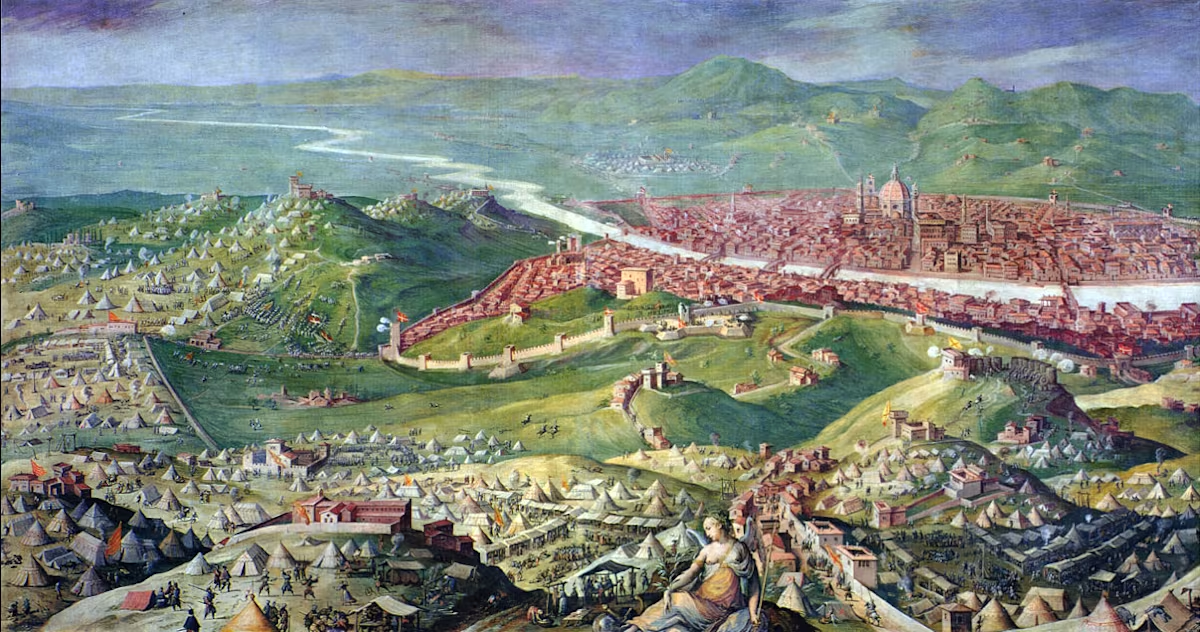
And the other mass is in three voices, based on the chanson Je le lerray puisqu’il me bat. The chanson was circulating in Florence in the first part of the century, and at first glance it doesn’t seem very nunly: the text tells of a woman who has been imprisoned by her husband, and she says she will leave him because he beats her and spreads rumours of her infidelity. However, the nuns of San Matteo were effectively imprisoned by a hostile power, when they were evacuated into the city during the ten-month Siege of Florence in 1529-1530. Did they collect the mass into their repertoire during that time? It seems entirely possible that they did.
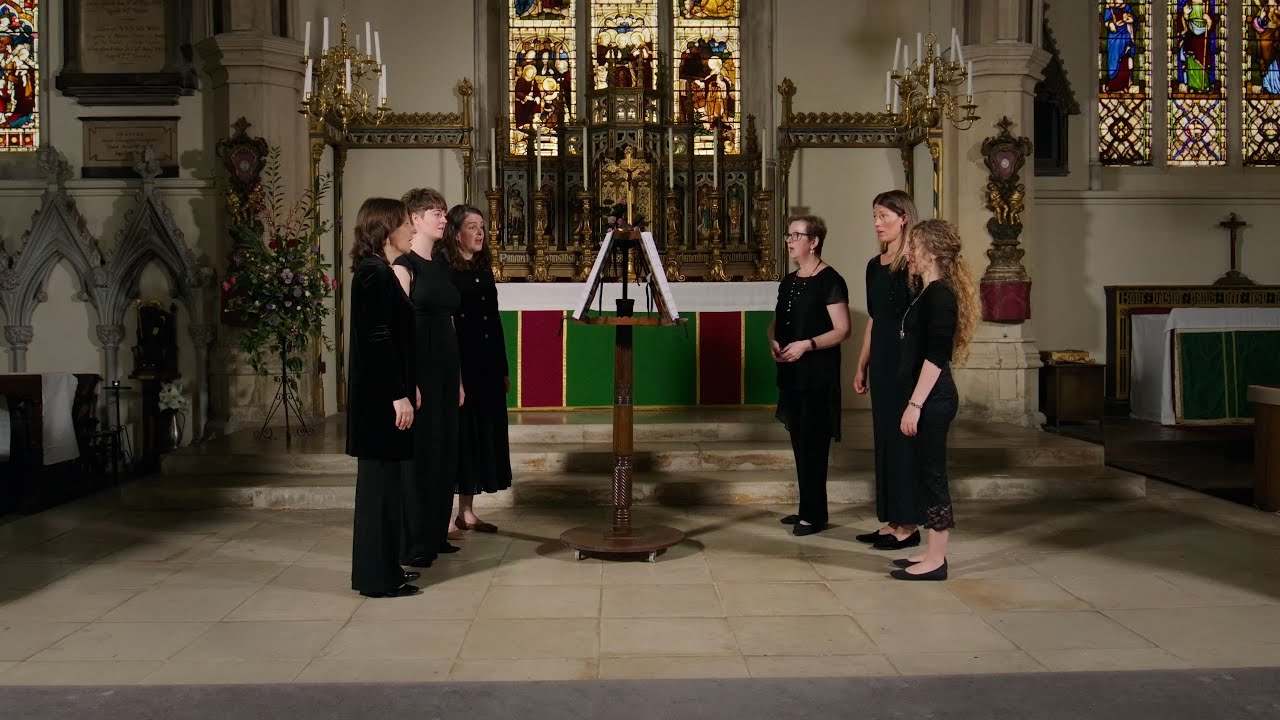 ▶
▶‘Gloria’ from Messa sopra Je le lerray (anon.) from Musica Secreta’s latest album, Ricordanze: A Record of Love
With Musica Secreta, how do you translate these discoveries into performance?
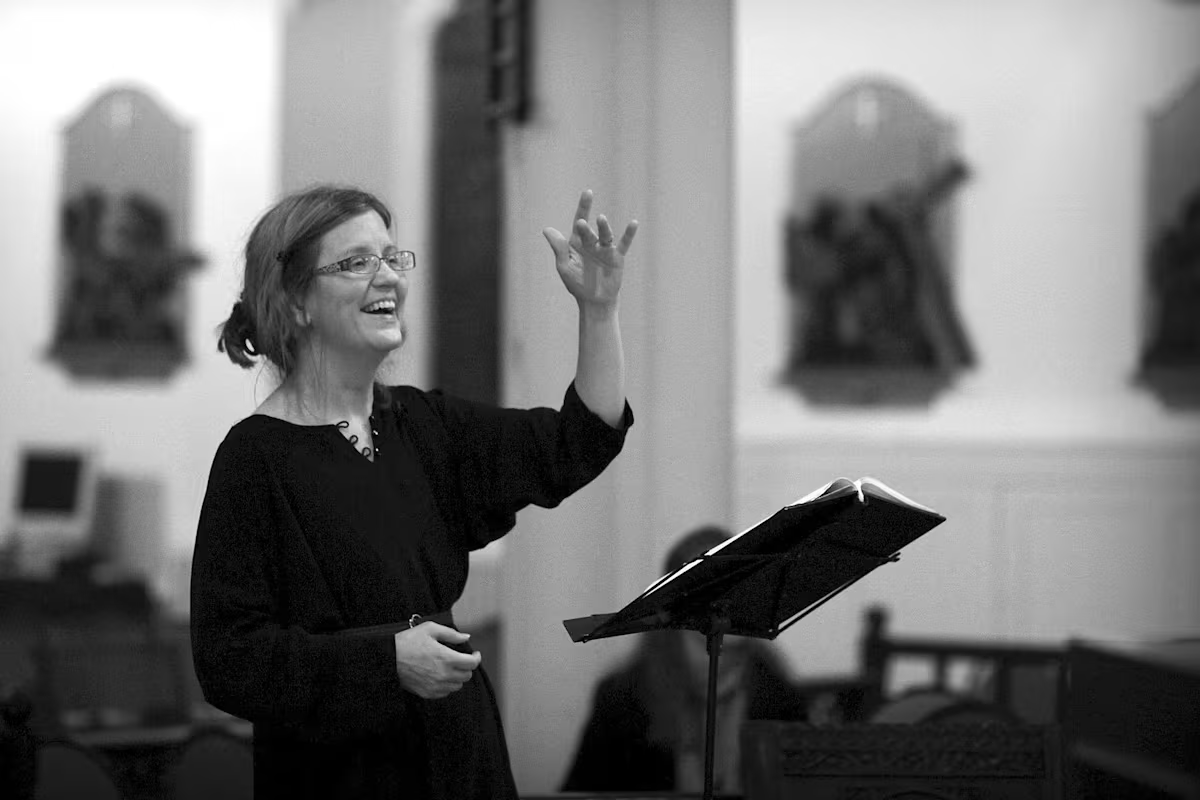
I’d reiterate that nothing is fixed. We experiment in rehearsal sometimes and we have been known to change our minds about a piece we have performed before; sometimes we have made different decisions for individual pieces depending on the forces we have available. I don’t think that is very different to how women made music in previous centuries, especially when the community is relatively stable and enclosed. Even the concerto di dame at Ferrara had to be flexible, since often one of them was pregnant, or recovering from childbirth, or sick with chronic malaria.
What do you hope listeners, especially those unfamiliar with convent music, take away from this repertoire?
I really want listeners to understand that women’s voices were very much part of the sound of the Renaissance city: that nuns’ polyphony was far more accessible to the average citizen than the music sung in the chapels of dukes or popes. I often say that nuns sang more than they did anything else in the day, even sleep, and it’s true. Their days were filled with music, whether chant or polyphony, or song. Every city had literally dozens of convents, and San Matteo was not even one of those that was famous for its music. There are still so many more ensembles that are men’s voices only, and we are conditioned to hear particularly sacred polyphony as a male-only repertoire. I want women, and all those upper-voice choirs that have sprung up in the recent revival and appreciation of choral singing as a Good Thing, to feel that they have a stake in early music and an ownership of this repertoire. And I very much want to support other performers and promoters to embrace (or continue embracing) the idea that the sound of polyphony can be so much more than just a replication of what’s on the page: instruments and voices together, ornamentation, arrangement. A transcribed score can be a lead sheet rather than the finished article.
You premiered Ricordanze live at the Brighton Early Music Festival in October. Are there other upcoming performances or tours where audiences can hear this programme live?
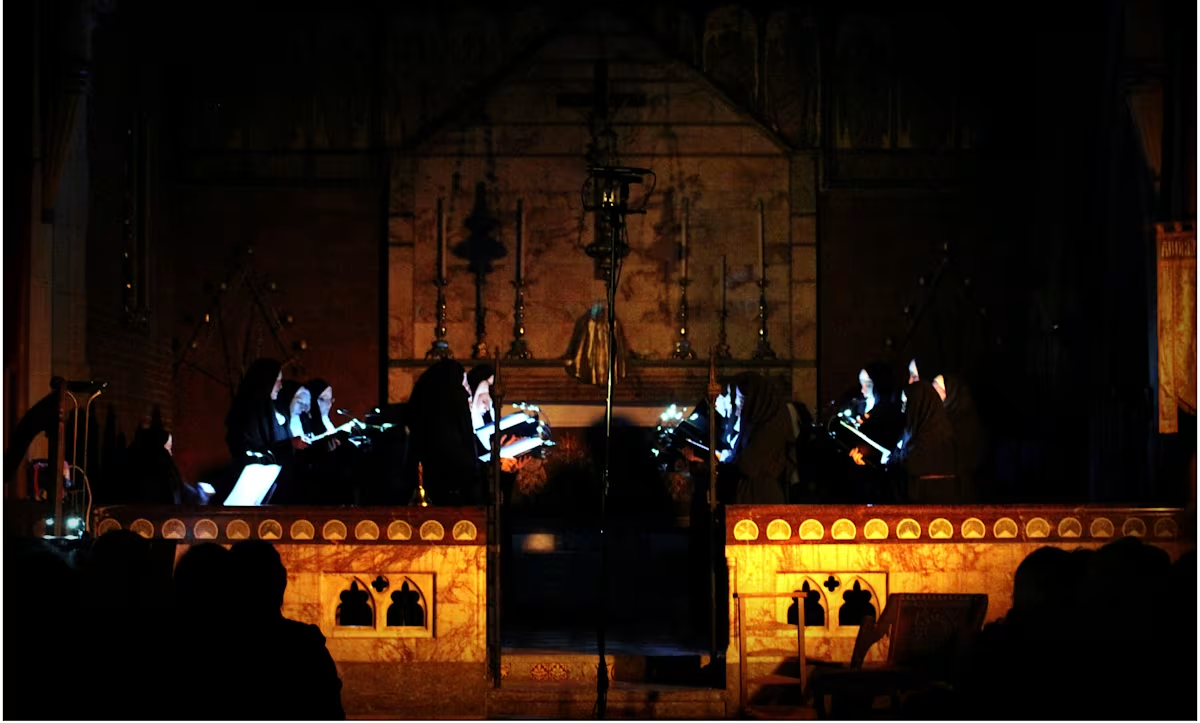
We haven’t got anything in the diary as yet, but we are speaking to venues in Brussels (where the manuscript is now) and in Florence about events perhaps in 2026 or 2027. We would, of course, love to be touring this music in the UK, but it’s been difficult to make that happen.
Looking ahead, are there more projects or manuscripts on the horizon you’re excited about exploring?
I am always on the lookout for more serendipitous finds, but I’m taking a little time out now mostly because I need a bit of brain space after the intensity of finishing this project at the same time as losing my friend and long-time co-director, Deborah Roberts. We’ve always been a project-based group rather than one that works on a season-to-season basis, so I have the luxury of downing tools if I want.
But… I would love to record the Palestrina mass dedicated to the elite Florentine convent of Le Murate, and his equal-voice motets – it would need a lot of musicians, though, with all eight vocal parts in the mass doubled on instruments, so it would be expensive to rehearse and record, and prohibitive to perform live. I’m now getting curious about the nuns in Cremona, too. They had famous maestri in their community – their fathers, brothers, uncles, cousins were people like Marc’Antonio Ingegneri, Tarquinia Merula, Antonio Stradivari, even Claudio Monteverdi – and they certainly created music in their convents. There are so many works by Cremonese composers that could have been intended for or adopted by nuns’ ensembles, yet the only piece clearly linked to a nun in Cremona is a work by Caterina Assandra, the profession motet, Veni sponsa Christi, which she dedicated to a Suor Silvia Assandra, perhaps her sister, or her cousin.
Clearly, Musica Secreta still has work to do if we can manage it!
You can catch up on Part I of the interview, ‘Sisters of polyphony’, here. Musica Secreta’s latest album, ‘Ricordanze: a record of love’ is available to purchase on Musica Secreta’s website as well as Bandcamp. Laurie Stras’s book, ‘Music at a Florentine Convent: The Biffoli-Sostegni Manuscript and Suor Maria Celeste Galilei’, will be available in hard copy from Cambridge University Press from 31 Jan 2026.
Share this
Keep reading

Guitar Meets Square Piano: Nathaniel Mander and Declan Hickey
Continuo Connect talks to guitarist Declan Hickey and harpsichordist Nathaniel Mander about their upcoming “Dukatenkonzert” in London and the instruments they will be playing.
Sam Brown on Dowland and filtering history through a modern lens
Lutenist Sam Brown of Dowland's Foundry chats with Simon Mundy about how we interpret John Dowland, the formation of the ensemble around Emma Kirkby's kitchen table, and an exciting recording project in the pipeline.
Playlist: Early Music Fusion
Explore the fusion of Early Music with jazz, pop and rock music. Listen to Sting’s Dowland, Jacques Loussier’s jazz-inspired Bach, L’Arpeggiata’s take on music by Purcell and Handel, and Attila the Stockbroker’s fusion of punk rock and Renaissance music.