
Review
Carnival spirit at The Vache
Campra’s 1699 opera brought to life in the Buckinghamshire countryside
Share this

BY ASHUTOSH KHANDEKAR | FIRST PUBLISHED 13 DEC 2025
Vache Baroque has quickly become one of those late-summer fixtures that manages to feel both relaxed and quietly ambitious. A short walk from the car park across the rambling lawns leads you past musicians warming up, families picnicking, and the cheerful bustle around the bar. It’s a setting far removed from any sort of metropolitan formality, and it lends the whole event a sense of ease that suits the repertoire performed there.
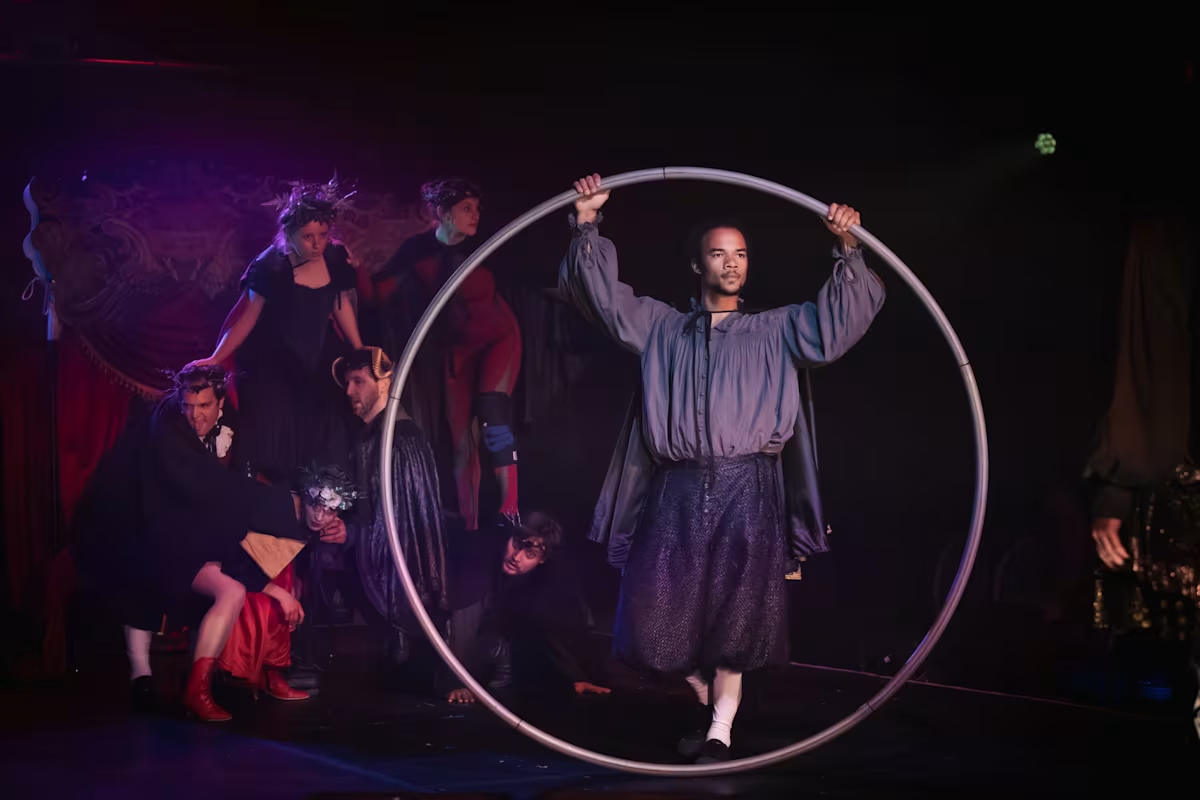
This year’s centrepiece was André Campra’s Le carnaval de Venise (1699), a work with its own particular theatrical spell. Part opéra-ballet, part 17th-century vaudeville, part proto-multimedia theatre, Campra’s work plays with illusion and self-awareness. Mortals – lovers, tricksters, bystanders – become playthings of capricious gods, while the characters themselves seem half-conscious of performing for an audience, constantly breaking through the ‘fourth wall’. The work is built on fluid identities, quicksilver shifts, and a certain wry charm.
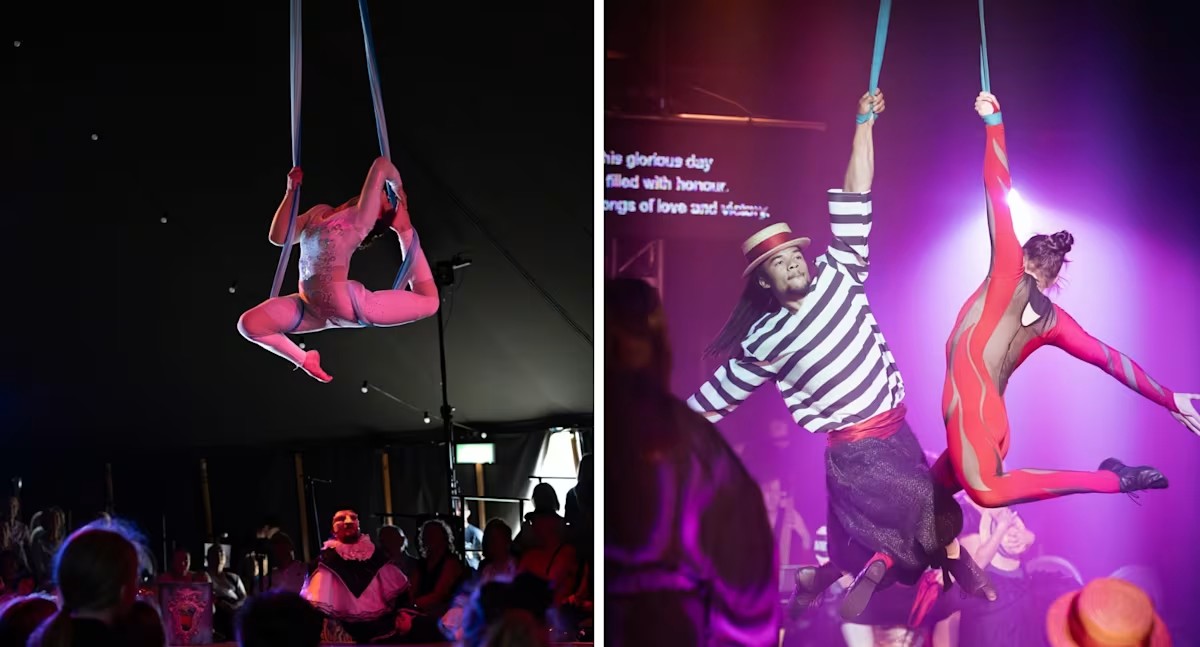
Director James Hurley and music director Jonathan Darbourne seized on this meta-theatricality and brought it to life in a bijoux black circus tent. Their boldest stroke was the integration of high-wire artists, Hannah Finn and Shane Hampden. Far from being decorative novelties, the acrobatic duo expanded the production’s physical vocabulary, echoing the agility and comic precision associated with Campra’s theatrical inheritance – commedia dell’arte very much included.
The aerial work added an invigorating vertical dimension. Performers swung, spun and hovered above the stage, sharpening the distinction between gods and humans. These moments captured the score’s own lightness and unpredictability. In a piece that moves in swift, almost cinematic scenes, the circus elements helped smooth transitions while offering flashes of visual wit that complemented the music.
Vocally, the performance had its subtleties and its strengths, with the high points proving genuinely impressive. Katie Bray’s portrayal of Léonore was a stand-out, with her warm, flexible mezzo-soprano ideally attuned to Campra’s writing and distinguished by poise and emotional immediacy. Her French was crisp, her phrasing refined and full of nuance. Anchoring the lower voices was Tristan Hambleton whose Rodolphe provided welcome depth. His resonant bass-baritone carried effortlessly, and he offered a calm, grounded presence amid the production’s shifting theatrical gears. Musically assured and dramatically centred, he interacted fluently with both the ensemble and the aerialists. Not to be overlooked was Eleanor Broomfield, who made a notably strong impression in the small role of La Fortune. Her focused soprano and bright tone sat elegantly within Campra’s sound-world while her contributions in the chorus were no less stylish.
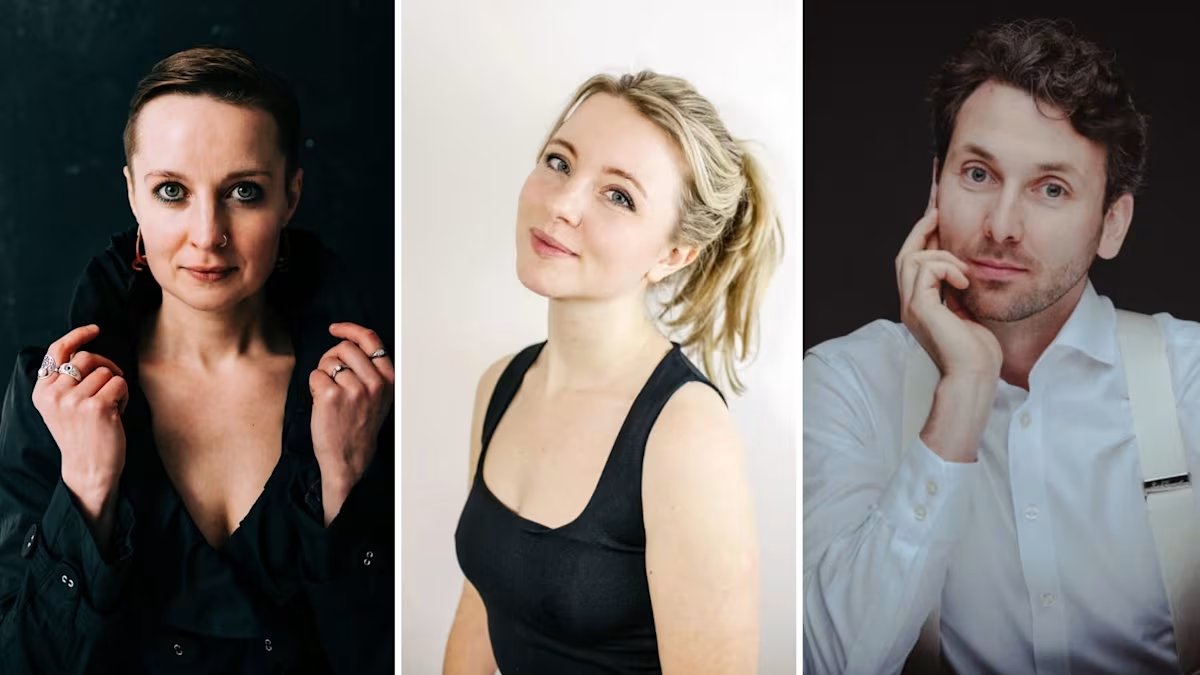
Around them, the remaining cast performed with the same commitment and good humour. Comprising Julieth Lozano (Isabelle), Themba Mvula (Léandre), Giuseppe Pellingra (Plutone), Feargal Mostyn-Williams (Orfeo/alto chorus), William Searle (tenor chorus/Le chef des Castellans) and Adam Jarman (bass chorus/Un musicien), the ensemble handled the multilingual text and the opera’s quick-fire scene changes with energy. Campra’s music rewards finesse, and some lines could have used more of it, but the cast’s dramatic engagement kept momentum buoyant.
Clarity and lift matter more than sheer weight in the score of Le carnaval – qualities the musicians of Vache Baroque lean into with ease. Directed from the harpsichord by Darbourne, the orchestra offered crisp, stylish support. The collective rhythmic lightness suited Campra’s idiom, and the continuo team shaped the many short scenes with admirable sensitivity. Darbourne kept tempi lively, allowing the score’s brightness to speak naturally.
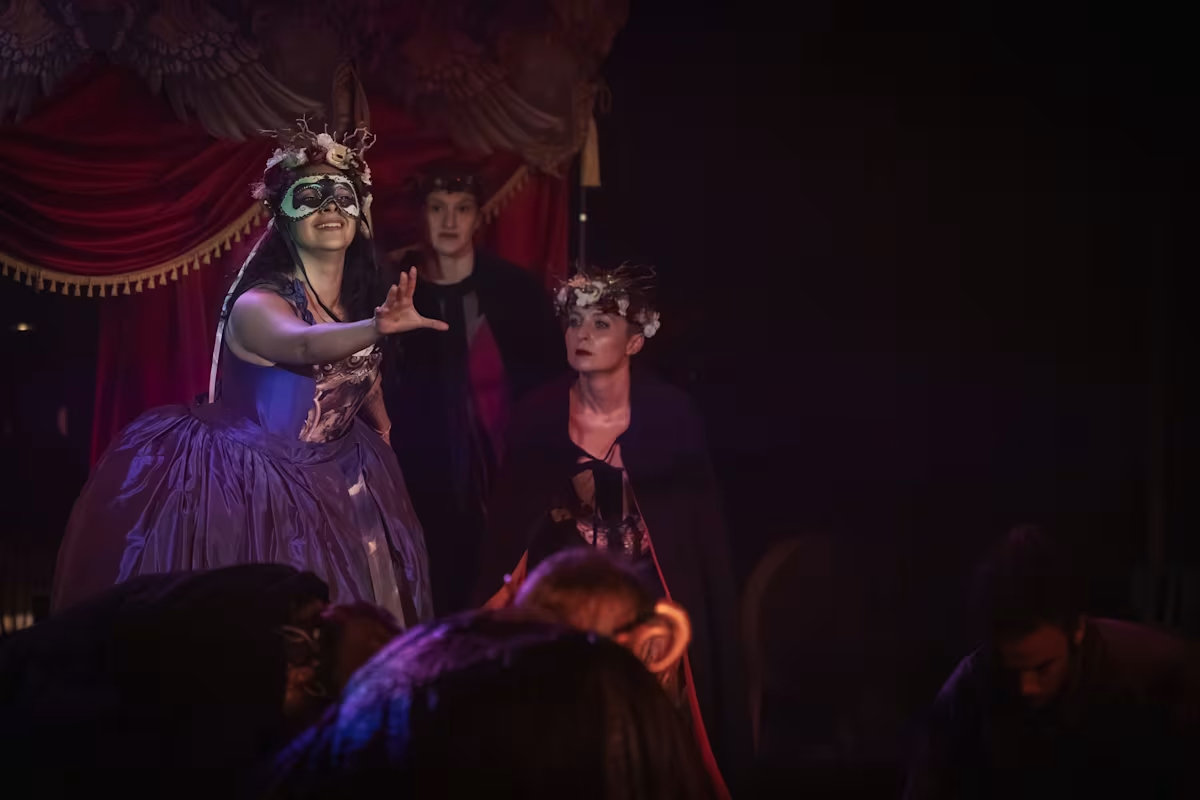
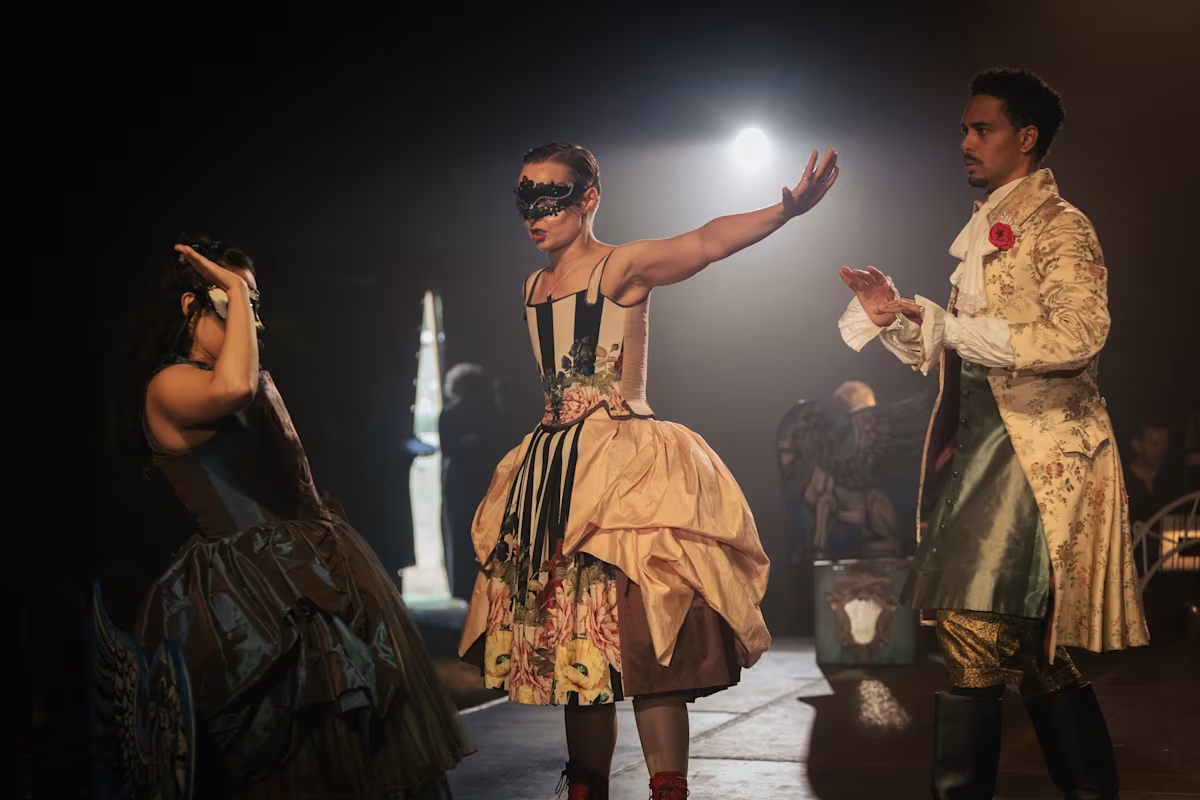
Visually, the production was unified by Laura Jane Stanfield’s economical design, which balanced circus rigging with gentle period touches. Associate Director Rebecca Solomon ensured that the movement – airborne or otherwise – felt part of the same theatrical world. Complementing these were Ben Pickersgill’s lighting which flattered both singers and aerialists, and the unobtrusive sound design by Dom Harter and Simon Honeywill for Martin Audio. What distinguished the afternoon was how fully the circus setting embraced the work’s carnival spirit, introducing a rarely staged 17th-century piece to modern audiences with freshness and good humour.
Vache Baroque’s La carnaval de Venise, while not without some imperfections, was imaginative, generous-spirited and thoughtfully assembled – a reminder of the festival’s growing reputation for exploring Early Music’s lesser-trodden paths with intelligence, warmth and a welcome sense of play.
Vache Baroque’s next programme, ‘The Food of Love’, forms part of a Valentine’s Day-themed feast at the Fidelio Café in London on 13 & 14 February. The ensemble’s 2026 programme will be announced in the coming weeks.

Share this
Keep reading
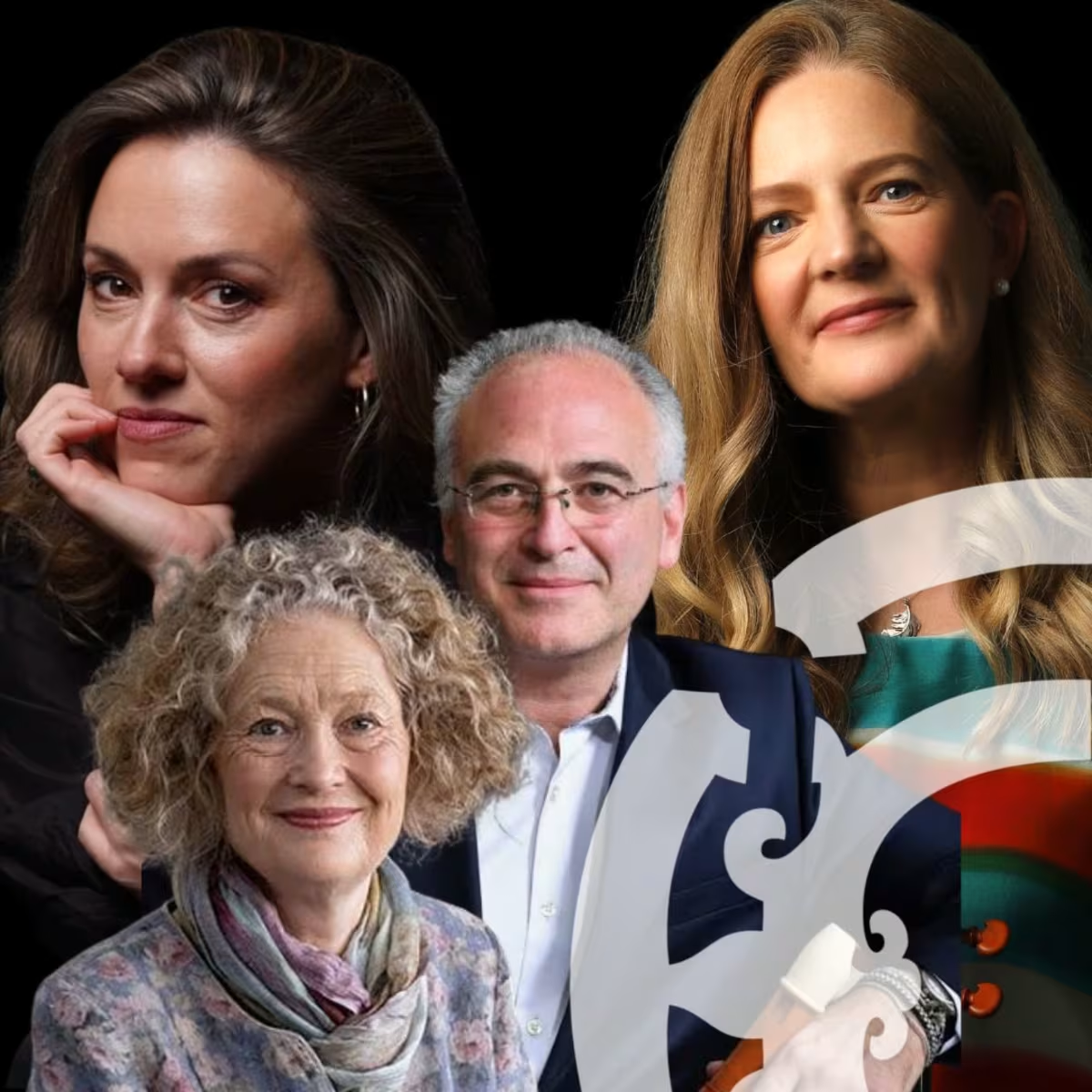
Playlist: Continuo Patrons
A playlist of tracks by Continuo Foundation Patrons Mary Bevan, Emma Kirkby, Rachel Podger and Ashley Solomon in celebration of the UN International Day of Charity.
Tallis: ‘Spem in alium’ – a forty-part motet
A favourite among choral fanatics, Tallis' 'Spem in alium' has a fascinating history and has more recently been used in an unexpected context.
Handel’s Messiah – the Salisbury connection
There is an oddly persistent local story that a performance of Messiah was given in the chapel room over St Anne’s Gate when Handel stayed in Salisbury in 1739 with his friend James Harris of Malmesbury House in the close.