

Feature
Handel at home: life and music on Brook Street
Share this

BY SIMON MUNDY | FIRST PUBLISHED 09 FEB 2026
𝄞 You can accompany your reading with our playlist, Handel in London.
Brook Street, at the northern edge of London’s Mayfair district between Piccadilly and Oxford Street, has always been fashionable. The Grosvenor family have made sure of that, ever since it passed into their hands in 1677 when the baronet Sir Thomas Grosvenor acquired it as part of the dowry of the manor of Ebury when he married the twelve year-old Mary Davies, great-niece and heiress of a city financier called Hugh Audley. Mary’s 500 acres of countryside between Westminster and the village of Chelsea and up the course of the River Tyburn have been the wealth foundation of one of Britain's richest families – now headed by the Duke of Westminster.
It was Thomas and Mary’s son, Richard, who decided to develop the land into a neatly laid-out grid of town houses and squares so different from the chaotic tenements of St Giles’ and Covent Garden to the east. Two of the most spectacular developments were Grosvenor Square, on the western edge, and Hanover Square at the east, one named after the family (naturally) and another a diplomatic nod to the new King George I, Elector of Hanover. The royal flattery was carried further with the building of the fine church of St George’s Hanover Square, finished in 1724.
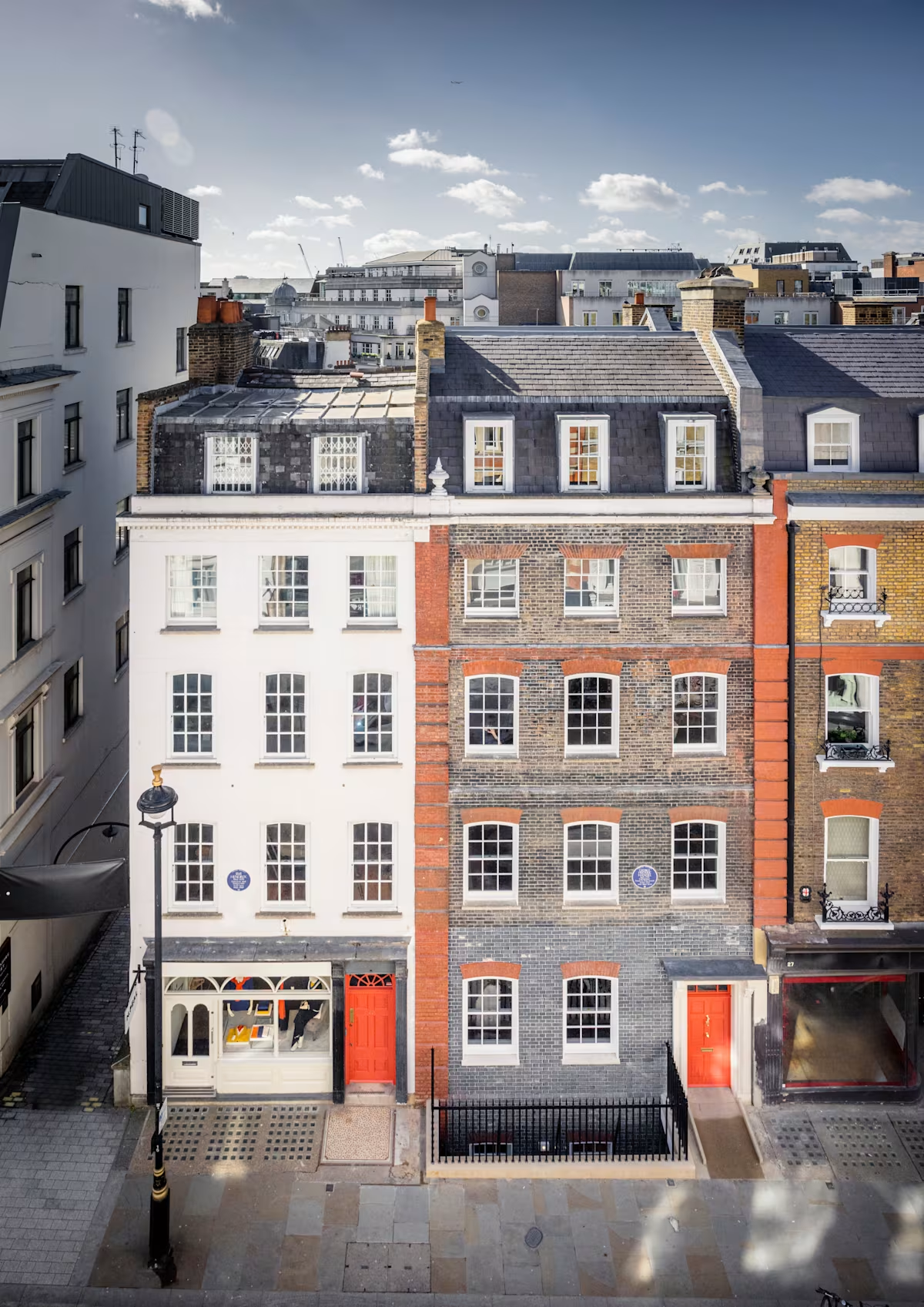
Between the two squares Brook Street (the brook being Tyburn, which splits and joins the Thames either side of the Houses of Parliament) was built as a residential thoroughfare of genteel terraced town houses for the middle class. These were substantial homes for those who were doing well but were not spectacularly wealthy. The man who bought the plot of No. 25 was one of those who had also moved to London to throw in his lot with his fellow countryman, the new King: Georg Friedrich Händel.
The house being built in Brook Street solved two problems for the composer, then in his late 30s and already a star throughout Europe. As a foreigner in England, he was only allowed to sublet the property. Georg from Halle in Saxony-Anhalt did not become George Frideric Handel from London until 1727. The second problem was that he needed a house small enough to be affordable, but large enough to be the headquarters for his musical business and respectable enough for his patrons to visit in person. That meant space for a ‘shop’ front and room for a grand harpsichord and small ensemble.
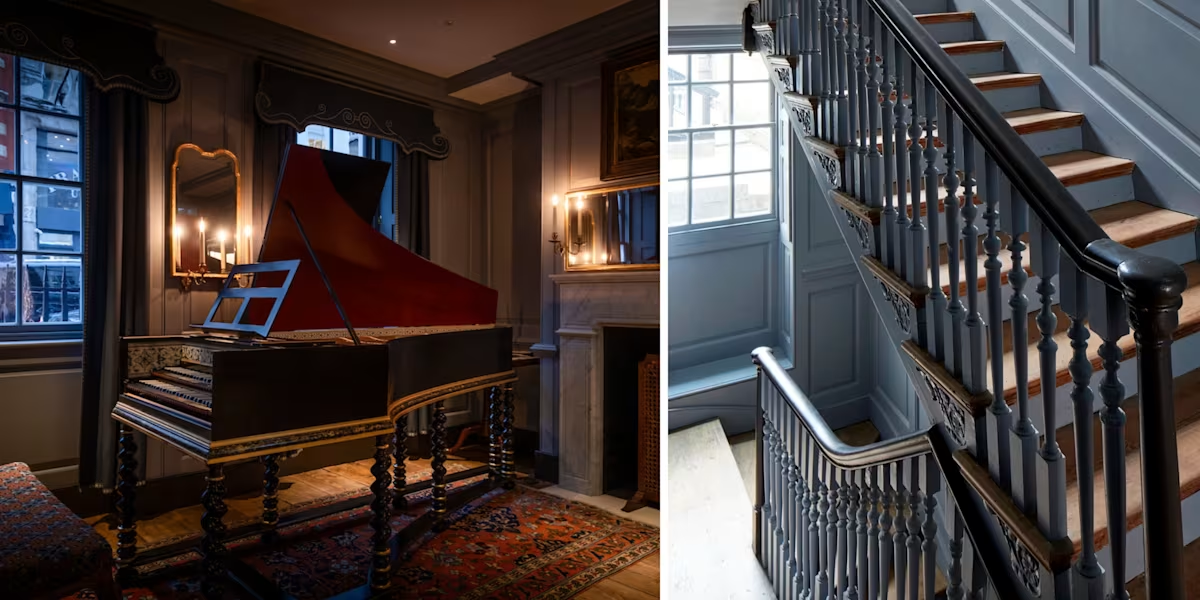
One of the most important instructions to the architect, George Burns, was for an extra wide staircase so that inflexible keyboard instruments could be carried up to the first floor, which doubled as music salon and dining room. On the ground floor subscriptions, tickets and souvenirs were sold. Unlike on the continent, where musicians sought court or church appointments, in London they were mainly freelancers. Handel was his own impresario. He accepted patronage, but he was no-one’s employee – a key difference that is still true today.
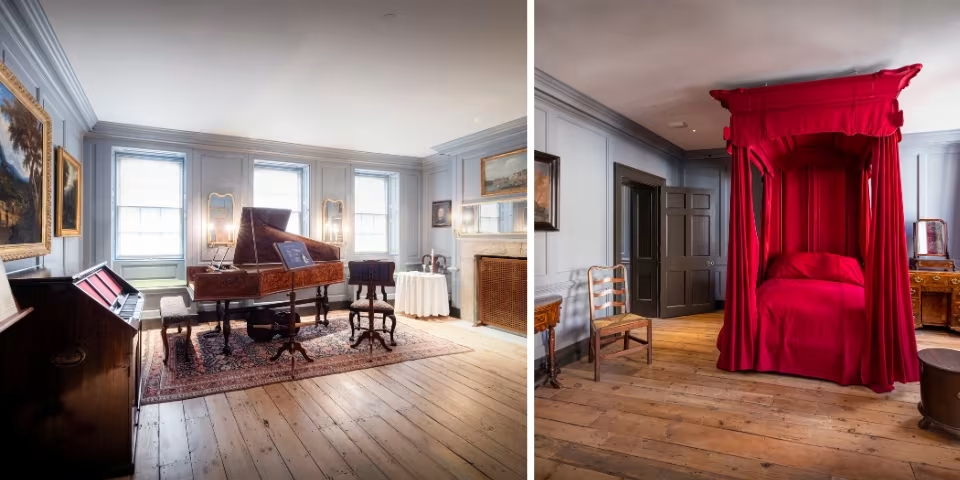
Upstairs in front, as was the custom, was the main reception room. This is where Handel rehearsed, performed and entertained. Behind that was the drawing room, which he used as his study and where he probably did most of his composing for the rest of his life. His bedroom and dressing room were on the second floor, and there was space for live-in servants in the attic. It was a very comfortable and well-appointed pad and it suited Handel’s bachelor way of life. He lived in the house from 1723 until his death 36 years later.
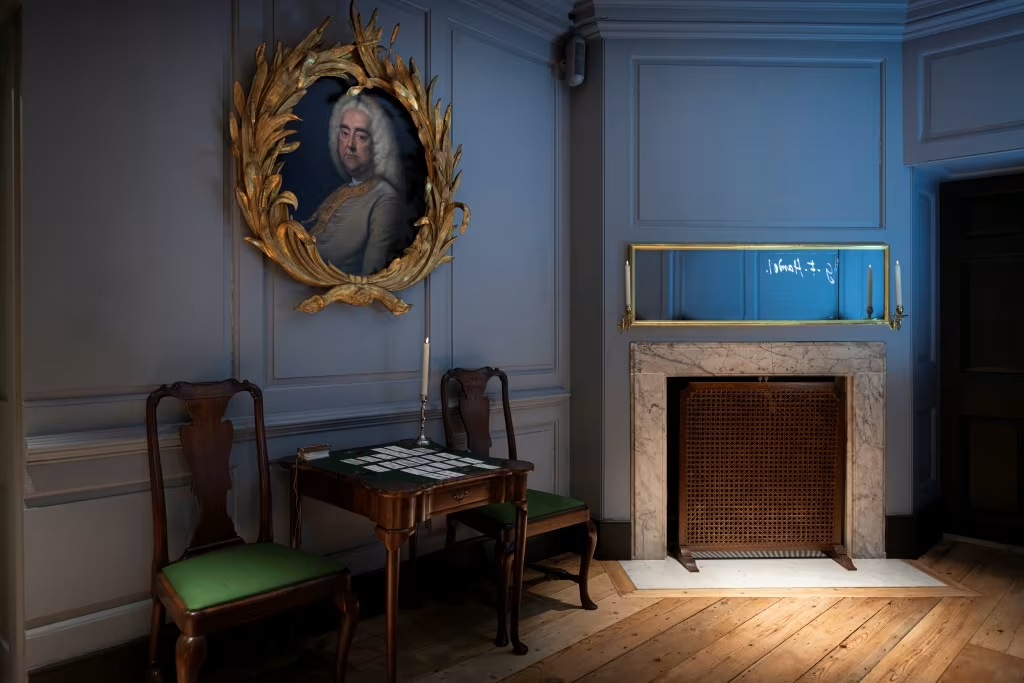
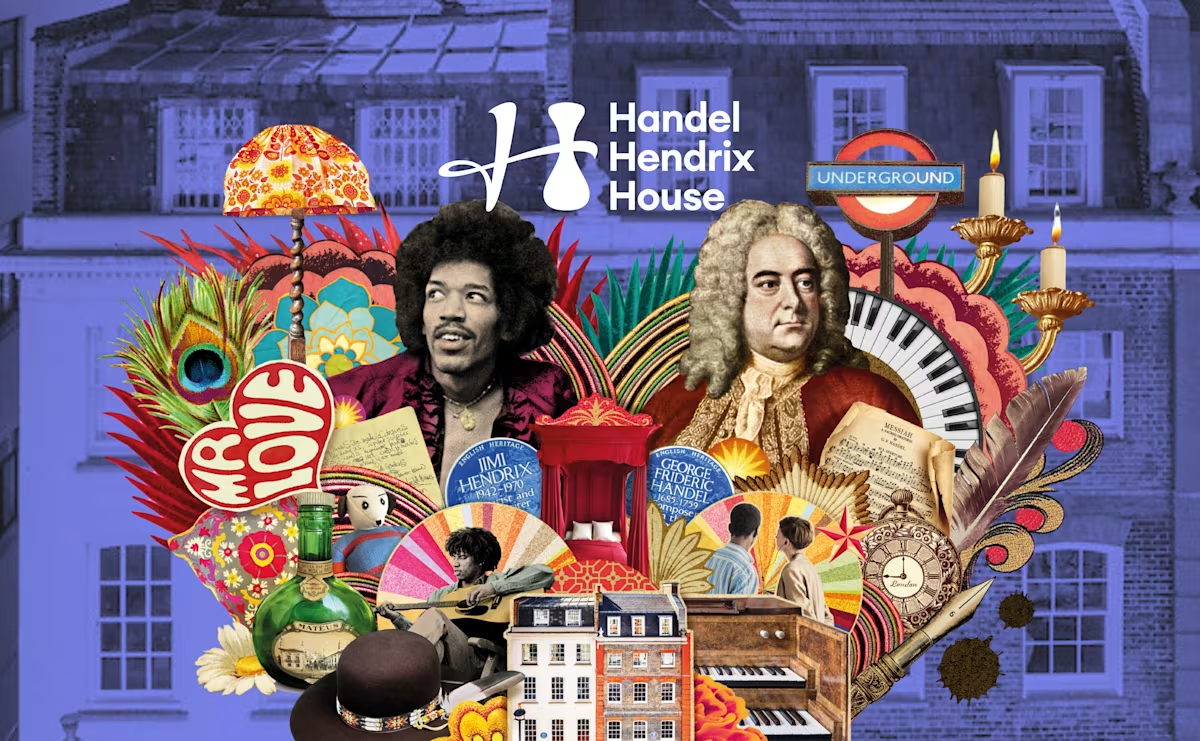
For all of the 21st century, the house (which has been extended in the centuries since, and included a flat owned briefly by the rock guitarist Jimi Hendrix) has been the Handel Hendrix House Museum. 2026 marks the 25th anniversary of its opening to the public, and there will be special exhibitions and events from May onwards. Recently I was shown around by curator Olwen Foulkes – the recorder player of Ensemble Augelletti, and joint artistic director of Brighton Early Music Festival.
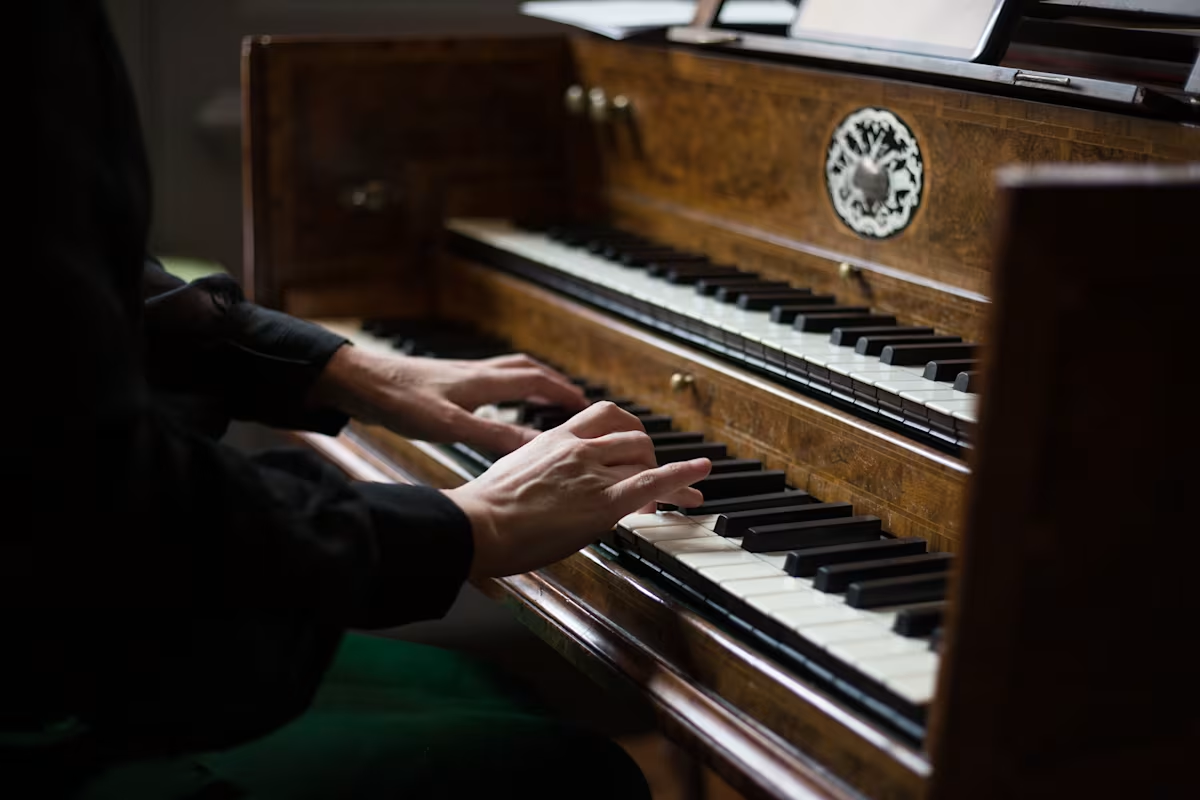
Then I discussed the house with Claire Davies, who is the Deputy Director, heading up the curatorial and programming teams. Davies has a background in history of art and music, as well as 18th-century architecture. This is important because Handel was a voracious collector of paintings (including a couple of Rembrandts) and one of the museum’s tasks is to fill the walls with an approximation to Handel’s own collection. Claire liaises with today’s art collections to identify what appropriate pictures they have in storage that they could lend.
Handel not only appreciated his collection, he understood how to decorate the house to its and his advantage. Claire told me, ‘the carefully chosen curtains, mirrors in gilt frames, candle sconces and brass door furniture all added to the air of opulence fit for visiting nobility to feel at ease.’
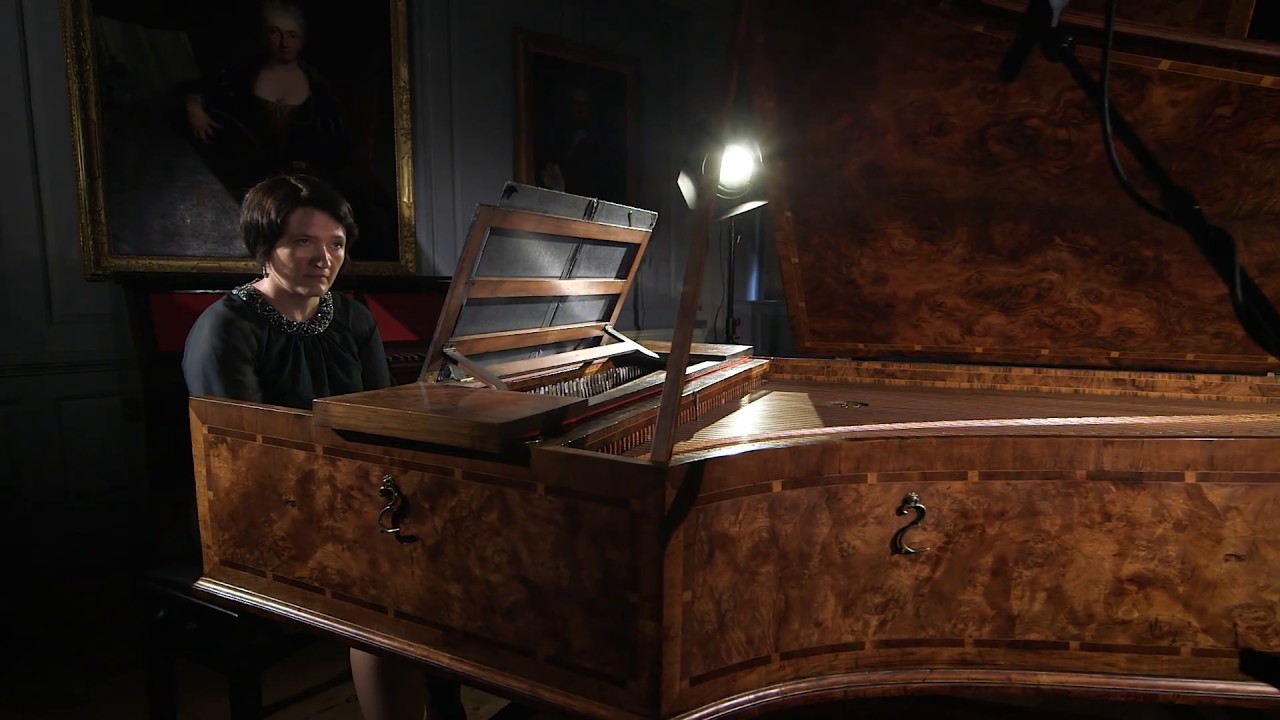 ▶
▶Katarzyna Kowalik performing Handel's piece popularly known as The Harmonious Blacksmith on the 18th-century harpsichord in Handel's Music Room at Handel House.
This year’s programming has Monday concert slots for harpsichord and solo instruments and voices, in homage to Handel’s own dining room concerts, complete with the audience sitting on 18th-century style chairs. On Saturday evenings there are soirées with a well-revered performer to listen to and then drink and chat with. ‘We will be taking you back as if Handel had invited you. There are some great accounts of these entertainments and we know that he served claret and port to his guests and audiences. There is a note in the margin of a score as a reminder to order 12 gallons of port!’ The museum’s catering is unlikely to be quite as excessive, reasonably enough, but will surely capture the spirit, if not the spirits, of the occasion.
On the very definitely non-alcoholic end of the house agenda are the concerts to entice the very young – concerts for the under 5s getting them to listen and respond to Handel, under the delightful title of ‘Wigs and Wiggles’.
As the Handel Hendrix House marks its silver jubilee, it continues to honour its most famous resident in the most Handelian way possible, not as a monument, but as a home filled with sound, welcoming people in, and letting the music do the rest.
Handel Hendrix House is open to public from Wednesday to Sunday between 10am and 5pm. The museum also curates memorable concerts and events in the intimate setting of Handel's house throughout the year.
Share this
Keep reading
Spiritato: music out of boundless curiosity
Continuo Connect catches up with Will Russell and Kinga Ujszászi, founding members of the ensemble Spiritato.

Sam Brown on Dowland and filtering history through a modern lens
Lutenist Sam Brown of Dowland's Foundry chats with Simon Mundy about how we interpret John Dowland, the formation of the ensemble around Emma Kirkby's kitchen table, and an exciting recording project in the pipeline.
Playlist: Continuo Patrons
A playlist of tracks by Continuo Foundation Patrons Mary Bevan, Emma Kirkby, Rachel Podger and Ashley Solomon in celebration of the UN International Day of Charity.