
Feature
Exploring the golden age of the ‘City of Dreams’
Florence & the Renaissance
Share this

BY CONTINUO CONNECT | FIRST PUBLISHED 18 SEP 2026
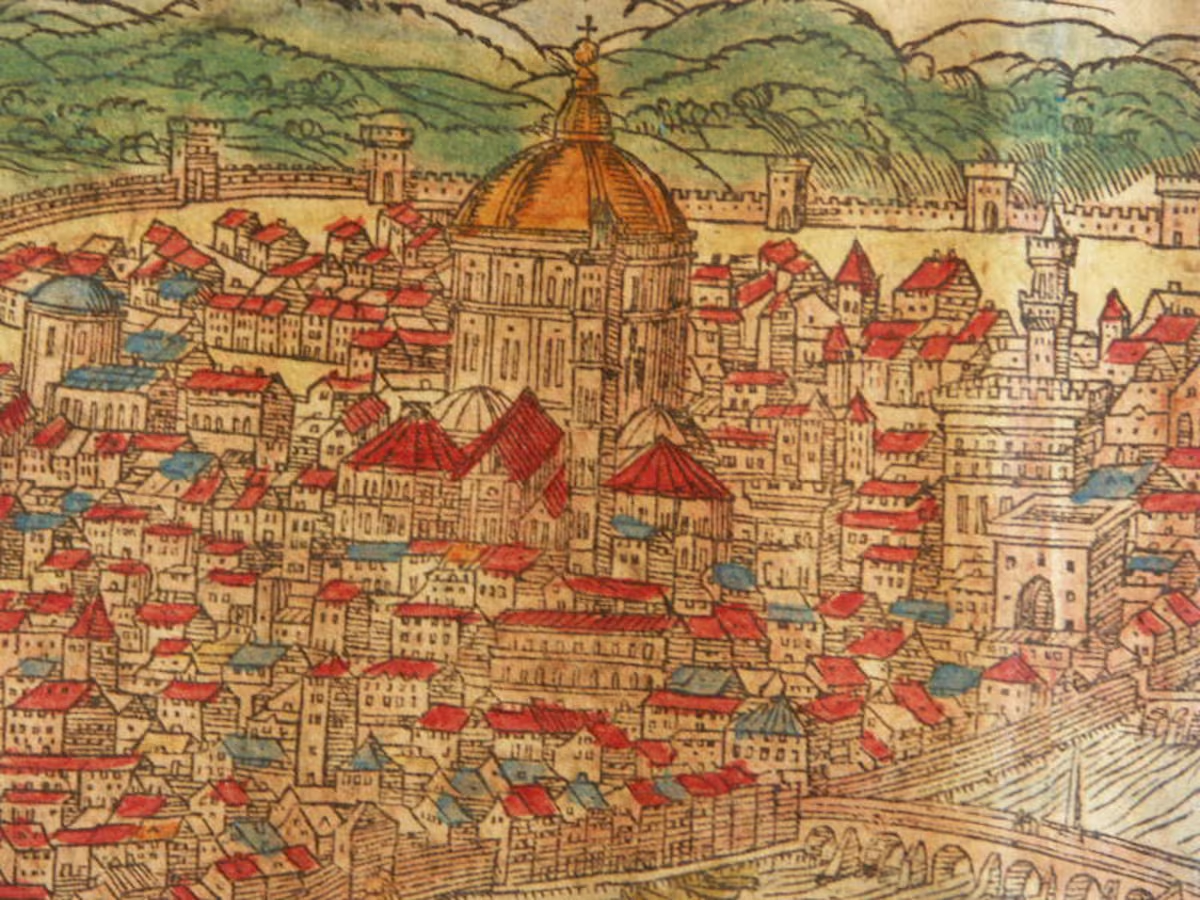
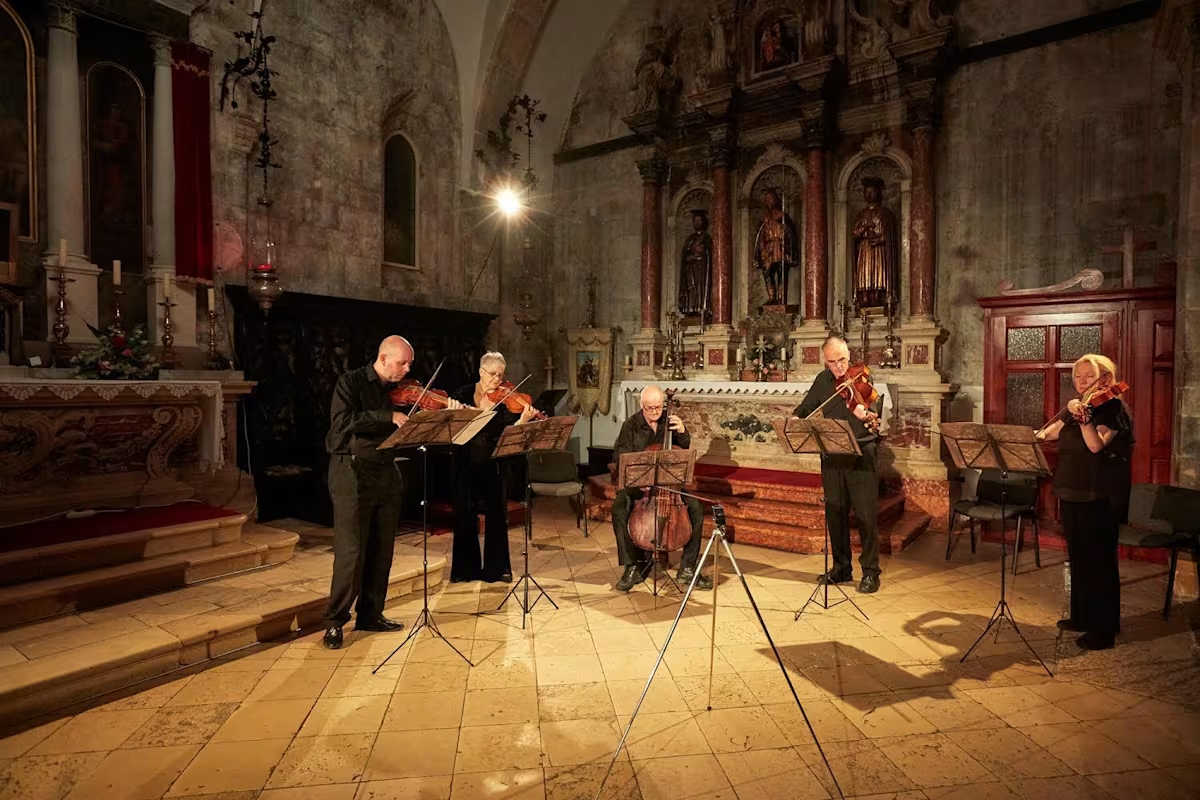
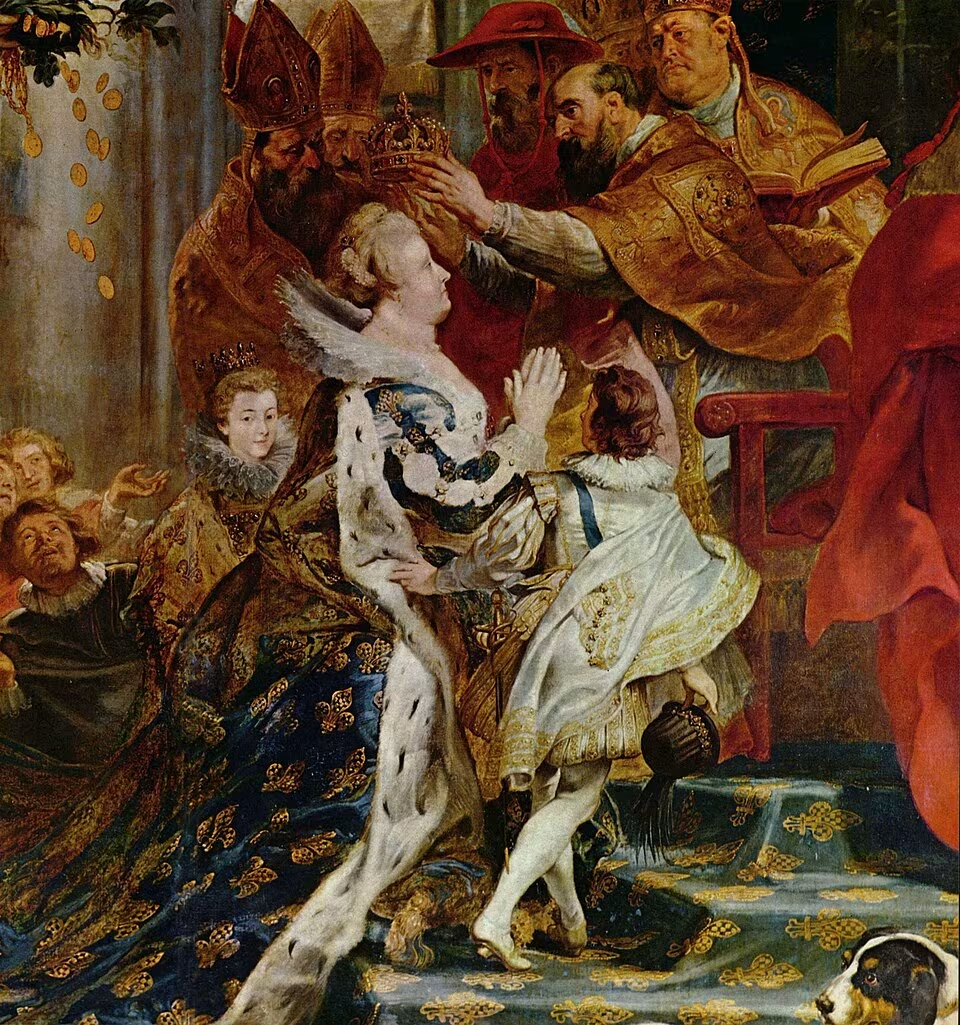
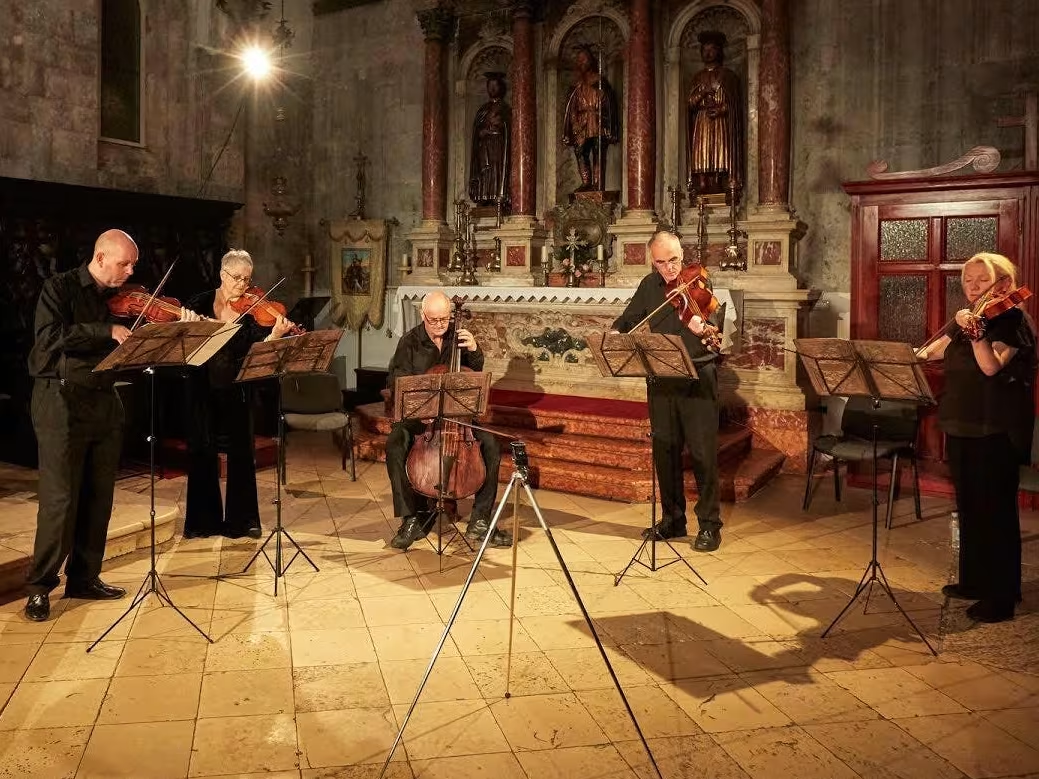
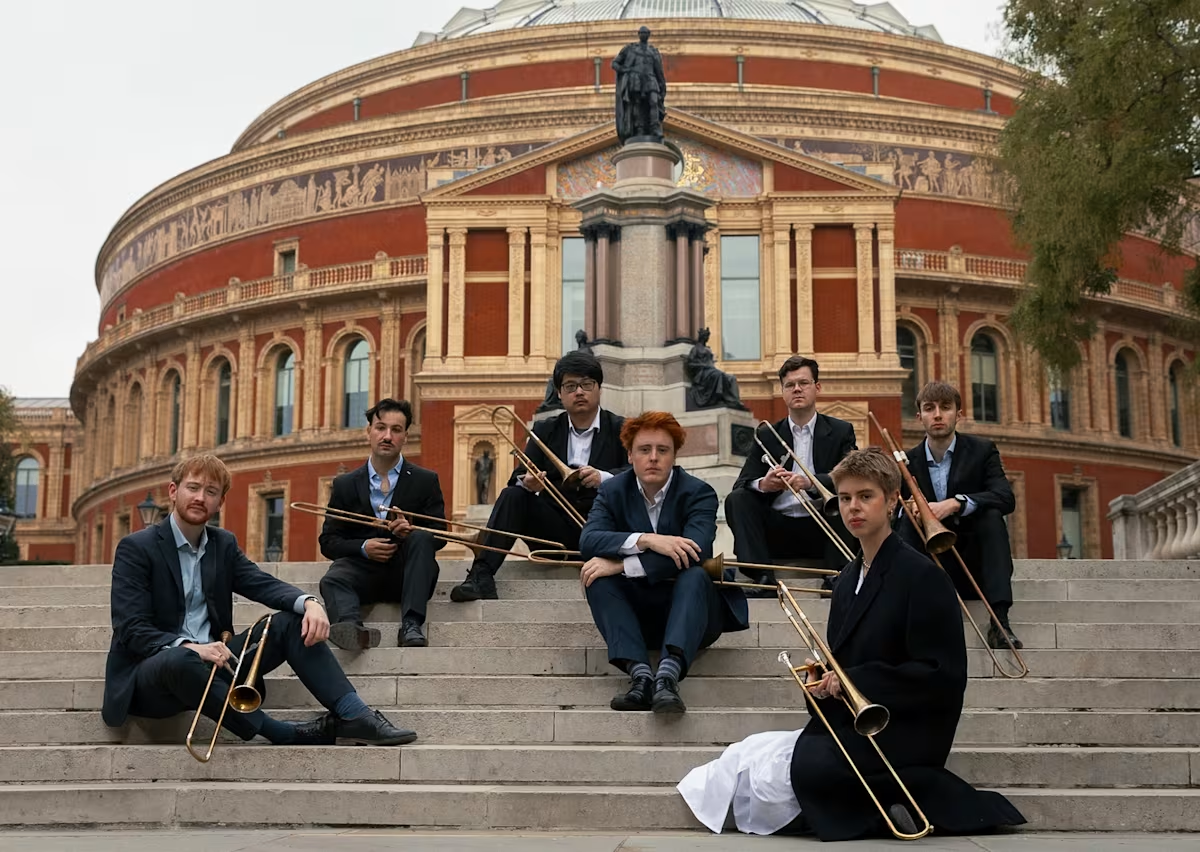
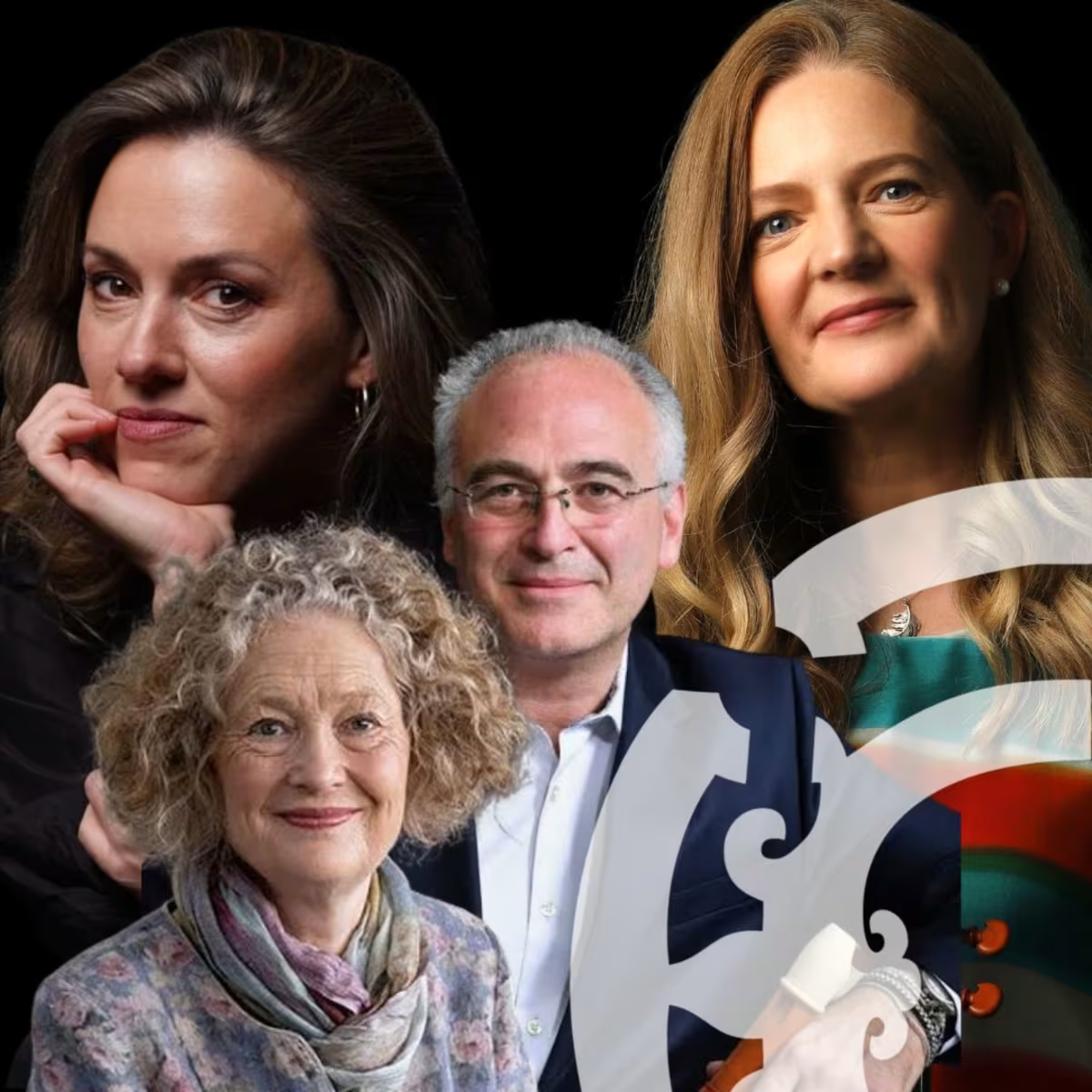
‘City of Dreams’ is an exploration of two centuries of Renaissance Florence at this year's Brighton Early Music Festival. From the engineering ambition behind Brunelleschi’s iconic dome in the early 15th century to the coronation of a Medici as Queen of France, the show traces how artistic innovation and civic ambition shaped the identity of the original ‘city of dreams’. The programme is narrated by actor Daria Mazzocchio in the role of Maria de’ Medici, and features a wide selection of repertoire performed by Monteverdi String Band, The Royal Sackbut Collective, BREMF Consort of Voices and pupils from Brighton primary schools, with the story brought together by writer and director Saria Steyl. We spoke to Oliver Webber, founder of Monteverdi String Band, and Saria Steyl about how the project came together, ahead of their 'City of Dreams' performance on 2 October.
How did you decide where the story of Florence should begin and end?
Saria: When narrating the show through Maria’s voice, I chose to do so through the framework of two significant events in her life: her wedding and her coronation. These are both moments of reflection in preparation to move forward into a new phase of life, giving Maria an opportunity to reflect on her family, Florence and the journey that brought her to each point. Her family’s story is entwined with the birth of the Renaissance in Florence in the early 1400s, and we meet Maria in 1600, so that gives her 200 years of her family in Florence to look back on.
Oliver: Saria’s choice of these two reflective moments gave us a wonderfully flexible framework for the musical 'soundtrack' to the story of Florence; we could complement Maria’s current situation with contemporary works and bring her memories – and the city's – to life with music from earlier events.
With so much history to draw on, how did you choose which events to highlight?
Saria: So many incredible moments to choose from! We decided to focus on moments of change, turning points that had a knock-on effect on culture and music, and we include some of the more human stories that bring the history to life. There was also a conversation around what music we felt was important to include, and if that music was connected with a specific historical event, we aimed to bring those two elements together in the story.
Oliver: We faced the same issue with the music! Our ‘shortlist’ got longer and longer as significant connections, events, and personalities occurred to us, and we’ve had to do quite a lot of pruning. Celebrations and tragedies throughout history have provided a rich vein of music, by turns stirring and touching, and Renaissance Florence boasted some of the finest composers of the era, so we were very fortunate: the challenge was deciding what to leave out!
What drew you to Maria de' Medici (1575 - 1642) as the storytelling voice?
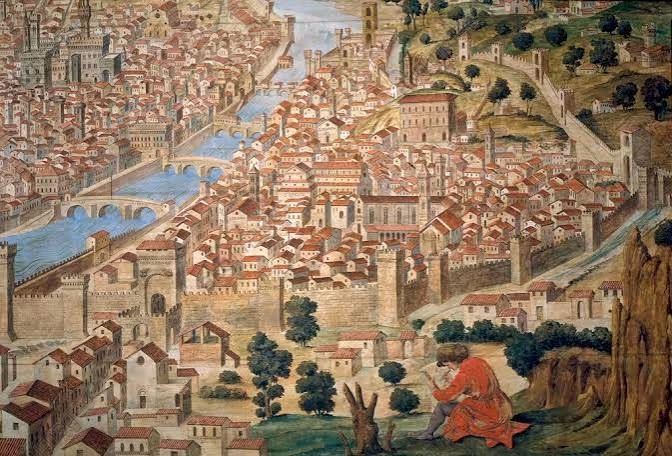
Saria: When we were looking at telling the story of Florence through the music of the Renaissance, it seemed appropriate to use a Medici voice to narrate it, as the family had such a significant impact on the golden age. Even though Maria went on to become Queen of France and ruled as regent, she’s not as well known as Catherine de' Medici or other Medici figures. The male Medici figures are much more prominent in our history books and our minds. We thought it would be interesting to take a look at her family’s history from her perspective and bring her voice to a modern audience. Maria also lived through a time when there were advances and innovations being made in music, like the earliest version of what we now call opera being composed for her wedding. So that gave us a great opportunity to source music that was relevant and revolutionary for her time.
The show moves through both triumphant and dark chapters in Florentine history. Which moments feel like real turning points to you?
Saria: There were so many brilliant moments of triumph, the building of the dome of Santa Maria Del Fiore, Giovanni de' Medici being appointed Pope Leo X at the pinnacle of the golden age, the wedding of Ferdinando I where the courtyard of the Pitti Palace was flooded for a mock naval battle, and of course the unforgettable wedding of Maria! Florence also underwent great hardships, the plague followed by a war which culminated in the siege of 1530. On a familial level, the death of Cosimo de' Medici, the man who kicked off the Renaissance and was named father of the nation when he died. It’s important to acknowledge that despite their contribution to the city, the Medici family didn’t always behave in the city’s best interests, and there were a few assassinations and exiles in there too!
Oliver: I’d also add from a musical point of view that one of the great achievements of the Florentine cultural elite was the creation, around 1600, of what became known as ‘opera’. Rinuccini’s retelling of the story of Orpheus and Eurydice, with music by Peri and Caccini, was created for Maria’s wedding celebrations, and it was the culmination of decades of discussion, debate, and experiment on the nature of dramatic performances in ancient Greece. This new concept of ‘favola in musica’ was one of the great turning points in musical history.
The programme brings together many different performers - what creative opportunities did that offer and what challenges did it pose?
Saria: It was an interesting challenge working on a piece of narration to accompany music that has its own history, journey and particular resonance with a moment in time. I really enjoyed working within these parameters to bring Maria’s voice into the context of the concert as a sort of a glue to bind all the aspects of the performing forces together. It’s also been very inspiring to learn more about the music from the period by working with Olly and the BREMF team, who all brought so much knowledge and passion to the project.
Oliver: With Monteverdi String Band we have often tried to work a narrative or commentary into our programmes; BREMF regulars may remember our ‘Galileo’ show from a few years back. It’s something we relish for the way the music can bring a narrative to life, while the narrative makes the music so much more vivid and poignant. However, it offers its own specific challenges: you almost always end up with more music than you need, and you might have to let go of ideas that you’d started to grow fond of! With this particular set of performers, we’ve also had to balance the contributions of all the different groups – actor, strings, sackbuts, choir and children – to create variety and texture while making sure everyone feels that their role counts.
What do you hope this show will mean to young performers and young audience members?
Saria: Sometimes when we look at historical figures, they feel very removed from us; their circumstances and their world can feel very abstract; we feel as though we wouldn’t be able to have a laugh with them. Maria is a very vivid character, and there’s a sense of drama in the way she tells her story. I wanted her to be identifiable so that audiences across the board would recognise her humanity; we all have fears and dreams, and we are all walking into the unknown. I hope that young audiences and performers connect with her and her story and, through doing so, find the joy in a new understanding of the golden age, the people who lived through it, and the music that carried it.
Oliver: Absolutely! I’d also add that for the young performers, the chance to be involved in a professional performance can be an inspiration for many aspects of their lives by showing what can be achieved with dedication and inspiration (as well as being enormous fun!).
Musical instruments must have evolved over the period you are exploring - did that shape how you thought about the performing forces for the show? Were there particular instruments required specifically for this repertoire?
Oliver: Yes, definitely: the string band, for example, was an innovation of the mid-16th century, and the theorbo even later, so we have tried to connect those with later events and memories. Voices (of course!) and sackbuts, on the other hand, were part of the sound world of the whole period. One rather special instrument which will have a cameo moment is the lira da braccio – a large violin/viola type of instrument with 7 strings, including drones. It has a unique sonority, particularly suitable for accompanying poetry and song. It was especially popular in Florence – Leonardo da Vinci was said to have commissioned a silver one shaped like a horse’s skull! - and its heyday coincided almost perfectly with the two centuries of City of Dreams.
Repertoire ranges across Josquin des Prez, Leonardo da Vinci, Jacopo Peri, Francesca Caccini and many more. How did you decide which composers and pieces to include?
Oliver: Our prime motivations were historical connection and emotional impact: we wanted music that sprang from, or accompanied, the events in the story, but also that created the right atmosphere at any given point: reflective, defiant, celebratory, etc., as needed. Sometimes a piece which seemed to have the perfect link didn’t quite support the narrative in the way that we wanted, which made us think again. We have also learned a lot about some of Florence’s most distinguished composers who were perhaps not so internationally celebrated, such as Francesco Corteccia, who wrote the music for a wedding in 1539, and Fabrizio Caroso, who dedicated a whole book of dances to the noble ladies of Florence. We all feel quite enriched by this process of discovery!
The programme culminates with the coronation of Maria de’ Medici as the Queen of France. What is it about that moment that you wanted audiences to really feel, rather than just be told about?
Saria: We first meet her when she’s preparing for her wedding, and the next time we see her, she’s being crowned ten years later. She didn’t have a lot of control when it came to her destiny; her uncle chose her husband, and her husband chose when she could become queen. I’ve given her a voice that feels more modern but stays true to the position she would have been in. The moment she goes to be crowned is about Maria taking ownership of the role of being queen on her own terms. I hope that moment inspires the audience. Daria is so wonderful and charming as Maria that I think the audience will miss her when she leaves and will want to go and find out more about Maria and what happened to her!
Oliver: When I first read Saria’s script, that’s exactly how I felt at the end!
Looking back at the whole creative process, what surprised you most? And which particular moment of the show will be your personal highlight?
Saria: I think for me, the moment I’m most looking forward to seeing come alive in front of the audience is when Maria goes to the Ospedale degli Innocenti. I went to that hospital during a research trip to Florence, and it had a big impact. I could feel the hope and love in the walls, and I wanted to bring that energy into the piece. I’m also really excited for the children’s choir to have this moment that really belongs to them in a way.
Oliver: I’m especially looking forward to Maria’s memories of her uncle’s wedding in 1589, illustrated by the grand musical finale from the Intermedii written for the celebration by Cavaliere – it’s a joyful evocation of a new golden age (a theme throughout Florentine history) and enormous fun to play and sing. The main theme from this was reworked and used by many composers and became known as the ‘Ballo del Granduca’ or the ‘Aria di Fiorenza’, and the attentive listener will hear it punctuate the show from time to time.
What would you like the audience to take away from this show?
Saria: I’d like them to fall in love with the music and the story, to walk away feeling as if they have taken a journey through time, accompanied by these extraordinary musical pieces. The show is called 'City of Dreams', and I think the title is fitting – it's about musicians and artists, people who dreamed of what hadn’t been done before and then turned it into a reality that shaped the world we live in today. I want it to inspire the audience to do the same.
Oliver: It would be wonderful if the audience went home with an understanding of the humanity and vulnerability of the characters we read about in history books, as well as a sense of the extraordinary ingenuity, invention and inspiration which so many great minds put to the service of this remarkable city.
Don't miss 'City of Dreams' in Brighton on Friday, 2 October at the Brighton Early Music Festival!
Share this
Keep reading

Guitar Meets Square Piano: Nathaniel Mander and Declan Hickey
Continuo Connect talks to guitarist Declan Hickey and harpsichordist Nathaniel Mander about their upcoming “Dukatenkonzert” in London and the instruments they will be playing.
Sam Brown on Dowland and filtering history through a modern lens
Lutenist Sam Brown of Dowland's Foundry chats with Simon Mundy about how we interpret John Dowland, the formation of the ensemble around Emma Kirkby's kitchen table, and an exciting recording project in the pipeline.
Playlist: Continuo Patrons
A playlist of tracks by Continuo Foundation Patrons Mary Bevan, Emma Kirkby, Rachel Podger and Ashley Solomon in celebration of the UN International Day of Charity.