
Feature
The infinite variety of Handel’s ‘Messiah’
Share this

BY ASHUTOSH KHANDEKAR | FIRST PUBLISHED 29 NOV 2025 [UPDATED 13 NOV 2026]
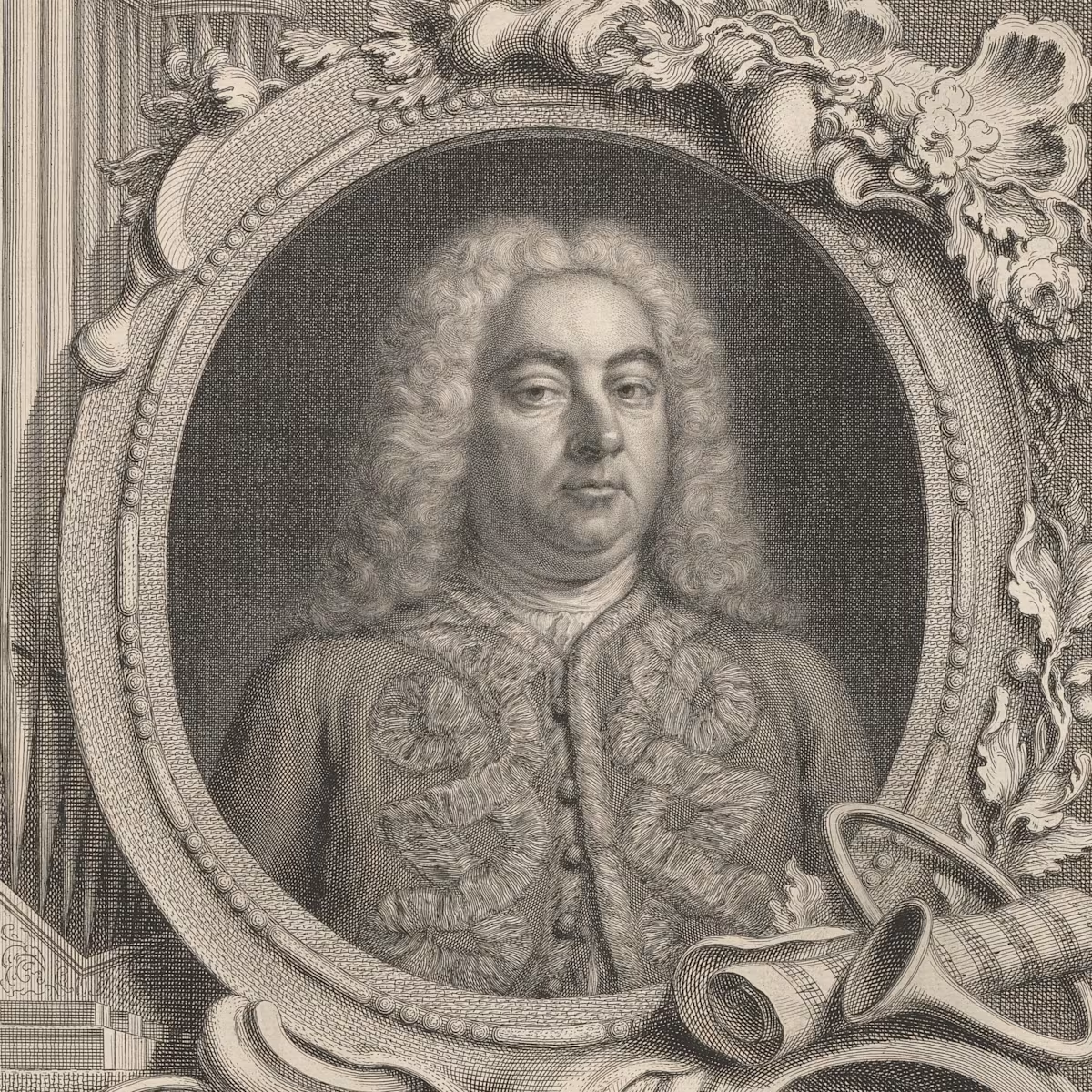
Few works in Western music have proved as adaptable as George Frideric Handel’s Messiah. Composed in just twenty-four days in the late summer of 1741, it has acquired so many traditions that it is easy to forget how readily its creator changed it. ‘Handel didn’t draft,’ conductor Laurence Cummings told me. ‘He thought in ink.’ That decisiveness did not prevent him from having second thoughts when a different singer or a new occasion called for them.
The Dublin premiere on 13 April 1742 was a civic sensation. To make room in the Fishamble Street music hall, gentlemen were asked to leave their swords at home and ladies to dispense with hooped skirts. Susannah Cibber’s singing of ‘He was despised’ prompted the celebrated, if apocryphal, response from the clergyman Patrick Delany: ‘Woman, for this be all thy sins forgiven thee!’ Whatever was actually said, the story captures the intimacy of a work whose public grandeur begins with individual voices.
Its charitable purpose mattered, too. The premiere supported hospitals and relief for imprisoned debtors; later, Handel’s annual benefit performances for London’s Foundling Hospital, beginning in 1750, helped establish Messiah in British musical life. The association between this score and practical generosity has proved almost as durable as its Christmas-season popularity. Neither requires a performance on a monumental scale.
Charles Jennens’s libretto is part of the explanation. Assembling passages from scripture, he offered neither a conventional plot nor a cast of named characters but a sequence of prophecies, reflections and declarations of faith. Handel supplies the human encounters: a voice offering comfort, a crowd rejoicing, another voice confronting rejection and grief. The emotional connections are immediate even when the theology asks more of the listener.
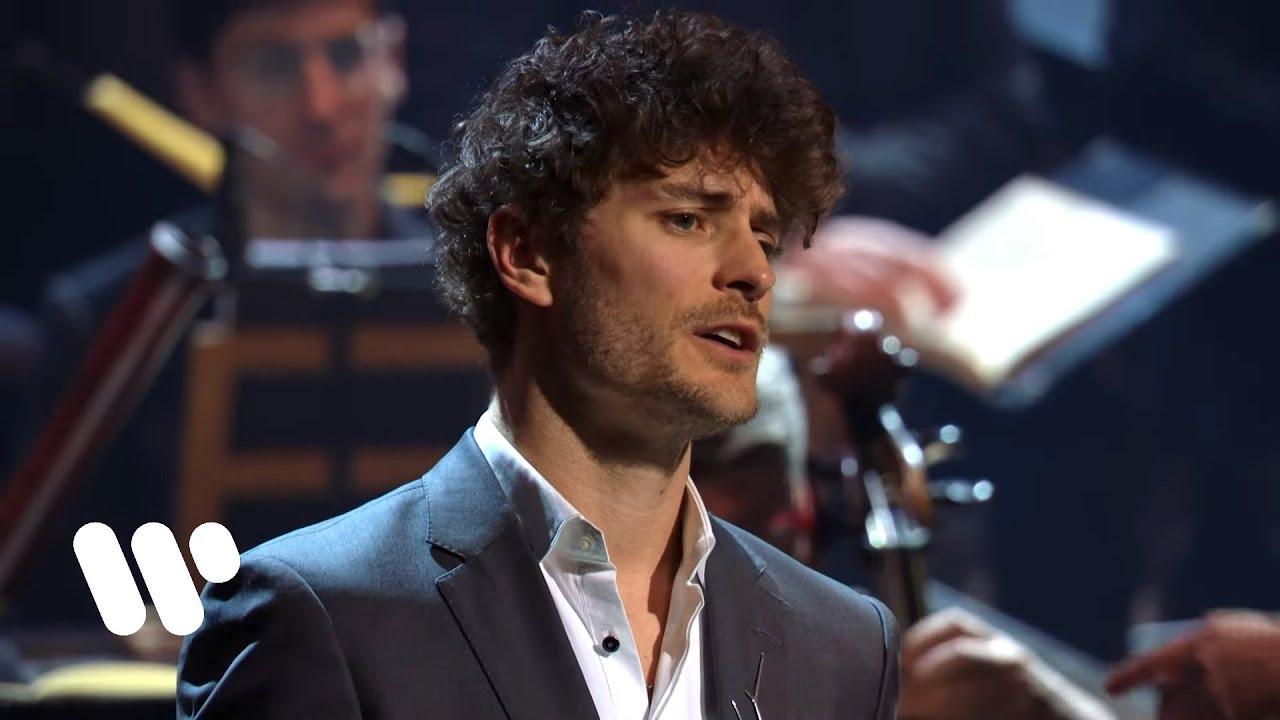 ▶
Jakub Józef Orliński, joined by Laurence Equilbey and the Insula Orchestra, performs ‘He was despised’ from Handel’s Messiah, filmed at the Festival de Pâques Aix-en-Provence, April 2024
The instrumental music is equally eloquent. The overture’s dotted rhythms establish a grave public manner; the gently rocking Pifa opens a space for the shepherds’ night watch before the angels arrive. In ‘The trumpet shall sound’, the instrument is a protagonist, its brilliance answering the bass’s promise of resurrection.
Handel repeatedly revised the score between its first performances and his death in 1759, reshaping arias for particular singers and responding to the resources available. There is no single version that settles every question of how Messiah should go. Choosing the vocal disposition, the ornaments, the balance of chorus and orchestra, and even which form of an aria to perform, brings the musicians into the argument.
Later generations made their own interventions. Mozart’s arrangement added woodwind colours for a different musical world; nineteenth-century festivals gathered hundreds, sometimes thousands, of singers. The historically informed performance movement restored an appetite for leaner textures, more pointed rhythms and the distinctive speech of old instruments. Christopher Hogwood’s 1980 recording with Academy of Ancient Music, with Dame Emma Kirkby among its soloists, helped a wide audience hear those possibilities.
‘Jennens’s libretto is genius,’ Kirkby told me in an interview for Continuo Connect. ‘Numinous, humane, and far broader than religious zeal. It tells a deeply moving human story.’ The variety of period-instrument performances this season suggests that musicians are still finding different ways to tell it.
Pifa (‘Pastoral Symphony’) from Handel’s Messiah, performed by Dunedin Consort & John Butt
The run-up to Christmas begins with The Harmonious Society of Tickle-Fiddle Gentlemen joins the Lay Clerks and Girls of Canterbury Cathedral on 21 November. David Newsholme conducts, with Dame Sarah Connolly among the soloists. Manchester Baroque and Manchester Cathedral Choir follow on 28 November, conducted by Christopher Stokes and led by violinist Pauline Nobes. Both place specialist instrumental playing alongside a cathedral’s own choral tradition.
In Northern Ireland, Matthew Owens directs the Ulster Consort and Players at Newry Cathedral on 27 November and Fisherwick Presbyterian Church, Belfast, on 28 November, with small vocal forces and period instruments. The different buildings will bring their own balance of intimacy and resonance to the score.
Dame Emma Kirkby sings ‘Thou art gone up on high’ from Handel's Messiah | Academy of Ancient Music, Christopher Hogwood
London offers several contrasting encounters. Temple Church Choir and the period instrumentalists of Temple Players perform on 3 December, directed by Thomas Allery, with Fflur Wyn, Lea Shaw, Nicholas Mulroy and Henry Waddington. Harry Christophers and The Sixteen bring the work to St Martin-in-the-Fields on 10 December, with Hilary Cronin, Helen Charlston, Rob Murray and Matthew Brook. Then Bach Collegium Japan, conducted by Masato Suzuki, visits the Barbican on 15 December: a reminder of how widely this once distinctly British seasonal custom now travels.
There is plenty to hear beyond the capital. The Musical & Amicable Society performs at Southwell Minster on 8 December, with the Minster Chorale and students from the Minster School under Jonathan Allsopp. Jack Gonzalez-Harding directs the Mayfield Consort and The Baroque Collective at St Dunstan’s, Mayfield, on 19 December. Fiori Musicali’s Northampton Cathedral performance on 22 December, conducted by Penelope Rapson, takes the season almost to Christmas itself.
Small forces offer their own rewards. Eboracum Baroque’s candlelit performance at Great St Mary’s, Cambridge, on 12 December, directed by Chris Parsons, uses just nine singers for solos and choruses. With so few voices, the transfer from private utterance to collective response becomes especially audible; the chorus’s intricate lines also demand the agility of chamber music.
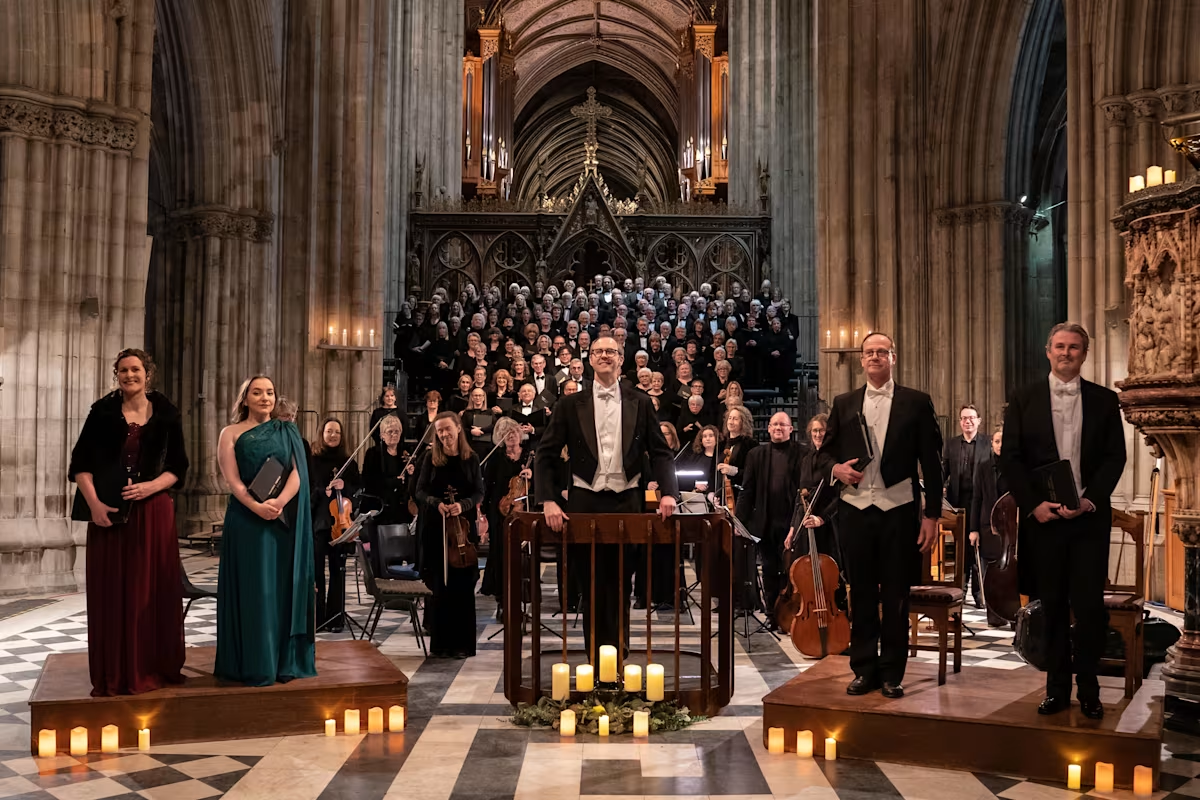
Period instruments can equally make rewarding partners for a substantial amateur chorus. Baroque in the North joins the 90-strong Salford Choral Society at Manchester’s Royal Northern College of Music on 12 December, under Tom Newall. On the same evening, Worcester Festival Choral Society and Meridian Sinfonia’s Baroque orchestra perform in Worcester Cathedral, conducted by Samuel Hudson. The latter is a benefit concert for local children’s causes and introduces an opportunity for local secondary-school students and teachers to participate: a nod to the work’s charitable history.
The Orchestra of the Age of Enlightenment joins Saffron Walden Choral Society at Saffron Hall on 12 December [sold out], conducted by Quintin Beer, adding another meeting of specialist instrumentalists and local choral commitment. Ralph Allwood conducts the Brandenburg Baroque Soloists and a professional chamber choir at Guildford Cathedral on 16 December, where the accompaniment is also on period instruments.
In Scotland, Dunedin Consort performs at The Queen’s Hall, Edinburgh, on 16 December and Glasgow Royal Concert Hall’s New Auditorium on 17 December. Violinist Matthew Truscott directs a small orchestra and twelve singers, with Rowan Pierce, Anita Monserrat, Ed Lyon and Marcus Farnsworth taking the solos. The Glasgow performance includes BSL interpretation by Paul Whittaker. With soloists emerging from the chorus, the approach makes the relationship between individual and collective voices central to the performance.
For a more theatrical approach, Wild Arts brings its dramatisation to Trinity College Chapel, Cambridge, on 17 December. Eight singers perform from memory, with staging devised by Tom Morris and a period-instrument ensemble directed by Orlando Jopling. Movement makes relationships visible in a piece that usually leaves them to our imagination. It is an intriguing response to the absence of named characters: the singers must discover who is speaking, and to whom.
The same production also travels to Malvern Theatres on 28 November, Layer Marney Tower on 29 November [sold out] and Smith Square Hall, London, on 4 December, before visiting Chichester Cathedral on 14 December, Chelmsford Cathedral on 15 December, Trinity College Chapel Cambridge on 17 December and St Edmundsbury Cathedral, Bury St Edmunds, on 18 December. A production built around the singers’ movement will meet a different set of possibilities in each space.
On 18 December, Peter Whelan and the Irish Baroque Orchestra present the 1742 Dublin Messiah at Wigmore Hall. Here the invitation is to reconsider the work through the circumstances of its first performance. The Hanover Band and Chorus, directed by Robert Howarth at Kings Place on 21 December, offer another London opportunity to hear the score on period instruments.
‘For unto us a child is born’ performed by The Sixteen & Harry Christophers
And Messiah need not end with the Christmas decorations. Baroque in the North returns to the Royal Northern College of Music with St George’s Singers on 20 March 2027, conducted by Neil Taylor. The spring date brings the music closer to the season of its Dublin premiere, and gives its Passion and Resurrection texts a different place in the calendar.
What connects these performances is the scope for discovery within music we think we know. A chorus heard with nine voices changes our attention; a natural trumpet changes the balance; a singer’s inflection can make a familiar sentence catch us unawares. Nearly three centuries after the work’s world premiere, performers of Handel’s Messiah are still exploring all the possibilities.
Explore period-instrument performances of Handel's most famous oratorio in venues up and down the UK this festive season – all listed on Continuo Connect.
Share this
Keep reading
The Present State of England (1692)
There are many musicians whose PhD allows them to prefix their name with Dr. Few though have juggled the two professions of medical doctor and high quality musician and impresario as expertly at Dr Stephen Coles.
Playlist: Musical Scandals
This playlist features music by Handel, Bach, Gesualdo and more, from 16th- to 18th-century composers and performers whose lives were touched by controversy, including public affairs, imprisonment and murder.

Singing from within: Paul McCreesh on Gabrieli Roar
Conductor and Artistic Director Paul McCreesh talks to Simon Mundy about Gabrieli Roar – the youth choral project that puts thousands of young singers on stage alongside professional period-instrument musicians.