
Spotlight
The Dutch touch: Ronald Brautigam
Share this

FIRST PUBLISHED 13 JUN 2026
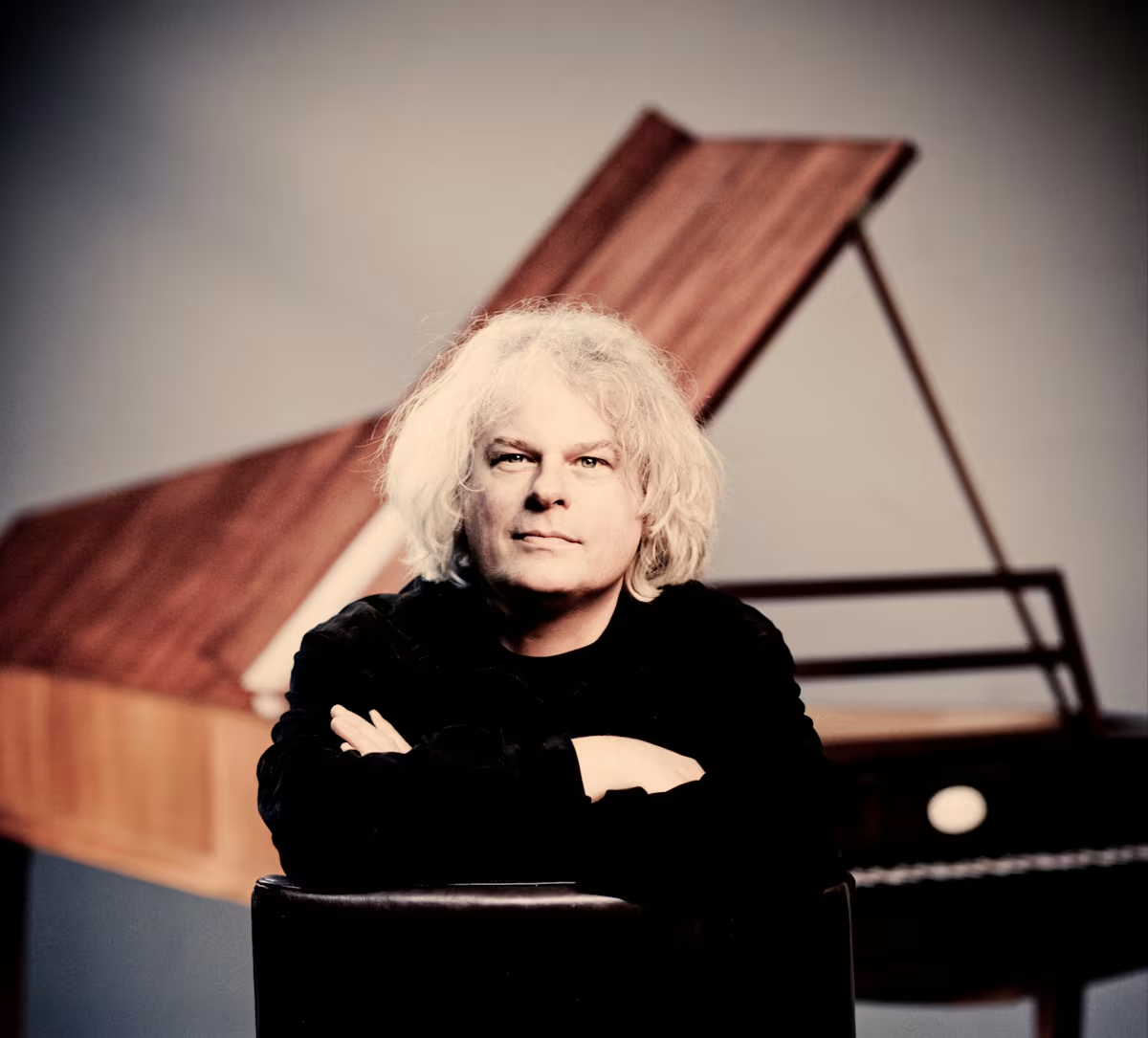
A leading pianist of his generation, Ronald Brautigam is one of the few to perform at the highest level on modern as well as period instruments. A student of the legendary Rudolf Serkin, he has, over the years, established himself as an authority on the Classical and early Romantic composers, with an acclaimed discography on the BIS label that includes complete cycles of works by Haydn, Mozart and Beethoven as well as recordings of solo works and concertos by Kraus, Weber and Mendelssohn.
Brautigam has performed with leading orchestras across the world – from the Amsterdam Concertgebouworkest to the Sydney Symphony Orchestra – as well as the foremost period ensembles. In 2009 he began what has proved to be a highly successful collaboration with the Kölner Akademie, and its conductor, Michael Alexander Willens, resulting in acclaimed recordings of the complete piano concertos of Mozart (11 discs), Beethoven, Mendelssohn and Weber. Current recording projects include the piano concertos by the Dutch-German composer Johann Wilhelm Wilms (1772 – 1847).
𝄞 Why not accompany your reading with a Mozart playlist specially curated by Ronald Brautigam?
What is your earliest musical memory?
My dad was a very talented amateur pianist, so from my very early years, I was exposed to the sound of the piano. I was told that as a four-year-old, I climbed onto the piano stool and started with one finger, picking out a melody my dad had just been playing.
What non-musical hobbies or interests do you have?
I love reading and solving (cryptic) crosswords, The Guardian’s being one of my favourites. And I love nature: the holidays in the Highlands with my Scottish wife are a yearly highlight.
What is your idea of perfect happiness?
Being able to do what I love doing most: making music. I often realise, during an orchestra rehearsal, how lucky I am to be able to spend my life surrounded by beauty.
What is your superpower or superhero ability?
If I have one, it would be the discipline to make sure that every concert is properly prepared, the discipline to put in the extra hour if needed.
If you could meet anyone from the past, who would it be?
It would be interesting to meet Beethoven, but I somehow don't think he'd be interested in meeting me. I'm sure that in Haydn's company, a pleasant evening could be spent.
Who is your favourite composer, and why?
I find it very hard to choose between Haydn, Mozart, Beethoven and Schubert. My favourite composer is usually the one whose music stands in front of me. I feel more at home with the Viennese classical style than any other.
Can you describe the feeling of truly understanding a complex piece of music?
Artur Schnabel once said: 'I am attracted only to music which I consider to be better than it can be performed. Therefore I feel (rightly or wrongly) that unless a piece of music presents a problem to me, a never-ending problem, it doesn't interest me too much.'
I feel very much the same: I am the proverbial donkey with a carrot dangling in front. We aim for understanding, but the truth lies just out of reach.
Describe a particularly challenging or rewarding moment in your musical journey.
The most rewarding moment was certainly getting my first 5-octave fortepiano from Paul McNulty and the wonderful learning curve afterwards.
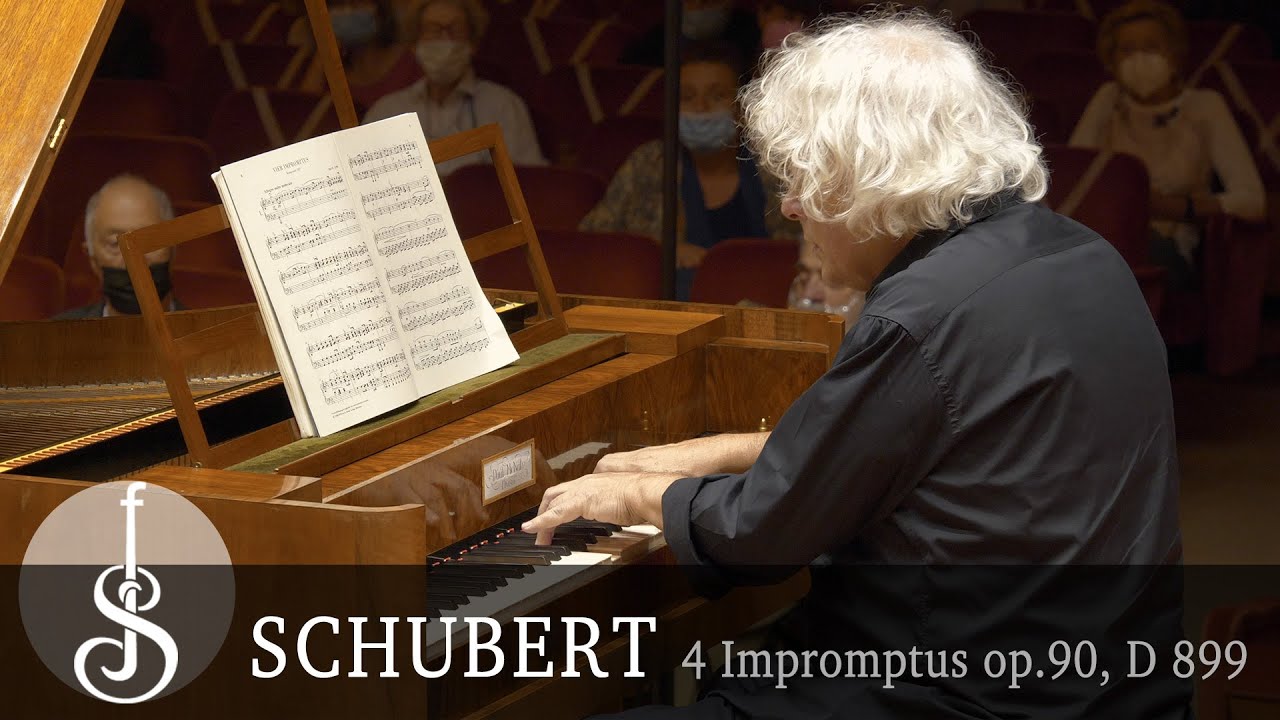 ▶
▶Ronald Brautigam | Schubert Four Impromptus, D899 at Konzertverein, Bozen (Bolzano), Italy | Audio & Video by Simon Lanz (Incanto Recordings)
How has classical music influenced your life outside of performing?
In my student days, I always had this dream of becoming a rock musician. I played in a band and spent all my money on organs and synthesizers. But then, more and more invitations for classical concerts were coming my way, so in the end I dropped the whole idea of a rock band and became a full-time classical pianist. Looking at the older generation of rock musicians, I'd say that classical music has kept me fit and healthy, and perhaps even alive!
Would you like to put the spotlight on a teacher, mentor or ensemble that has had a significant influence on your journey so far?
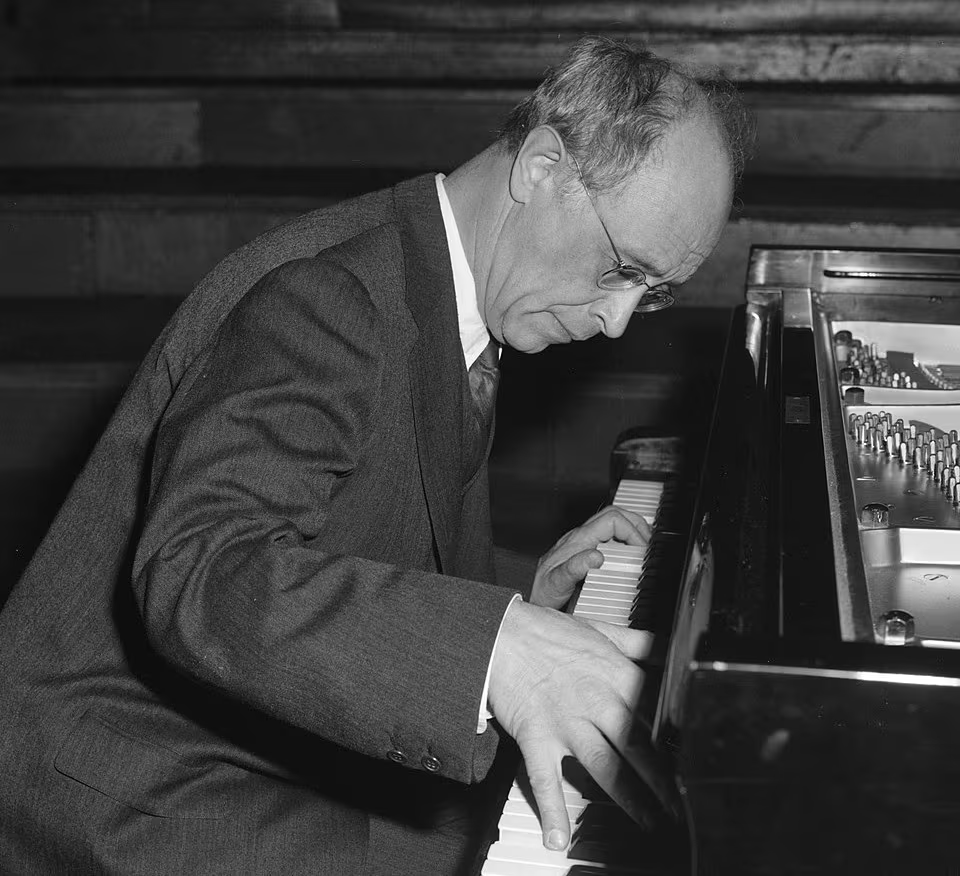
I had the opportunity to work with Rudolf Serkin in the early 1980s. I was a rather unbridled pianist in those years – the more notes the merrier – and Serkin's honest and modest approach to music taught me proper respect for the composer. Of course this didn't happen overnight – it was a very slow and gradual process, but in the end, it is no coincidence that some years after his lessons, my interest in period pianos began.
What will someone living in future centuries think about ‘Early Music’?
Early Music has come a long way since the first pioneers began the slow process of sandblasting away layers of 19th-century 'romantic grime'. Early Music is no longer seen as the playground for a small group of insiders: most modern orchestras have adopted a 'historically informed' way of playing older music, and the barrier between 'modern' and 'period' playing has become less pronounced. Of course, there is still a lot of work to be done, but the fact that more and more young musicians have taken an interest in playing period instruments is a very hopeful sign.
How did you start performing on historical pianos? What, for you, is distinctive or compelling about historically-informed performance and the fortepiano as an instrument?
It was in the '80s, after a rather unhappy Mozart rehearsal with a modern orchestra that I decided something had to give. By chance, I discovered Paul McNulty's workshop in Amsterdam on one of my walks, and saw this beautiful instrument through the window. Having played on it for five minutes, I realised that from now on this was how I wanted my Mozart to sound. The rest is history.
Ronald Brautigam with Kölner Akademie & Michael Alexander Willens | Mozart: Piano Concerto No. 9 in E-flat, K271 Jeunehomme – I: Allegro
You perform extensively on both modern and period instruments. Does one inform the other for you?
Since discovering the fortepiano, my playing on modern instruments has definitely changed. For earlier music, I find that a lighter touch on a modern instrument works equally well: if you treat a Steinway like a Walter fortepiano, the result is quite remarkable. But, in the end, it will always be a translation from one instrument to another.
You recorded the complete Mozart Piano Concertos between 2010 and 2016. Could you share some special moments from this project, and describe your relationship with these works?
Long before I started playing fortepiano, Mozart's Piano Concertos were among my favourites so it was an absolute delight to be able to record them all. But, as everyone who has been there knows, it can be rather challenging to record with a greater group of musicians. Things have to be played over and over again, and as a soloist it's hard to tell which recording take will be used in the end. You have to make sure that whatever you play is up to standard and that requires a lot of concentration. But if I had the chance, I'd happily do it all over again!
How does your approach differ when preparing for a recording compared to a live performance?
Recording alone, I try to play as few takes as possible to keep the feel of a live performance. Having said that, when recording something like Beethoven's Hammerklavier Sonata, I am very grateful for all available editing possibilities.
Ronald Brautigam | Beethoven: Piano Sonata No. 29 in B flat, Op. 106 Hammerklavier – III. Adagio sostenuto
You will perform Mozart’s Piano Concertos Nos 6 & 8 with The Mozartists in June at Cadogan Hall. What is particularly exciting or important to you about these works 250 years on?
I love these early Mozart Concertos where he is finding his own characteristic style. Isn't it amazing that these works by a 20-year old composer are as fresh now as when they were written?! They are less often performed than the later, grander concertos, so I am very pleased that we have a chance to present them side by side at Cadogan Hall.
Ronald Brautigam with Kölner Akademie & Michael Alexander Willens | Mozart: Piano Concerto No. 8 in C, K246 Lützow – III: Rondo. Tempo di menuetto
Beyond the keyboard, you collaborate and record widely with other musicians. What place does chamber music hold in your career?
Many composers wrote their best works for smaller ensembles. It would seem such a shame to stick to the solo repertoire and miss out on these musical gems. And what is better than making music with good friends?
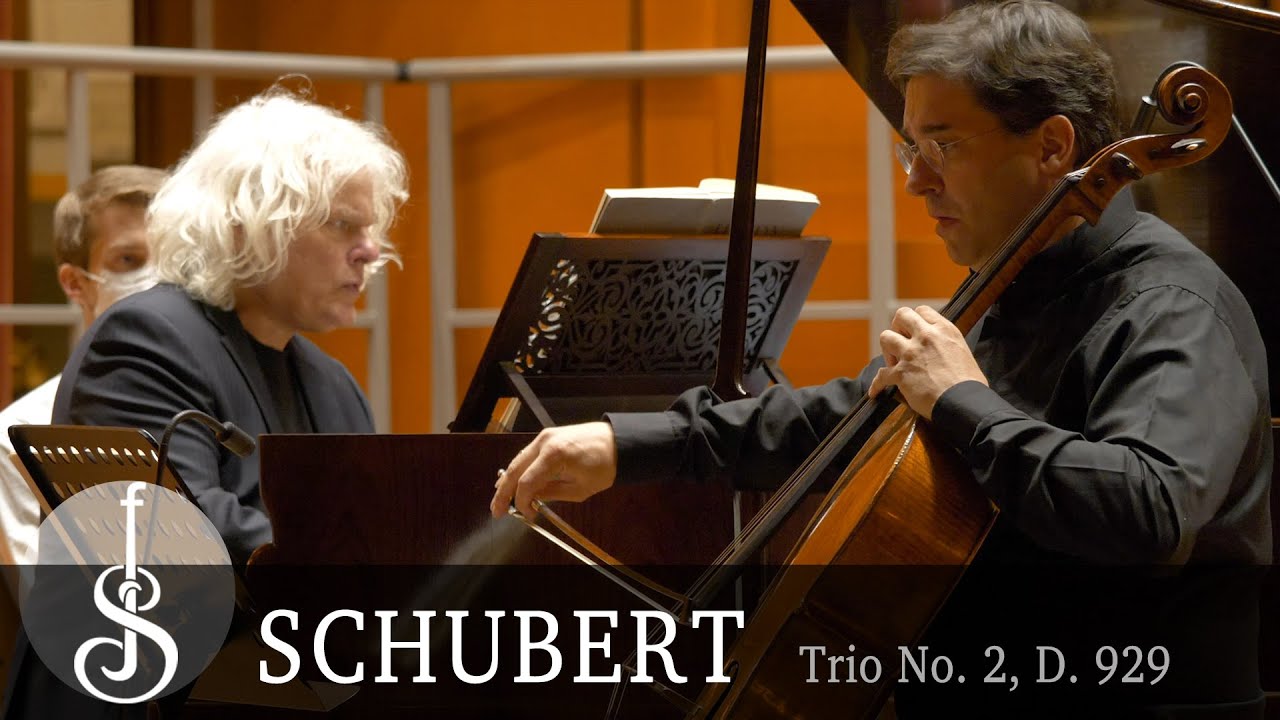 ▶
▶Esther Hoppe, Christian Poltéra & Ronald Brautigam | Schubert Piano Trio No. 2 in E-flat, D929 at Konzertverein, Bozen (Bolzano), Italy | Audio & Video by Simon Lanz (Incanto Recordings)
Alongside your performing career, you have undertaken editorial work on music by Beethoven and Johann Wilhelm Wilms. Can you tell us more about this side of your work?
Both the reconstruction of the early Piano Concerto in E flat, WoO4 by Beethoven and the editing of five Wilms concertos were the result of CD plans. I recorded the Beethoven Concertos between 2005 and 2008 with Andrew Parrott and the Norrköping Symphony Orchestra where we needed a score for WoO4 (that only exists in a piano solo version). It turned out to be very hard to find anyone willing to take this on, so in the end, I decided to make my own reconstruction of the score and record it.
For the recording of the five Wilms concertos, there were only handwritten orchestra parts available so I had to put these together into a score and at the same time edit the material. I enjoy this kind of work as much as performing, and am currently working on concertos of 'glorious' John Cramer.
Ronald Brautigam with Kölner Akademie & Michael Alexander Willens | Johann Wilhelm Wilms: Piano Concerto No. 1 in E, Op. 3 – I. Allegro
Until recently, you were also Professor at the Musikhochschule Basel. What role does teaching play in your artistic life?
I did it for 14 years with great pleasure. I worked with modern piano students and had the opportunity of working with them on period instruments, too. And I am pleased to say that some of them have continued playing fortepiano alongside their modern activities.
Is there a project you are particularly excited about in the coming months?
I'm very much looking forward to 2027, the bicentenary of Beethoven's death. Among the various projects is a series of three recitals at Amsterdam's Concertgebouw, highlighting the three distinctive periods in his oeuvre. Together with the Heidelberger Orchestra, I will perform the five piano concertos on fortepiano, and there will be many more Beethoven-related concerts. And of course in 2028 it will be Schubert's turn. And last but not least, the collaboration with Ian Page and The Mozartists is one I am particularly looking forward to!
Ronald Brautigam will perform Mozart's Piano Concertos No. 6 & No. 8 with Ian Page and The Mozartists on 30 June 2026 at the Cadogan Hall in London.
Share this
Keep reading
JS Bach, and a cabinet of curiosities: Jorge Jiménez
Violinist, director and composer Jorge Jiménez talks to Simon Mundy about his latest album Curiosa: Lost & Found Tunes, his new Bach weekend in Ipswich, and his freelance career balancing life in rural Essex with regular work in Spain.
The Best of Rachel Podger
This playlist celebrates 'the unsurpassed British glory of the baroque violin' (The Times) - that is of course Rachel Podger.
From kitchen to cathedral: the accidental art of festival-making
Rachel Podger, a Continuo Foundation Patron, has spent two decades creating a festival as open-hearted and inquisitive as her own music-making. She tells Ashutosh Khandekar how the Brecon Baroque Festival evolved almost by chance.