
Spotlight
In conversation: Kiele Sacco
Share this

FIRST PUBLISHED 11 JUL 2026
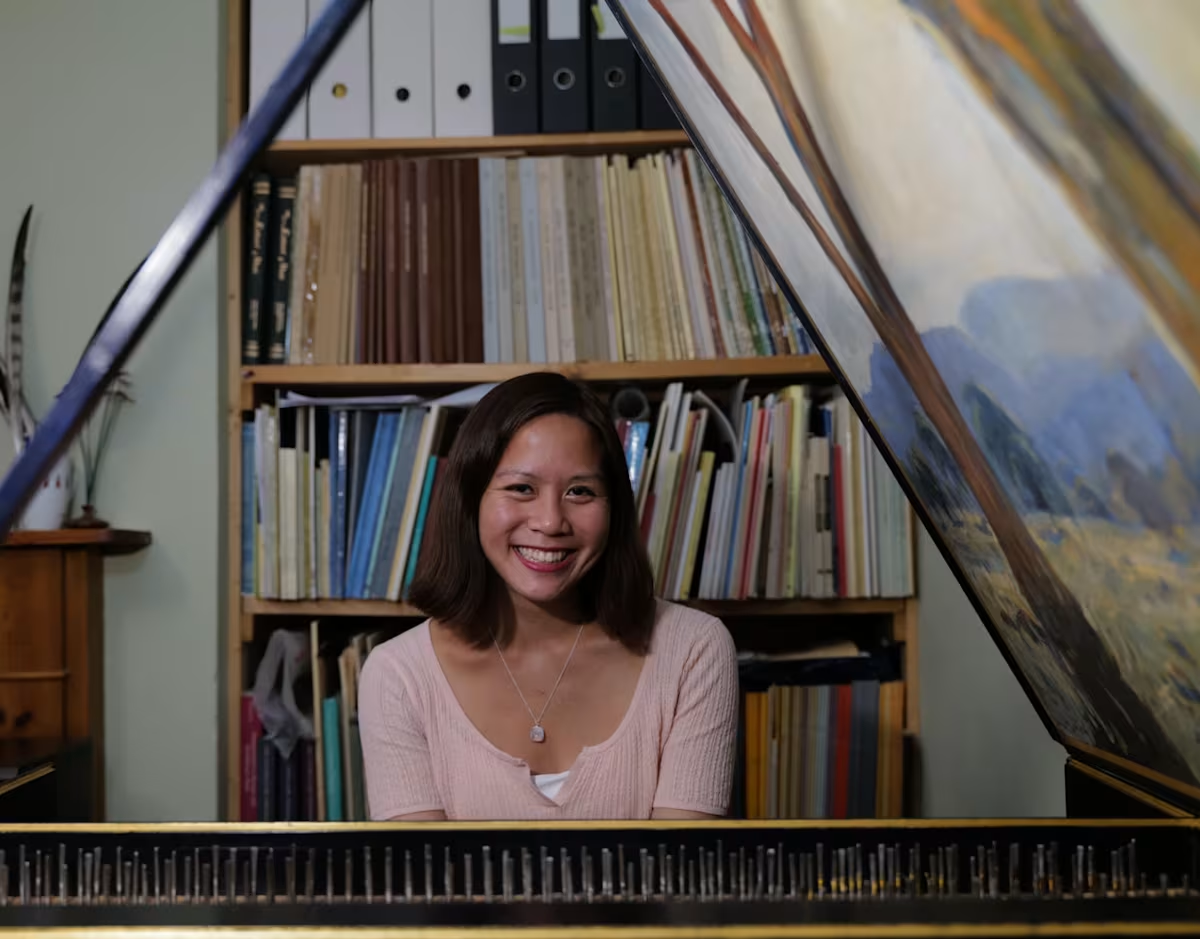
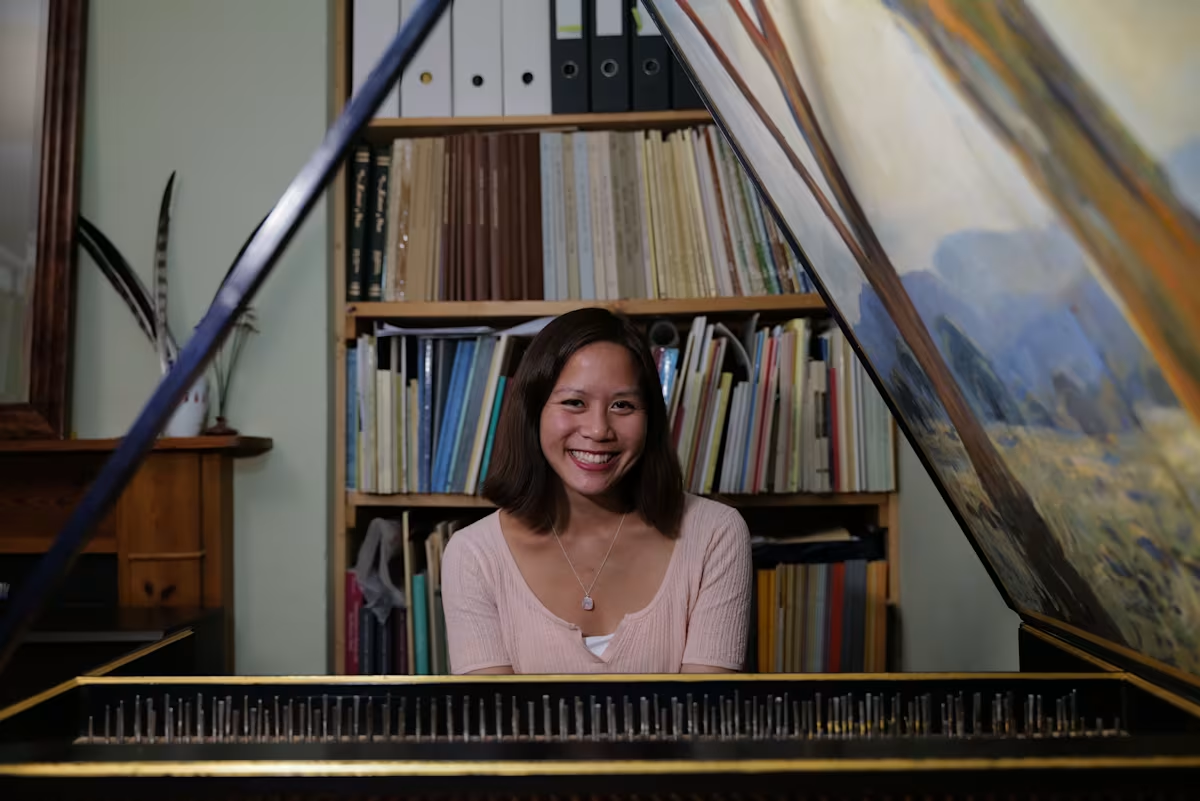
Kiele (Ki) Sacco is an American harpsichordist and a Master of Music graduate of the Guildhall School of Music and Drama, where she studied under James Johnstone and Nicholas Parle. Based in London, she is a founding member of two historical performance groups: The Great Bear Ensemble and Duo Pathopoeia. She is currently a sessional lecturer in harpsichord at Morley College. Recent performances include appearances at St George’s Hanover Square, Danny House, the 5th edition of Prangins Baroque, The Music Summer School and Festival, Benslow Music, The London International Festival of Early Music, and The Dartington Summer School. Ki has collaborated with renowned musicians such as Steven Devine, Bojan Čičić, Emma Kirkby, John Butt, Rachel Podger, and Nigel North. Alongside her performing career, she is passionate about early keyboard tuning, historical temperaments, and instrument maintenance. In her free time, Ki is often outside in nature, birdwatching and doing photography.
Growing up in the USA, was there a healthy provision of Early Music in your area, or was it something you were drawn to later – have you always played historical instruments?
I came to historical keyboards relatively late. Although there was an active Early Music community where I grew up in Connecticut, it wasn't until 2016 that I really discovered historical keyboards for myself. That year I attended an 'early keyboard petting zoo' in Hartford, where visitors could try a variety of historical keyboard instruments. I was immediately captivated by how different each one sounded and felt, from the bright clarity of the virginals to the richness of the harpsichord. Until then, I had mainly played the piano, and I hadn't realised there could be so many distinct keyboard voices. I had already fallen in love with the expressive beauty of 17th-century vocal music, particularly Purcell, so discovering the instruments that originally accompanied that repertoire felt like a natural next step. What began as curiosity quickly became an obsession, and before long I found myself immersed in the world of historical performance.
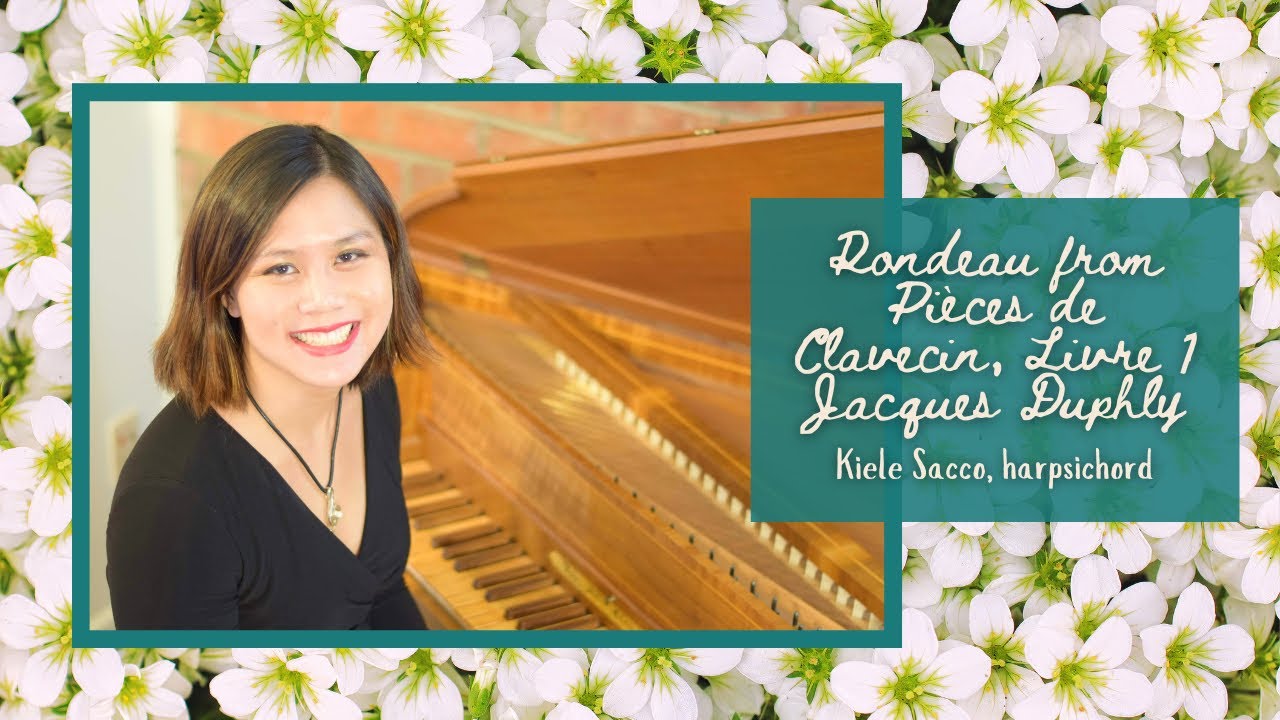 ▶
▶Duphly: 'Rondeau' from Pièces de Clavecin, Livre 1 | Kiele Sacco
What is your earliest musical memory?
Attending Kindermusik classes as a young child... I still remember how interactive they were – we sang, played recorders and glockenspiels, and learned through games and movement. Music never felt like a chore; it was something to explore and enjoy. The moment that has stayed with me most came at the end of each class. As we left, Mrs Robins would sing a little musical farewell using each child's name, and we'd sing back, 'Goodbye, Mrs Robins.' It was such a simple ritual, but it taught me from a very young age that music is a form of communication – a conversation rather than a performance.
Would you like to put the spotlight on a teacher, mentor, or ensemble that has had a significant influence on your journey so far, and why?
Although I've been fortunate to study with many wonderful teachers throughout my career, the person who first drew me to harpsichord was Mark Edwards. My first real immersion in the world of Early Music came at the Oberlin Baroque Performance Institute in 2018. That summer focused on François Couperin and Marc-Antoine Charpentier, and I remember being completely enchanted. Hearing Mark perform Couperin's Sixième ordre was unlike anything I'd experienced before, and seeing Les arts florissants (H487), with its combination of music, dance, and theatre, revealed a richness and elegance that I hadn't encountered before. One moment that has stayed with me ever since is the 'Sarabande en rondeau'. I found the way the music and dance complemented one another completely captivating.
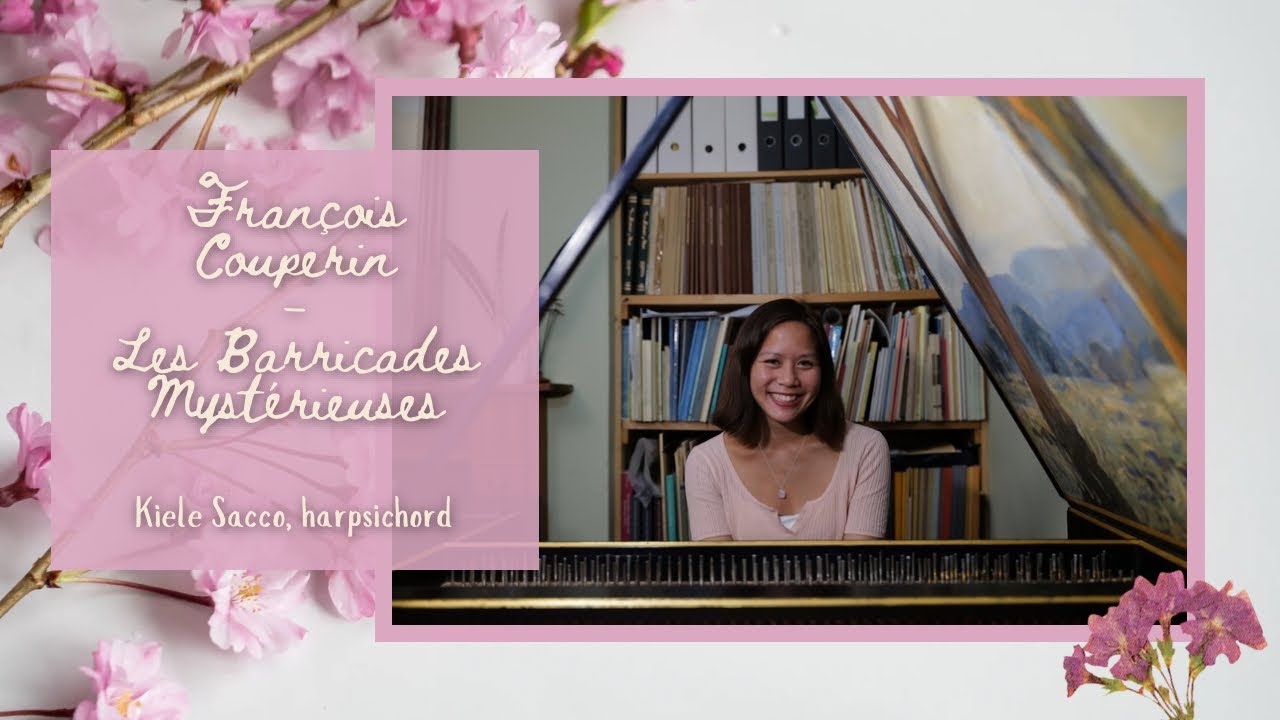 ▶
▶François Couperin: Les Barricades Mystérieuses | Kiele Sacco
During the course, I spoke with Mark about my growing fascination with the harpsichord and the possibility of pursuing it more seriously. That conversation planted a seed. Although I didn't change direction immediately, I found myself increasingly drawn towards Early Music.
Before eventually transferring to Indiana University – with just one semester remaining in my previous degree – I commuted between two universities so that I could study with Elisabeth Wright and immerse myself in chamber music. Elisabeth had an enormous influence on my musical development. She taught me about elegance of touch, colour, and the richness and expressive depth that Early Music offers. More than anything, she encouraged me to listen deeply, to think beyond the notes on the page, and to discover how even the smallest musical gesture can carry meaning. Looking back, it wasn't the most straightforward path, but I wouldn't change it. That summer at Oberlin, followed by my studies with Elisabeth, opened the door to a musical world that has shaped everything I've done since.
You're a founding member of two groups – The Great Bear Ensemble and Duo Pathopoeia. What makes them unique in your eyes?
I think what makes both ensembles unique is that co-founder, Matthew Millkey, and I see performance and research as inseparable. We're both interested in the idea that performing can itself be a way of asking historical questions. Rather than treating sources as fixed authorities, we're interested in what happens when manuscripts, instruments, playing techniques, and performance are allowed to inform one another. That perspective shapes everything we do, from the repertoire we choose to the projects we undertake. In a musical world where the line between Historically Informed Performance and modern performance practice is becoming increasingly blurred, we're committed to maintaining what Bruce Haynes described as the 'radical' ethos of Early Music. Ultimately, we're less interested in recreating the past than in engaging with it. If our performances encourage someone to hear familiar music differently or to ask a new question, then I think they've done their job.
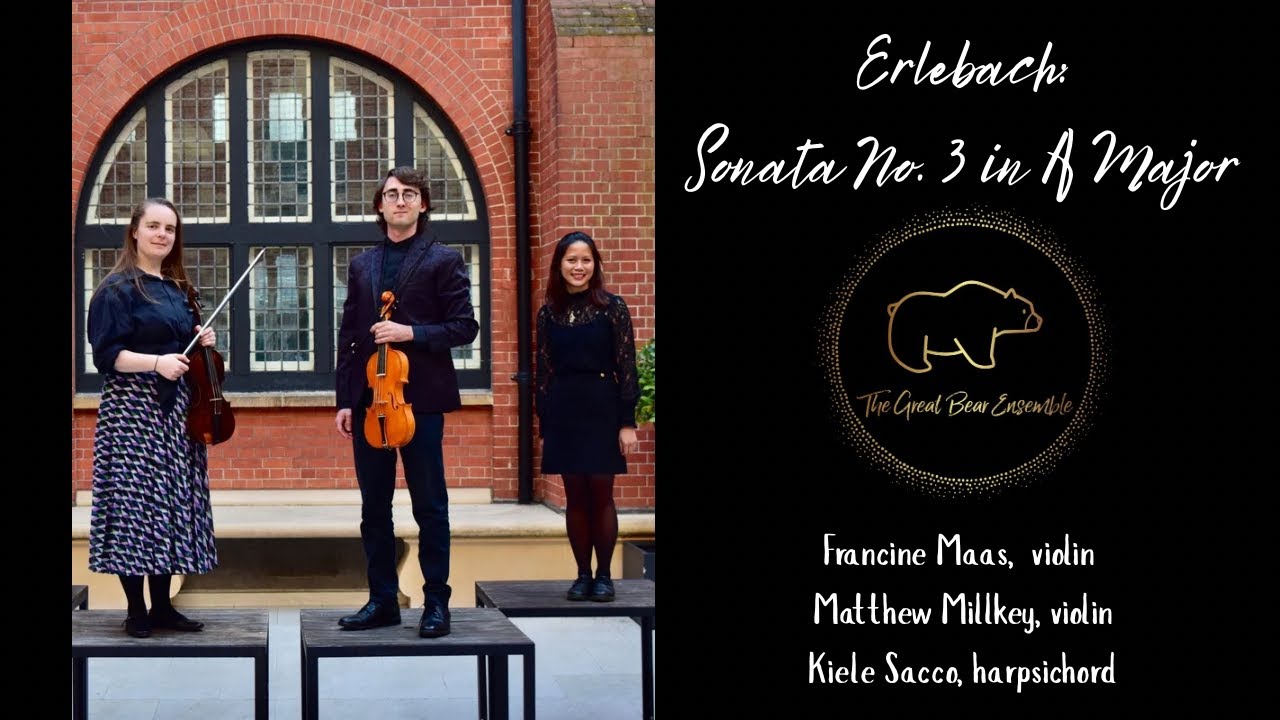 ▶
▶Philipp Heinrich Erlebach: Sonata No. 3 in A | The Great Bear Ensemble
If you had to choose between only performing solo or only performing in ensembles for the rest of your life, what would it be?
I would definitely choose performing in ensembles! Chamber music is one of the main reasons I fell in love with Early Music and continuo. I love the collaborative nature of it – listening, responding, and shaping the music together with other people. Great ensemble playing isn’t about individual players standing out; it's about creating something together that is greater than the sum of its parts.
What's your favourite historical keyboard to play?
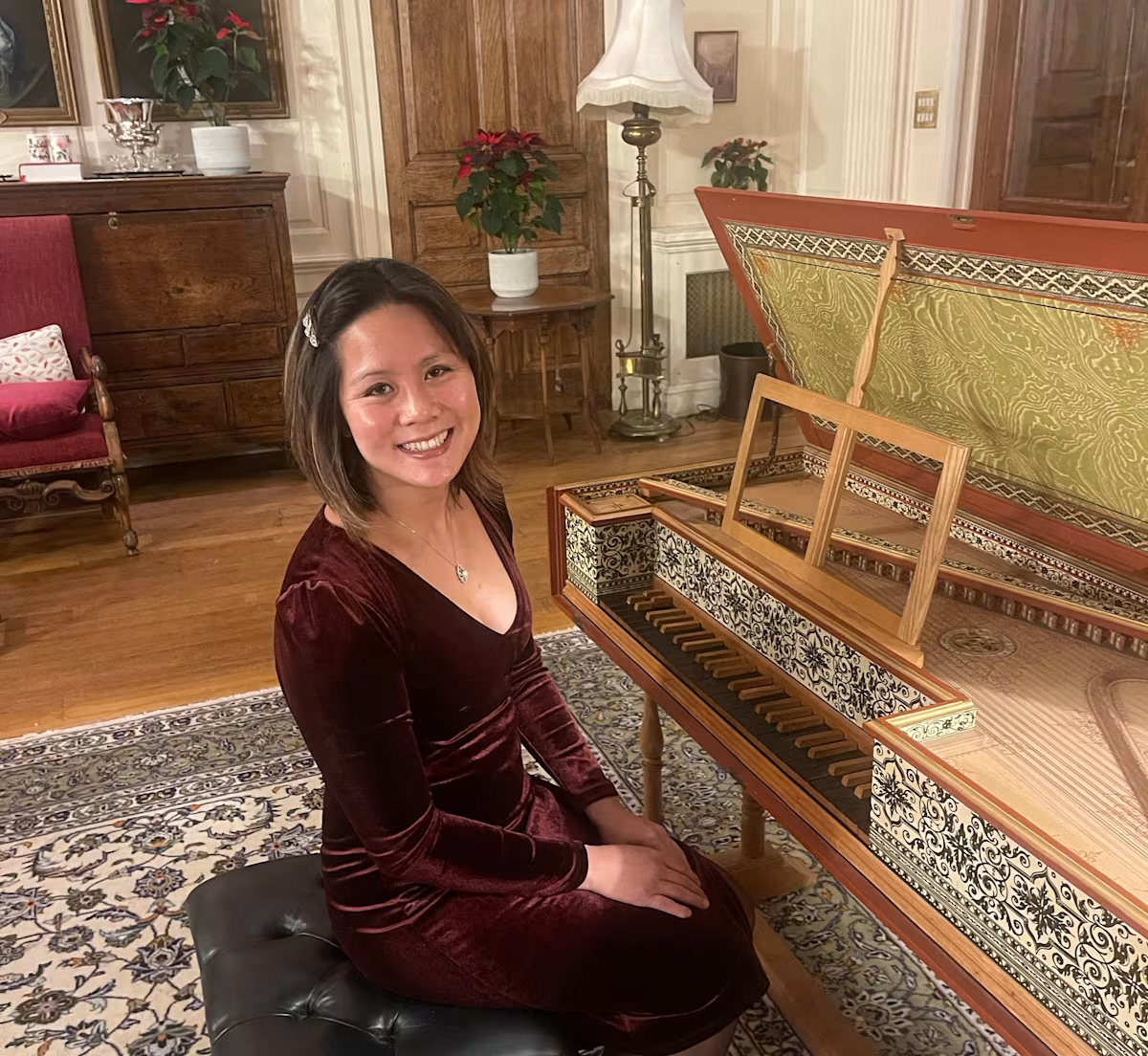
I would probably have to say the virginals, especially mother-and-child instruments. I love their warm, rounded sound, and I've always found mother-and-child virginals fascinating. The idea that the smaller instrument can be stored inside the larger one and then placed on top to be played is just so ingenious. Spinets will always have a special place in my heart too. The first historical keyboard I owned was an English bentside spinet built from a Hubbard kit, so perhaps it's no surprise that I'm drawn to those smaller English instruments. They have such a distinctive warmth of sound, and every one seems to have its own personality.
Can you share any positive experiences from your performances at Danny House?
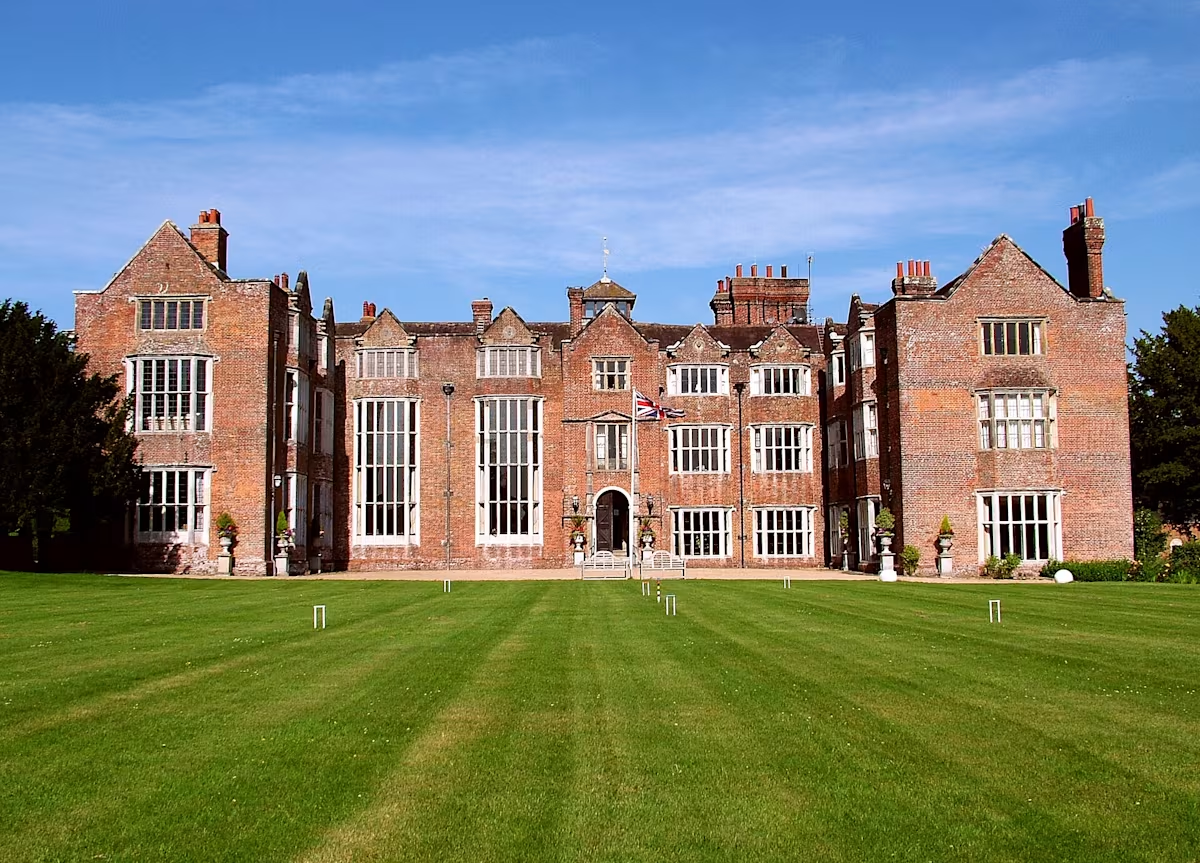
Performing at Danny House is always one of the highlights of my year. They're some of the most rewarding concerts I play. The setting is absolutely beautiful, surrounded by gardens and countryside, and there's such a welcoming atmosphere. Everyone is so friendly and genuinely appreciative to have live music there, which makes it a real pleasure to perform. It's also the perfect place to play the virginals. I'm incredibly fortunate to be able to perform on an instrument kindly loaned to me by my fellow harpsichordist, Asako Ogawa, and it feels completely at home in that setting. There's something rather special about hearing the sound of an English virginals in a historic English house – it creates an atmosphere that's difficult to put into words. I always leave Danny House feeling that I've shared something meaningful, both with the audience and with the place itself.
If you could meet one composer from history, who would it be?
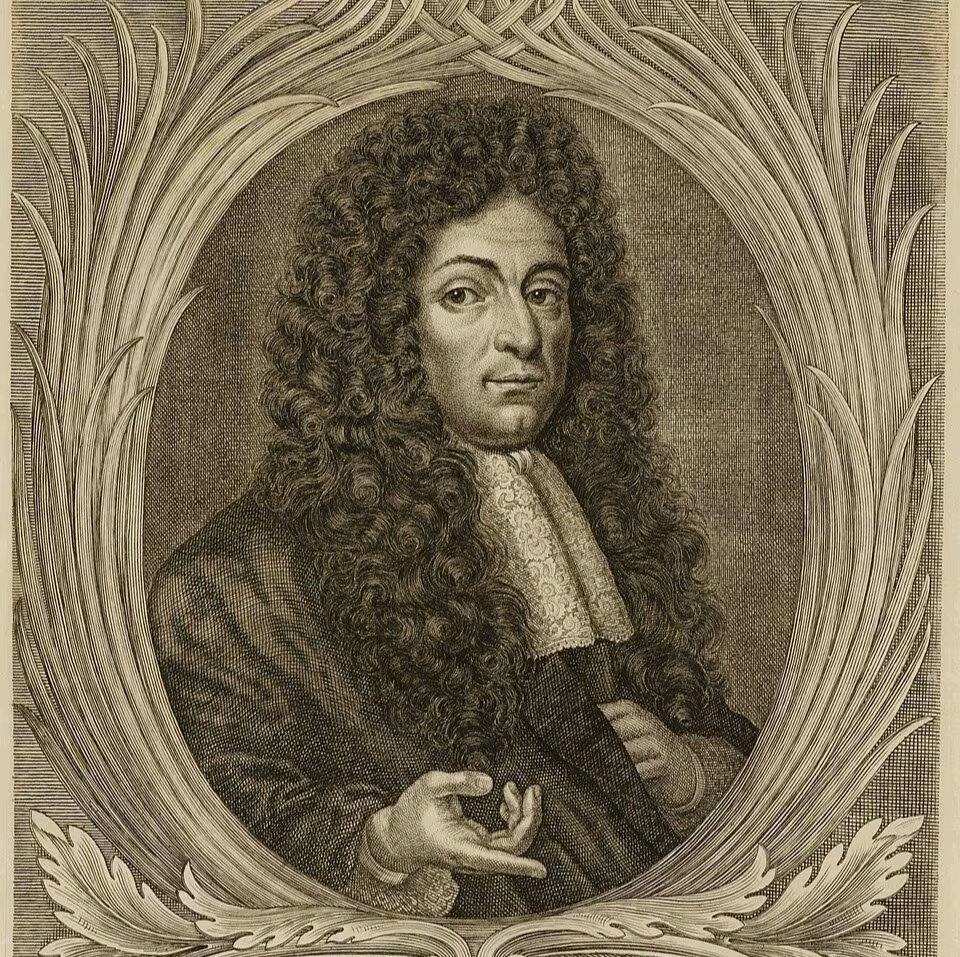
I think I'd choose Johann Adam Reincken. I've always been drawn to his music, especially his keyboard works and Hortus Musicus. There's something about his writing that I find incredibly captivating – it has such imagination, colour, and expressive freedom, and it's music I never tire of returning to. What makes him especially fascinating to me is how much remains unknown. We know he was hugely admired in his own lifetime, yet so much of his music has been lost, and we can only speculate about what his playing and improvisation were really like. I think that's part of what makes him such an intriguing figure.
What will someone living 400 years from now think about 'Early' Music?
I imagine they'll see Historically Informed Performance much as we look back on earlier performance traditions today – as something that was constantly evolving rather than a single, unified movement. Different generations of musicians have always been interested in different questions, and I suspect ours will be no exception.
Perhaps they'll recognise that today's Early Music movement placed particular emphasis on historical instruments, sources, and performance practice, while future generations may find new questions to ask that we haven't even considered yet. I hope they'll see HIP not as a finished project, but as an ongoing conversation – one that continues to evolve as musicians bring fresh perspectives to the music.
Hear Kiele Sacco perform live on Sunday 12 July in Stoke Doyle, Peterborough, and on Friday 17 July in Leeds Minster.
Share this
Keep reading
Tallis: ‘Spem in alium’ – a forty-part motet
A favourite among choral fanatics, Tallis' 'Spem in alium' has a fascinating history and has more recently been used in an unexpected context.
The soundtrack of imagination: David Yardley and Green Dragon Guild of London
Medieval countertenor David Yardley, Artistic Director of Green Dragon Guild of London, discusses Medieval music, Southwark’s layered history, and how imagination and meticulous research meet in performance in our latest podcast.
Handel’s Messiah – the Salisbury connection
There is an oddly persistent local story that a performance of Messiah was given in the chapel room over St Anne’s Gate when Handel stayed in Salisbury in 1739 with his friend James Harris of Malmesbury House in the close.