

Feature
Fiddlers Three – from concept to recording
Share this

BY MARTIN PERKINS | FIRST PUBLISHED 27 JUNE 2026
Martin Perkins is co-director of the Musical & Amicable Society, Head of Historical Performance at Royal Birmingham Conservatoire and a freelance historical keyboard player. In this piece, he traces the development of the ensemble’s latest recording, ‘Fiddlers Three’, exploring the research, repertoire and performance decisions behind the project, supported by Continuo Foundation.
Asked to name one piece of Baroque music for three violins and continuo, you will probably think of Pachelbel. While his Canon in D is a good piece, I’ve always been struck by the disparity between this and a contemporary work which uses a near-identical bass line. Henry Purcell’s Three Parts upon a Ground is dizzyingly inventive: rather than confining himself to just one contrapuntal idea, Purcell uses a huge variety of techniques, from straight motivic imitation, to canons in which the violins enter at different pitches and at different times, giving rise to a plethora of conversations and connections between the instruments. What he manages to achieve ‘academically’ never detracts from the sheer vivacity of the music, neatly packaged as a stylish chaconne.
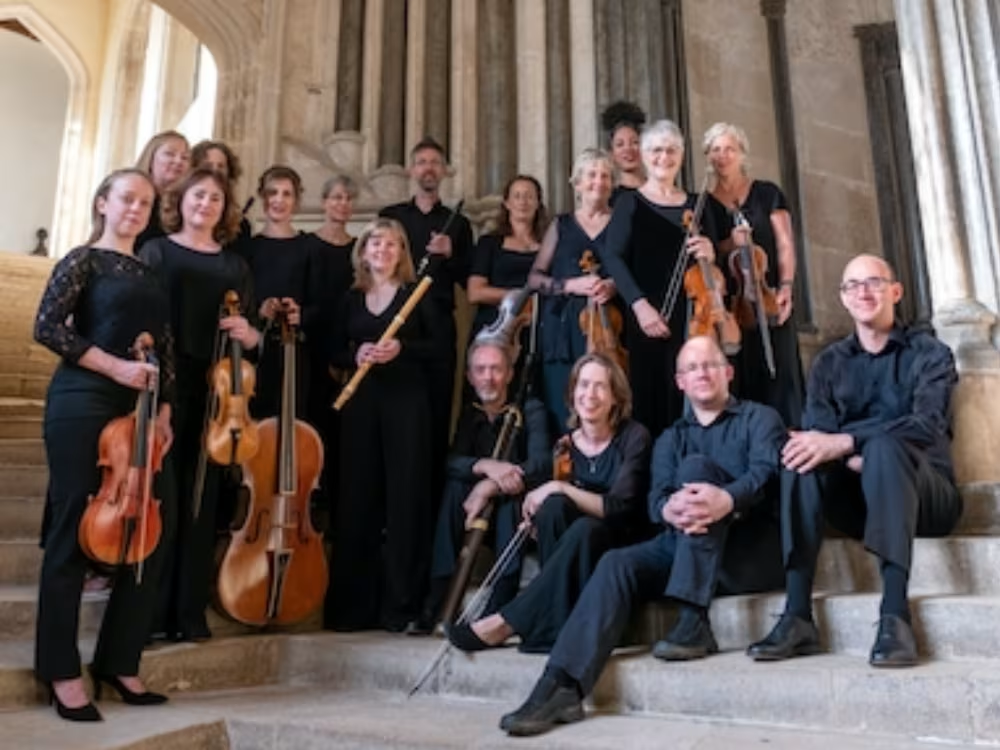
The Musical & Amicable Society has explored music for three violins many times during its 23-year history, often bookending these concerts with the joyous Purcell and the crowd-pleasing Pachelbel. We have refined our programme over the years to include works by composers from Gabrieli to Fux, swapping works in and out as the mood has taken us.
Musical & Amicable Society | Henry Purcell: Three Parts upon a Ground, Z731
It’s easy to assume that there isn’t much more Early Music to ‘discover’ – which hasn’t been transcribed from original sources, never mind performed or recorded. Yet, there are still treasures to be revealed to the persistent. While looking at manuscript music in the remarkable collection relating to the Oxford Music School held at the Bodleian Library, I came across a few works which fitted well with Three Parts upon a Ground, with no other known extant copies. This prompted the inevitable deep dive that many Early Music groups embark upon when putting together a new project which involves unearthing long-forgotten music. While working my way through the extensive research on 17th-century English music by the likes of Andrew Ashbee, Peter Holman and Rebecca Herissone, I started to realise the extent of musical crossovers: of seemingly disparate musicians, musical styles and works coexisting and interconnected. There was considerable overlap of musicians between theatre, court and church in Restoration London, yet at the same time very distinct circumstances of particular venues and contexts which governed aspects such as performance pitch and the configuration of musicians involved.
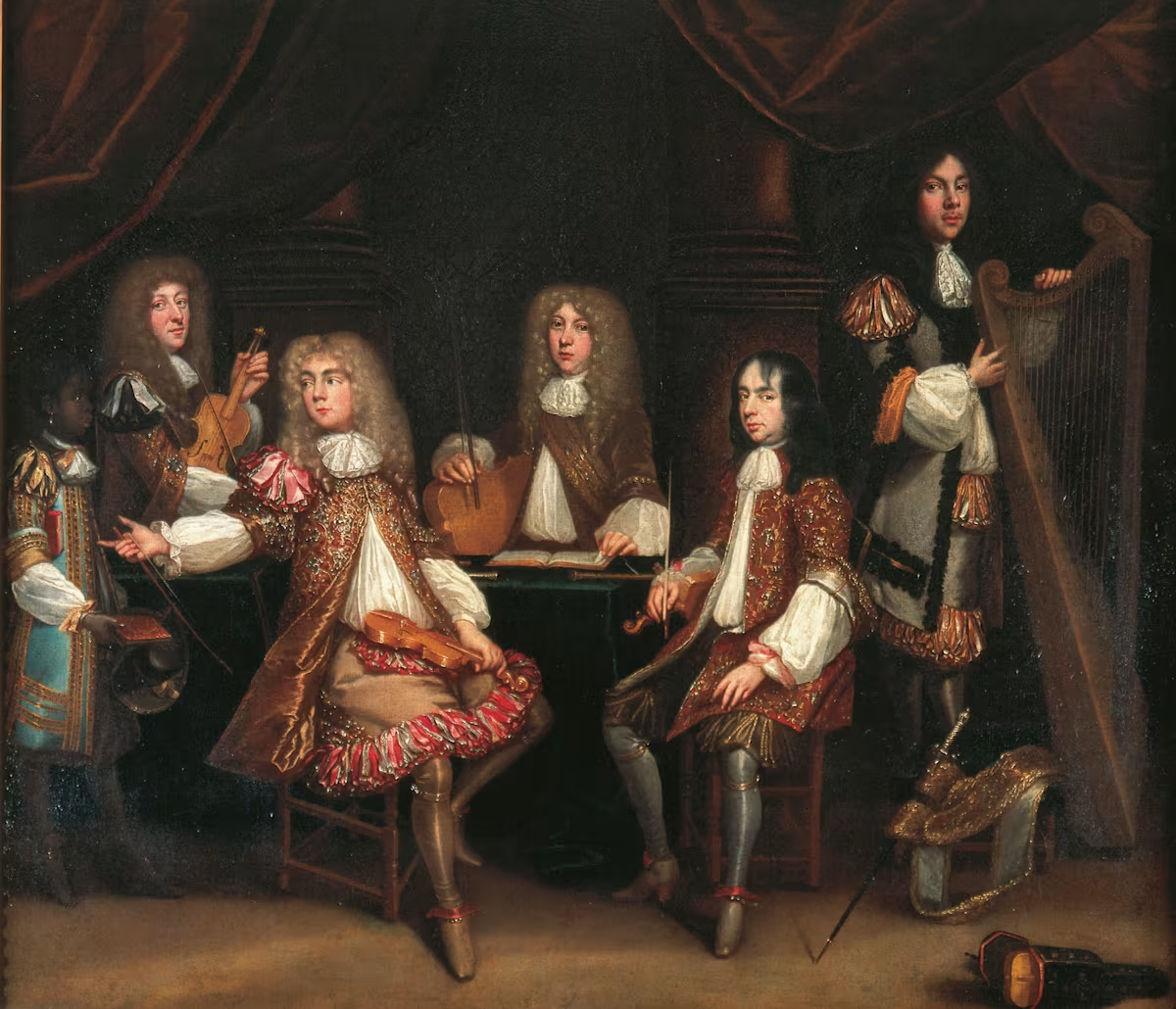
The group portrait known variously as ‘The Cabal’ and ‘The Crimson Bedchamber’, misattributed to John Baptist de Medina (1659–1710), depicts one such musical situation and became the inspiration for this project. Holman suggested as long ago as 1984 that the musicians portrayed are dressed in clothing which was fashionable in the 1660s, making it impossible for Medina (still a child) to be the artist. The identification of some of the musicians – Thomas Baltzar, Davis Mell and Humphrey Madge – all violinists on the payroll of Charles II’s court as members of his Private Musick, and the presence of a cellist and a harpist, led to the idea of focusing our programme on the repertoire of the Private Musick, by recreating the king’s ensemble. These nuggets of circumstance – the painting, the evidence from court documents, the manuscripts in the Bodleian – together told the story of people, places and music.
At this point I had to weigh up including works that reflected the music actually written and played by these court musicians, while also offering a variety of sound-worlds and textures across three decades, to keep the listener engaged. Music written for three violins during this period included an extensive suite by Baltzar, as well as ten fantasia-suites by John Jenkins, who at the end of his career was a court theorbo player – we chose to include one of these not previously recorded. The Italian violinist Nicola Matteis had arrived in London in about 1670 and published four books of violin music. His Ground in D minor was the only one of many that he scored for three violins, surely written with the players of the Private Musick in mind. Gottfried Finger was in England by around 1687, and his inclusion of no less than three sonatas for three violins among his twelve Sonatae pro diversis instrumentis, Op. 1 (London, 1688), suggests this combination was by now more than just an oddity reserved for the Private Musick, and had become a fashionable line-up among the amateurs who bought chamber music prints.
Musical & Amicable Society | Gottfried Finger: Sonata No. 9 in D from Sonatae pro diversis instrumentis, Op. 1
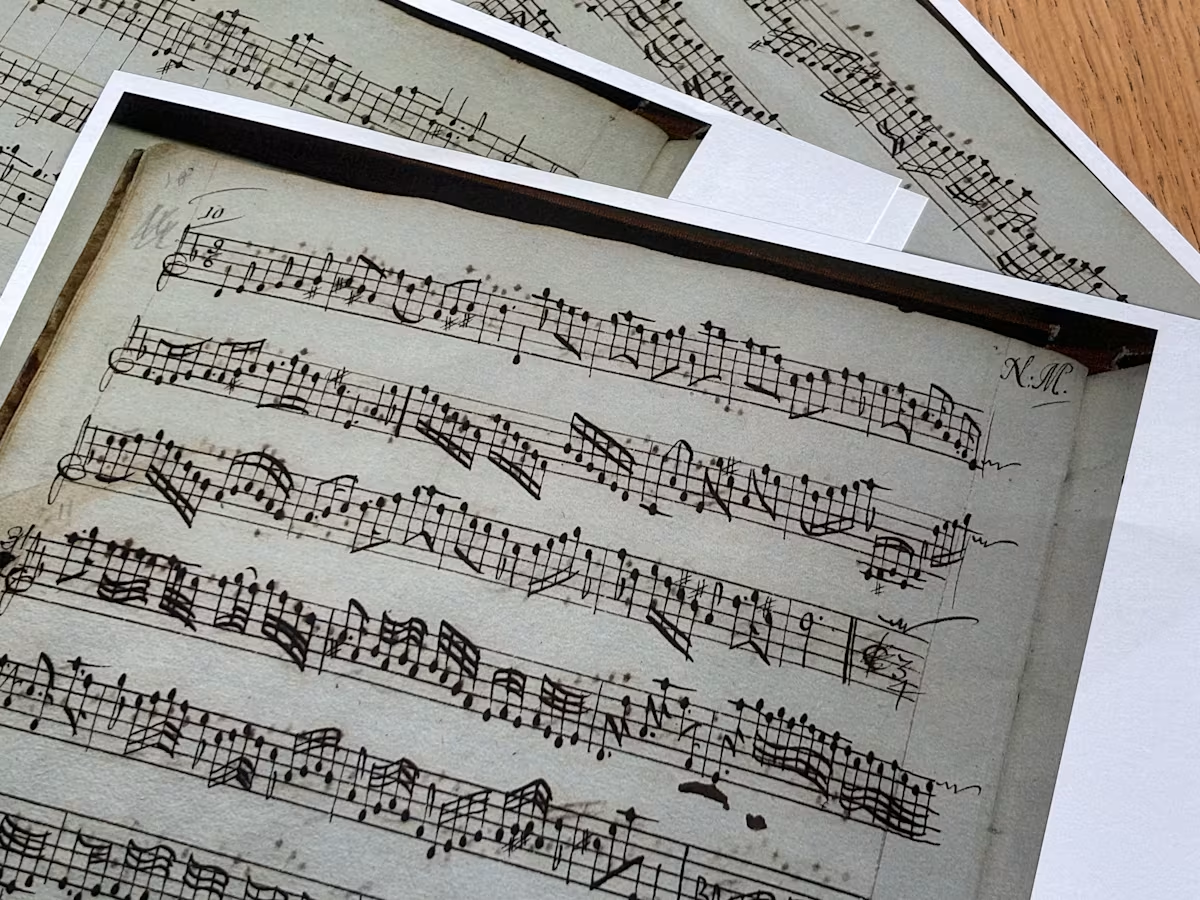
With these larger-scale works in place, I wanted to represent the musicians, styles and forms of the period by including smaller-scale works instead of more of the three-violin works by Jenkins and Finger. Rather than relying on music already well-known to listeners, such as the popular tunes in John Playford’s The Division Violin (1684), I turned to the smaller pieces I had come across in the Oxford Music School collection which had connections with the Private Musick. Edward Lowe was Heather Professor of Music at Oxford from 1661 until his death in 1682, and many of the manuscripts he collected for the Music School included works by court musicians including Baltzar, Mell and Jenkins. The first violin part of a set of suites copied out by Lowe included the inscription: ‘Mr. Baltzar commonly calld the Swede 25 feb: 1659’. Baltzar’s suite for three violins, from which we have recorded the opening Pavan, survives solely due to Lowe’s efforts to preserve it.
![The first violin part of a set of suites copied out by Edward Lowe included the inscription: ‘Mr. [Thomas] Baltzar commonly calld the Swede 25 feb: 1659’.](https://images.ctfassets.net/dittccn4etc2/2gGewdVXqHiaO76lnOIr6B/3f25ce6e24d2593fdc7e5a8270b07372/Baltzar_commonly_called_the_Swede.jpeg?w=1200&fm=avif&q=75 "The first violin part of a set of suites copied out by Edward Lowe included the inscription: ‘Mr. [Thomas] Baltzar commonly calld the Swede 25 feb: 1659’.")
Musical & Amicable Society | Thomas Baltzar: Pavan in C
One intriguing manuscript in the collection includes a set of divisions on the popular tune, I am the Duke of Norfolk (also known as Paul’s Steeple). Its distinctive scoring for violin and viol rather than solo instrument or two equal instruments distances it from the quasi-pedagogical pieces by Christopher Simpson or those found in The Division Violin, which serve as examples of what professionals may have improvised. The manuscript also contains an extraordinary set of divisions on the popular continental dance, ‘La Folia’. While this virtuosic work has been discussed in print, it had not been commercially recorded before. The skill demanded of the player far exceeds anything Matteis’ English contemporaries wrote, and is in stark contrast with the folky Duke of Norfolk and the sonorous suite by Mell, written for violin in unconventional ‘scordatura’ tuning.
Musical & Amicable Society | Nicola Matteis: Ground on ‘La Folia’
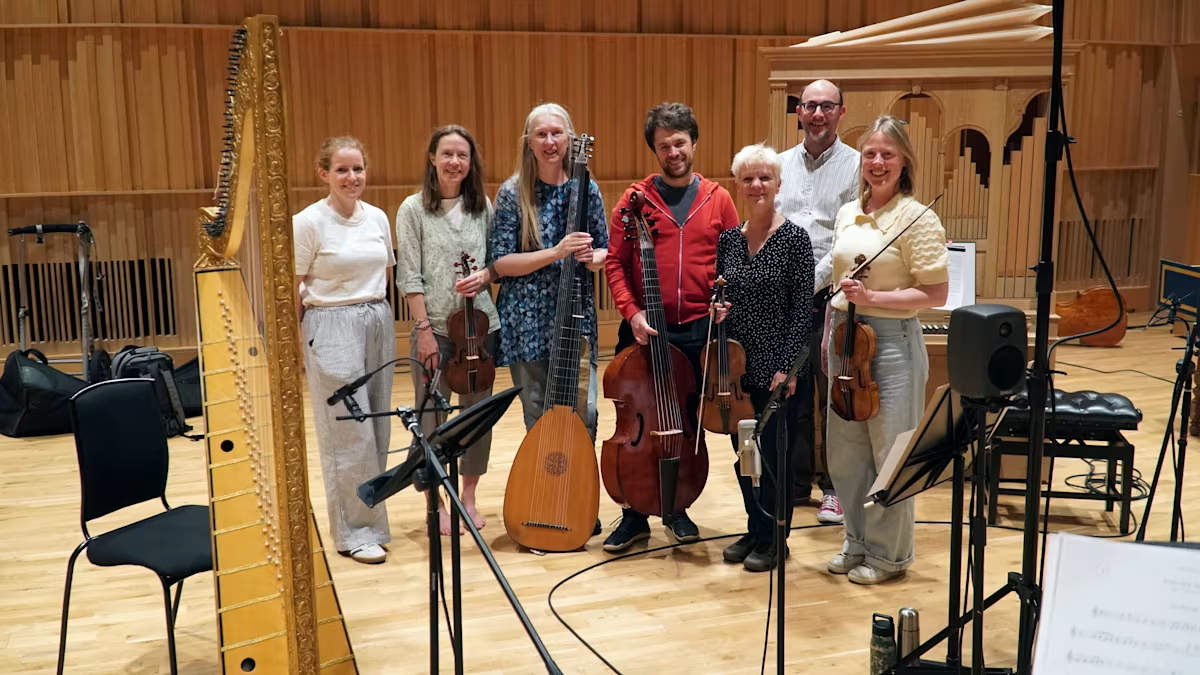
I was intrigued by the presence of the harpist in the painting, clearly playing an Italian instrument rather than the more common Irish-style wire-strung harp. The only known professional harper in Restoration London, Charles Evans, was appointed ‘Musician in Ordinary for the Italian Harpe’ in 1660, remaining on the royal payroll until at least 1683. There is no known solo harp music from this time, leading to the conclusion that Evans played a continuo role. With harpsichord, organ and theorbo players also listed in the accounts, there was potential for a wide variety of continuo line-ups at court. Many of the Oxford sources of music on this disc have multiple continuo parts – that is, more than one part with figured bass indicating the harmony – suggesting that two or more chordal instruments were involved. Hence, we allowed ourselves the luxury of the full continuo team of harp, theorbo, guitar, organ and harpsichord in various configurations to accompany the bowed strings.
Most surviving 17th-century consort organs, suitable for use in domestic settings rather than cathedrals and chapels, are pitched between modern pitch (A=440) and a semitone above (A=465). A few are lower than this but not as low as conventional 'Baroque pitch' (A=415) often used for this music. Stringed instruments are easily transposable and the musicians of the Private Musick would have adapted to a variety of pitches when playing with consort organs, in theatres, with wind instruments or in churches. Settling for a pitch of A=440 for our recording created a vibrant, bright sonority which we feel brings a freshness to the repertoire.
I don’t think it’s an exaggeration to say that it can take a while for new thinking about how music was performed in the past to be adopted in practice. Some academic research is simply not picked up by performers, and performance practice developments can be slow to be experimented with and implemented. Noting the expectation of instantly accessible variety in today’s global culture, it is often impractical for musicians to adopt the multiple performance practices required. Instrumentalists wanting to perform repertoire spanning several centuries need to own 3 or 4 versions of their instrument at different pitches or with varying numbers of keys; singers not only need many languages under their belt, but multiple varieties of historical pronunciation. If we want to meet modern audience tastes by offering a variety of styles and periods of music within one concert, pragmatic compromises of historical performance practices are inevitable. This is why the recording industry is vital to the Early Music sector, keeping alive the spirit of enquiry and helping us to remain nuanced and alert to difference in Historical Performance contexts. What might not be achievable in concert can be explored in depth on a recording. None of this is cheap, and it is only with the support of organisations like Continuo Foundation that projects such as ours can be fully realised.
Our approach in the Musical & Amicable Society has always been one of chamber music, with everyone an equal partner. Wherever possible, we’ve not been constrained by line-up or instrumentation and we hope this reflects the spirit of our performances and recordings where there is no ‘leader’ as such, but a group of like-minded colleagues passionate about making music together, much like the members of the Private Musick might themselves have been.
‘Fiddlers Three’ is available to purchase on the Barn Cottage Records label and to stream on major platforms. This recording project was supported by a grant from Continuo Foundation. To see the Musical & Amicable Society perform live, visit their Continuo Connect profile page.
Share this
Keep reading
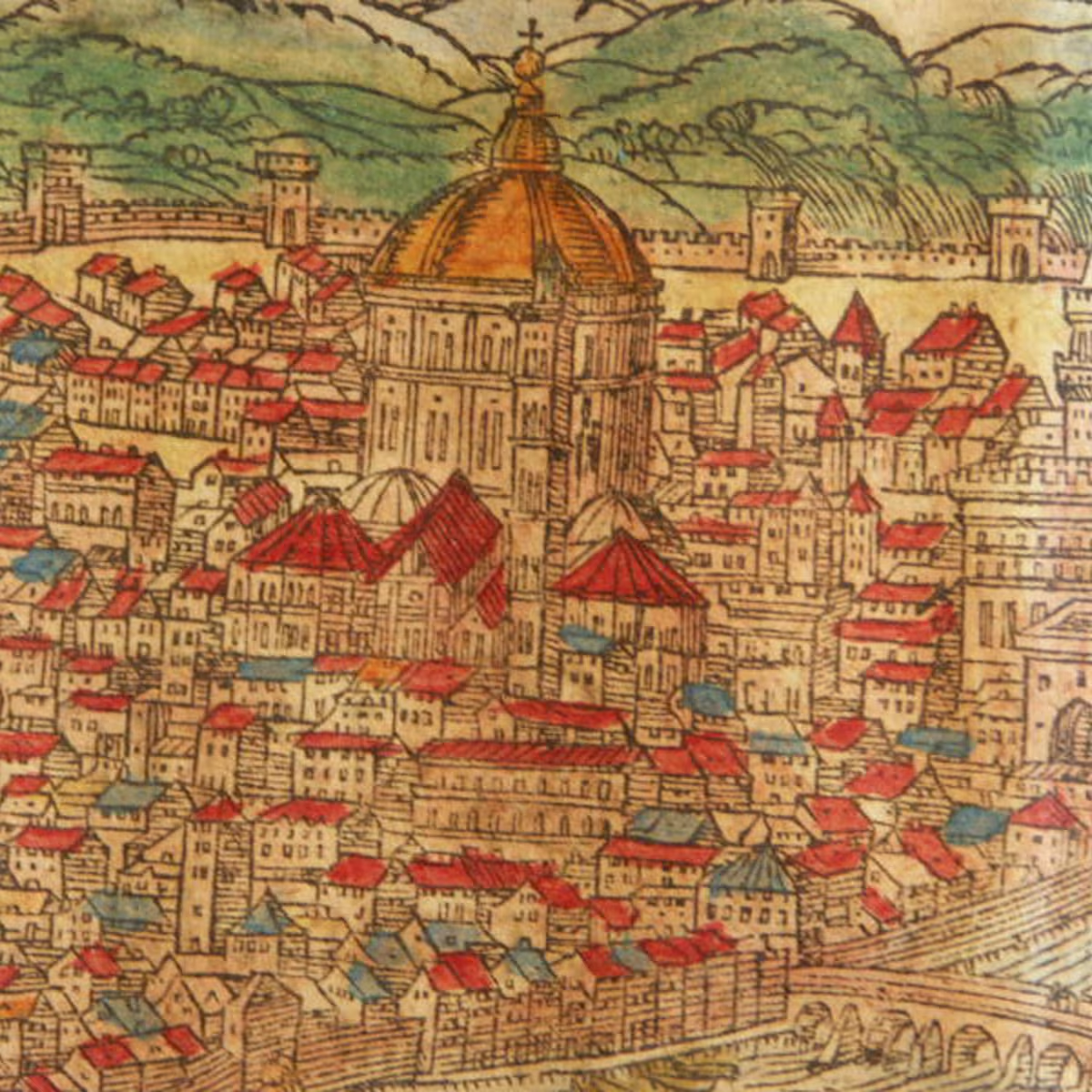
Exploring the golden age of the ‘City of Dreams’
‘City of Dreams’ is an exploration of two centuries of Renaissance Florence at Brighton Early Music Festival. We spoke to Oliver Webber, founder of Monteverdi String Band, and writer Saria Steyl about how the project came together.
The soundtrack of imagination: David Yardley and Green Dragon Guild of London
Medieval countertenor David Yardley, Artistic Director of Green Dragon Guild of London, discusses Medieval music, Southwark’s layered history, and how imagination and meticulous research meet in performance in our latest podcast.
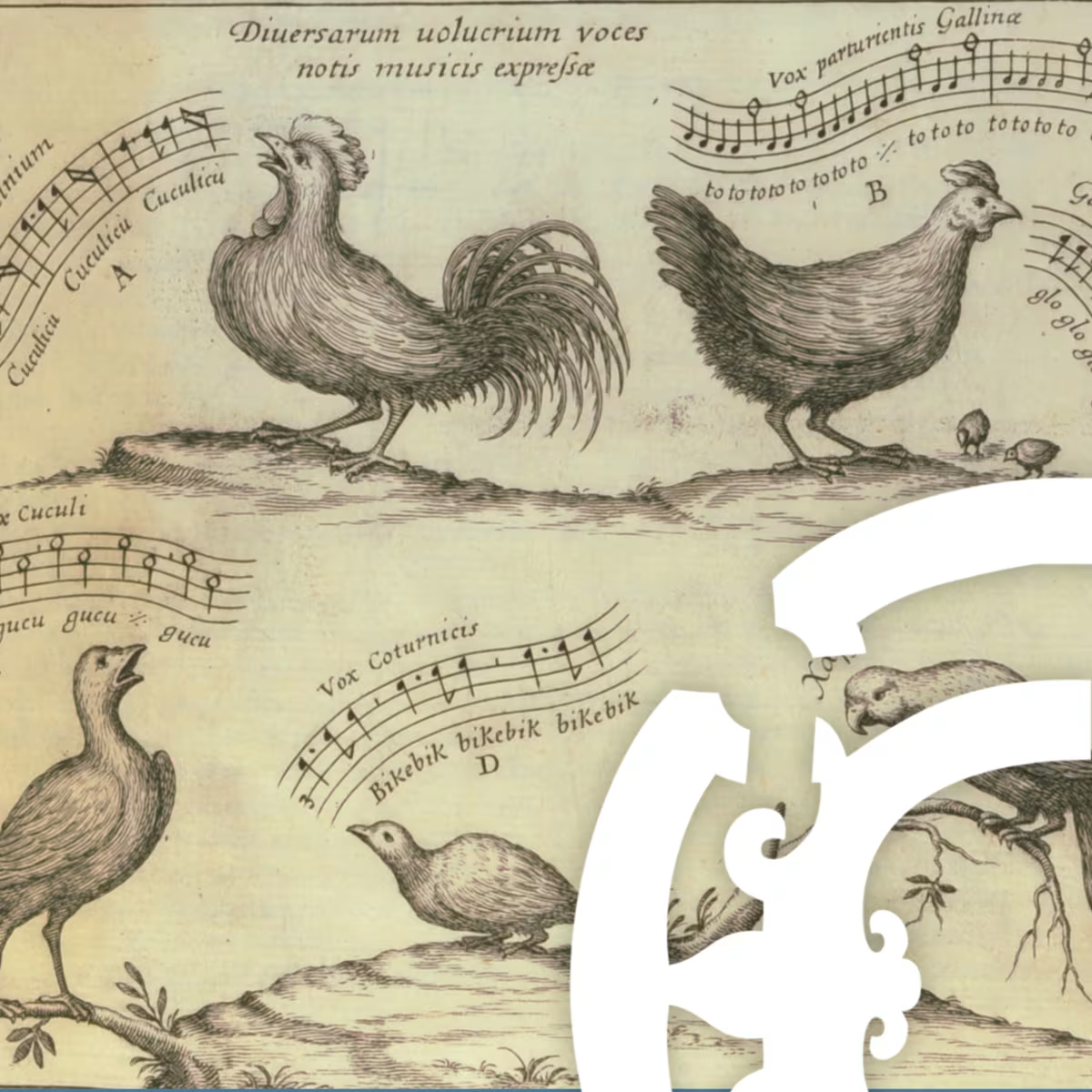
Playlist: Birds in Early Music
A playlist that explores how birds and birdsong inspired composers from Rameau and Couperin to Handel and Haydn and beyond.