

Spotlight
In conversation: Timothy Lin
Share this

FIRST PUBLISHED 9 JUL 2026
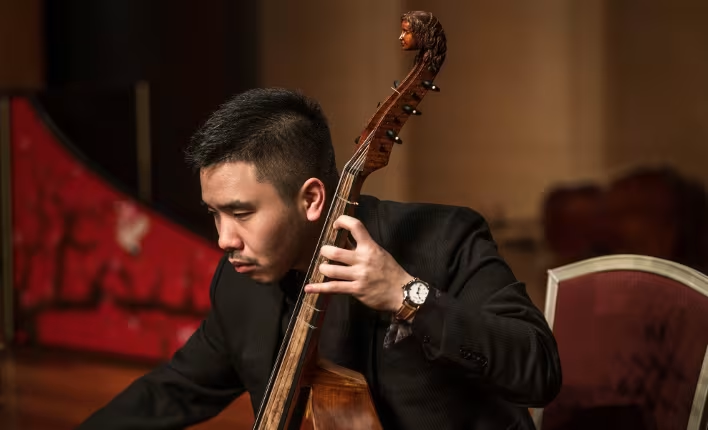
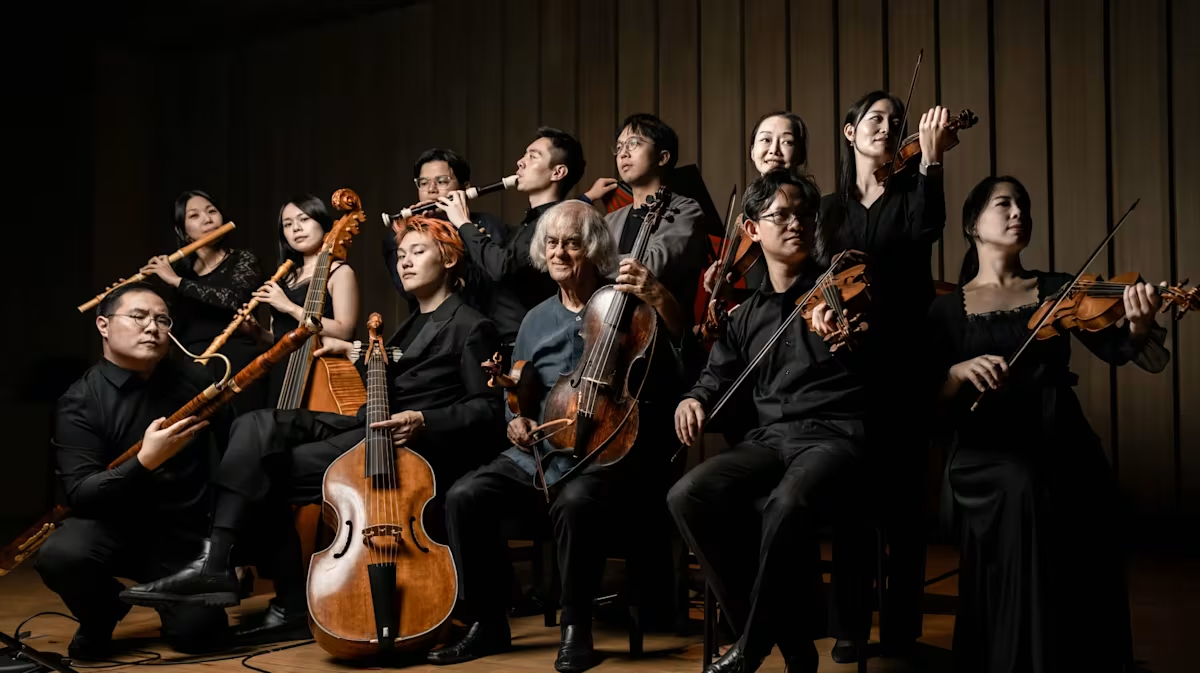
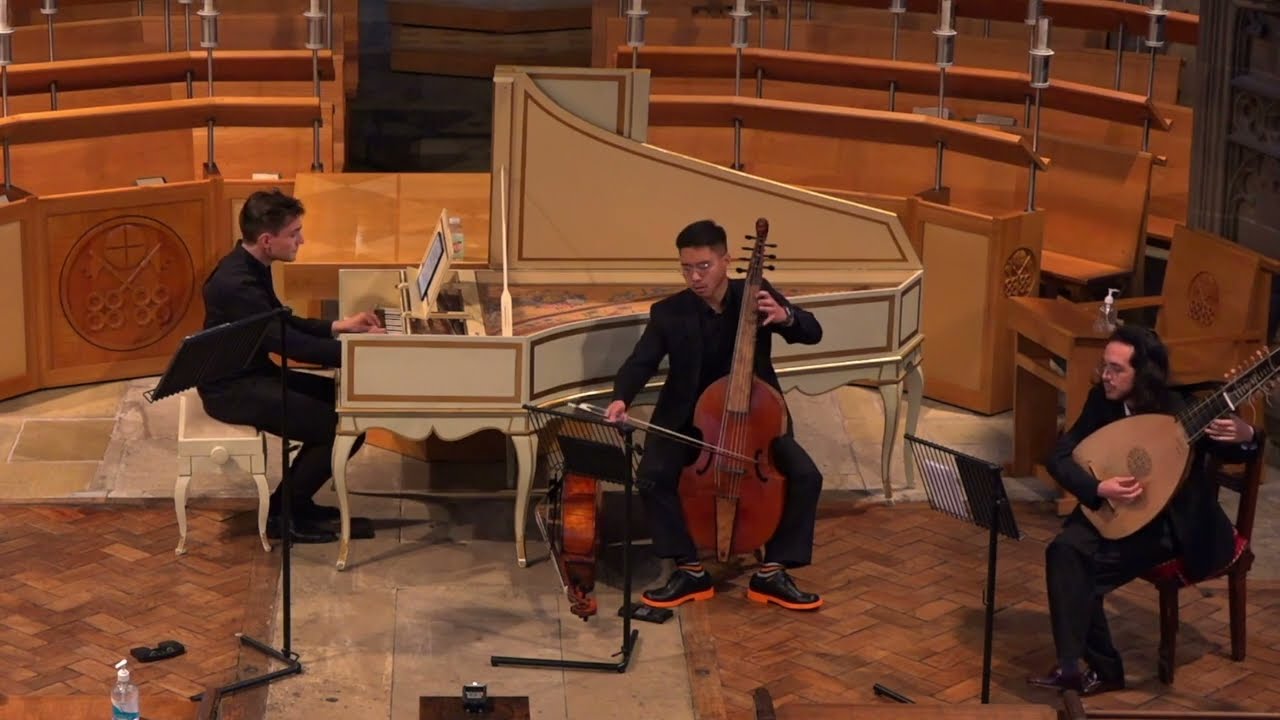
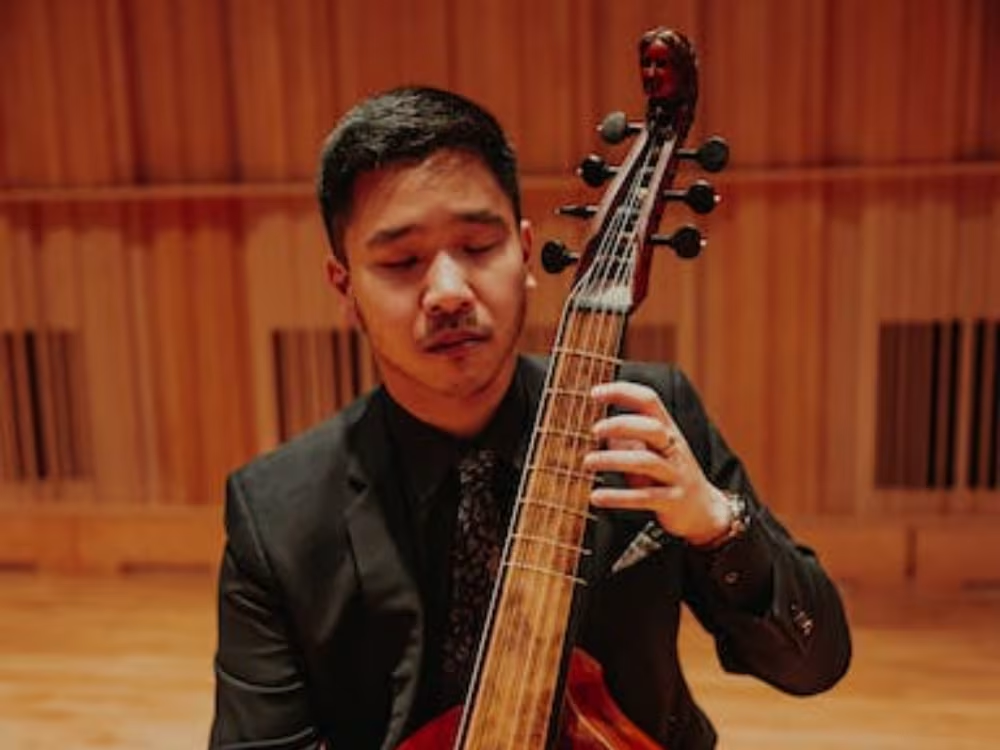
Hailing originally from Taiwan, Timothy Lin is a viol player, baroque cellist and researcher, who has built a career as one of the UK’s foremost early music instrumentalists. In 2019, Tim and his friends founded The Glæm Ensemble to introduce the beauty of Early Music and Historical Informed Performance practices in Taiwan. In 2021, he joined the Linarol Consort of Viols, an ensemble specialising in Renaissance consort music. In 2022, he was the winner of the Corton-Hyde Early Music Competition at the Royal Birmingham Conservatoire. Tim is also a core member of Música d’Outrora, selected as the 2023/24 BREMF Young Artist, the 2024 Philip & Dorothy Green Young Artists (PDGYA) scheme and also a Continuo Foundation grant award recipient.
Prior to his current career development, Tim was awarded PhD at Royal Birmingham Conservatoire, and a Master's degree in Performance from the Royal College of Music, London, where he developed a deep interest in Historically Informed Performance and musicology research. Before moving to London, he read music at National Taiwan Normal University. Tim has studied viol with Lucy Robinson, Reiko Ichise and Claire Bracher, and baroque cello with Imogen Seth-Smith and Richard Tunnicliffe.
How did you get into Historical Performance practice/Early Music?
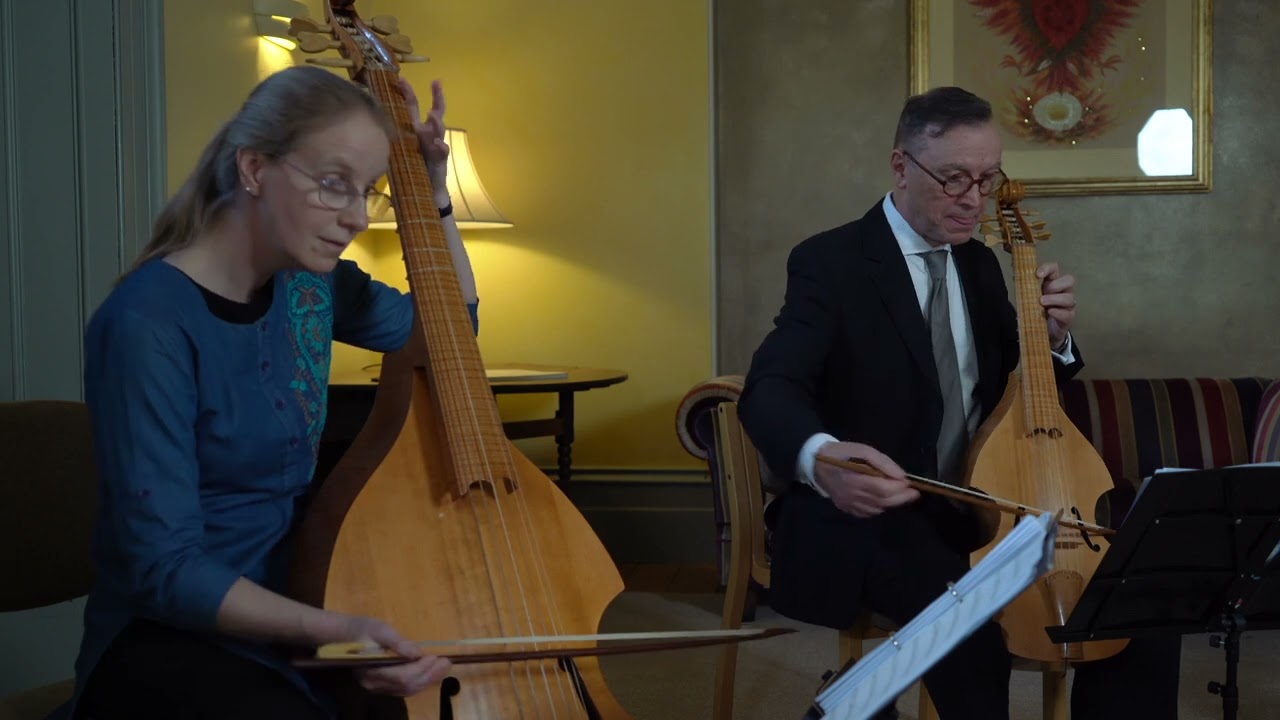
I went to the viol trying session at RCM when I was doing my master’s degree. First, I was drawn to the instrument's sound and appearance. Soon after, I started attending the viol consort session regularly as an escape from modern playing. English consort music really gave me a different perspective on baroque music. The pureness of the sound and complexities of the counterpoint really attract me. I think I decided to become more serious about playing the viol after a term of playing.
 ▶
▶What’s so special about HIP/Early Music performances?
To me, Early Music performances offer a different way to play and listen to music. With this perspective, I found myself putting more effort into observing the traces left by composers or copyists on the scores. It’s an interesting process of learning a piece of music. Sometimes, I feel I almost know the people involved in producing music in the old days in person, which is fascinating.
How much of an Early Music scene is there in your native Taiwan, and did you have any opportunities to use period instruments before you moved to London?
When I was in Taiwan, the Early Music scene was not as flourishing as it is today. There was no module on HIP at my university, and there were only a couple of groups that occasionally gave early music concerts and lectures. So, I only came to the idea of HIP during my Masters in the UK.
However, the scene has changed a lot. Since the late 2010s, several Taiwanese Early Musicians have completed their studies in Europe and returned to Taiwan. In 2019, we started an Early Music group – Glæm. Although I moved back to the UK soon after the group started, my colleagues are really doing their best to promote Early Music in Taiwan, and we have started to see the fruit in recent years. There are more Early Music concerts, and schools start to deliver lessons on HIP-related modules. I believe the scene will become even more thriving if we keep working on the right path.
Please tell us a little about the subject of your PhD and your learnings!
I did my research on the Durham Cathedral Library MS. A27. It is a manuscript transcribed and compiled by Philip Falle (1656–1742), a canon of Durham Cathedral and an advanced amateur viol player. An interesting thing I learned from my study is how expensive it was to participate in all sorts of cultural activities in the 17th and 18th centuries, which makes me appreciate how accessible these activities are today.
If you could meet anyone from the past, who would it be?
I really want to meet Sainte Colombe and his son, who were part of my doctoral studies. Although Sainte Colombe was one of the musicians who founded the French viol school, the archives about the family are limited. I still have many questions about their life and music after my studies. It would be wonderful to know them in person.
 ▶
▶You are passionate about coffee – what's your go-to style and what interests you about it as a drink?
Yes, making and drinking coffee is kind of my daily ritual. I normally drink an americano/long black in the morning and flat white or filter coffee in the afternoon. I prefer light-roasted coffee, which I think better shows the character of the bean. I used to only drink single-origin coffee, but I recently found some really interesting blends that taste awesome!
What non-musical hobbies or interests do you have?
As you may already know from the previous question, I’m a huge coffee geek. I really enjoy the process of brewing coffee, which I do quite a lot when I’m not playing. Recently, I’ve been working on my latte art skills. Apart from coffee, I also spend a lot of time taking care of my plant collection. Just looking at them makes me happy.
Do you have a lucky charm or ritual that you follow before important concerts?
I only have a few routines to help me relieve some stress: drinking enough water and doing breathing exercises.
What is it that you most dislike? Feel free to explain why, or not!
I really don’t like travelling. I have quite bad motion sickness, so I often feel terrible after a long journey. Don’t like the feeling at all…
If you were to have one, what would be your superpower / superhero ability?
Teleportation. As you have seen, I don’t like travelling!
Share this
Keep reading
Playlist: Continuo Patrons
A playlist of tracks by Continuo Foundation Patrons Mary Bevan, Emma Kirkby, Rachel Podger and Ashley Solomon in celebration of the UN International Day of Charity.

The soundtrack of imagination: David Yardley and Green Dragon Guild of London
Medieval countertenor David Yardley, Artistic Director of Green Dragon Guild of London, discusses Medieval music, Southwark’s layered history, and how imagination and meticulous research meet in performance in our latest podcast.

Celebrating 300 years of Academy of Ancient Music
Three hundred years after the first Academy of Ancient Music was founded, its modern namesake is preparing a season that looks far beyond commemoration.