

Playlist
Midsummer Night
Music - 'tis nature's voice
Share this

FIRST PUBLISHED 09 JUN 2024
Festive and joyful, contemplative and pensive, and with a strong nod toward nature, this is music for a Midsummer Night:
The list begins with the beautifully simple song Uccelino, which asks: "Little bird, beautiful little bird, how can you sing so sweetly?", followed by dance music and more reflective pieces, as the sun (almost) sets for only a short time in this 'eternal' season. (The dances include the medieval Estampie, the Bransle, a type of Renaissance dance popular in the early 16th century, the Saltarello, a dance originally from Italy and two Baroque dance movements, the Gigue and the Courante.) The Grand Duke throws a Baroque ball, and Purcell praises nature's voice. And you may even end up falling asleep to the songs of nightingales. The playlist is available on Spotify.
Uccelino (anon)
Angelo Michele Bartolotti: Prelude
La Palatine
Douce Dame Debonaire (trad.)
Bransle de la Torche (trad.)
Estampie Real (trad.)
Guillaume Dufay: Saltarello
Jordi Savall, La Capella Real De Catalunya
William Williams: In Imitation of Birds
Ensemble Sonority
Quant je suis mis au retour
Giovanni Legrenzi: Ballo del Granduca
Richard Jones: Chamber Airs Op 2, No 4, A minor Giga. Allegro
Rachel Podger and Brecon Baroque
Ca' the Yowes (trad.)
Henry Purcell: 'tis Nature's Voice
Elisabeth Kenny, Robin Blaze
John Jenkins: Fantasia Suite in A minor, No1, III
Rachel Podger and Brecon Baroque
Jacques Hotteterre: Pourquoi doux rossignol
Ensemble Sonorita
Share this
Keep reading
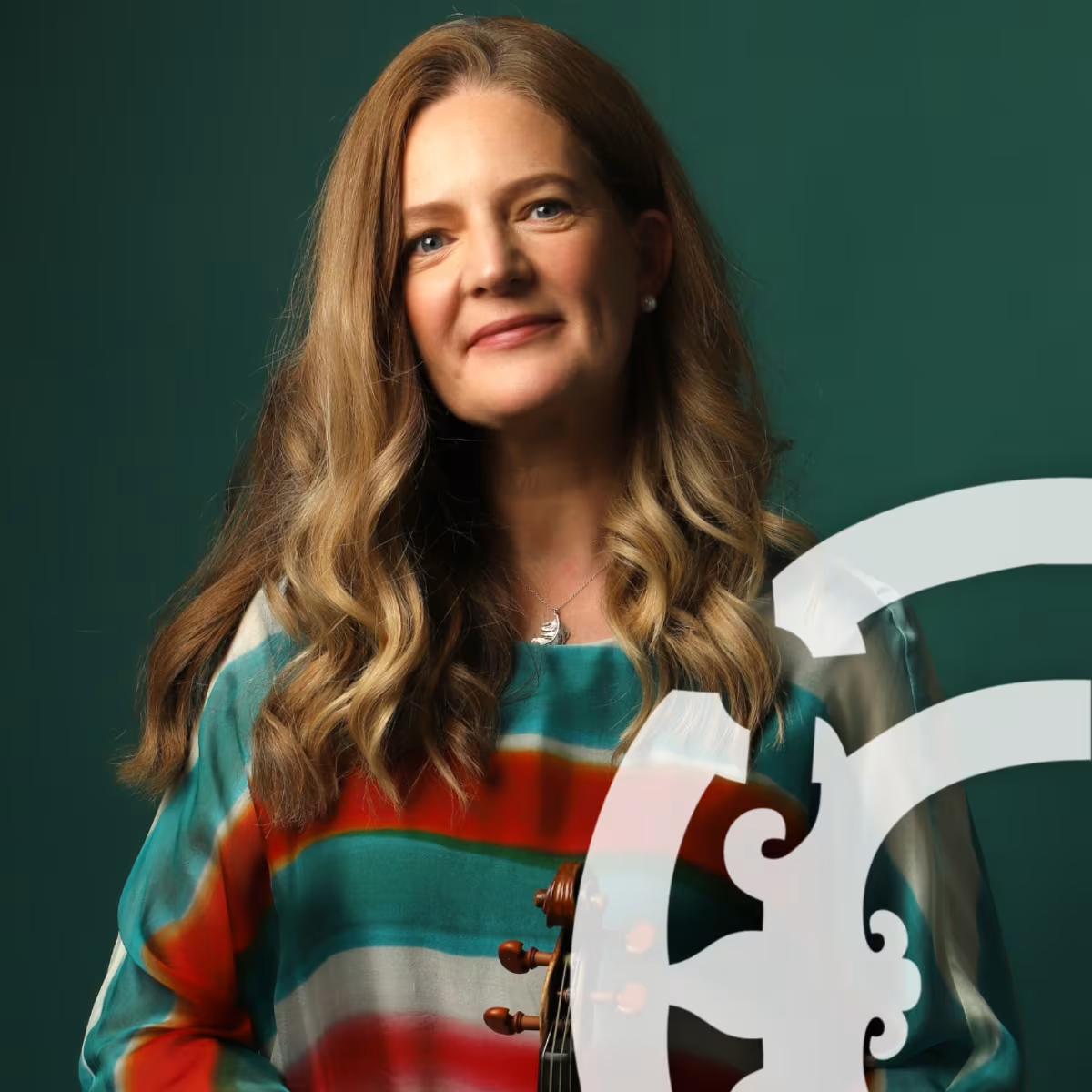
The Best of Rachel Podger
This playlist celebrates 'the unsurpassed British glory of the baroque violin' (The Times) - that is of course Rachel Podger.
Singing from within: Paul McCreesh on Gabrieli Roar
Conductor and Artistic Director Paul McCreesh talks to Simon Mundy about Gabrieli Roar – the youth choral project that puts thousands of young singers on stage alongside professional period-instrument musicians.
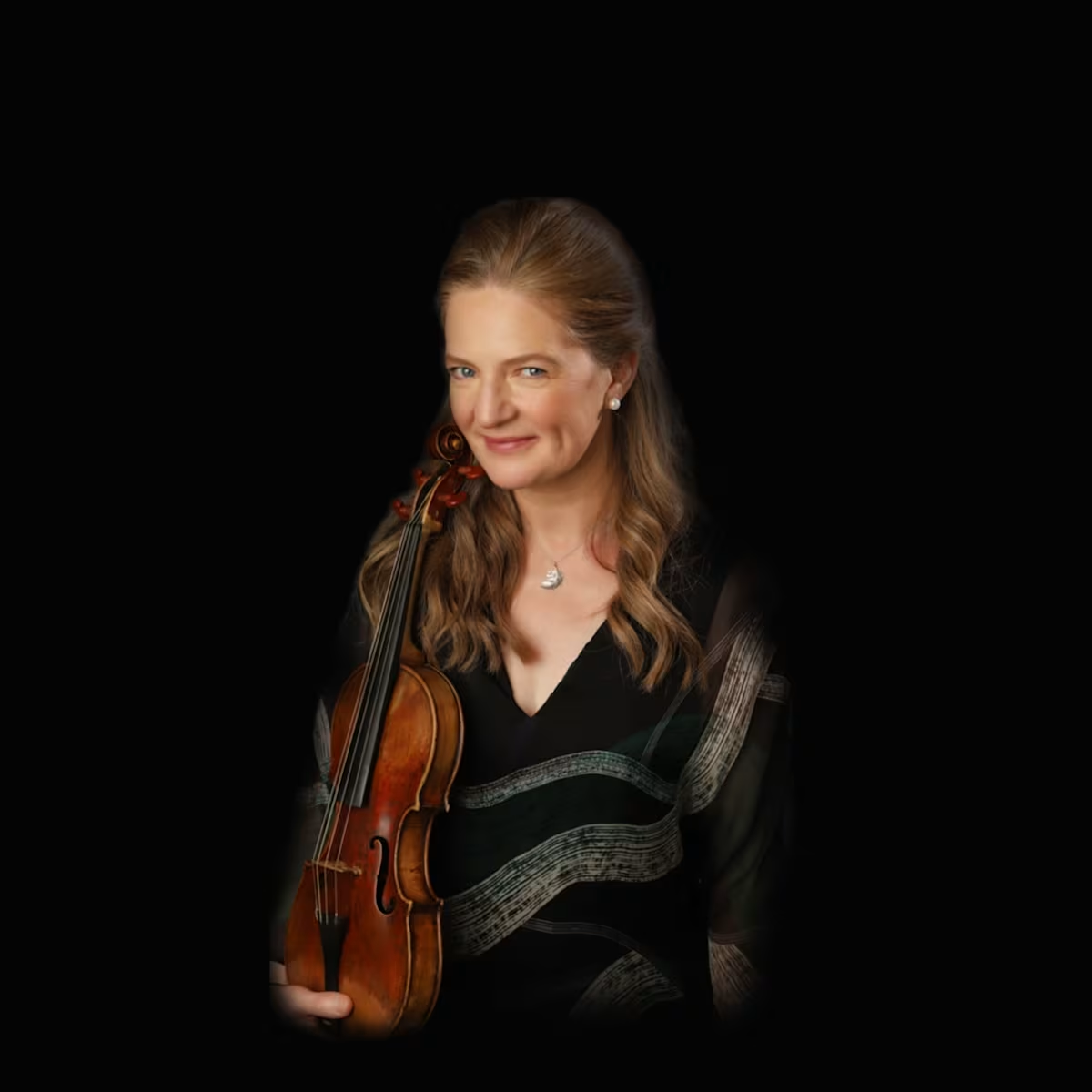
From kitchen to cathedral: the accidental art of festival-making
Rachel Podger, a Continuo Foundation Patron, has spent two decades creating a festival as open-hearted and inquisitive as her own music-making. She tells Ashutosh Khandekar how the Brecon Baroque Festival evolved almost by chance.