
Spotlight
In conversation: Teresa Wrann
Share this

FIRST PUBLISHED 11 MAR 2026
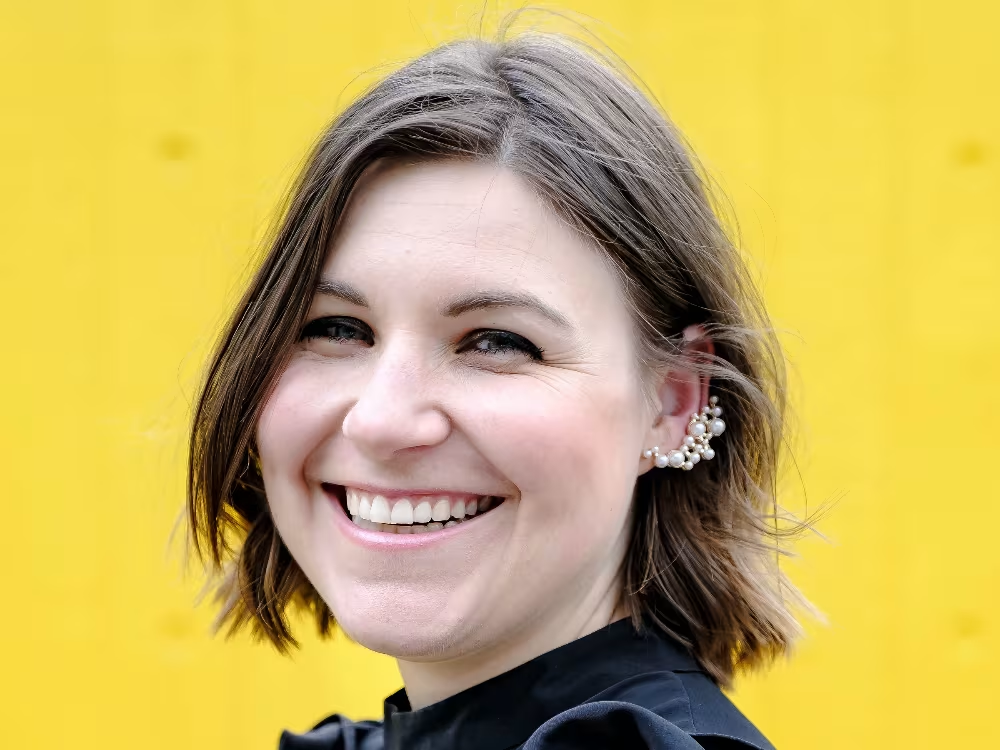
Teresa Wrann grew up in the idyllic village of Thüringen, nestled in the Austrian Alps. At the age of 8, she became a junior student at the Vorarlberger Landeskonservatorium, where she later completed her bachelor’s degree with distinction. After graduating Teresa moved to London in 2017 to complete a Master’s Degree (MPerf/MMus) and a 2-year Artist Diploma degree at the Guildhall School of Music & Drama. She has enjoyed various competition successes and once had the honour of performing to the princess of Liechtenstein.
Concerts have taken her across Europe and she has performed as a soloist and chamber musician with English National Opera, Early Opera Company, the OAE and Sinfonisches Blasorchester Vorarlberg. Live recordings and interviews have been broadcast on WDR, France Musique, NDR Kultur, ORF, BBC Radio 3, and the Dutch station NPO Klassiek. As well as performing, Teresa has a passion for education and teaches at MPW College in London and in Switzerland, and regularly leads workshops and educational concerts. Teresa is a founding member and director of the internationally acclaimed ensemble Apollo’s Cabinet and enjoys recorder-shenanigans with her duo TnT.
Why did you found Apollo's Cabinet and what makes it a unique ensemble in your eyes?
Apollo’s Cabinet is a collective of musicians who all love Early Music - we think it’s exciting, fun, moving and we can use it as a medium to communicate with, entertain and touch our audiences. Our goal is to bring these qualities to life in a way that captivates not only early music enthusiasts but also people who might not expect to enjoy this repertoire. We do this by uncovering the fascinating stories behind the music - about composers, historical figures, and themes that still resonate today: love, ambition, freedom (and even mischief and drinking). It’s amazing how many parallels we can draw and how easy it is to make old music feel relevant.
It wasn’t always such a grand vision. The group began at Guildhall, when three colleagues and I met for our chamber music module and started reading through trio sonata repertoire together. We were all driven and put in time and effort and soon performed in smaller lunchtime concerts around London, mostly unpaid at first, but with growing enthusiasm. Two key moments really shaped our direction and encouraged us to think outside the box: winning the Brian Nisbet Competition, which inspired us to blend poetry and music, and being accepted onto the BREMF Live! scheme. Cathy Boyes and the late Deborah Roberts have shaped what we do in a big way and really encouraged us to embrace our thematic programmes and individuality. Once we start working so creatively with music there really was no going back.
What is your idea of perfect happiness?
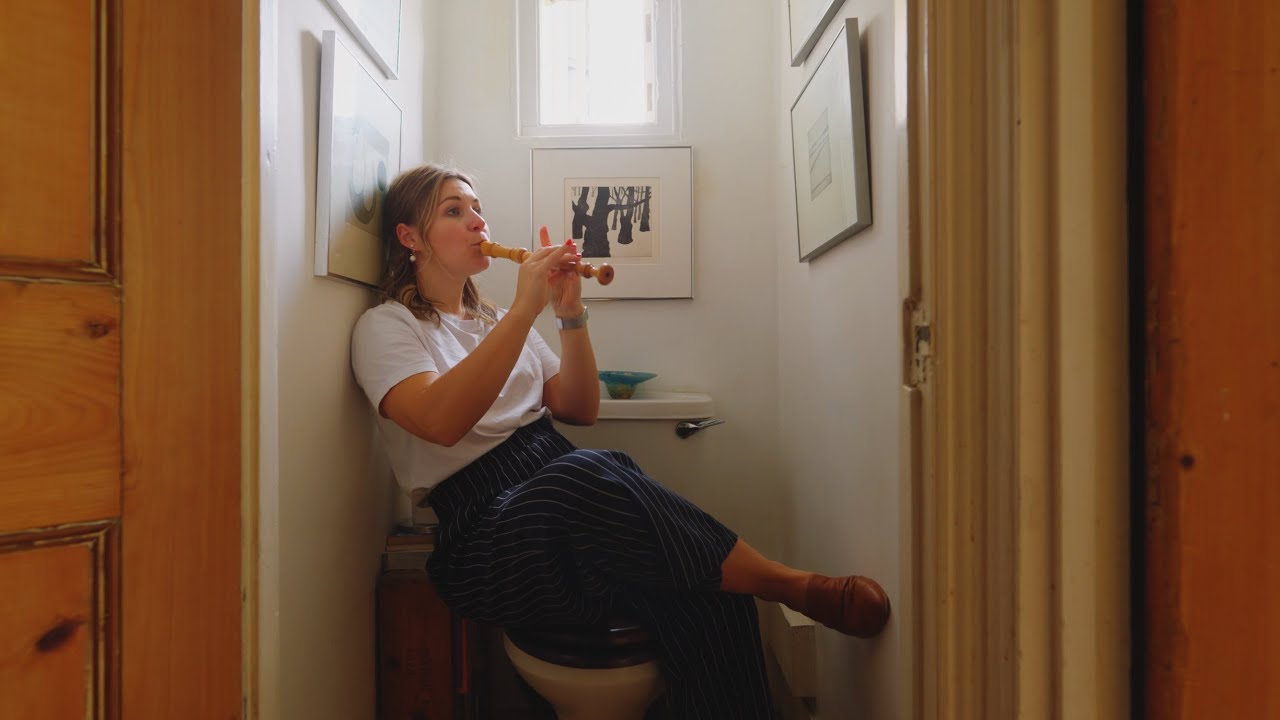
The introvert version: Saturday morning with a really good cup of cappuccino from our espresso machine, doing a crossword and lighting my favourite candle whilst my partner Craig is cooking us bacon sandwiches.
But also: Squeezing round the table in our tiny kitchen with lots of our friends sharing homemade food, fantastic wine, long conversations and playing games. Accompanied by lots of laughter and often whacky music.
What is your superpower / superhero ability?
Resilience and Optimism - as musicians, we constantly put ourselves out there and get assessed, judged and reviewed. Many time-consuming applications get rejected, we might not get accepted onto schemes or might not win at competitions. Over the years I have learned to overcome these little stumbling stones and bounce back quickly to focus on the bigger picture. I tend to see the bright side of things, genuinely believe everything will work out and never lose my sense of positivity or excitement.
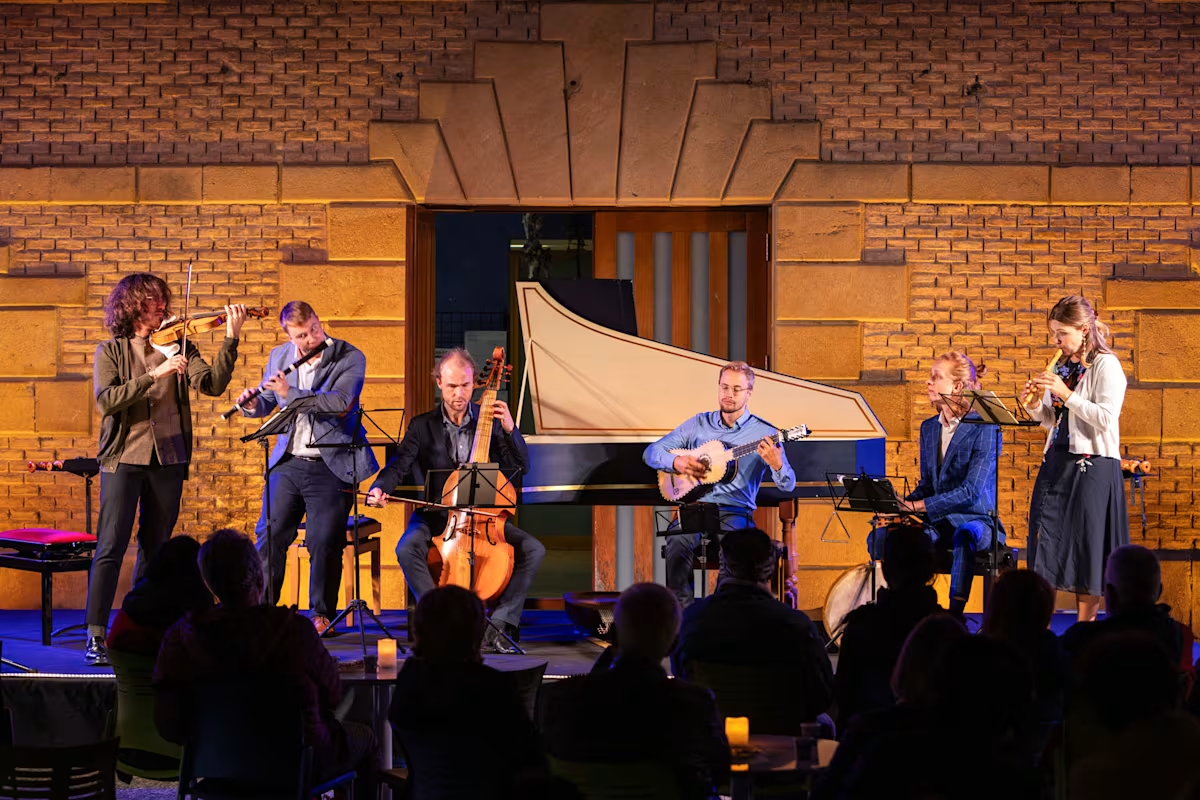
'Haste thee nymph' from Handel's L'Allegro, il Penseroso ed il Moderato, HWV 55 (arr. Apollo's Cabinet) from Apollo's Cabinet's recently-released album: The Comic Muse: The Theatrical World of Kitty Clive
What non-musical hobbies or interests do you have?
Quite a few! I love cooking and baking for my loved ones, exploring new restaurants, playing board games, reading, and getting nerdy about coffee and wine. I’m also into crosswords, the gym, squash, dance classes with Craig, and cross-country skiing when I’m back home in Austria. I love to travel and visit new places (for work and to go on holiday) and lately, I’ve rediscovered my love for crochet and knitting - perfect for long train or plane rides!
What is your earliest musical memory?
I was very lucky to have parents that practised with me, despite them not being musicians, so music-making always felt like a shared experience. I remember recording a cassette tape in my first year of learning the recorder (I was 5) for our extended family, on which I played lots of Christmas tunes and then recorded poems in between. Looking back, that mix of music and storytelling may have planted the first seeds of my love for creative programming!
What’s so special about HIP/early music performances?
The sense of freedom and discovery. Historical performance is deeply rooted in improvisation, creativity, and personal interpretation. The musical forms and customs of the time were far more flexible than we often imagine, leaving plenty of space to put our own stamp on it. I also love the unique sound of the instruments - their warmth and immediacy - and how closely much of this music is connected to folk traditions and something instinctively human.
 ▶
▶Apollo's Cabinet perform the ‘opening’ of Handel’s Rinaldo: The Overture
Would you like to put the spotlight on a teacher, a mentor or an ensemble that has had a significant influence on your journey so far, and why?
I’ve been fortunate to learn from many wonderful teachers. My first teacher, Christine Regez, was both strict and kind - she inspired a love of ensemble playing from the start and somehow managed to make a group of beginner recorder players sound great! She also put little moments of theatre and dialogue into our performances which seems to have stayed with me ever since. I then got accepted onto the junior scheme of the local conservatory where I studied with Sabine Gstach for over a decade. I was the youngest there by some distance and she took me under her wing, kept pushing me, always believed in me and encouraged me to participate in competitions and take on many performance opportunities. Her lessons were fun and effective and she always put in that extra bit of effort and came to all my concerts (and does so still). We have stayed in touch and meet up regularly and I’d say she’s become more like family than just a teacher.
I came to London for my Erasmus programme and then returned for my postgrad and artist diploma degrees, studying at GSMD with Ian Wilson. He refined my sound, challenged me to be able to read in all sorts of clefs and crazy transpositions imaginable and always supported me in my chamber music endeavours. He was also a great role model of someone balancing a performing and teaching career and I adore his sound and playing. At Guildhall I was also lucky to have lessons with visiting professors Karel van Steenhoven and Robert Ehrlich, who both inspired new ideas and challenged our way of thinking and made it clear that there never was just one right way of interpreting something.
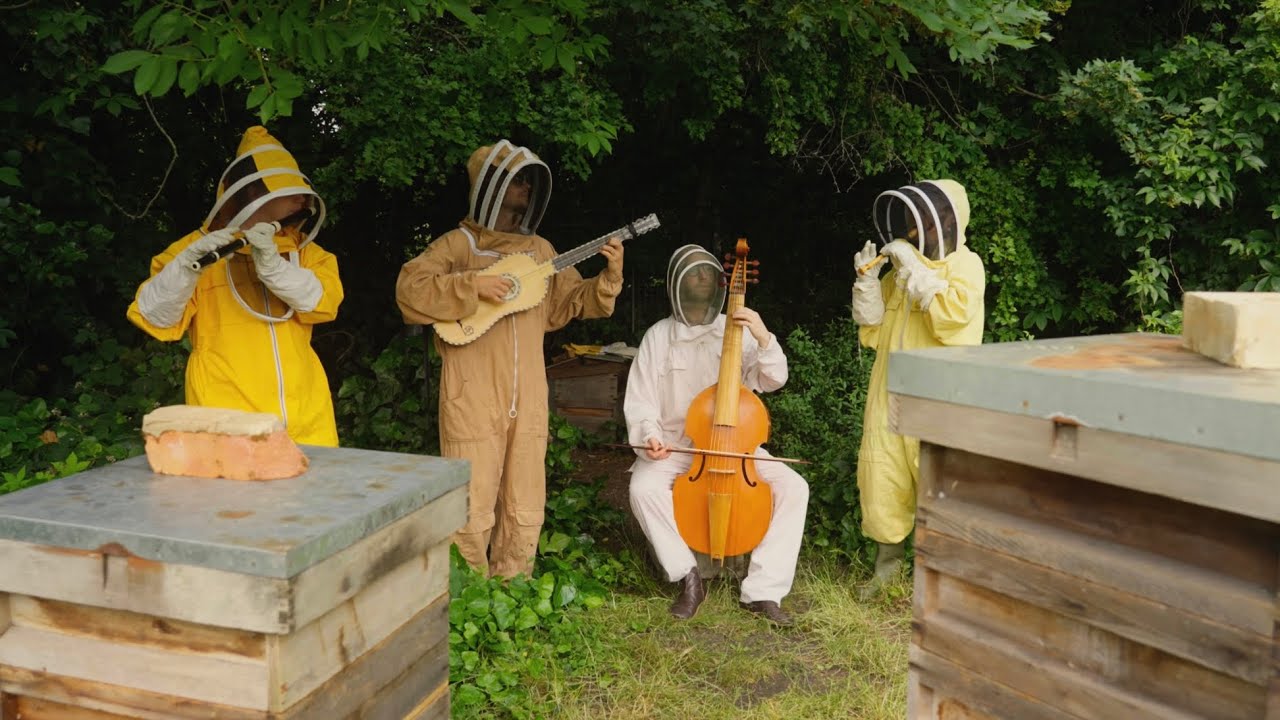 ▶
▶Teresa Wrann performing with Apollo's Cabinet: 'Where the bee sucks. Ariel‘s song' from The Tempest, by Thomas Arne
And lastly Catherine Fleming, who was my Alexander technique teacher and is possibly one of the kindest humans I know. She modelled positivity, gentleness and grace whilst keeping clear boundaries. Her perspective continues to influence how I handle challenging interactions.
How did you get into historical performance practice/early music?
As a recorder player, early music is almost part of our DNA. From the very beginning, I was immersed in Baroque and Renaissance music - it’s simply at the core of the recorder’s repertoire. Growing up, this music felt completely natural to me: not something old or distant, but expressive, immediate, and full of emotion. Over time, my curiosity and studies led me deeper into historical performance practice; reading original sources and treatises, researching for programme ideas, and collaborating with colleagues who share the same passion for authenticity and experimentation. My love for it has only continued to grow!

Share this
Keep reading
In conversation: Samuel Ng
Continuo Connect catches up with Samuel Ng, cellist and gamba player with the newly formed Republic of Viols and Liturina.
JS Bach, and a cabinet of curiosities: Jorge Jiménez
Violinist, director and composer Jorge Jiménez talks to Simon Mundy about his latest album Curiosa: Lost & Found Tunes, his new Bach weekend in Ipswich, and his freelance career balancing life in rural Essex with regular work in Spain.

Exploring the golden age of the ‘City of Dreams’
‘City of Dreams’ is an exploration of two centuries of Renaissance Florence at Brighton Early Music Festival. We spoke to Oliver Webber, founder of Monteverdi String Band, and writer Saria Steyl about how the project came together.