
Feature
Harry Christophers: The Sixteen and the art of sacred sound
Share this

BY SIMON MUNDY | FIRST PUBLISHED 4 APR 2026
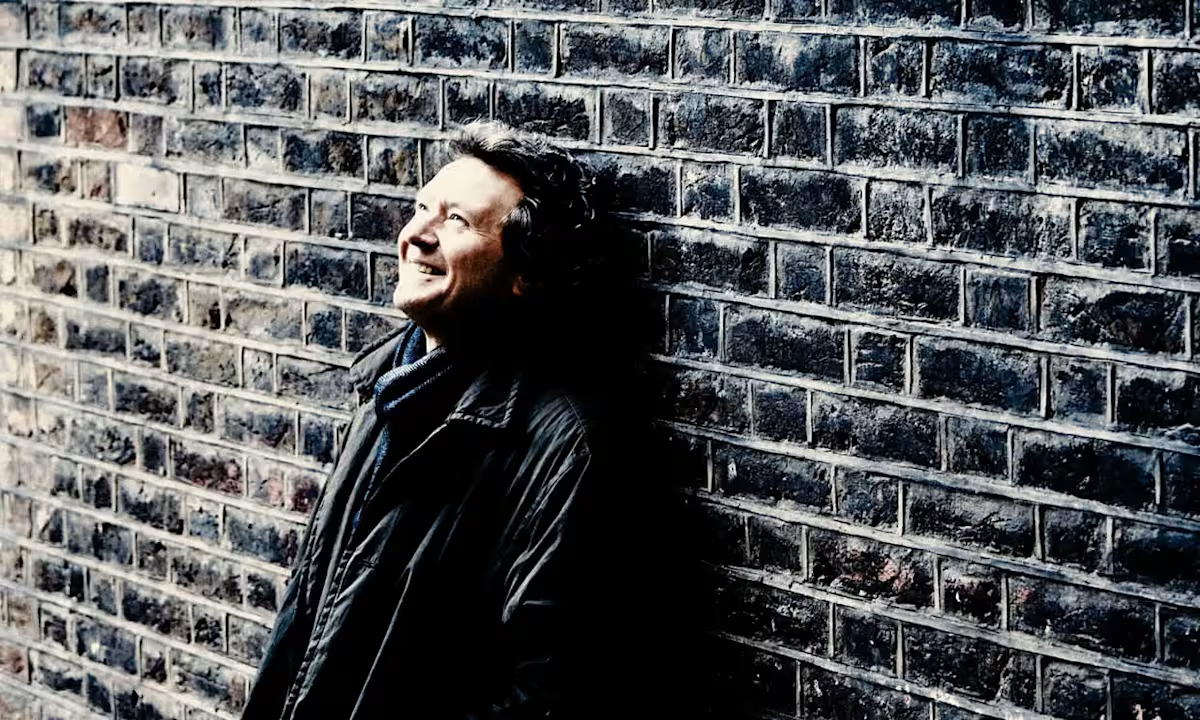
Few figures in the choral world have shaped the sound of sacred music as profoundly as Harry Christophers. As founder of The Sixteen, he has spent nearly five decades defining the space between the past and the present, reviving early choral masterpieces, and commissioning new works. As Conductor Laureate of the Handel and Haydn Society and mentor to the next generation of singers through Genesis 16, he continues to shape the future of choral music. In this interview with Simon Mundy for Continuo Connect, he shares insights on his long-standing passion for choral music and the upcoming 2026 Choral Pilgrimage, ‘Lead, Kindly Light’.
The biggest surprise when talking to Harry Christophers is to find that he does not live in Oxford. The Sixteen, the choir and then orchestra he founded in 1979, is so imbued with the spirit and traditions of Oxford that it seems inconceivable that Christophers is not holed up in an ancient quad there. In fact he is a Kentish man, through and through, now living in the county's north-western corner, and schooled in King’s Canterbury where he played clarinet with his contemporary Andrew Marriner, the long-serving Principal Clarinet of the LSO and son of Sir Neville. The office for The Sixteen is in London’s Tufton Street, a hymn book’s throw from Westminster Abbey where Harry was a member of the choir at the time he formed the group. He was at the Abbey from 1977 until 1982.
That having been said, the roots of the group are firmly in Oxford soil, specifically Magdalen College, where Harry studied. ‘I'm very much a product of Magdalen. I got fixated there on the English Renaissance. From its foundation The Sixteen had people from all over the place, both younger and older than me, although it is true that it was a bit of a Magdalen Mafia, but with a wide age range. It still has now, with singers ranging from their 20s to 60s. When you start a group just out of university, one is pretty cavalier about it, but then when you start touring and the BBC asks to broadcast something, you think, “maybe I’d better take this a bit more seriously”.’
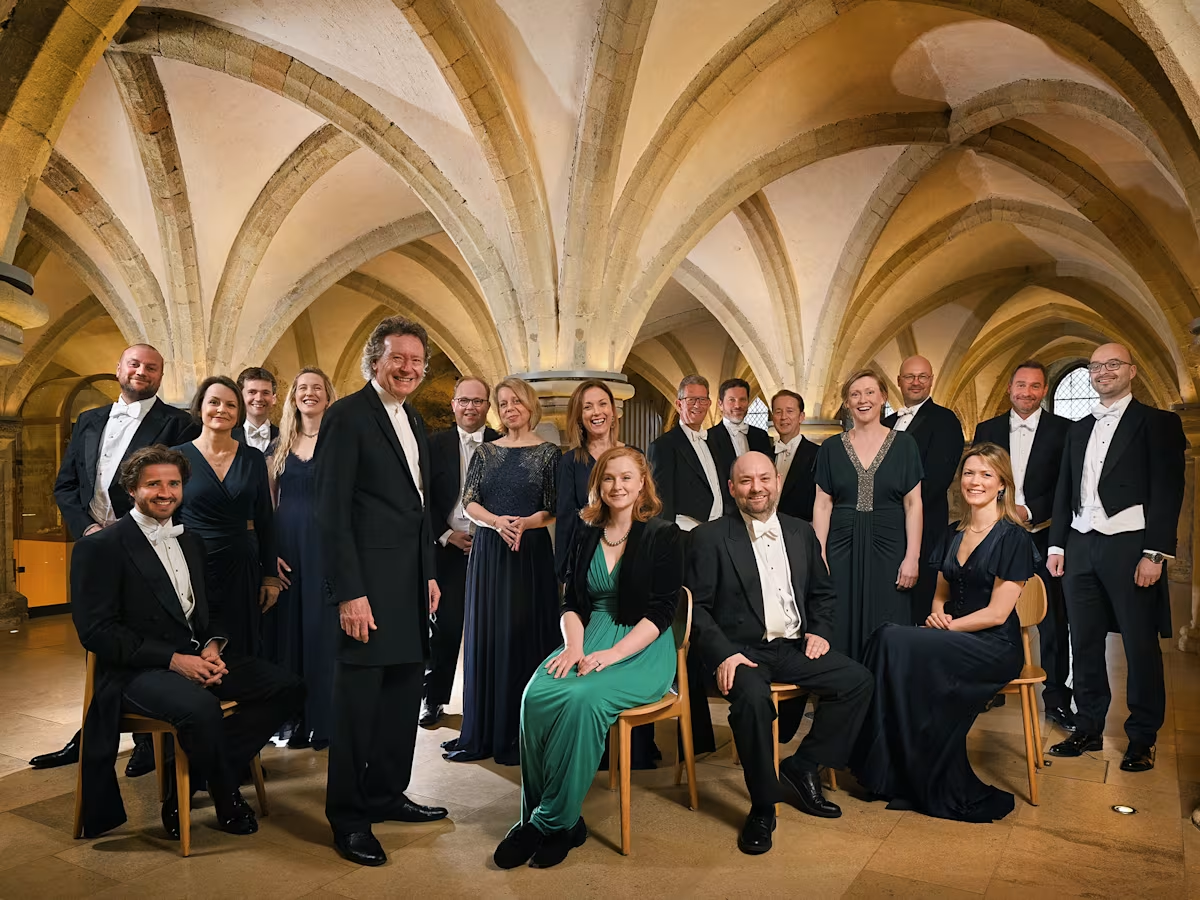
He reflects that the type of singers has developed through the years, with more women coming in. ‘There is a mix of alto sounds now, not just the laser beam countertenor sound of the 1970s. For some reason, there is a shortage of good choral countertenors at the moment while there is a plethora of excellent female altos.’
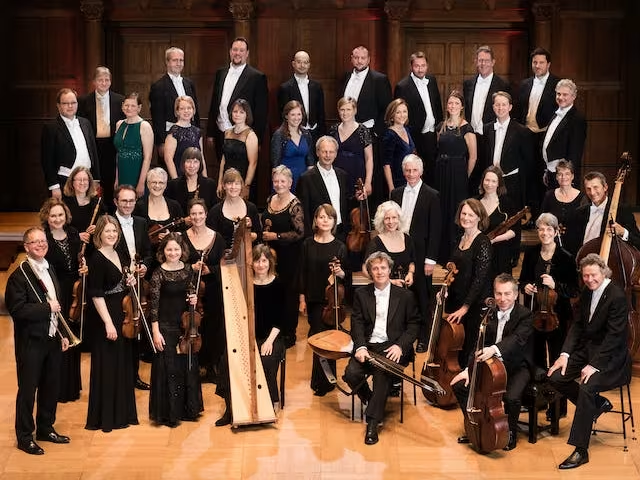
There never were just 16 people in the group all the time, although four of each voice was the basic idea – equal parts for balance. Even the official photo on the website (see above) includes 19, plus Harry. The ensemble always expanded or contracted, adding a period-instrument orchestra or remaining a cappella, as the repertoire required. The one constant in the repertoire of the choir is that it is predominantly sacred, though without any strong preference for the Anglican or Catholic tradition. However, in the last 15 years, the funding from the Genesis Foundation and the major collaborations with Sir James MacMillan have tipped the balance towards the Catholic side.
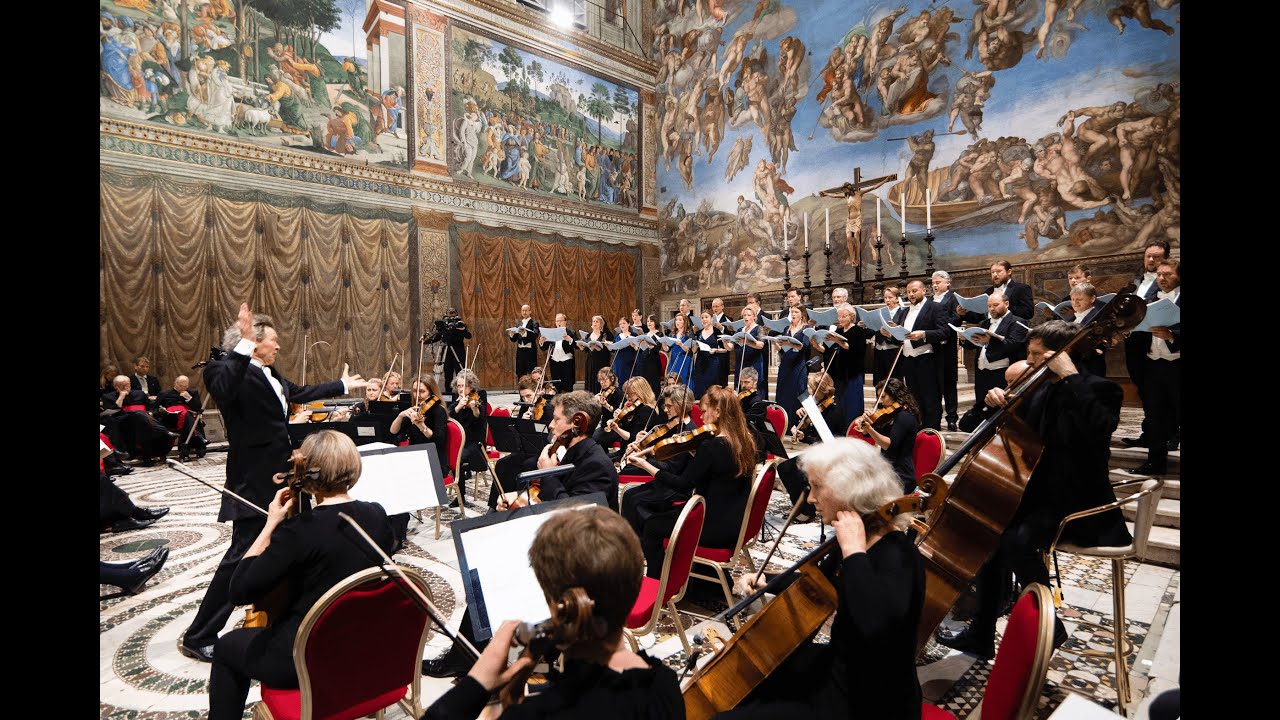 ▶
▶Harry Christophers & The Sixteen at the Vatican premiere of Sir James MacMillan’s Stabat Mater in the Sistine Chapel (22 Apr 2018)
This year sees the 26th edition of The Sixteen’s Choral Pilgrimage, which started in 2000 and, he says, ‘this really is the 26th; we did something even in the COVID years. It started as a Millennium project when a big commission fell through. The President of Magdalen, Anthony Smith, suggested the idea and we said, “that’s mad, we’ll lose a fortune”, but we didn’t. We realised that concerts had been very London-centric and that there is a big audience that is not. We visited 12 cathedrals in the first year, starting in York and, aptly, finishing in Canterbury. Now the concerts are still mostly in cathedrals but not all, and not all the cathedrals are the obvious ones. For example, Blackburn Cathedral has the best acoustics in the country, and we’ve found that doing matinées there brings in not just the older audience, but the young as well. The principles of the pilgrimage have always been the same; to take the music back to the sort of places it was written for.’
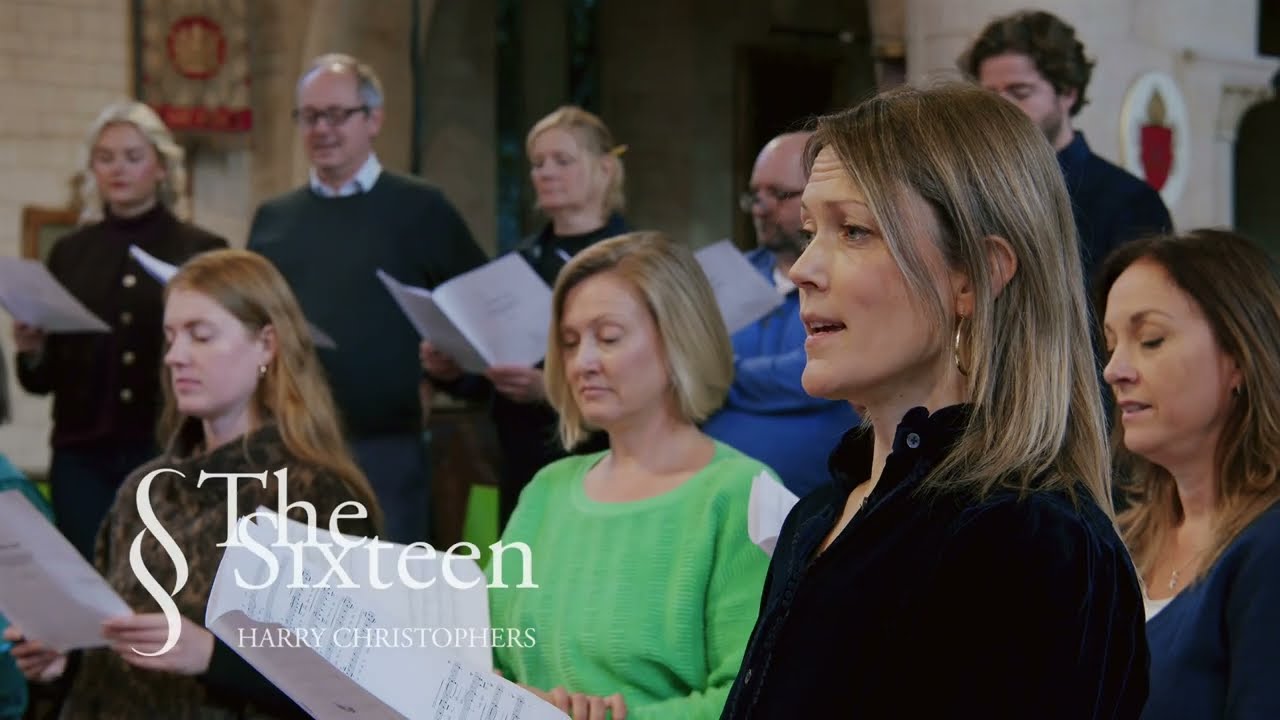 ▶
▶For the Choral Pilgrimage 2026, Harry Christophers & The Sixteen perform music from the Spanish Renaissance by Morales and Vivanco, plus the world premiere of a new commission by Kerensa Briggs, and music from James MacMillan.
The 2026 migration starts in Southwell Minster on 16 April and comes to rest in Edinburgh’s Greyfriars Kirk on 17 October. To go with it, The Sixteen have released a CD on the CORO label of the whole programme for the concerts, Lead, Kindly Light (CORO 16218). The title work is a new commission from Kerensa Briggs, herself a life-long product of the cathedral tradition, and works by the Spanish composers Sebastián de Vivanco (c. 1551–1622) and Cristóbal de Morales (c. 1500–1553). ‘What is amazing for me about the Spanish music,’ Harry says, ‘is that it feels totally Iberian, very different from the Catholic music that was being written elsewhere.’
Harry Christophers & The Sixteen perform Vivanco’s Caritas Pater est a9
The programme also includes MacMillan’s Nothing In Vain. ‘The work was written for us two or three years ago as part of a project for the Genesis Foundation.’ The words are by Cardinal John Henry Newman, whose writing was also the basis of Elgar’s The Dream of Gerontius. They were taken by Robert Willis (1947–2024), the former Dean of Canterbury Cathedral, who transformed it into a poem. ‘It’s such a good piece – it rivals James’s Miserere. He constantly challenges us, but listens to our singers if they have problems with what he has written. He tries things out and finds ways around the problems, so that he still finds the sounds he wants to achieve. On 22 March in the Sistine Chapel, we had another big commission from him, a 70-minute cantata, set to more poems by Robert Willis, called Angels Unawares.’
Having its own record label has been a huge boon to The Sixteen, giving Harry the freedom to record whatever programme he felt merited preserving. ‘We started CORO in the days when it was possible to make money out of selling CDs, and it has continued to be a success, but in recent years we have also been able to host other groups with which we have connections – Magdalen College Choir, obviously, but also Robert Hollingworth’s I Fagiolini and Boston’s Handel and Haydn Society, the oldest organisation with an uninterrupted record of public performances in the United States; in fact nearly anywhere – only the Leipzig Gewandhaus Orchestra beats it, I think.’ The label celebrates its silver anniversary this year.
Harry Christophers & The Handel and Haydn Society perform ‘The Representation of Chaos’ from Haydn’s The Creation
Harry Christophers spent 13 years as the Artistic Director of the Handel and Haydn Society and is now its Conductor Laureate. He reflects, ‘The Early Music scene in Boston is very good, but in the rest of the US the main venues still really don’t want to know. The home-grown organisations struggle to get into them. I loved my years there, though I did have to make sweeping changes both in the chorus and the orchestra when I arrived. However, some excellent singers started coming out of the woodwork, and I feel that after my decade or so I left it all in pretty good shape.’
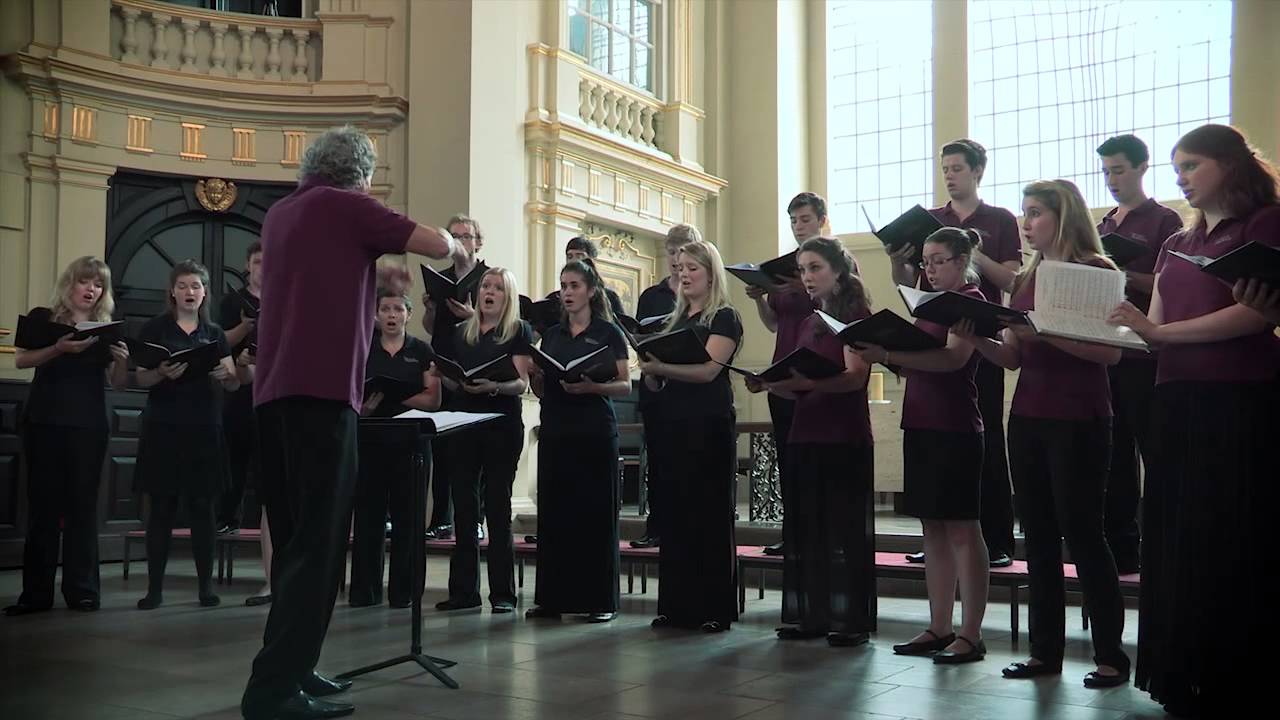 ▶
▶Harry Christophers conducts Genesis Sixteen in Salve Regina by Victoria.
Alongside The Sixteen's usual work, its young artist programme, Genesis Sixteen, is now appropriately in its 16th year. It aims to nurture the next generation of talented ensemble singers. During the course of a year, 22 singers aged between 18 and 23 attend a series of week-long and weekend courses with Harry and Eamonn Dougan (The Sixteen’s Associate Conductor), as well as getting mentoring and masterclasses. ‘We started it because I was desperate that there should be a legacy from The Sixteen. We’ve had over 300 singers through the courses, many of whom have gone on to do amazing things – from Glyndebourne to taking music into prisons. Each course takes just a few pieces, but rehearses them in incredible detail. We also do a couple of Evensongs because many of our students have never had the opportunity to sing in one. I have to tell them to sing naturally, not the way they think I want them to. I say, “you have a voice, let’s hear it”! It’s our job to put all those different voices together.’ That could be a maxim for all his impressive work with The Sixteen and around the world over the last 47 years.
‘Lead, Kindly Light’, the 2026 edition of The Sixteen’s Choral Pilgrimage, will start on 16 April in Southwell, Nottinghamshire, and will tour to 20 other locations across the UK, with a final performance in Edinburgh on 17 October. The Sixteen's latest album of the same name, featuring all the music from this year’s Choral Pilgrimage is available to purchase from The Sixteen's own label, CORO Records, and to listen on all major streaming platforms.
Share this
Keep reading
Exploring the golden age of the ‘City of Dreams’
‘City of Dreams’ is an exploration of two centuries of Renaissance Florence at Brighton Early Music Festival. We spoke to Oliver Webber, founder of Monteverdi String Band, and writer Saria Steyl about how the project came together.
Tallis: ‘Spem in alium’ – a forty-part motet
A favourite among choral fanatics, Tallis' 'Spem in alium' has a fascinating history and has more recently been used in an unexpected context.
Mary-Jannet Leith on collaborating with the Buskaid Soweto String Ensemble
In the first of a new series of Continuo Connect podcasts, Simon Mundy talks to Mary-Jannet Leith of Ensemble Hesperi about their collaboration with the Buskaid Soweto String Ensemble, and the music that once filled Scotland's country houses.