
Spotlight
In conversation: Tabea Debus
Share this

FIRST PUBLISHED 7 SEP 2026
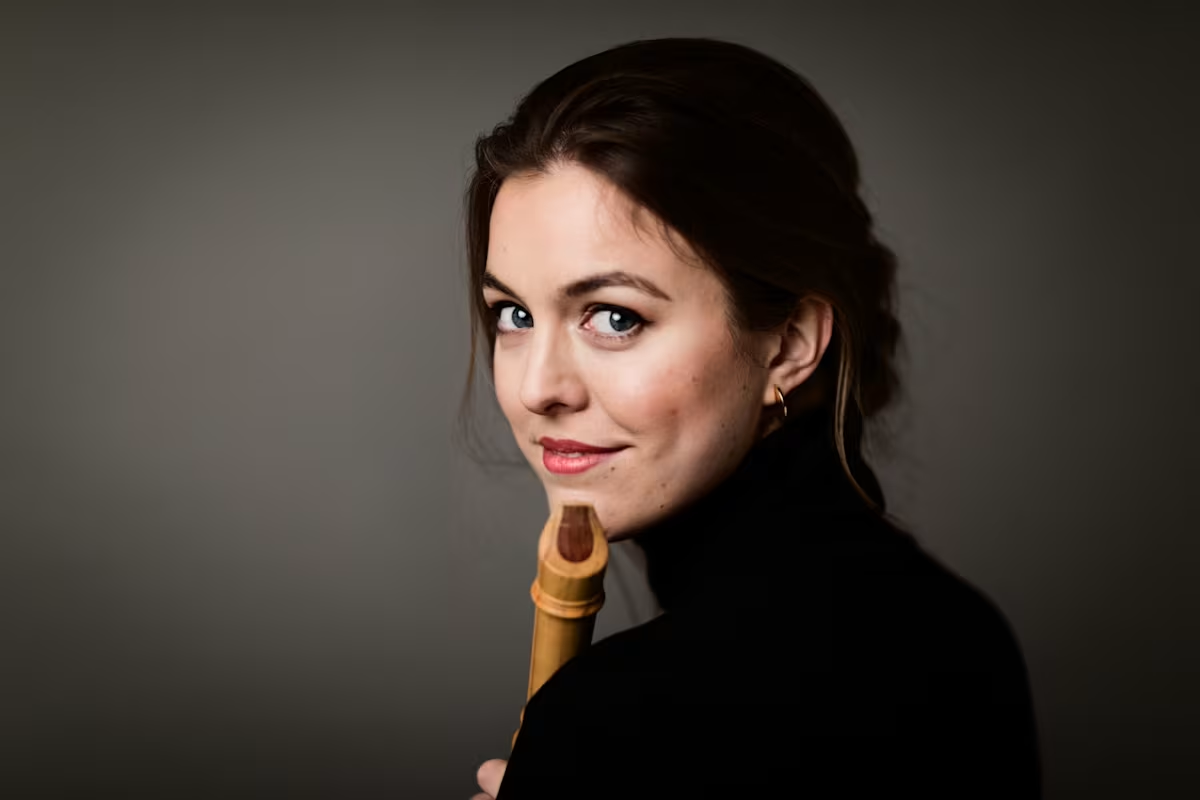
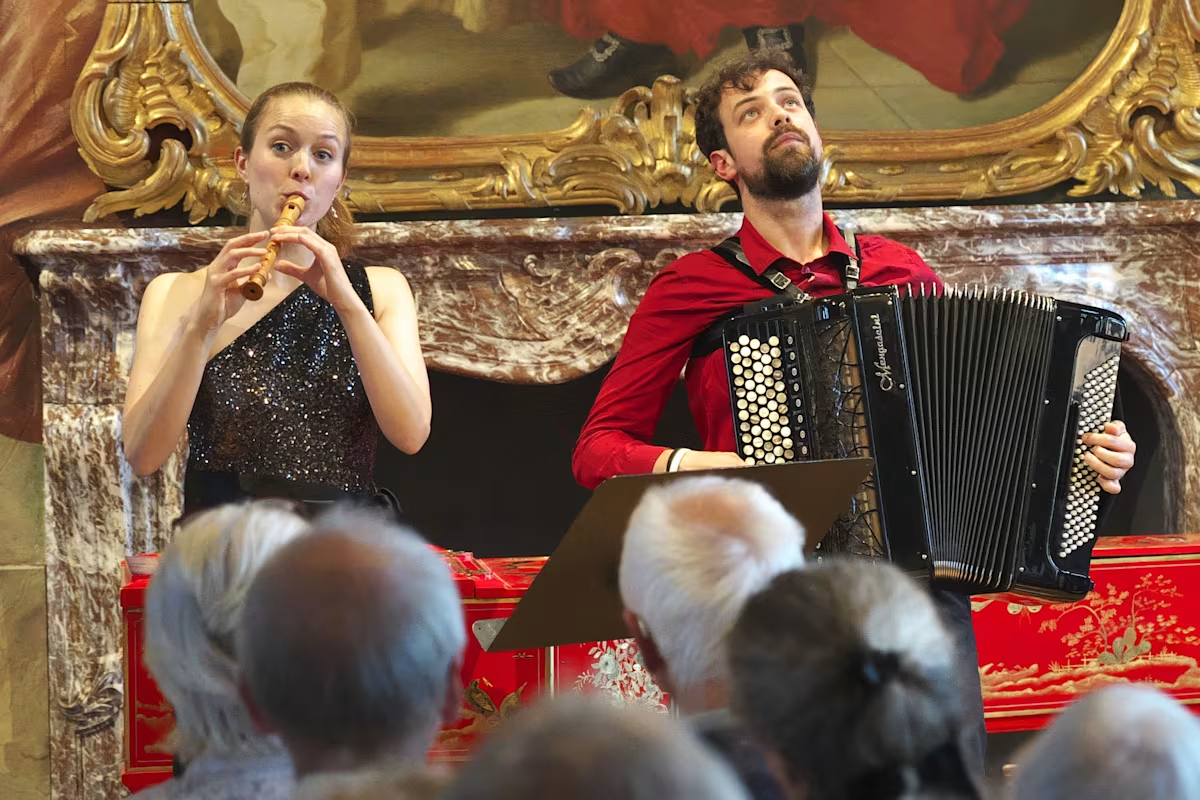
Described by The Times as a 'charismatic virtuoso' Tabea Debus is constantly exploring the horizons of music for the recorder and has performed widely in Europe, Asia, and the USA. Highlights include concerts at Wigmore Hall, Early Music Series in London and San Francisco, Spoleto Festival, Festspiele Mecklenburg-Vorpommern, and collaborations with La Serenissima, The English Concert and the Cedar Consort.
What do you love about being a musician?
The variety it brings to my life and the people I meet along the way! No week is the same as the last, travelling to places I would never otherwise discover and performing with wonderful colleagues and friends — what could be better?
What made you choose the recorder in the first place?
That happened more by chance than by design, through joining a family friend’s son for his recorder lessons. I realised I really enjoyed it, kept having lessons, and eventually ended up at the music school in my home town of Münster in Germany. Through the school we went on numerous trips, including to far-flung places such as Singapore and Malaysia – all playing the recorder. That’s when my dream of building a career as a recorder player started taking shape.
 ▶
▶Introducing the Baroque Recorder | Tabea Debus with the Orchestra of the Age of Enlightenment
How did you get into Historical Performance Practice/Early Music?
As a recorder player, 'getting into' Historical Performance and Early Music is a very natural process, which probably starts during the earliest stages of learning the instrument. For me, playing with other instruments (be it in a modern or Baroque setup) ignited that passion for Early Music, for which learning about Historical Performance Practices was a natural (and concurrent) next step.
Where did you encounter the most receptive audience?
I find that audiences generally tend to be won over by the variety of the recorder and its music. But perhaps the most receptive and curious audiences I have found in schools. With Palisander, outreach work is central to what we do as a group, and it's so rewarding to play for and with children of all backgrounds and give them an idea of what being a professional musician can be like.
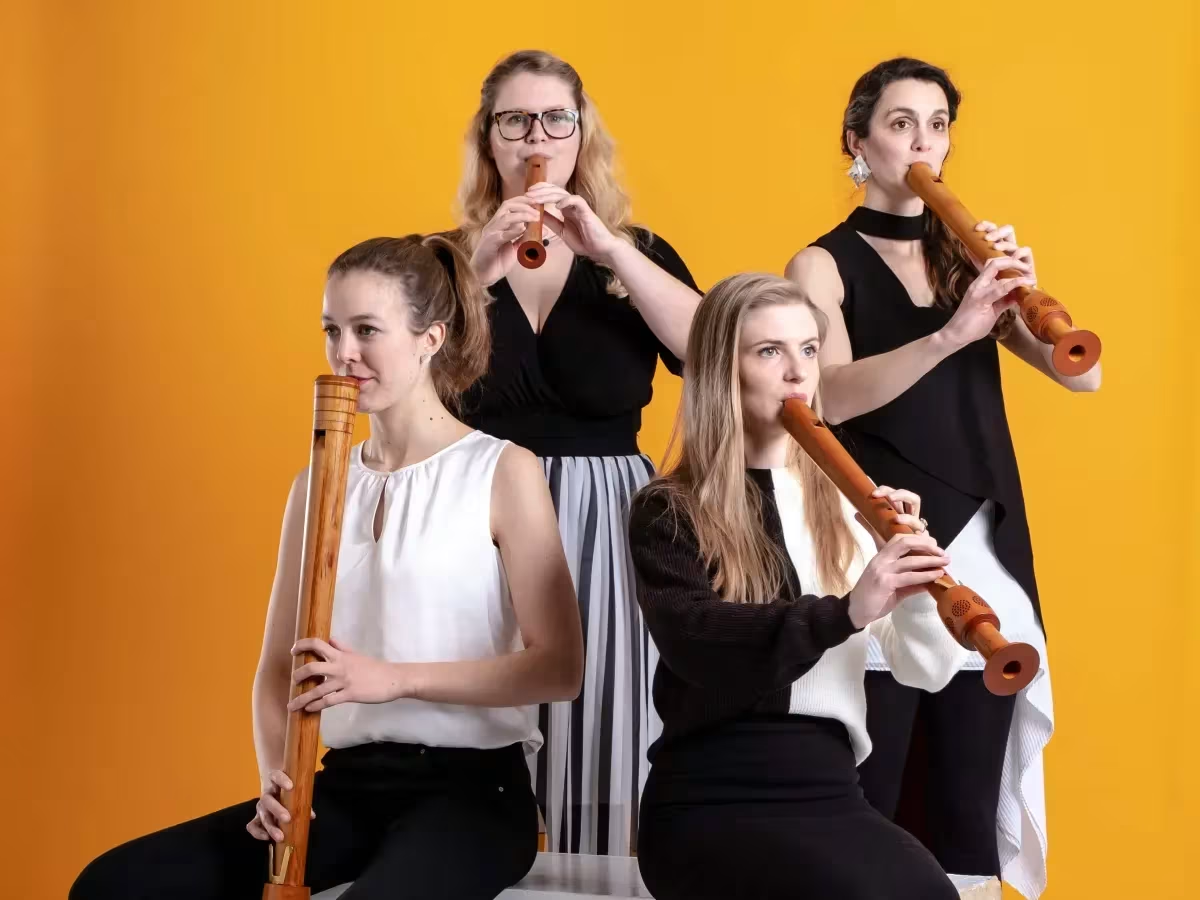
As a member of Palisander, what do you enjoy most about your role?
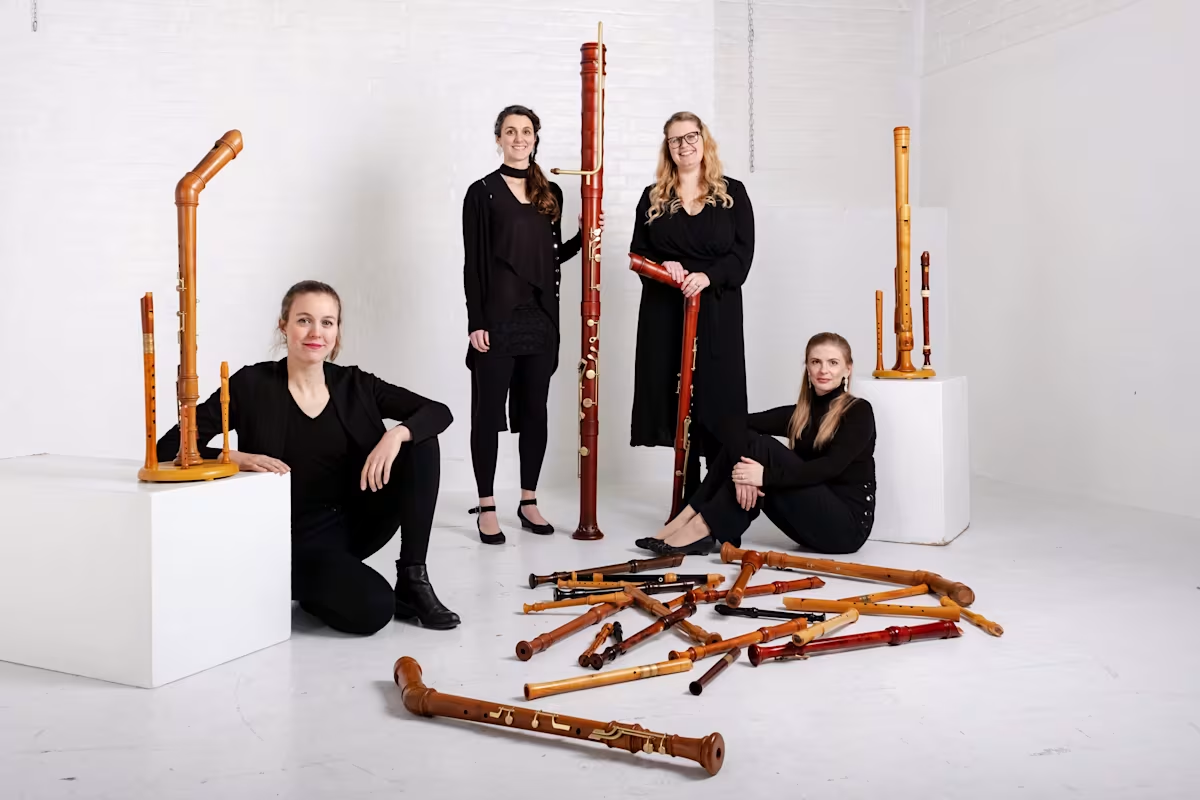
I’ve been friends with the other members of Palisander for years, so when they asked me to join them a few years ago, I couldn’t resist. I really enjoyed memorising the music of their programme and becoming part of this tight-knit ensemble and group of friends.
How has Continuo impacted your day-to-day life?
So many projects I’ve been fortunate to be involved with have been made possible by funding from the Continuo Foundation – from working with La Serenissima or the Cedar Consort to this latest venture with Palisander: the launch of our Palisander Playbook! series and tour of playing days and concerts. I reckon my diary would be emptier (and less varied) without the Continuo Foundation. And it’s wonderful to be able to spend (at least part of) your days dreaming up and planning new musical adventures, having the security that Continuo is able to provide.
What new doors have opened for you since becoming a grantee?
It has helped keep the 'door' between the UK and Germany open for me: teaching (and performing) in Germany and continuously returning to the UK to perform with ensembles here.
Palisander's latest Continuo Foundation-supported project celebrates the release of your new range of sheet music for recorder. Tell us a bit about how this book came to fruition!
Miriam Monaghan arranges and writes a lot of music for our Palisander's concert programmes, and people kept asking about the scores for these pieces. So now we have launched our own series of music publications, the Palisander Playbook! We can’t wait to share some of our music with recorder lovers across the UK and beyond, both in playing days, where they can try out the pieces in ensemble settings, and in Palisander Playbook-themed concerts.
The recorder is perhaps the most widely learnt instrument in schools in the UK. What is your philosophy on teaching the recorder, and why do you think it is such a great instrument for young musicians to study?
It is not for nothing that the recorder is often used (and much discussed) as a first instrument for young children: learning to play the recorder isn’t just about the instrument but about fine motor skills, breath control, listening and ensemble skills, to name just a few. Although the same goes for other instruments, of course, the recorder is such an immediate instrument. Anything you do and feel immediately translates to sound… which is also one of its biggest challenges.
What excites you in the world of recorders today?
I’ve just spent a few days in beautiful Amsterdam for the 7th edition of ORDA (Open Recorder Days Amsterdam) – so many exciting projects to discover there! I have a particular interest also in contemporary music for and with recorders, so I’m always keen to hear and play new pieces and collaborate with composers. Since starting my teaching position at the Musikhochschule in Hannover, I’m particularly enjoying looking at these pieces through the eyes of my students… and being presented with pieces I don’t know yet!
What is your greatest fear?
Non-music-related? Mice! Otherwise I probably share a lot of other recorder players' fears: forgetting part of my recorder for a concert, bringing the wrong pitched instrument, or, for Palisander, not remembering the right part!
What non-musical hobbies or interests do you have?
I like crafty and hands-on hobbies, like gardening (albeit currently just on a small balcony packed with pots of herbs and flowers) and baking.
Do you have a lucky charm or ritual that you follow before important concerts?
I have the ambition to develop one… and it becoming a key ritual. However, in reality, there are always last-minute tasks to complete before a concert starts, which often take priority over 'lucky charms'. But changing into concert clothes and doing at least one slow, calming breathing exercise will always put me in concert mood.
Who is your favourite composer, and why?
Telemann, of course ;-) His music is just a joy to play, very recorder-idiomatic and sits well under the fingers, whilst being a fun challenge at the same time.
No. 1 listening recommendation?
Of course, a recorder one! 'Baroque Recorder Concertos' with Pamela Thorby and Sonnerie. I love these interpretations, and especially Pamela’s ornaments. This album inspired me to return to the UK to continue my studies here!
'Baroque Recorder Concertos' with Pamela Thorby and Sonnerie
Tabea will be performing with Palisander on 17 October (Edinburgh) and and 18 October (Ely) for their Palisander Playbook Live! event days. The series celebrates the launch of Palisander’s new recorder ensemble sheet music range, which launched in Spring 2026. Each event day comprises a 'playing day' for amateur recorder players followed by an evening concert from Palisander open to the public. Both parts draw on repertoire from the new Palisander Playbook editions, including arrangements of medieval, renaissance and baroque music for recorder ensemble, alongside new compositions inspired by the historical art of consort writing.

Share this
Keep reading
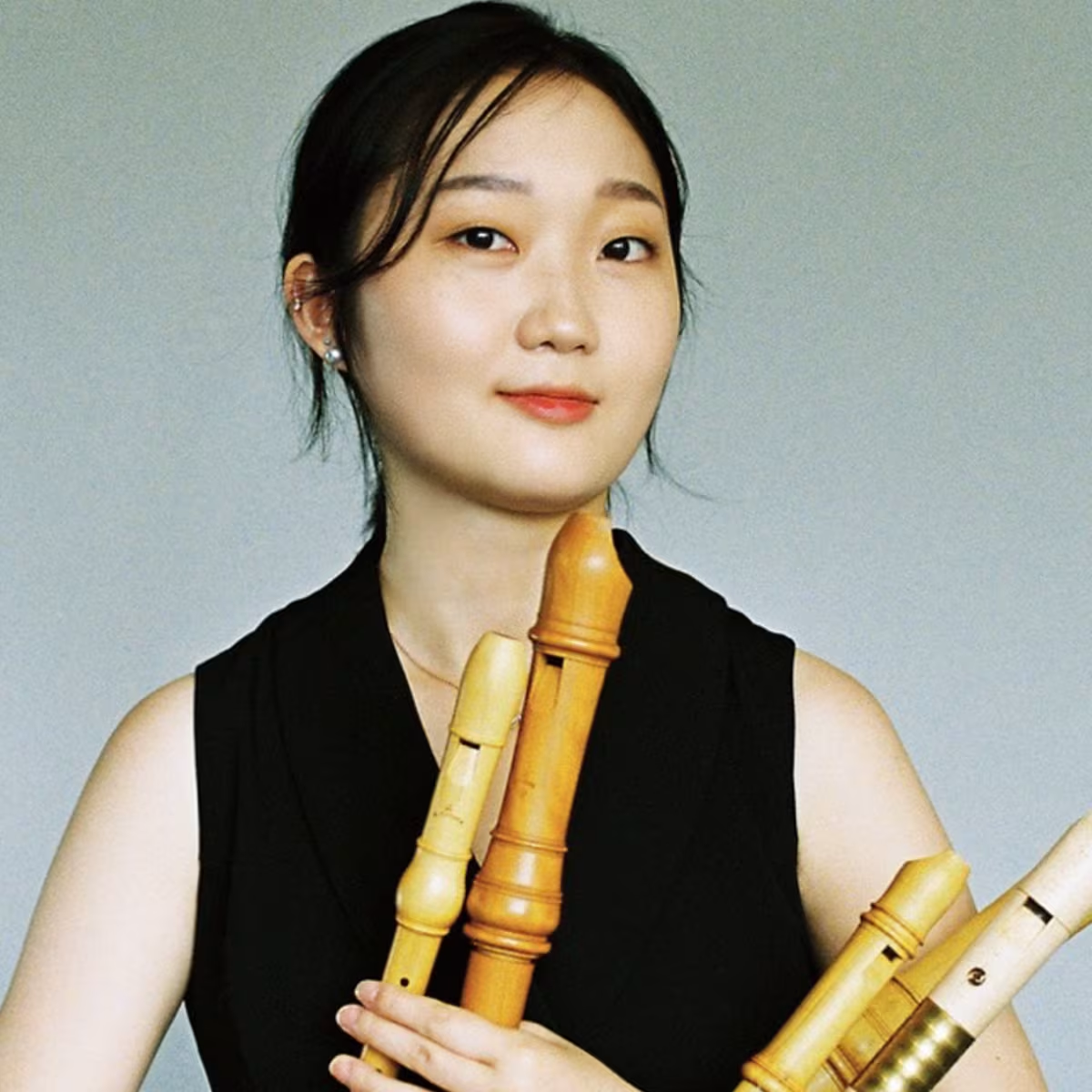
LIFEM 2026: Interview with Eun Sol Lee
The Early Music Shop caught up with Sol to find out more about her year since she won the competition, and what we have to look forward to in her performance at LIFEM this year...
JS Bach, and a cabinet of curiosities: Jorge Jiménez
Violinist, director and composer Jorge Jiménez talks to Simon Mundy about his latest album Curiosa: Lost & Found Tunes, his new Bach weekend in Ipswich, and his freelance career balancing life in rural Essex with regular work in Spain.
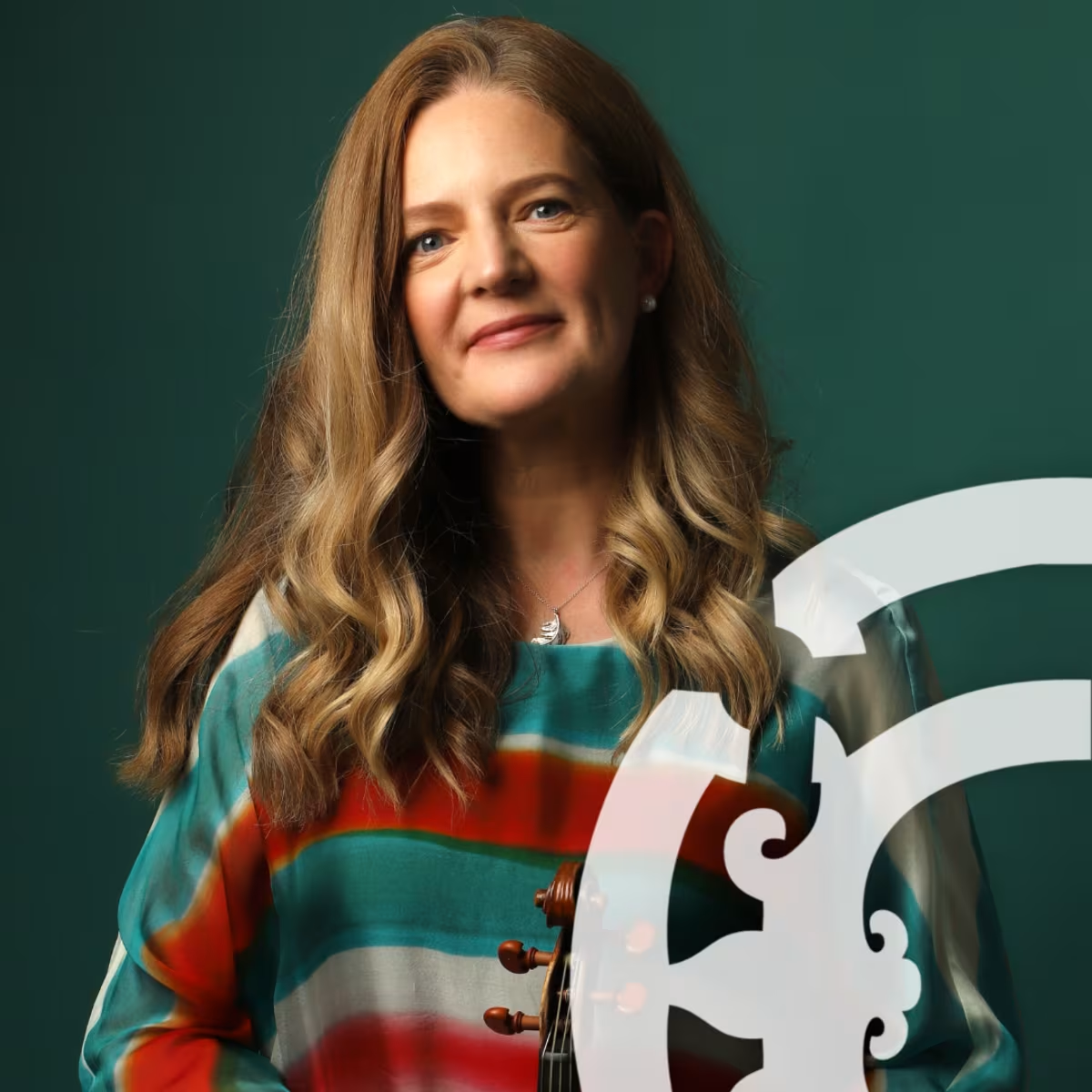
The Best of Rachel Podger
This playlist celebrates 'the unsurpassed British glory of the baroque violin' (The Times) - that is of course Rachel Podger.