

Spotlight
In conversation: Kinga Ujszászi
Share this

FIRST PUBLISHED 05 APR 2026
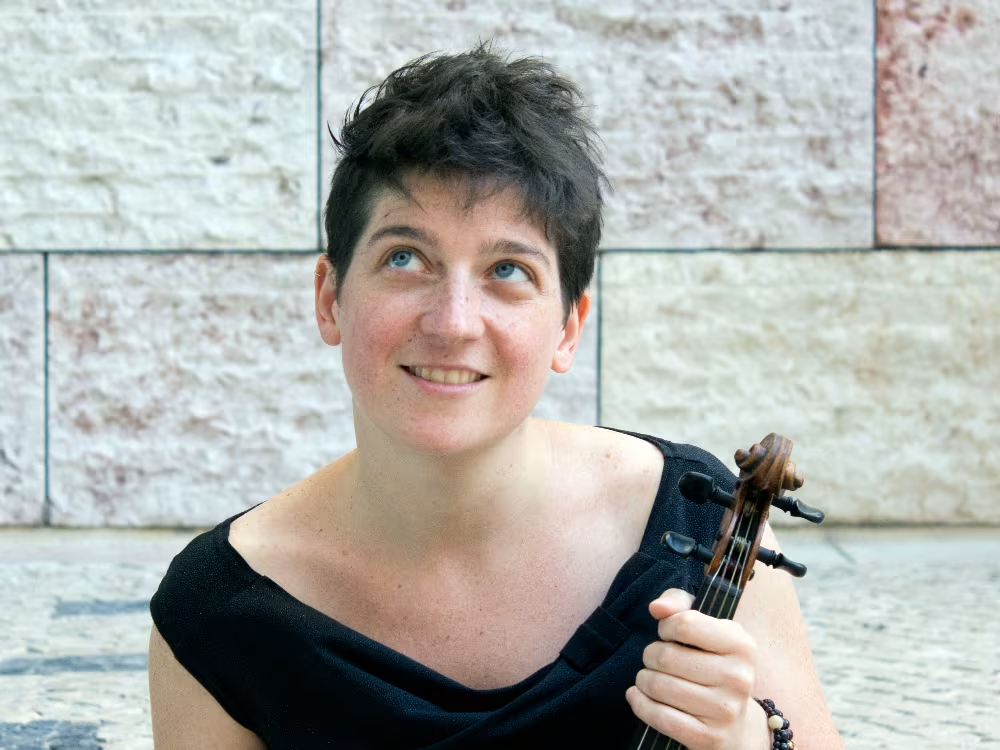
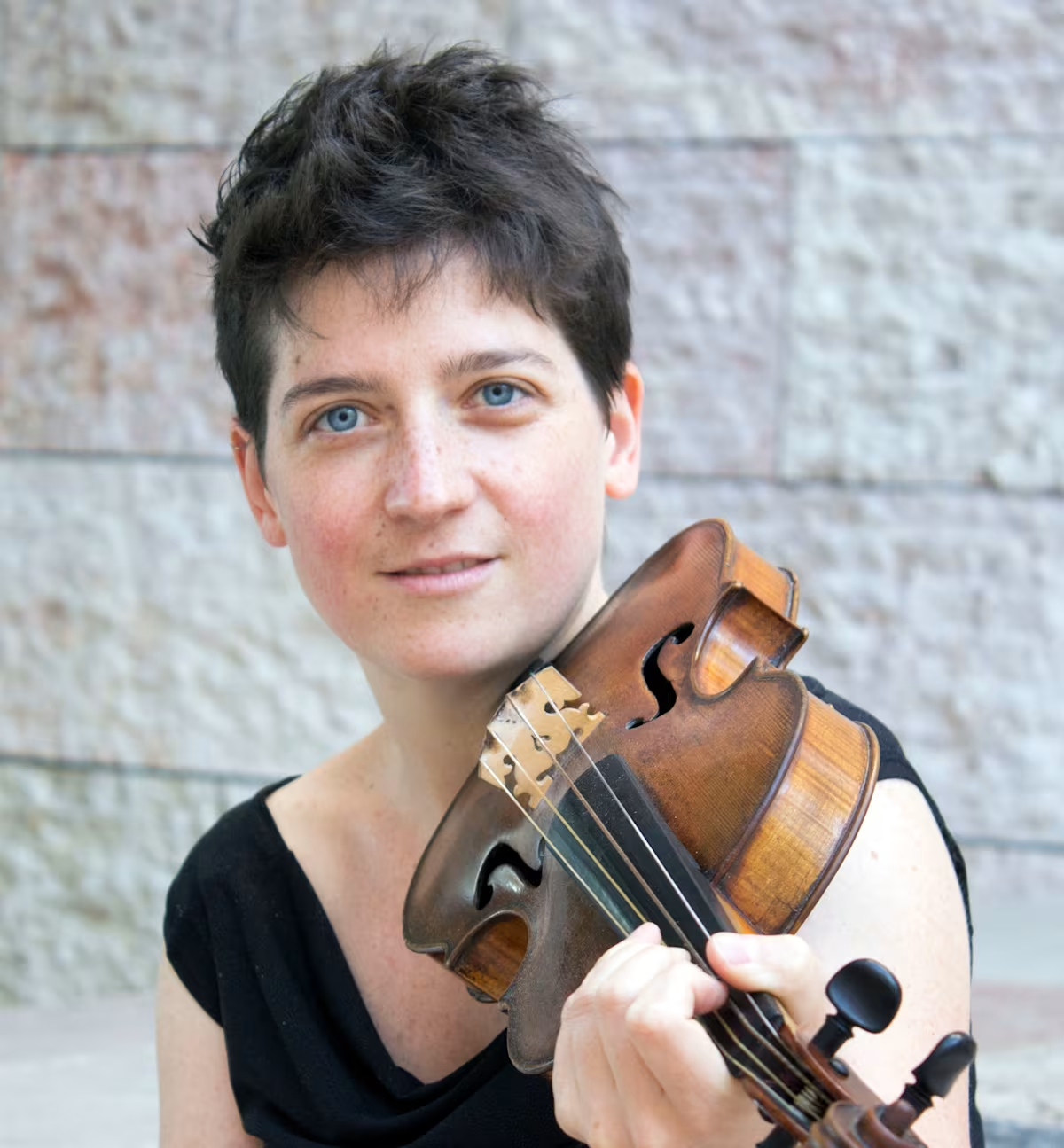
Kinga Ujszászi moved to London to study at the Royal Academy of Music after graduating from the Franz Liszt Music Academy in Budapest. At the Academy she got interested in historical performance and picked up the baroque violin. Since then she has played with many of the leading period performance groups of England and Europe. She is Director of Spiritato and she regularly leads numerous other ensembles, including L'Arpeggiata, Barokkanerne, and Irish Baroque Orchestra. She is also a member of The English Concert and the OAE. Her first solo album, ‘Assassini, Assassinati’ with baroque duo, Repicco, featuring music from the very turbulent 17th century Italy, received high praise from prestigious music magazines and was awarded with 5 diapasons.
You have a very busy international touring schedule. Where is your favourite place to visit to perform, and why?
A very difficult question to answer! I still get giddy about playing in some concert venues, like Carnegie Hall or the Concertgebouw. New York City is always an exciting place to return to, but I feel like I never have enough time to spend there. It’s a place where I could just walk around for days on end – hanging out in local bars, rummaging through second-hand bookshops, eating peanut butter M&Ms, cycling around Central Park, and going to gigs.
That said, some of my favourite places to perform aren’t necessarily the most famous ones. I’ve had unforgettable experiences in smaller cities and venues where the connection with the audience feels especially strong. It is often easier to meet local people and to really absorb the atmosphere of a place. Touring has taken me to many places where a meal becomes part of the memory of a performance – you step out of a hall after a concert and find yourself in a small local restaurant with incredible food and a glass of local wine. Those moments of unwinding together with colleagues over a great meal are just as much a part of the experience as the concert itself.
And there are still many places I would like to discover this way!
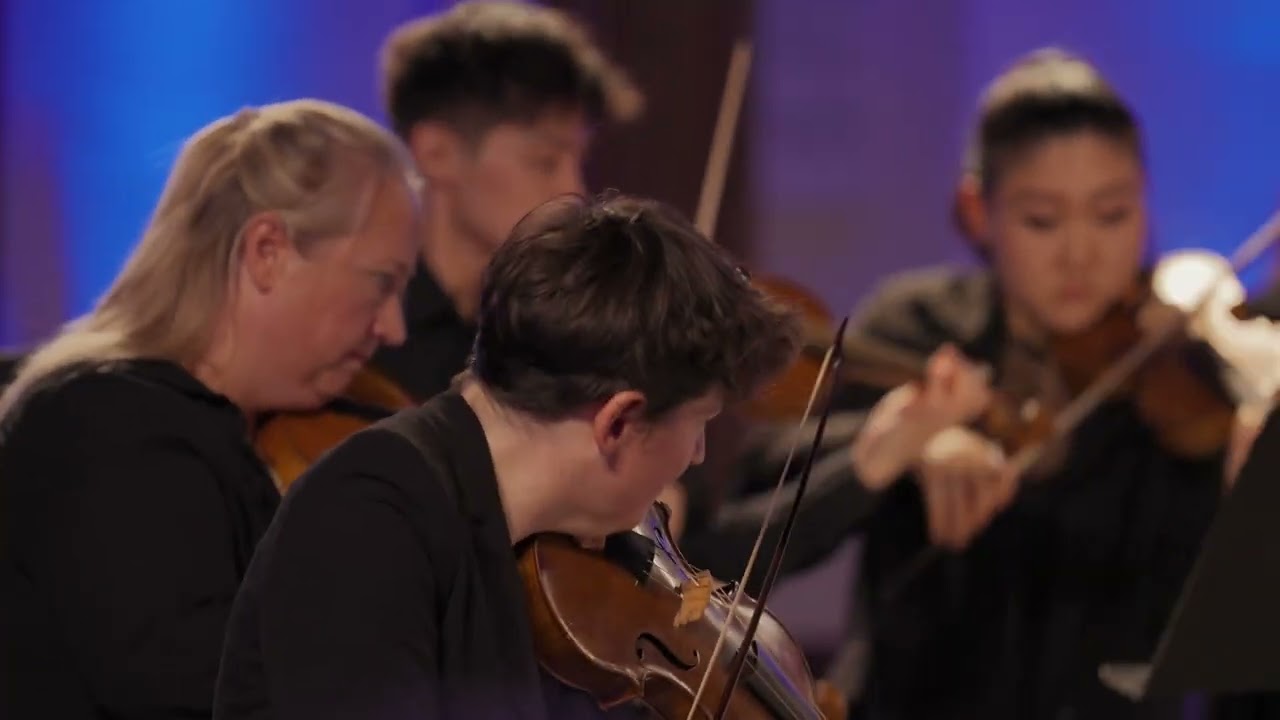 ▶
▶C Graupner: Overture Suite in D major (GWV 420) | Spiritato, directed by Kinga Ujszászi | Recorded live at the London Festival of Baroque Music, Smith Square Hall, London on 7 November 2025, by Tom Mungall and John Henry Baker (supported by Continuo Foundation)
Tell us a little about your Cabinet of Wonders project with Tom Foster.
The 'Cabinet of Wonders', our ‘Cabinet of Curiosities’, is a project very close to my heart. Together with Tom Foster, we aim to uncover lesser-known violin sonatas from the Dresden Hofkapelle’s remarkable manuscript collection, Schrank II.
I’ve always loved the process of discovery: working through sometimes barely legible manuscripts and feeling the spark when something jumps off the page. We are taking a deep dive into this cabinet, which is probably the most famous wardrobe in the music world. It contains over a thousand manuscripts, mainly collected and copied by the violinist Johann Georg Pisendel, offering a window into the musical world of the 18th-century Dresden court. It’s an extraordinarily rich resource, full of repertoire that ranges from well-known masterpieces to works that have completely disappeared from modern performance.
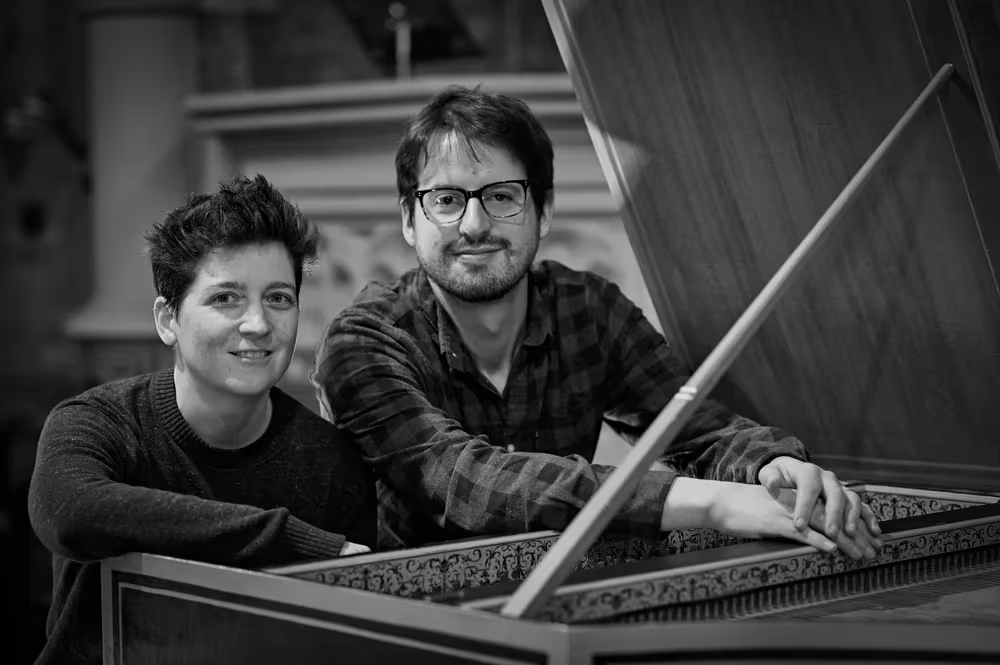
While parts of the collection form the core of today’s Baroque canon, a huge amount remains unexplored. Our goal is to seek out those hidden gems and bring them to life again for contemporary audiences. This process is very exciting from the beginning to the end. Unearthing, deciphering, editing, recording and performing the music. We’ve played through countless manuscripts in search of the pieces which surprised us. We had a lot of fun (and sweat and tears) bringing these pieces back to life! There is something deeply satisfying about giving these works a new life beyond the dark cabinet.
And if anyone happens to stumble over Schrank I or III, do give me a call!
Johann Joseph Vilsmayr: Violin Sonata in E-flat: IV. Passacaglia from Cabinet of Wonders, Vol. 1 | Kinga Ujszászi & Tom Foster
What is your idea of perfect happiness?
Sitting around the fire with lovely people, cooking food to share, having a drink, playing games, and staying up late into the night chatting.
What is your superpower / superhero ability?
If I had to choose, I’d say my two superpowers are adaptability and sleep.
As a freelance musician, I move constantly between different ensembles, countries, and roles. One day I might be playing solo repertoire, the next working within a large group, and then directing, teaching, or editing music. I really enjoy that variety – the challenge of shifting ‘colours’, sometimes several times in a single week. It also means adapting to different people, working styles, and occasionally very unexpected circumstances. Being able to adapt quickly to different situations is essential, and finding the fun and joy in it feels like a real superpower.
And almost more importantly: the ability to fall asleep pretty much anywhere. On planes and trains, or in slightly questionable accommodation after a late concert. It might sound trivial, but it’s essential. With early starts, late finishes, constant travel, and ever-changing environments, being able to close your eyes and switch off quickly is a great gift. Without that, touring life would be much harder to maintain.
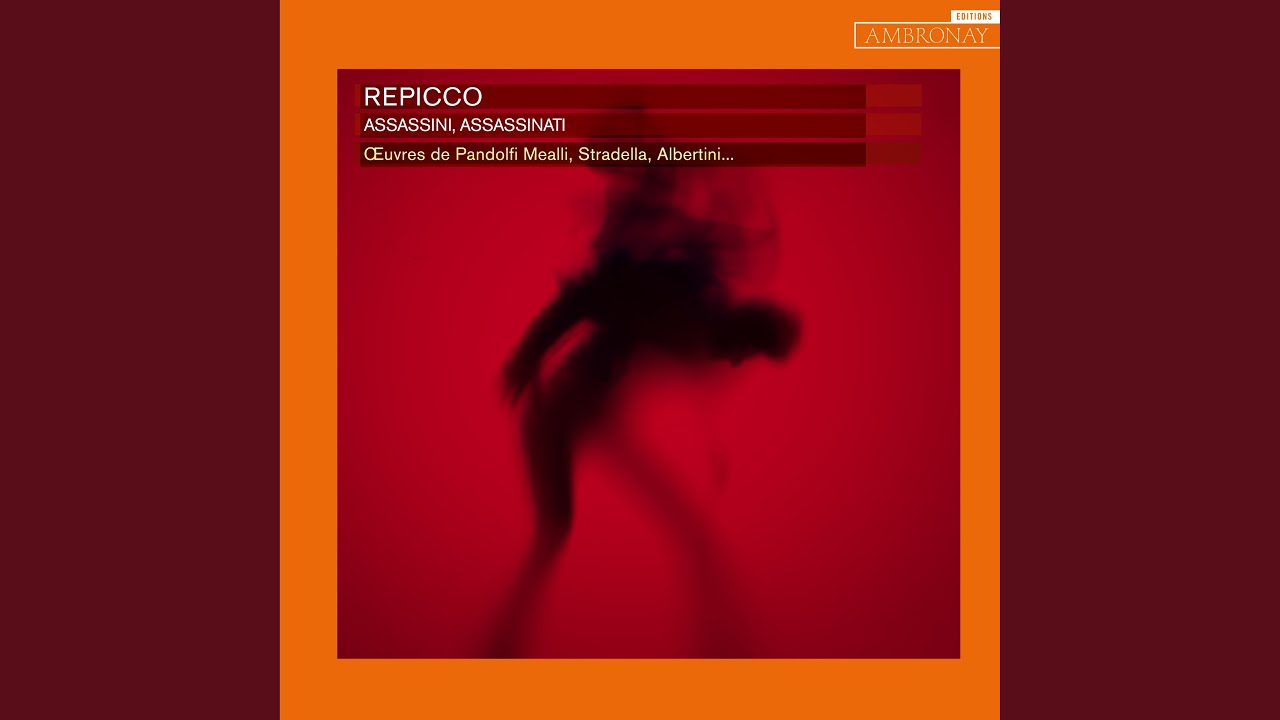 ▶
▶Ignazio Albertini: Sonata No. 1 from Assassini, Assassinati’, Kinga Ujszászi's first solo album with baroque duo, Repicco
What non-musical hobbies or interests do you have?
I have quite a few interests – more than I often have time for, unfortunately – but there are a handful of non-musical activities I do find very relaxing.
Reading is a big one. Where there are books, I feel happy. I also love being outdoors: skiing, hiking – really anything mountain-related. I also enjoy playing board games and cooking; they make me feel grounded. Many musicians share similar interests; it probably comes with travelling and curiosity. But we all need to reboot at home sometimes and enjoy the downtime.
I’m also quite into coffee. I’m one of those annoying people who travels with their own coffee gear. It’s become a small but important ritual – no matter which country or airport hotel I wake up in, I can make myself a cup of coffee the way I prefer it before the day begins. No need to be presentable, no need to go anywhere – just a quiet, grounding moment. A small bubble of luxury that travels with me.
What is it that you most dislike? Feel free to explain why, or not!
Non-authenticity, airlines’ ever-changing instrument policies, and – perhaps inevitably – queuing.
Non-authenticity is probably the one that bothers me most. Whether in music or in people, I find it difficult when something feels insincere or forced. For me honesty, curiosity and individuality make both performances and human interactions meaningful.
What is your earliest musical memory?
Coming from a musical family, it’s hard to pinpoint a single ‘earliest’ memory. But I vividly remember seeing my first opera at the age of four: The Magic Flute. My father was a viola player in the Hungarian National Opera, and I used to make him tell me the stories of whichever operas he was performing. When he finally took me to see The Magic Flute, I immediately fell in love with it – although I suspect the dragon and the lions may have helped!
When we got home, I immediately asked if we had a recording. For months afterwards, I insisted on listening to the LP over and over again—so much so that my parents were probably thoroughly tired of the Queen of the Night. But I can still sing the whole opera by heart.
Another very memorable ‘first’ was my debut as an orchestral musician at the age of six, when I was entrusted with the extremely important and prestigious role of the triangle player. I remember it vividly because, just before the concert, I misplaced my triangle. I remember running around in a panic, convinced I had ruined the entire performance – and possibly my musical career. Fortunately, the mischievous triangle was spotted just in time, and disaster was narrowly avoided.
How has classical music influenced your life outside of performing?
In every possible way. For most dedicated musicians, it’s almost impossible to separate life from performing. It shapes what you read, where and how you live, where you travel, your daily routines – so often even when you eat and sleep. It becomes a framework for your whole life.
What’s so special about HIP/early music performances?
The people, the curiosity, and the freedom.
Early musicians are a wonderfully curious, slightly geeky bunch of people, united by a genuine love for what we do. There’s a shared desire to dig deeper and question what we know.
William Corbett: Le bizarrie universali: Al' inglese: Aria Cantabile | Kinga Ujszászi & Spiritato
I also enjoy the freedom we can have, all the things which are not written on the page. The space for improvisation, ornaments, the choices that the continuo players have to make, freedom in instrumentation, and so much more. I love how the written music is only a jumping-off point and not an end product by any means.
Can you describe the feeling of truly understanding a complex piece of music?
I don’t think that’s actually possible. I wouldn’t say I’ve ever completely understood a piece. You can analyse structure and harmony, but music goes beyond that. The wonderful thing about being a performer is that, even after many performances, you keep discovering something new.
With every performance, every performer and every listener, the ‘same’ music changes into something new. In music nothing is ever static, not even the piece itself. That’s why live music remains such a profound part of being human.
Who is your favourite composer, and why?
My order is purely chronological here:
Claudio Monteverdi – his expression of human emotion still moves us centuries later, even in a completely different social backdrop.
Heinrich Ignaz Franz Biber – I’m a violinist at heart, after all! I love his innovative writing for the violin, his philosophical approach, and how even his most virtuosic writing is always rooted in expression, never self-serving.
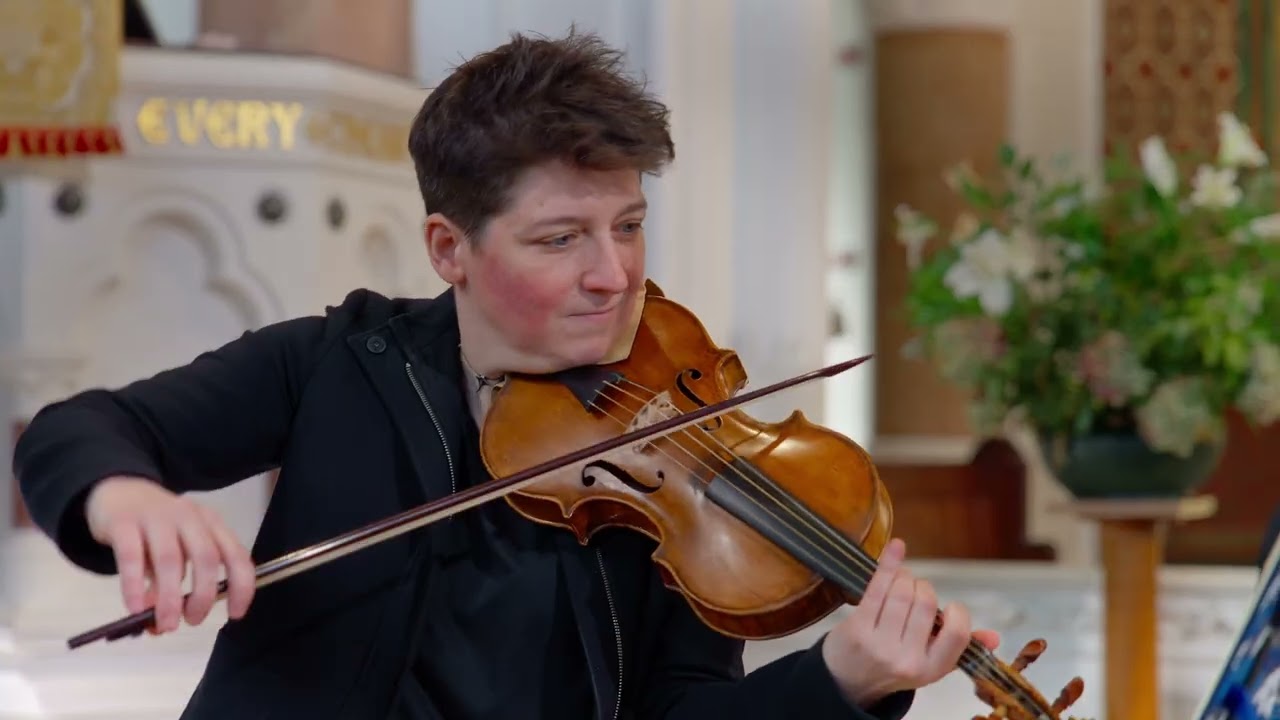 ▶
▶Biber: Sonata No 3 in F (1681) | Kinga Ujszaszi, violin; Carina Cosgrave, violone; Tom Foster, harpsichord; Sergio Buchelli, lute
Joseph Haydn – His incredible catalogue of string quartets would be almost enough to put him on my list. But there are many sides to him. He is witty, he is very clever, he composes beautiful melodies, and he makes me laugh.
Franz Schubert – I just adore his chamber music! His music deeply moves me.
If you could meet anyone from the past, who would it be?
Leonardo da Vinci. I’d love to spend time with him in the 15th century (with some modern medicine in my pocket, just in case!) to witness his curiosity at work. And then bring him into our world and show him how many of his ideas shape everyday life.
Share this
Keep reading
Playlist: Continuo Patrons
A playlist of tracks by Continuo Foundation Patrons Mary Bevan, Emma Kirkby, Rachel Podger and Ashley Solomon in celebration of the UN International Day of Charity.
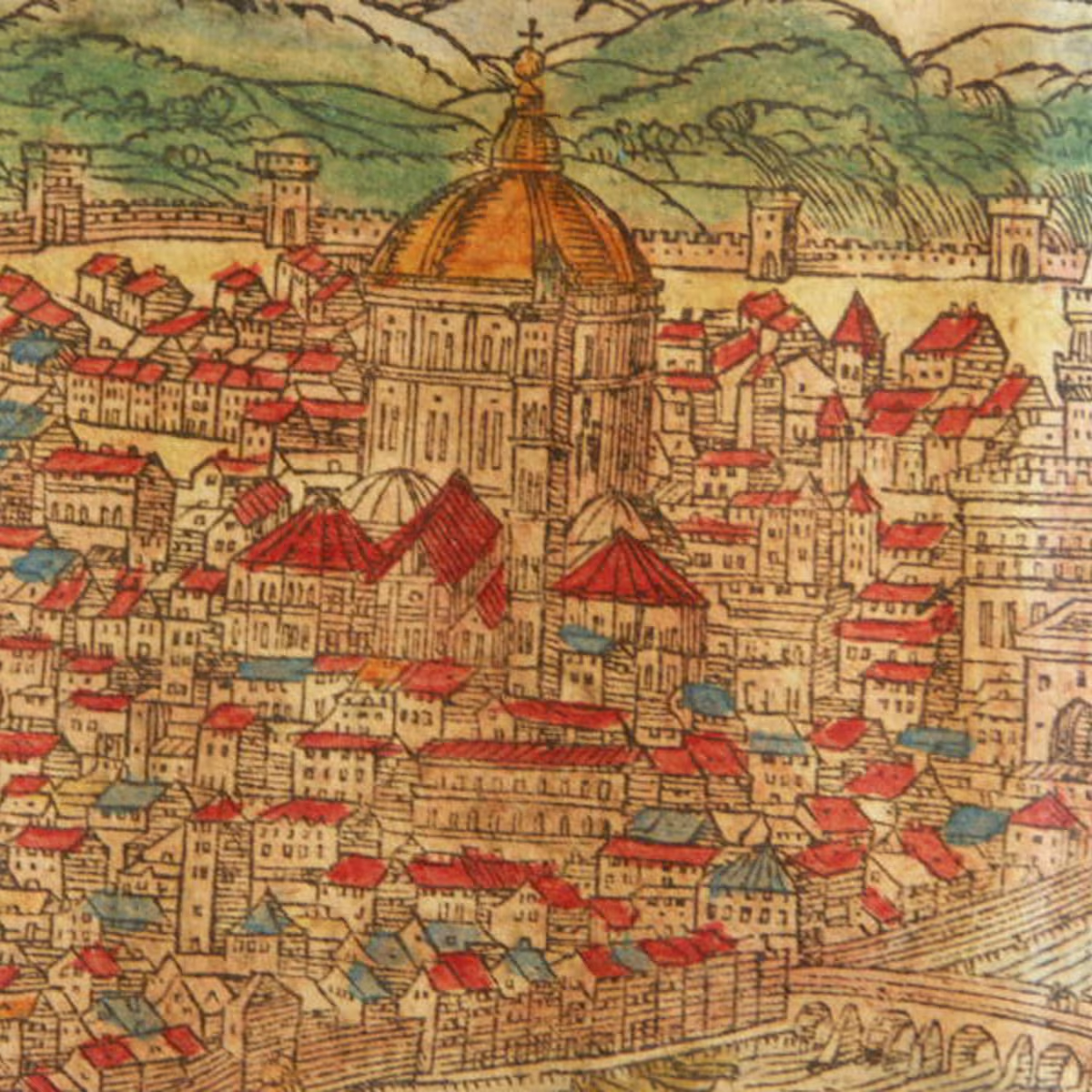
Exploring the golden age of the ‘City of Dreams’
‘City of Dreams’ is an exploration of two centuries of Renaissance Florence at Brighton Early Music Festival. We spoke to Oliver Webber, founder of Monteverdi String Band, and writer Saria Steyl about how the project came together.
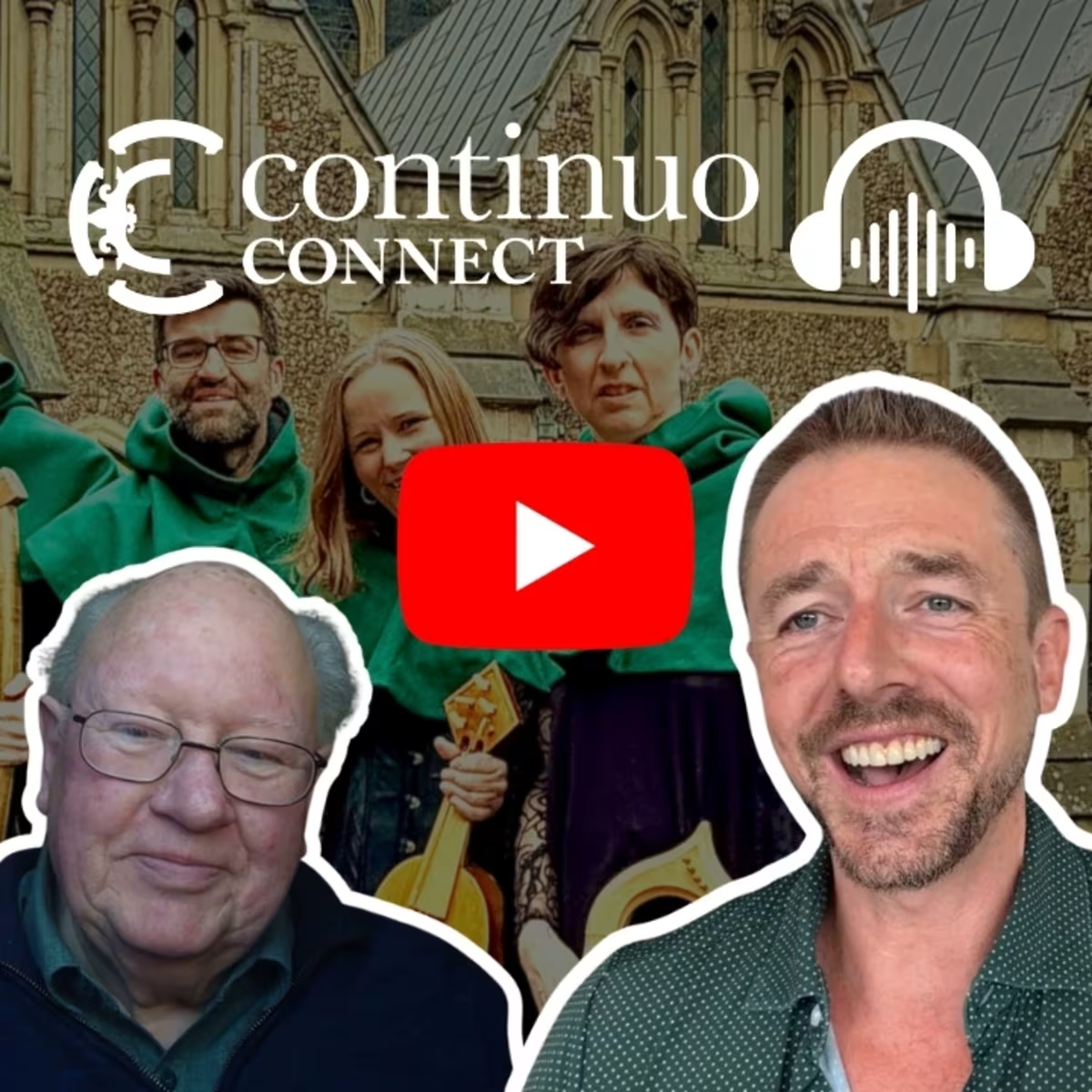
The soundtrack of imagination: David Yardley and Green Dragon Guild of London
Medieval countertenor David Yardley, Artistic Director of Green Dragon Guild of London, discusses Medieval music, Southwark’s layered history, and how imagination and meticulous research meet in performance in our latest podcast.