
Feature
Sound on canvas: Jérémie Queyras
Live-painting concerts in collaboration with Parnassus
Share this

FIRST PUBLISHED 10 MAY 2026
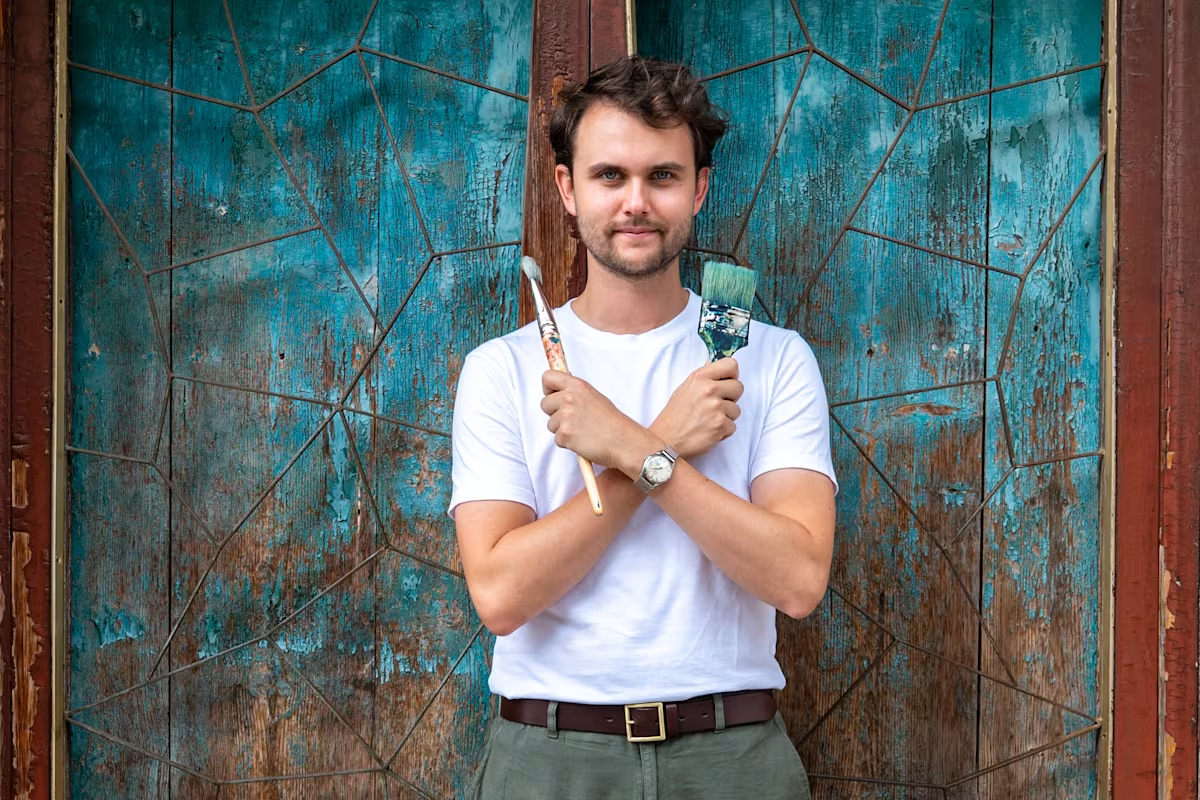
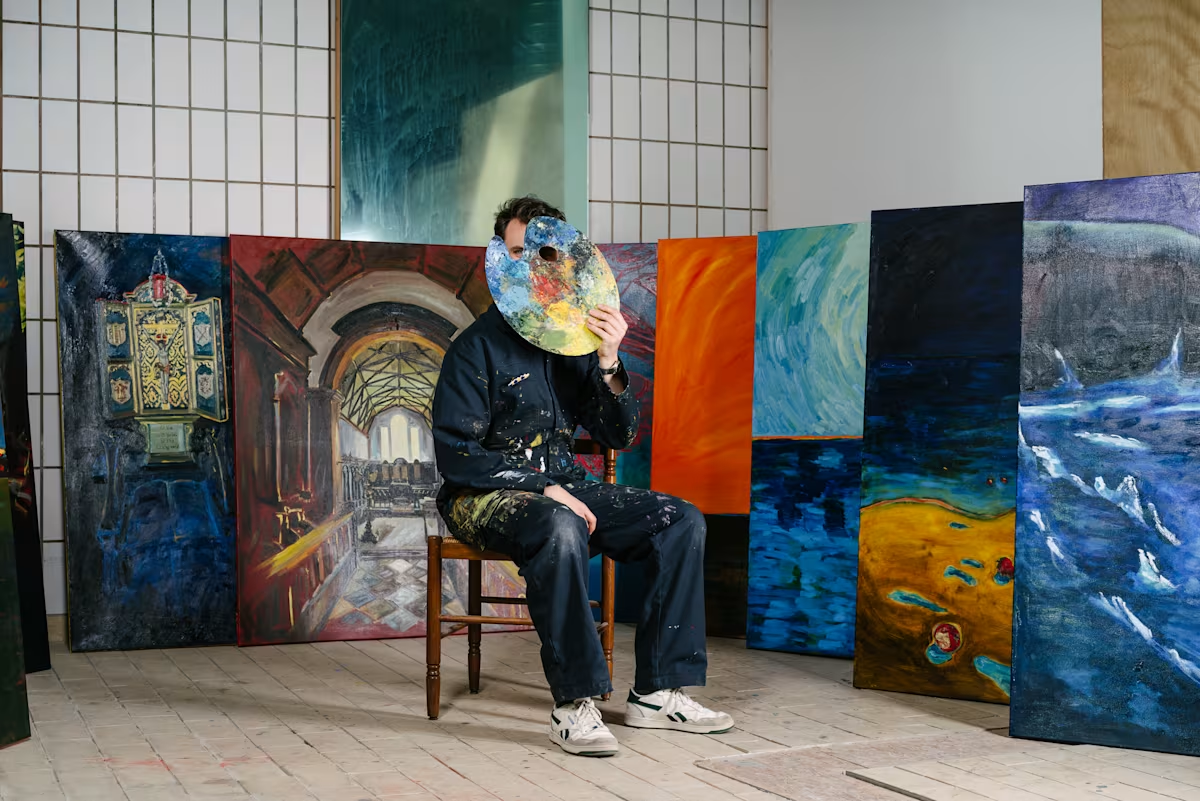
French-German artist Jérémie Queyras’s work spans oil painting, portraiture and live performance, often inspired by music and poetry. From London and Paris to New York and Shanghai, his paintings have been exhibited internationally, while his live-painting collaborations in concerts transform those performances into multi-sensory experiences. Ahead of his appearance in a Continuo-supported project with Parnassus Ensemble in London and at the Purbeck Art Weeks Festival, we caught up with him to discuss the art of live-painting, the interplay between music and colour, and how his brush becomes another instrument in performance.
How would you describe the notion of live-painting? As ‘accompaniment’, ‘interpretation’, ‘parallel performance’ or something else entirely?
Simply put: it is an interpretation of the music. However, through the process of working with the musicians, I aim to become part of the overall experience. Ideally the painting is like one more instrument contributing to the overall harmonies, rather than a separate element. I guess the word I would use is ‘integration’. When I work with an ensemble, I aim to be a part of it, just like every other musician.
What initially drew you to the practice in the first place?
I grew up in a household of musicians, and I played the cello until I was about 18. I never lost interest in classical music and was always frustrated with what I felt was an artificial and inflated boundary between artistic disciplines. Reading Wassily Kandinsky’s Concerning the Spiritual in Art (1911) left a lasting impression on me. In his book, he explores the conceptual links between music and abstract painting, showing how abstraction in music can explain the notion of abstraction in visual art.
In 2019, the opportunity emerged to do a short 15-minute performance with my father [the cellist Jean-Guihen Queyras], and then the violinist Charlotte Spruit asked me to do a collaboration – a perfect opportunity to demonstrate those links between music and abstract painting in a live setting. The first performance was actually streamed online during the confinement of the global pandemic. I enjoyed it very much and soon enough, I kept being asked by various musicians and groups to do painting performances. Over the course of the last few years, it has become a bit of a specialty.
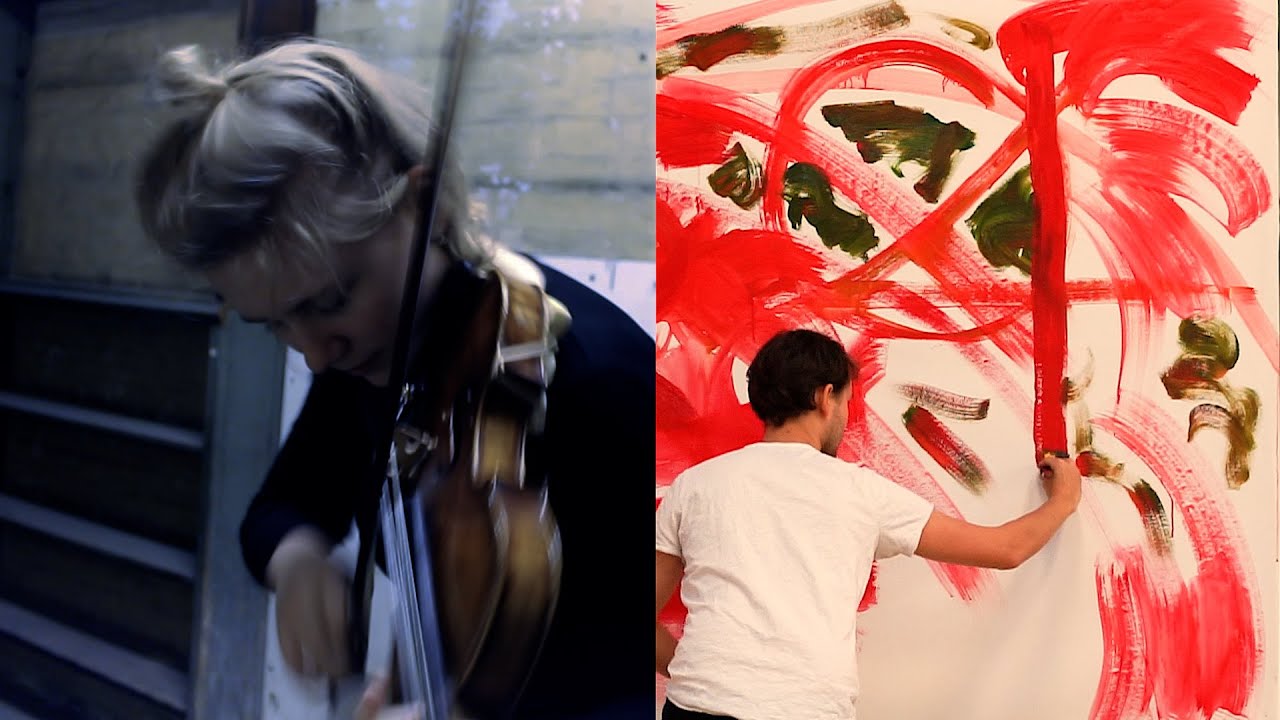 ▶
▶Jérémie Queyras with violinist Charlotte Spruit in a recorded performance presented for the Goodmesh Concours 2021 Finale
How does live-painting differ from studio practice? What challenges come with creating visual art in real time to music?
There are two main differences: time and space. In my studio, I have no time constraints: I can work on a painting for weeks or months, and sometimes even years. In contrast, a live performance usually gives me around one hour to complete the work! I also have to plan the order of colours very carefully. The paint does not have enough time to dry during the performance, a lot of work consists in understanding how I can juxtapose colours, where I can mix them and where I need to use thick or thin paint, etc. Otherwise, it can very quickly become a grey mess.
In the studio environment, I can take a step back, walk to the other end of the room and get a feeling for what the work looks like from a distance. During a performance, however, I am practically glued with my nose to the canvas, and I can only ever see a fraction of the whole picture, whereas the audience can see the whole picture at all times.
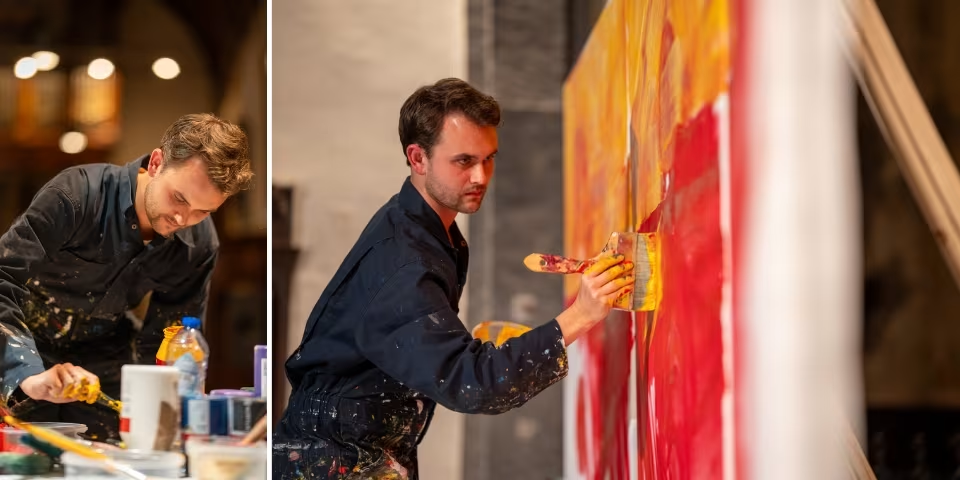
How do you prepare for a live performance? Are you involved in the musicians’ rehearsals? How much of your work is envisaged in advance versus improvised in the moment?
The entire process is a collaboration. Once we decide on the programme, I usually join the musicians towards the end of the rehearsal process and we work on details, especially the order of the pieces and the transition between movements. I tend to learn the music by heart, to be aware – at any given moment – of how much time I have left and where I need to work next on the canvas. We usually also play with tempi and dynamics, to create clear links between the painting and the music. These performances give musicians a kind of freedom to emphasise certain moments in the music, or include improvisations, which would be deemed unacceptable in a normal concert setting. Of course, nothing ever goes 100% according to plan. Colours mix slightly differently every time. The unplanned elements, the drips and splashes, are what gives the paintings their individual character in the end.
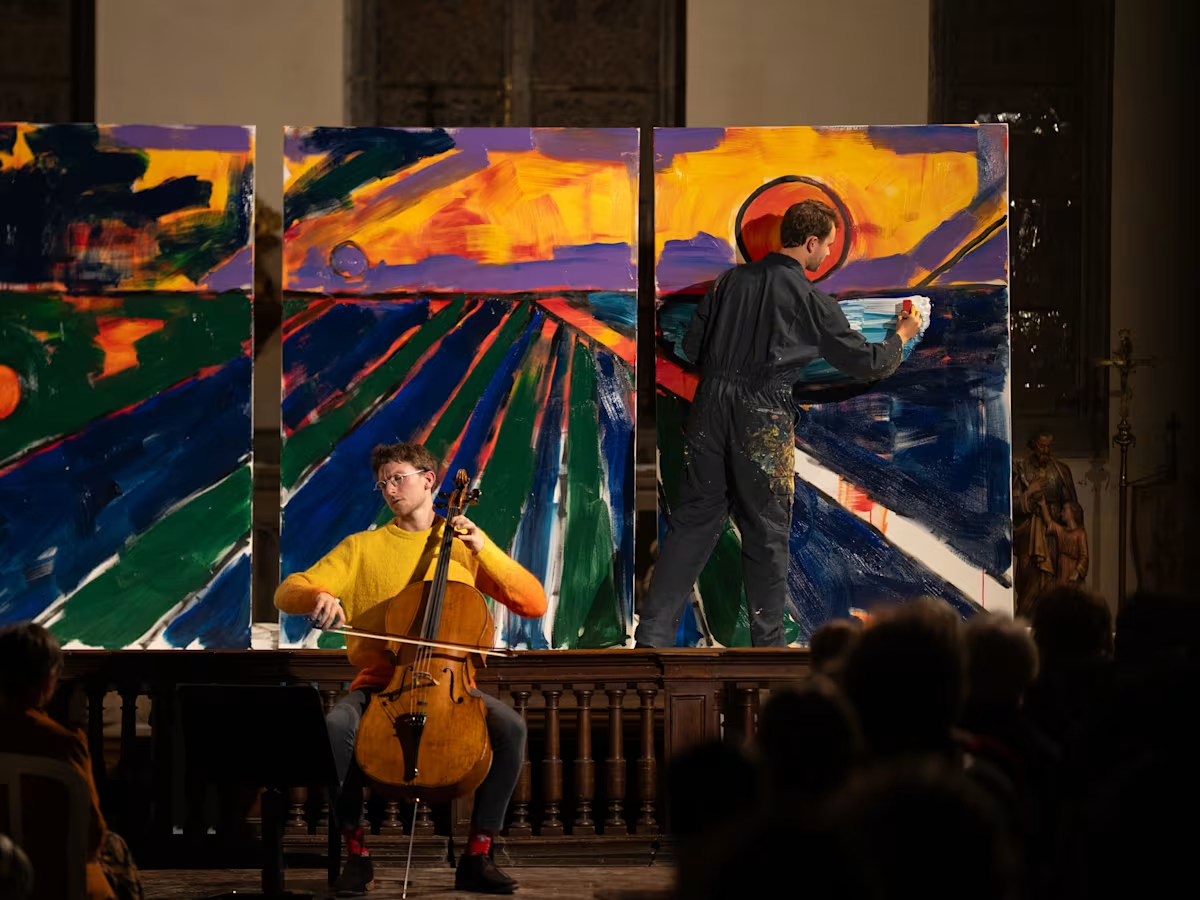
In comparison to your work inspired by poetry, such as T.S. Eliot’s Four Quartets, how do you approach interpreting a Lutheran hymn like ‘Christ lag in Todesbanden’ into visual form?
In the case of Eliot’s poems, I took the time to conceptualise images capturing the essence of the text. However, with sung words, it is slightly different. The question is, how do those three elements – words, music and colours –interact with each other? I think that the painting can occupy a space between the descriptive nature of words, and the abstract nature of music. I will sometimes highlight elements of the text and sometimes highlight moments in the music throughout the painting process.
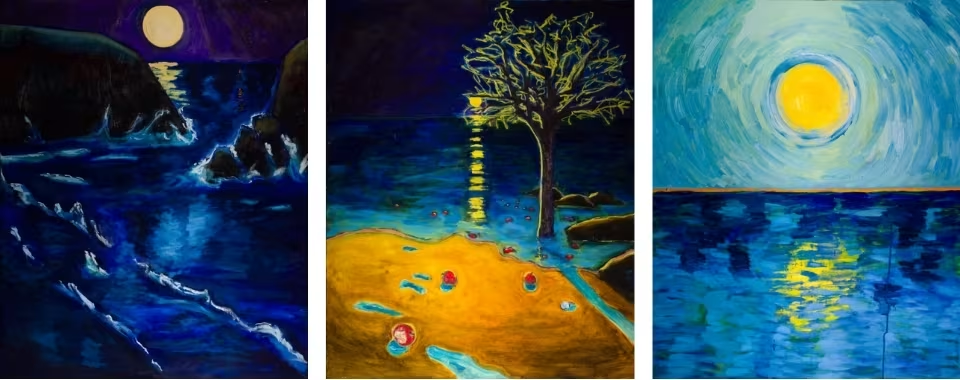
In your art, you respond to music from all ages. Do you perceive Baroque and Early Music repertoire differently than, for example, works by Robert Schumann or Steve Reich?
The truth is – in order to understand how to paint with the music, I have to deconstruct the music into its most fundamental building blocks. Any piece of music becomes a sequence of sounds and rhythms, harmonies and dissonances. It is the same process I apply to any painting, whether it is figurative or abstract. When I paint, all I see is a combination of shapes and colours. The image, which might constitute a still life or portrait, only emerges from the abstraction once I take a step back. In other words, any painting is abstract if you look at it up close enough. To make a link between what I hear and what I paint, I have to apply the same process to how I hear the music. Whatever difference there is between Baroque music and Steve Reich, it will show in the painting and emerge naturally through the process. I do not consciously change my methodology.
Your programme with Parnassus features settings by Pachelbel, Kuhnau and Bach of the very same hymn by Martin Luther. How do you plan to respond differently to each setting?
Well... We will see, I guess!
Does the presence of an audience influence the way you paint in comparison to studio practice?
It is the artist’s privilege to be able to select which works he or she presents to the world. If I decide in the privacy of my studio that a work is not worth sharing, I dispose of it or paint over it. During a performance, however, I am aware that at any given moment hundreds of people are following every one of my movements across the canvas. And once the music stops, that’s it. I no longer have a way of ‘fixing’ the artwork. This takes getting used to as a visual artist. I would say that it has made painting in the studio feel comparatively easy.
What do you hope the audience takes away from this fusion of music and painting?
That the barrier which we put up between artistic disciplines is actually in our minds. That paintings can emerge as naturally from music as a dance might. And I hope that perhaps after seeing the performance, it will both influence how they might look at a painting in a museum, and how they listen to music in the future.
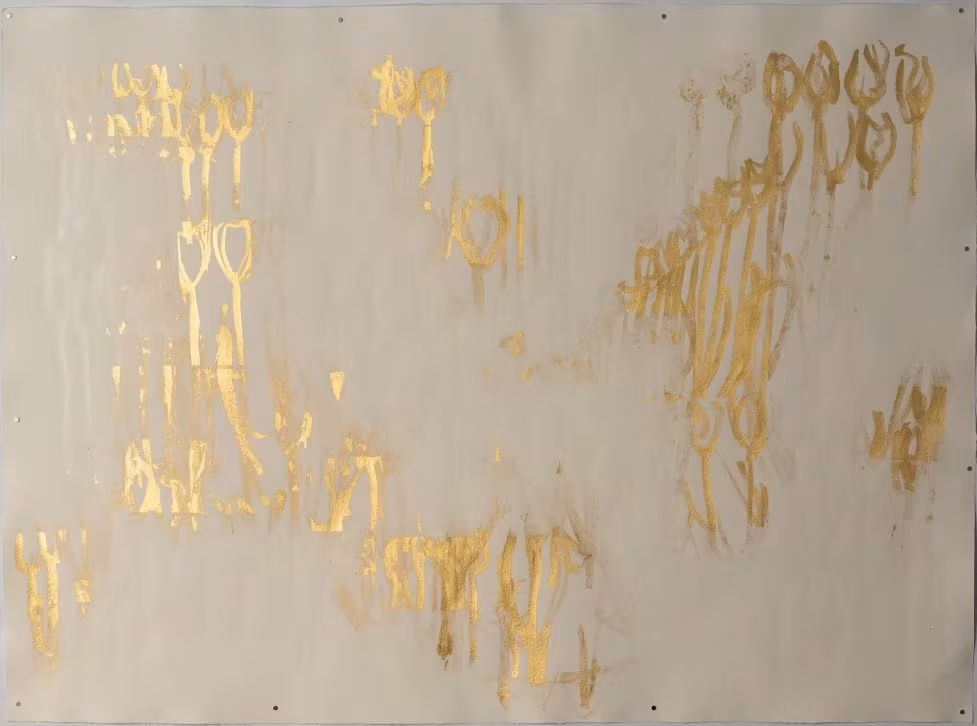
You are based in Paris and Berlin, studied in London and have had subsequent residencies and exhibitions around the world. How do these different cultural environments influence your work?
My time studying in London was very influential for these performances, as it was where I spent a lot of time with music students and working at Wigmore Hall as an usher for three years. This certainly deepened my understanding of music. In Paris, with its avant-gardist spirit, I spent time reflecting on the impact of AI art and the prospect of a future with artworks made by machines. Berlin, in turn, has reinvigorated my desire to paint portraits of people. Each city has left a very distinct mark in my creative journey, not least through its museums and concert halls.
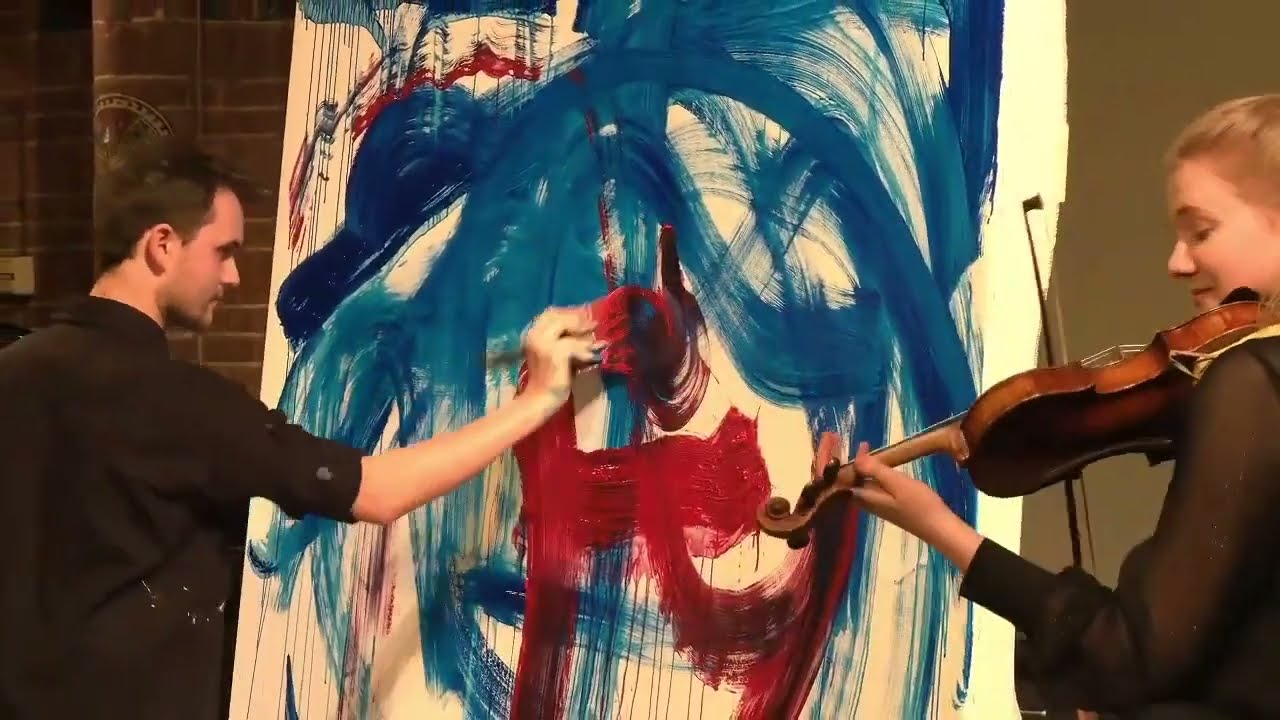 ▶
▶Jérémie Queyras with violinist Charlotte Spruit at the Prizewinner’s Performance, live-painting in response to two Fantasies by Telemann and excerpts from Kurtág’s Signs, Games and Messages | The Goodmesh Competition, The Netherlands, 2021
What’s next in line? Are there other interdisciplinary collaborations you’d like to explore in the future?
I am currently working on a series of backstage portraits of actors in make-up and costume, capturing the moment just before they step on stage to inhabit their roles. Alongside this, a series of painting performances is planned for next season, including one here in the UK at the Wimbledon International Music Festival in November 2026, with violinist Charlotte Spruit.
The Parnassus Ensemble will join forces with Jérémie Queyras in a programme of three cantatas, all based on the Lutheran hymn ‘Christ lag in Todesbanden’, by Pachelbel, Kuhnau and JS Bach – each accompanied by literary and visual artistic responses. Performances in London (22 May) and Wareham, Dorset (24 May), the project is supported by a grant from Continuo Foundation.
Share this
Keep reading
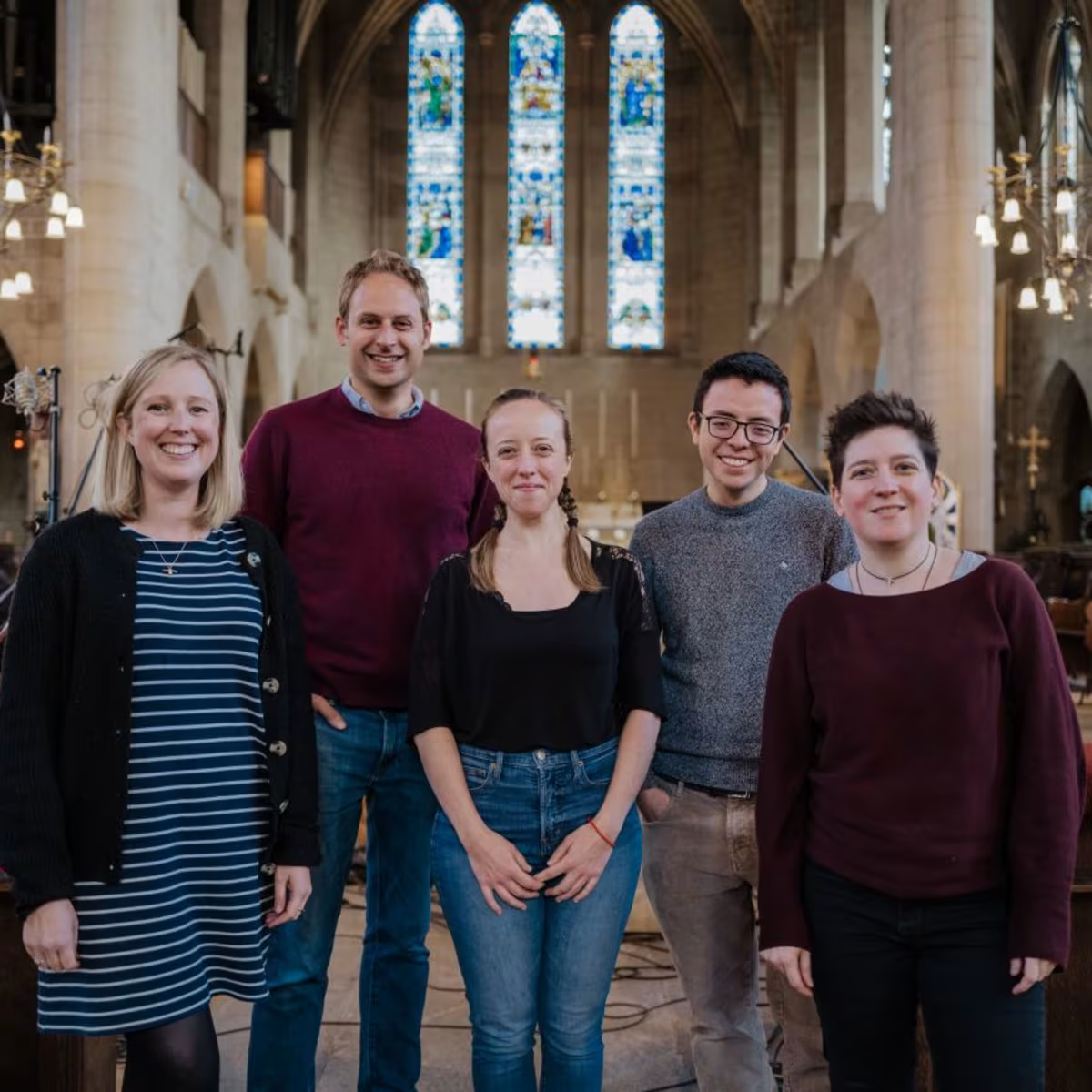
Spiritato: music out of boundless curiosity
Continuo Connect catches up with Will Russell and Kinga Ujszászi, founding members of the ensemble Spiritato.
Mary-Jannet Leith on collaborating with the Buskaid Soweto String Ensemble
In the first of a new series of Continuo Connect podcasts, Simon Mundy talks to Mary-Jannet Leith of Ensemble Hesperi about their collaboration with the Buskaid Soweto String Ensemble, and the music that once filled Scotland's country houses.
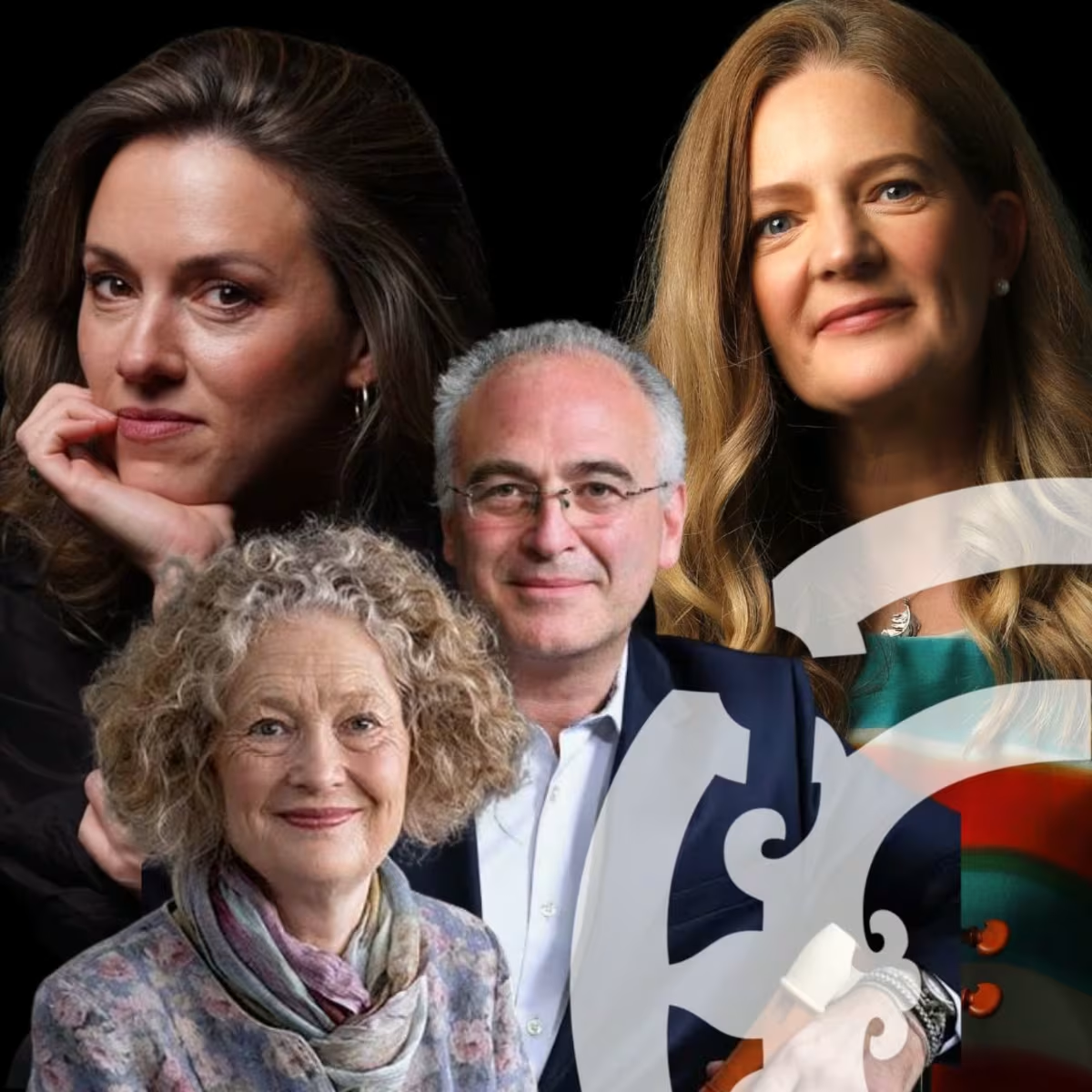
Playlist: Continuo Patrons
A playlist of tracks by Continuo Foundation Patrons Mary Bevan, Emma Kirkby, Rachel Podger and Ashley Solomon in celebration of the UN International Day of Charity.