

Recording
La Parisienne | Passacaglia Ensemble
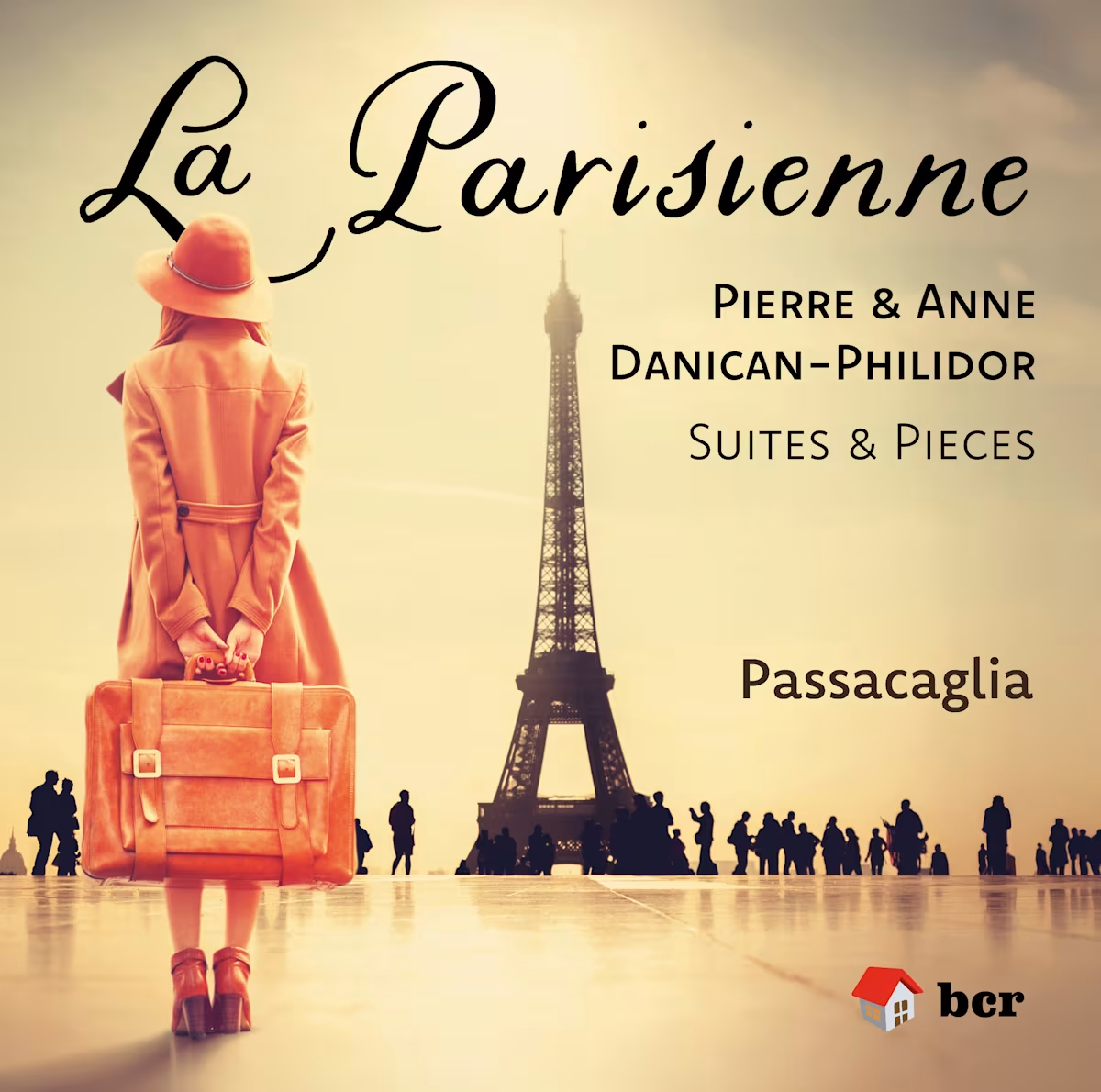
Pierre & Anne Danican-Philidor: Suites & Pieces
Share this

FIRST PUBLISHED 29 APRIL 2026
La Parisienne explores French chamber music written during a period of transition in Europe’s musical life marked by rapid expansion of public concerts and a boom in new audiences and compositions. Spanning the final years of Louis XIV’s reign and the early years of Louis XV, the album traces a shift away from the grandeur and formality of Versailles towards a rather different type of concert-going that led to the birth of Le Concert Spirituel, the hugely influential public concert series in Paris that shaped musical life across Europe.
Recorded by Passacaglia in Great Tew Church, Oxfordshire for release on the Barn Cottage Records label, the programme brings together rarely heard works composed between 1712 and 1718, capturing a period when music began to move from palace to city, and from ceremonial pomp and spiritual purpose to a more intimate, personal realm.
 ▶
▶Passacaglia’s La Parisienne album trailer
For nearly 150 years, the Danican-Philidor family stood at the centre of French musical life. Through the closely connected yet distinctive voices of cousins Pierre and Anne Danican-Philidor, La Parisienne captures a moment of transition in French music from the cultural hot-house of Versailles to the more cosmopolitan salons of Paris.
Pierre Danican-Philidor’s chamber works transform courtly dance forms into finely-shaped, expressive pieces that make full use of the Baroque flute’s vocal qualities. Anne Danican-Philidor, later founder of the Concert Spirituel in Paris, the world’s first public concert society, goes further still. His works point towards a future in which music is no longer confined to a courtly world, but shared with a broader public in more accessible venues.
‘French Baroque instrumental music can often be written off as either too simple in structure, or overly fussy in its decoration - but the music of Pierre and Anne Danican-Philidor is anything but. Their works feel wonderfully three-dimensional: full of fragrant, exotic harmonies and fragile melodies, they demand an extraordinary amount of expressive control and delicacy. Moments of drama and rhetorical flair, alongside the more playful character pieces, make this music very exciting and fulfilling to perform.’ - Annabel Knight, Passacaglia (traverso and recorders)
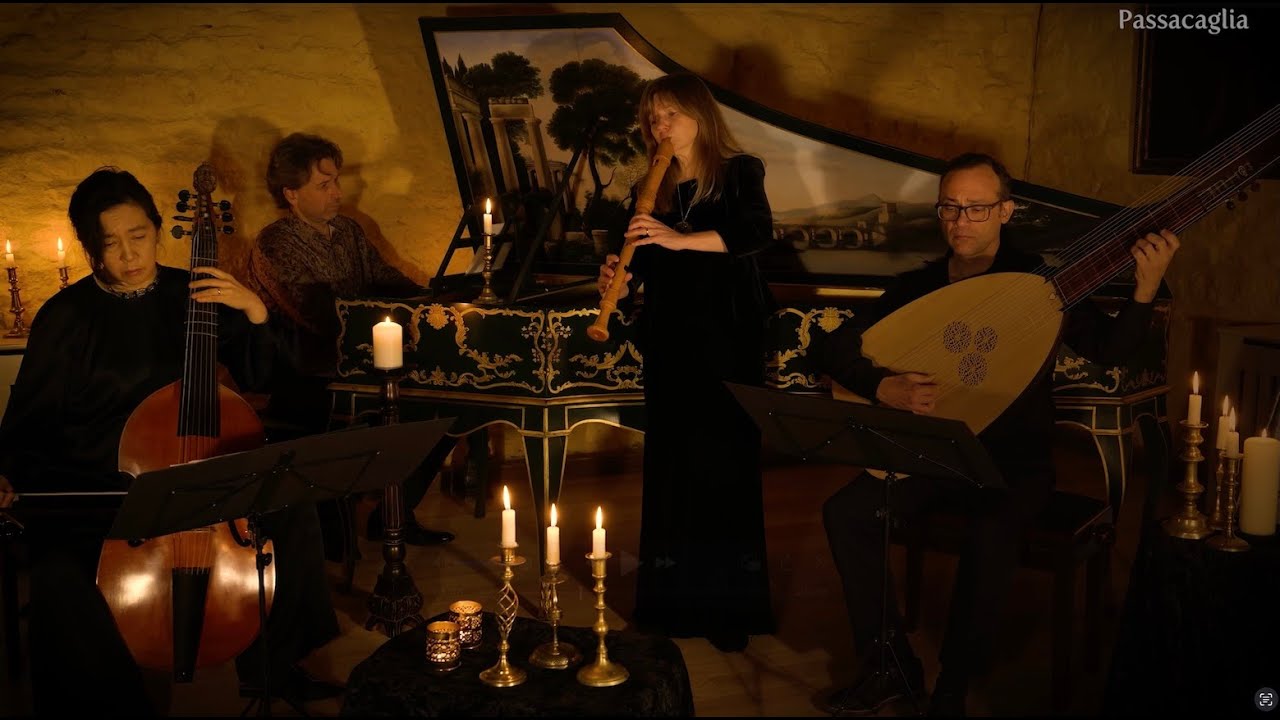
Anne Danican-Philidor (1681–1728): Le Tombeau (Deuxième Livre de Pièces, Paris 1714)
The surviving sources reveal a clear contrast in approach. Pierre Danican-Philidor is often highly prescriptive, providing numerous ornaments and detailed phrasing and breathing marks, even if their exact execution remains open. Anne Danican-Philidor, by contrast, offers little beyond the occasional trill, leaving much more to the
performer. Even so, much of the music is not proscribed. Decisions about continuo realisation, tempo and character sit firmly with the players. The result is a balance between discipline and freedom: this is music that requires stylistic clarity and precision, yet gives performers real scope for individuality and expression – performances that feel fresh, collaborative and alive.
Annabel Knight transverse flute, recorders
Robin Bigwood harpsichord
Reiko Ichise viola da gamba
with guest artist
Eligio Quinteiro theorbo, guitar
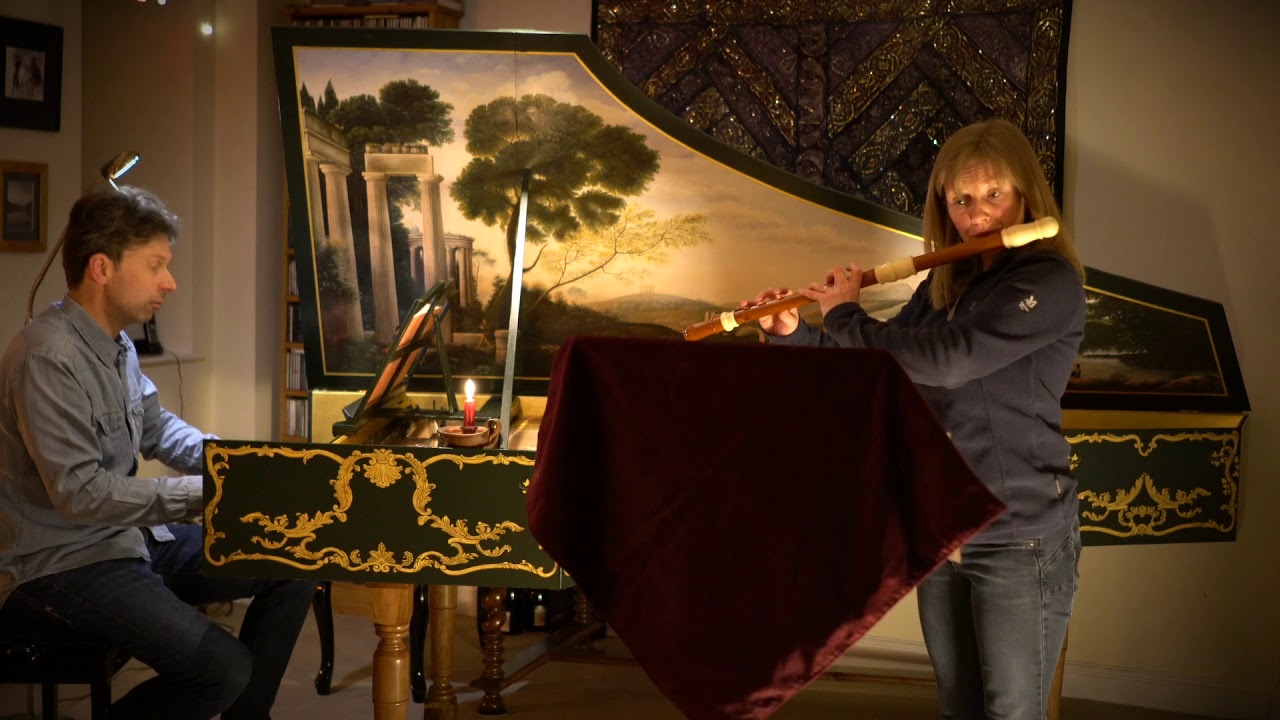 ▶
▶Pierre Danican-Philidor (1681–1731): ‘Prelude’ and ‘Allemande’ from Cinquième Suite in E minor, Op. 1 No. 5 (1717)
Passacaglia is a UK-based early music group known for its imaginative programming and performance-led approach to 17th- and 18th-century repertoire. Specialising in music written at moments of transition, the ensemble combines historical awareness with expressive freedom and collaborative energy. Passacaglia performs regularly across the UK and Europe and is committed to presenting early music as a living, responsive art form.
TRACK LIST
Pierre Danican-Philidor Suite No. 12 in D, Op. 3 No. 2
I. Prelude; II. Allemande; III. Sarabande; IV. La Parisienne; V. Chaconne
P D Philidor Suite No. 6 in B minor, Op. 1 No. 6
I. Lentement; II. Gavotte; III. Sarabande; IV. Rigaudon; V. Gigue
Anne Danican-Philidor from Deuxième livre de pièces
Le Tombeau
Le Badin
P D Philidor Suite No. 5 in E minor, Op. 1 No. 5
I. Très Lentement; II. Allemande; III. Sarabande; IV. Gigue
A D Philidor from Deuxième livre de pièces
Les Vents
P D Philidor Suite No. 4 in A minor, Op. 1 No. 4
I. Lentement; II. Courante; III. Air en Musette; IV. Gavotte; V. Sicilienne; VI. Paysanne
A D Philidor from Premier livre de pièces
Sonate ‘pour la Flute à bec’ in D minor
I. Lentement; II. Fugue; III. Courante; IV. Les notes égales et détachées; V. Fugue
A D Philidor from Deuxième livre de pièces
Chaconne
Released on 16 April 2026, ‘La Parisienne’ can be purchased from Barn Cottage Records and streamed on all major sites. The two performance videos are from a 10-part series supported by a grant from Continuo Foundation.

Share this
Keep reading
Šarovít, duende, meraki… Inside Nocturnalia’s musical language
Continuo Connect catches up with Pablo Tejedor-Gutierrez from Nocturnalia Ensemble, first-time Continuo grantees, about their upcoming season.
In conversation: Tabea Debus
Continuo Connect talks to Tabea Debus about her latest Continuo-supported project with ensemble Palisander.
Playlist: Early Music Fusion
Explore the fusion of Early Music with jazz, pop and rock music. Listen to Sting’s Dowland, Jacques Loussier’s jazz-inspired Bach, L’Arpeggiata’s take on music by Purcell and Handel, and Attila the Stockbroker’s fusion of punk rock and Renaissance music.