

Feature
Hugh Cutting: a countertenor in counterpoint
Share this


BY ASHUTOSH KHANDEKAR | FIRST PUBLISHED 22 AUG 2026
Along his journey from Oxford choirboy to internationally acclaimed opera singer, Hugh Cutting has been guided by the expressive possibilities of the countertenor voice. Soon to appear as a soloist in Bach’s B minor Mass at the Proms, he talks to Continuo Connect's Ashutosh Khandekar about the physical joy of singing, Bach’s gifts to the countertenor and his determination to make music from the past speak to the present.
Handel can hardly have imagined climate change bringing one of his operas to a halt. But at Santa Fe Opera, where Hugh Cutting has been singing Unulfo in Rodelinda, conducted by Harry Bicket, forest fires have stopped performances in their tracks. The company’s theatre, in the New Mexico desert, is open to the elements, and the fourth of the production’s five performances has been cancelled. When we speak, Cutting is confined to his hotel, sheltering from the smoke-laden air.
‘They’re advising us to keep the windows closed,’ he tells me. By the time that evening’s curtain should have risen, the local air-quality index had reached dangerous levels. Cutting is frustrated, but has suddenly found himself with the luxury of free time in which to catch up on next season’s plans.
So, from Handel in the American desert, our conversation turns to Bach in London, where Cutting is shortly to sing the B minor Mass at the BBC Proms (10 September). The composer has been present throughout his musical life. Cutting’s father is a Baroque trumpeter, his mother a violinist and teacher. His elder brother Guy is a distinguished tenor who preceded him as a chorister at New College, Oxford. As the boys were growing up, music from Bach to Broadway mingled freely at home.
‘I grew up listening to my dad playing the Brandenburg Concertos,’ he recalls. ‘Meanwhile, my brother would be bashing through stuff on the piano – Guys and Dolls, or whatever. I actually thought “Mache dich, mein Herze, rein” from the St Matthew Passion was a pop song for ages, because of the way my brother played it!’
I ask Cutting whether, as a countertenor, an affinity with the Early Music world was inevitable. The relationship isn’t quite so tidy, he replies: ‘It was certainly very normal – after all, I was singing evensong week in, week out, and a lot of the repertoire was Early Music. But the thing that really got me interested was just the feeling of singing itself.’
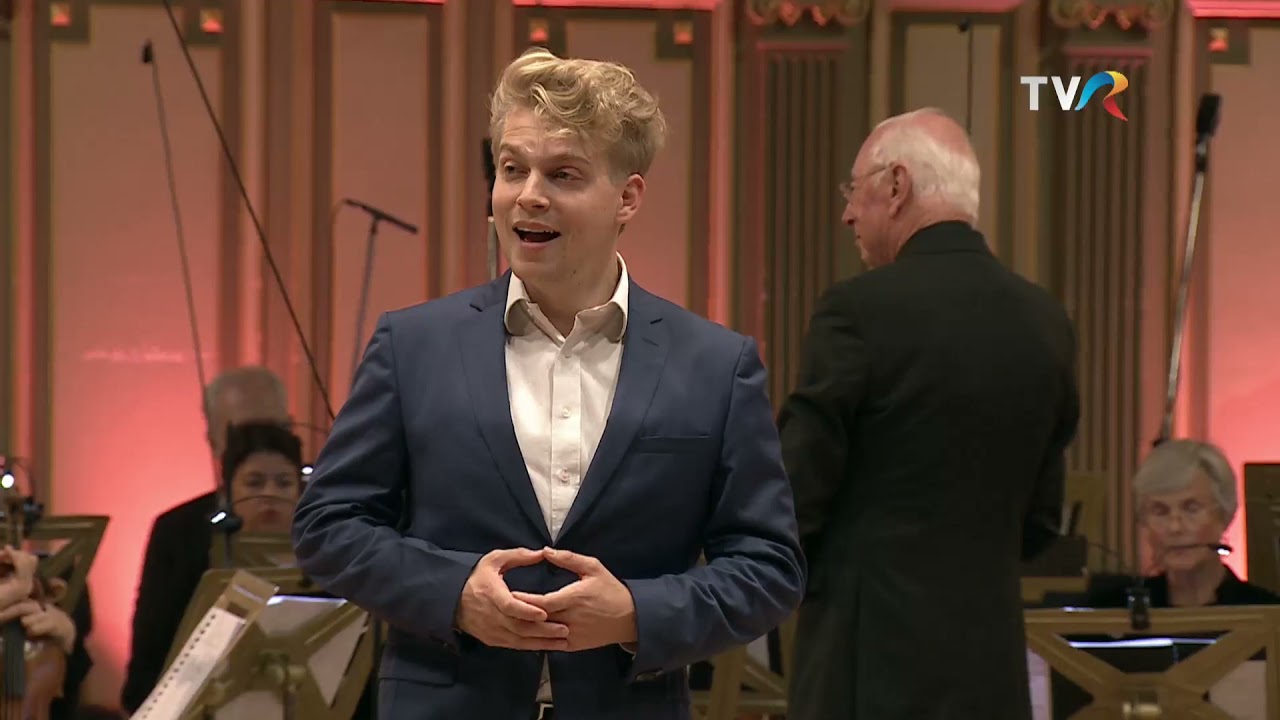 ▶
▶Handel: Arsace’s aria, ‘Sento Amor con nuovi dardi’ from Partenope | Hugh Cutting, William Christie & Les Arts Florissants
As a treble at New College chapel under Edward Higginbottom, Cutting remembers that the choristers were ‘little worker bees’. The regime was exacting, but for Hugh and Guy it established the seriousness – and excitement – of performance.
‘We had this sense of occasion every day, five days a week. Being in a 14th-century chapel, you’re confronted with beauty as a constant in your life, which is not necessarily a normal thing for anyone, let alone a child. I grew up loving this ritual. I think it led to my interest in theatre: as a performer, you come into a space and a story unfolds through your very presence there.’
At school, the Cutting brothers were keen sportsmen, and Hugh describes the sensations of singing in terms of being on the games field: ‘You get the same sense of physical joy when it’s all working. And, of course, the same misery when it’s not!’
As Cutting’s voice broke, becoming a countertenor involved no grand decision. At first he had assumed that, because his brother was a tenor, he would follow suit. ‘I sang a lot of tenor at school, both in the choir and in musicals, and I loved it. My chest voice will always be part of what I do.’ But he also discovered a facility in the upper register, which opened up the expressive horizons of the countertenor world.
Opera arrived surprisingly late. Cutting barely listened to it before university, though he was an avid fan of James Bowman, Tim Mead and Iestyn Davies. ‘We’re quite lucky as countertenors,’ he says. ‘We don’t really have the weight of history behind us in terms of what you should and shouldn’t sound like. Other voices have many more categories assigned to them – lyric, soubrette, dramatic, heroic... But countertenors can do it all.’ That freedom has taken him from being a Baroque soloist to the Boy/Angel in George Benjamin’s 2012 opera Written on Skin, currently a favourite role.
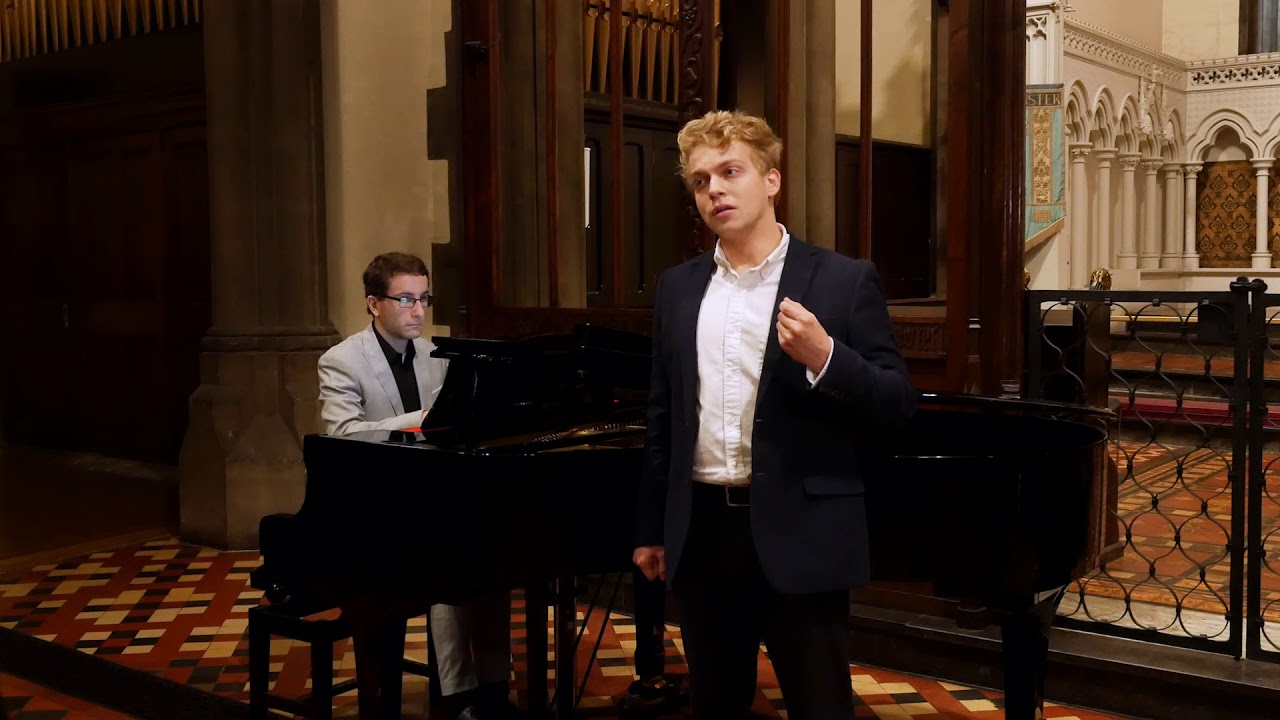 ▶
▶George Benjamin: 'This, says the Angel' from Written on Skin (2012) | Hugh Cutting
At music college, mezzo-soprano Sally Burgess became a crucial mentor as Cutting developed his operatic credentials. ‘She’s had such an amazing career as a singer and performer. And she listened to what I was already doing, shaping the individual qualities of my voice rather than having a cookie-cutter approach.’
Singing with period instruments, says Cutting, offers practical advantages to countertenor voices in terms of smaller forces and transparent textures. But he believes the real affinity lies in the culture of the period-instrument world. ‘Maybe it’s not so much the sound of the instruments,’ he says, ‘but the approach of Baroque musicians. It’s collective – less hierarchical than a modern orchestra. There’s clarity of texture and an importance given to counterpoint, to the back and forth within each phrase and across the various instruments.’
He affectionately describes conductors such as Jonathan Cohen and Peter Whelan as ‘anti-maestros’. Both began as players and retain an instrumentalist’s pragmatism. ‘They want to hear the counterpoint, the harmony and the little interesting bits of filigree notation. It’s part of the culture of period ensembles: everyone has their moments.’
That transparency gives the singer room to bring music closer to speech. The countertenor register can tempt a performer towards ethereal detachment, but Cutting’s aim is direct: ‘I do want to sound like a human being. The base level of it is this human thing. That’s how someone who isn’t really into opera will connect to it.’ His guiding question is: ‘How would I actually say this if I were speaking?’
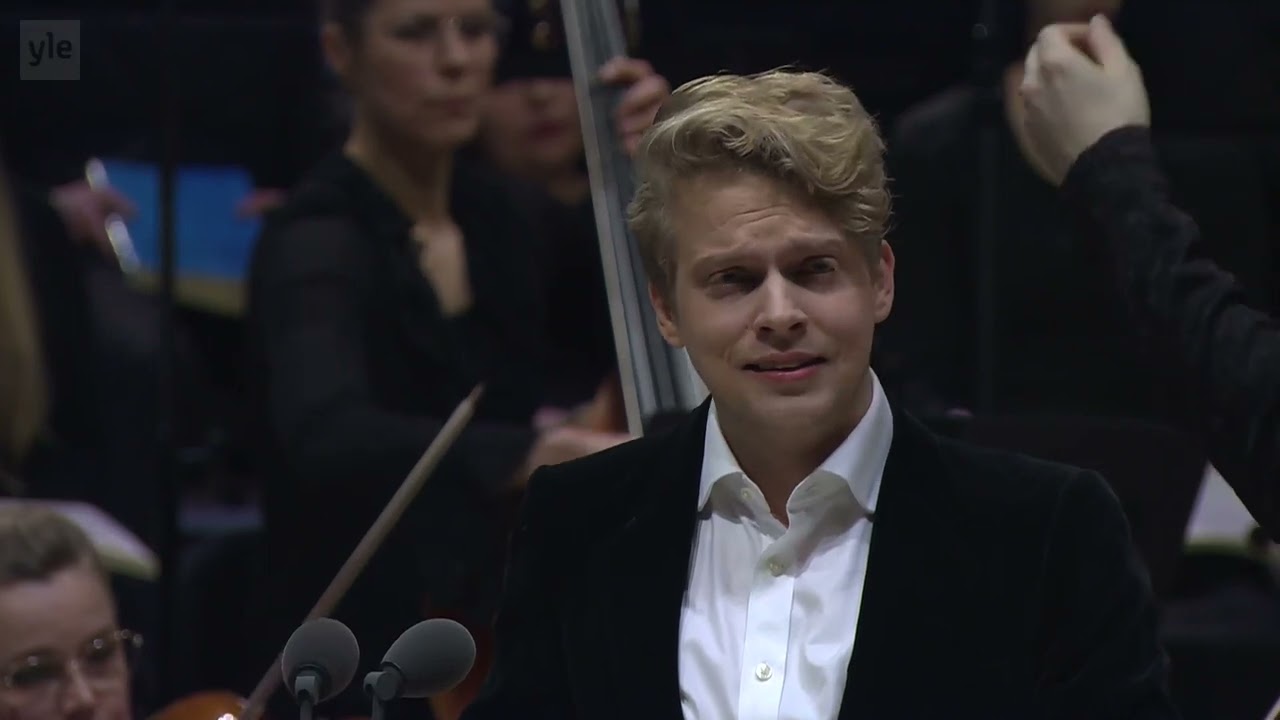 ▶
▶JS Bach: ‘Erbarme dich mein Gott’ from St Matthew Passion | Hugh Cutting, Finnish Radio Symphony Orchestra & Nicholas Collon
Bach offers perhaps the richest meeting of voice, text and instrumental texture. ‘The alto parts, especially in the St Matthew Passion and the B minor Mass, are such gifts for singers,’ Cutting says. ‘The texture is organised around the voice, and the tessitura as well. You really have the peachy arias, but at the same time you are a voice within the counterpoint. It’s not just a case of an accompaniment with the aria on top. You are part of a bigger scheme. You have to think texturally, even if you’re being an impassioned soloist.’
And what of Cutting’s approach to singing the B minor Mass’s soul-searching Agnus Dei? He hears the solo as ‘a little frozen moment in time’ near the end of the work: spare, exposed and strangely modern after the Mass’s great contrapuntal structures. ‘You have to find an inner stillness before you begin,’ he says. ‘If you go at it too directly, its spell is broken.’
Currently Artist-in-Residence at Wigmore Hall, Cutting has been given a platform to ‘explore and expand what’s possible with a human voice’. Curatorship, he says, means creating encounters across categories, developing programmes that bring different composers together ‘without trying to pitch them against each other’. Bach and Handel, for example, are often compared and contrasted, but for Cutting they are ‘two sides of the same coin’.
Hugh Cutting's debut recital album, Refound, with pianist Audrey Hyland, released on Linn Records
This same sense of inclusiveness animates Refound Ensemble, Cutting’s own instrumental collective. Its purpose is to find new engagement with music through intimate chamber arrangements, re-orchestration and fresh colour. Refound’s Morpheus programme, presented during Cutting’s Wigmore Hall residency, was inspired by the Roman god of sleep and dreams, moving through nocturnal music by Cavalli and Purcell to Britten, Schubert, Weill and popular song, alongside new works by Piers Connor Kennedy and Elena Langer. Familiar pieces appeared in new guises for an ensemble that included strings, theorbo, clarinet, bass viol, piano and percussion. Cutting hopes eventually to record the project.
‘The idea is not to reinvent the wheel,’ Cutting explains, ‘but to pick out bits of colour that could be done differently – to re-tint and explore the picture from different angles.’ Refound can therefore be ‘whatever shape we want to be’, unconstrained by the belief that a particular repertoire belongs only to a particular institutional or instrumental formation.
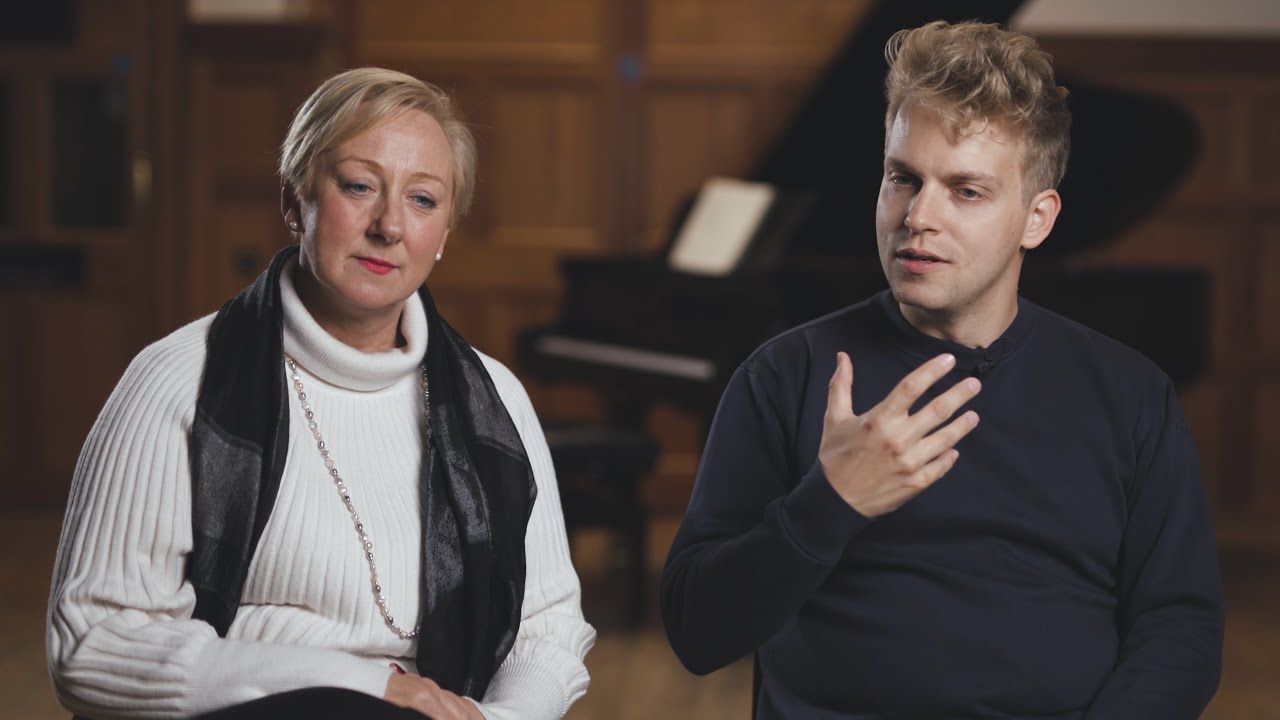 ▶
▶Countertenor Hugh Cutting talks about Refound, his debut recital album with pianist Audrey Hyland
Behind that sense of playful free association lies a democratic seriousness. Cutting wants listeners to step into classical music without specialist knowledge acting as an ‘entrance pass’: ‘Music and singing are, at heart, a desire to connect with people. It’s a human need to have communion of some kind. That’s what performing is.’
Hugh Cutting joins Jeanine De Bique, Eva Zaïcik, Nick Pritchard and Florian Störtz as soloists in Bach’s Mass in B minor, performed at the 2026 BBC Proms by Arcangelo at the Royal Albert Hall on Thursday 10 September. For further details and ticket, visit the BBC Proms Continuo Connect profile page.

Share this
Keep reading

Exploring the golden age of the ‘City of Dreams’
‘City of Dreams’ is an exploration of two centuries of Renaissance Florence at Brighton Early Music Festival. We spoke to Oliver Webber, founder of Monteverdi String Band, and writer Saria Steyl about how the project came together.
Tallis: ‘Spem in alium’ – a forty-part motet
A favourite among choral fanatics, Tallis' 'Spem in alium' has a fascinating history and has more recently been used in an unexpected context.
In conversation: Bolette Roed
Continuo Connect talks to the Danish recorder player Bolette Roed about her group, the Elephant House Quartet, and Copenhagen Baroque Festival.