

Feature
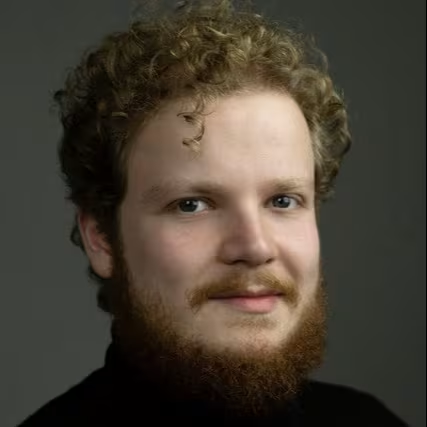
Freddie Waxman: FIGURE and a modern take on Gluck
Share this

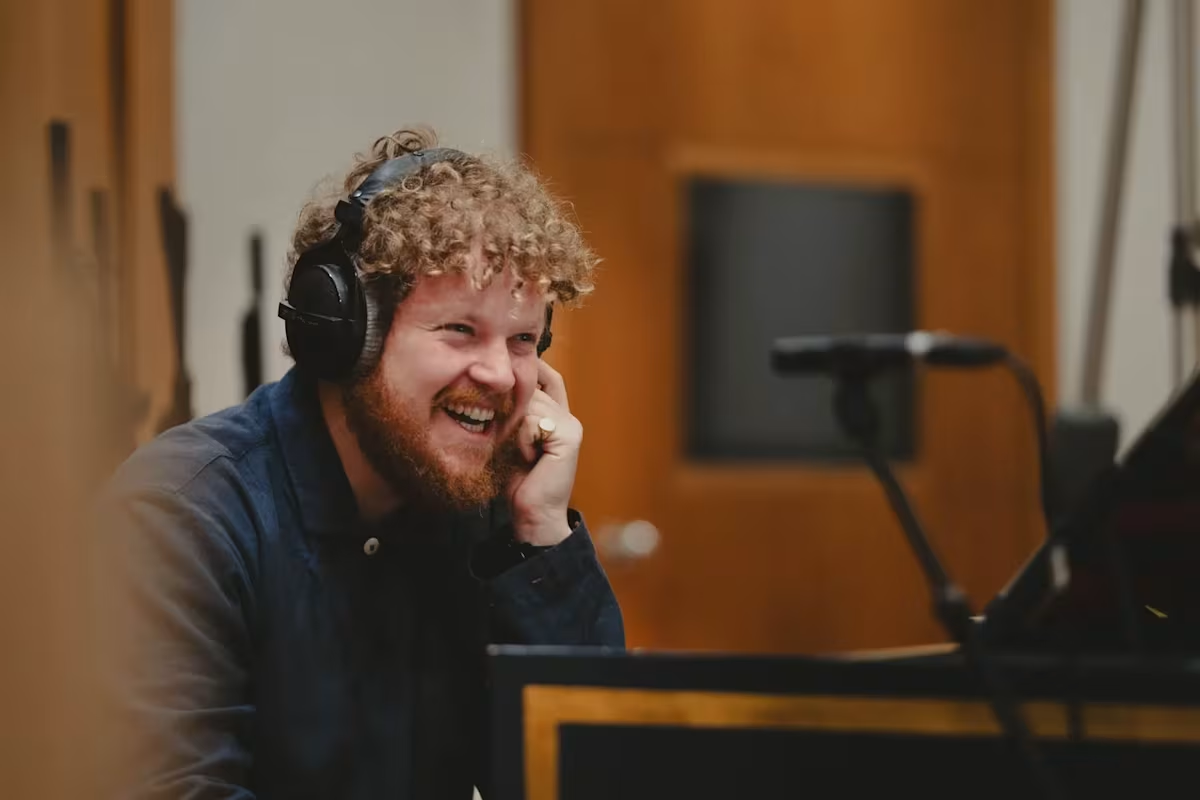
BY SIMON MUNDY | FIRST PUBLISHED 13 NOV 2026
Ahead of four performances of Gluck's Orpheus and Eurydice at one of the most exciting alternative performing arts spaces in London's West End, Simon Mundy talks to harpsichordist and founder of FIGURE, Freddie Waxman, on why Greek mythological subjects still resonate with today's society and how the concept of 'modern' historical performance is not the misnomer one might assume.
We are beginning to sense a change in the way Early Music and theatre group founders are approaching their genre. Names say a lot. This decade there is less emphasis on naming ensembles after Italian composers (or beans in the case of I Fagiolini) and places of residence (London Baroque, etc.) and more on abstract concepts or seemingly random words. When harpsichordist Freddie Waxman leads his ensemble FIGURE through Gluck’s Orpheus and Eurydice this November, the venue, at the corner of London’s Shaftesbury Avenue and Charing Cross Road, will be Stone Nest – a Welsh Presbyterian chapel built in the 1880s that later became a gay nightclub. His stage director Laura Hounsell heads the opera and theatre-making team Bread and Bus Stop.
'FIGURE was founded as we came out of lockdown,' Waxman tells me. 'There is a profound social quality to live performance that you don't get in a recording. Equally, I felt that listening in a concert hall is not the whole experience it could be. Music is not an object in a gallery. I wondered how I could bring the performance and the audience closer together.'
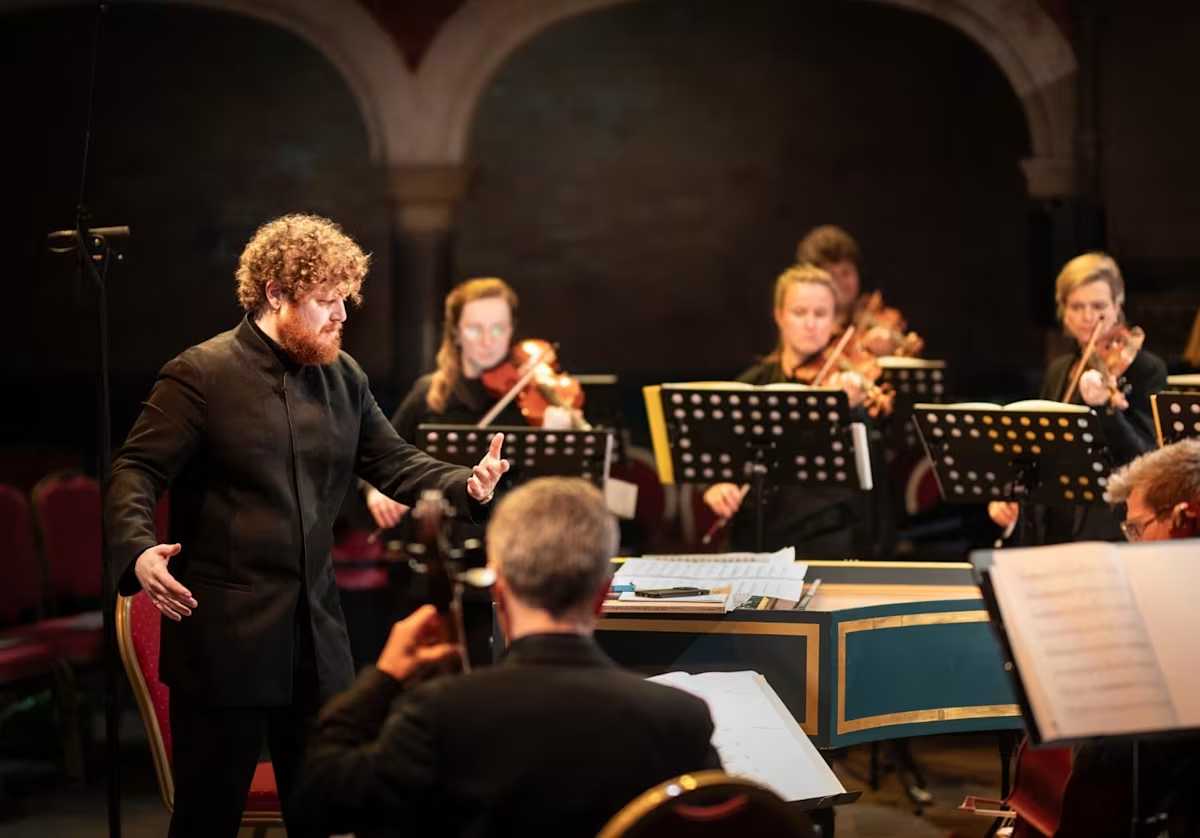
It was a question that came to the fore as he discussed Gluck with countertenor Hugh Cutting, who sings Orpheus (Sofia Kirwan-Baez plays Eurydice), and Hounsell. She had rethought the narrative of the myth: Orpheus descending into Hades to retrieve his wife, Eurydice, and lead her back to life in the sun, which would only be possible if he did not look at her on the journey back. He could not resist, and Eurydice returns to the underworld. Hounsell found herself seeing the story as an allegory about dealing with loss and grief after reading CS Lewis's book about the death of his wife, A Grief Observed, which was later the basis for the 1993 film Shadowlands.
Waxman says: 'It was so intimate and difficult for Lewis to write that at first he published it under a pseudonym. One of the recurring themes was his reluctance to think about his wife, because he worried that every time he brought her to mind, it would dilute his memory of her. Laura's idea was to confront this fear of loss. In her interpretation, the critical point at which Orpheus looks back is no longer a tragic moment but a necessary stage in facing grief and accepting what's happened. Rather than losing Eurydice, he's finally engaging with the fact that she's dead. Myths like Orpheus and Eurydice endure because they often deal with critical turning points in life – often more unflinchingly than modern stories do. All-consuming love, loss, jealousy and violent revenge are all recurring themes, and the richly symbolic way in which this is expressed leaves them open to a wide range of contemporary interpretations.'
The staging in Stone Nest will mean that the action takes place in the round, with the audience very close to the performers. Waxman is sure that proximity 'makes things so much more direct than the televisual experience you get in the gods at the Royal Opera House'. He has also reworked the orchestration for Gluck's opera. 'As a harpsichordist looking at performance practice from the 18th century, one question has to be, "What did those people mean when they were writing their spare notation?" Our Early Music movement is itself a modernist aesthetic. We have lost a lot of music and its context; the understanding of the dances, religion and myth that would have been automatic to people at the time. So we have to imagine the effect the composer was trying to get for them.'
His answer is to go in the opposite direction to those looking to recreate 18th-century conditions, instead adding modernist elements to the instrumentation and aiming to secularise religious and mythological works so that they operate within our own sense of society. 'I thought about how Gluck might have wanted to write something modern instead of being stuck in his time 250 years ago. In London it would have been different listening to contemporary music then. Most of Handel was not canonised and the idea of going to a concert and only hearing something familiar would have been strange. I wanted to find a way to de-familiarise the music; to stop the old music sounding dusted off.'
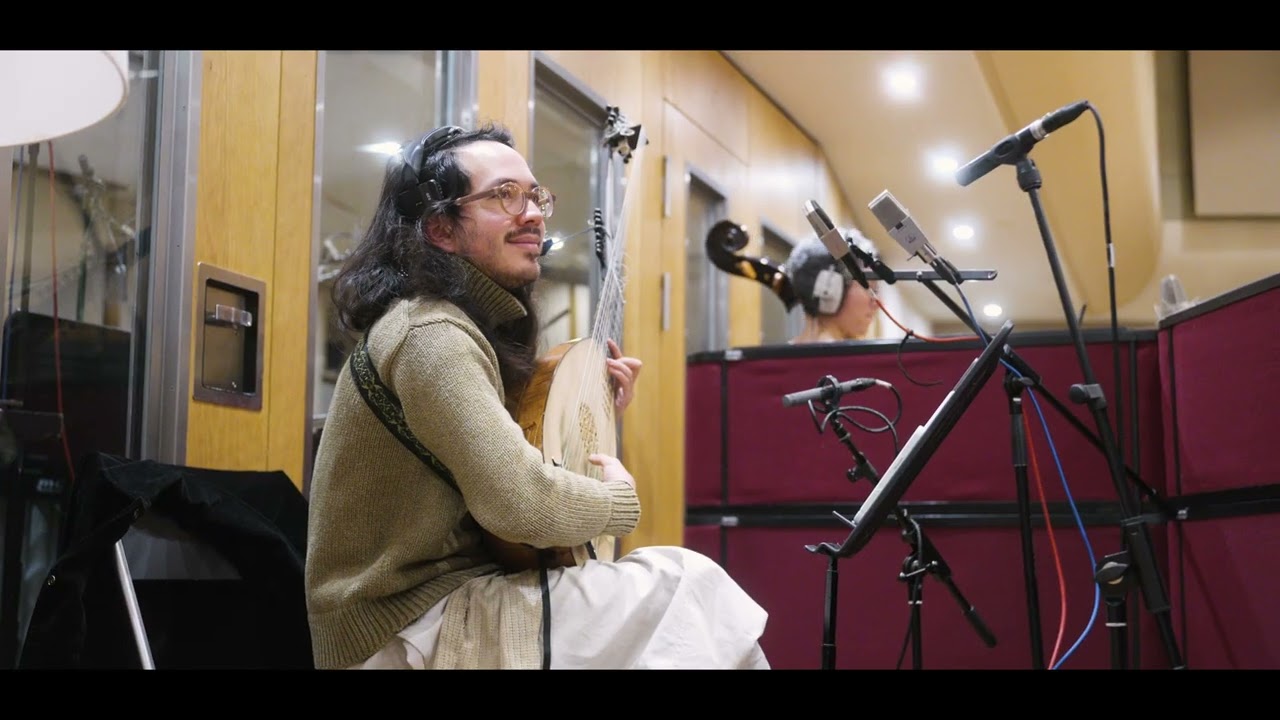 ▶
James Larter and FIGURE perform a snippet from a new percussion adaptation of Vivaldi's Four Seasons
The same approach runs through FIGURE's recording of Vivaldi's Four Seasons, adapted for percussion (played by James Larter) and strings, to be released in the future, and the concerts being given as part of FIGURE's 2026-27 concert series at the more traditional venue of LSO St Luke's. Two of the three concerts pair Bach cantatas with works by Alex Paxton, Lara Agar, Jonathan Dove and Freya Waley-Cohen: Lotte Betts-Dean sang the first on 4 November, and Hugh Cutting follows on 16 January (supported by a grant from Continuo Foundation). The third concert, in March, will have music by Isabella Gelis complementing Charlotte Spruit playing Bach's A minor Violin Concerto BWV 1041. Waxman explains the unifying theme of the series: ‘I wanted the composers’ responses to and reflections on the Bach.’ As in his upcoming production of Orpheus and Eurydice at Stone Nest, placing the familiar beside the new makes sure, in Waxman’s words, that the old music never sounds ‘dusted off’.
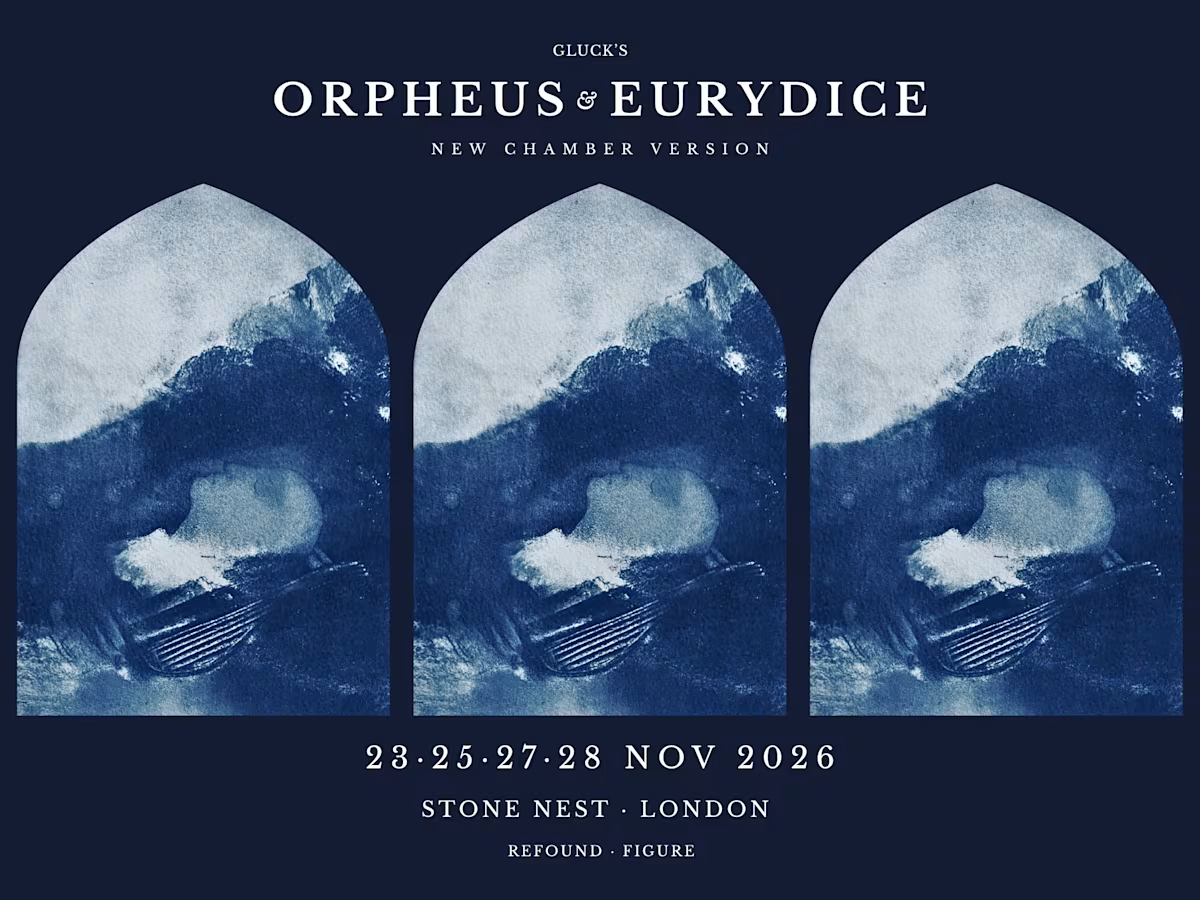
FIGURE's new production of Gluck's Orpheus and Eurydice will take place at Stone Nest, London on four dates: 23 November, 25 November, 27 November and 28 November.

Share this
Keep reading
In conversation: Samuel Ng
Continuo Connect catches up with Samuel Ng, cellist and gamba player with the newly formed Republic of Viols and Liturina.

JS Bach, and a cabinet of curiosities: Jorge Jiménez
Violinist, director and composer Jorge Jiménez talks to Simon Mundy about his latest album Curiosa: Lost & Found Tunes, his new Bach weekend in Ipswich, and his freelance career balancing life in rural Essex with regular work in Spain.
The Best of Rachel Podger
This playlist celebrates 'the unsurpassed British glory of the baroque violin' (The Times) - that is of course Rachel Podger.