

Podcast
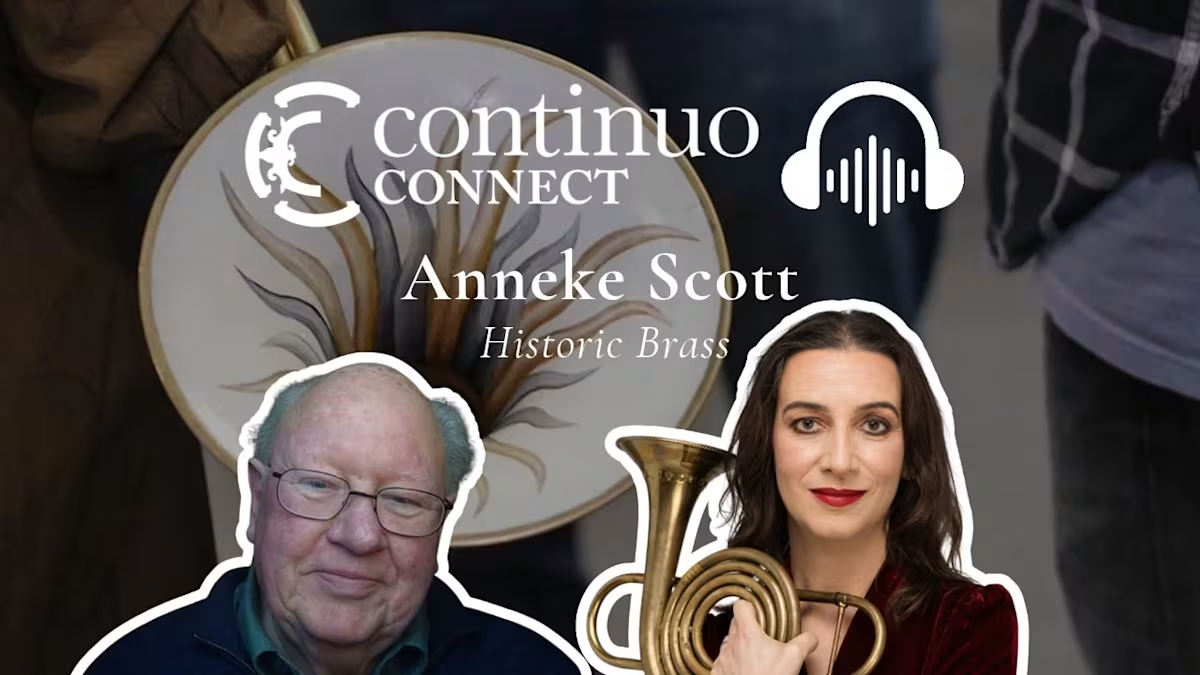
Anneke Scott on historic brass and long-lost Beethoven
Share this

BY CONTINUO CONNECT | FIRST PUBLISHED 27 NOV 2026
In this podcast, historic brass specialist Anneke Scott joins Simon Mundy from Dortmund to speak about historical horns, her love of brass instruments from the 'long 19th century' and how a Beethoven project cancelled in 2020 will be resurrected at a Continuo Foundation-supported album launch in 2027.
Prefer to read this interview? View an edited transcript of this podcast below.
Listen to this episode and all past episodes on the following platforms: Spotify Podcasts | Apple Podcasts | Substack Podcasts
Simon Mundy: Hello, I'm Simon Mundy, and welcome to the Continuo Connect podcast. Today I'm talking to the horn player Anneke Scott, who has played in pretty well every important Early Music orchestra and ensemble over the years, but now has her own band, The Prince Regent's Band, which has been going for over a decade and is coming out with a new project, a new album and various other odds and sods – perhaps more odds than anything else! Anneke, you're in Dortmund at the moment, which seems fairly normal for your very peripatetic life. What's happening in Dortmund?
Anneke Scott: Exactly! I arrived in Dortmund a few days ago. One of the hats I wear is Principal Horn for the French ensemble Pygmalion, and we're at the beginning of quite an exciting project around Mozart's Mass in C minor. We've just had several days of rehearsals in Paris, and now we're doing the recording in Dortmund, which will be followed by a European tour.
SM: I love Mozart's C minor Mass. In fact, I've just done a Sidetracks piece for Continuo Connect [coming soon] explaining how much I love it, how extraordinary those solos are, and Mozart's amazing relationship with his singers – especially his wife, but also anybody else who came along in those early performances. Who are your singers for the recording?
AS: It's fabulous. Getting back to what you just said about Mozart's relationship with his wife, one of our – shall we say – power couples is our conductor, Raphaël Pichon, and his amazing soprano wife, Sabine Devieilhe, who has been collaborating with Pygmalion for several years. We've got the mezzo-soprano Léa Desandre as well, and Kieran Carrel, a tenor I've not worked with before. And Christian Immler, the bass, who's been a Pygmalion friend for many years – he and I have often done the Quoniam from Bach's B minor Mass together for Pygmalion. So it's one of our normal line-ups.
SM: And that horn solo is fantastic, isn't it? It's absolutely gorgeous.
AS: Isn't it just!
SM: Are you doing it on your early horns – appropriate for 1783 or thereabouts?
AS: For this project I'm using a copy. One of the issues we often have in late 18th-century repertoire for us hornplayers is the establishment of A430 pitch. We're quite lucky, because with the crook system – the bits of metal that start the instrument and put us into different pitches – we're quite flexible. But one of the interesting issues in the horn community at the moment is exactly which instruments we should be using in the late 18th century. It's one of those slightly shadowy areas for us, because a lot of the evidence has been hidden: many of those instruments were converted during the 19th century. So for this project I'm using a copy of an Austrian natural horn. It would be wonderful to have an original, but very few from that era, the second half of the 18th century, sadly survive.
SM: As a horn player, you go from the very beginnings right up to date. I've always thought the natural horn must be one of the most difficult instruments ever to play, because it doesn't give you a lot of scope except with your mouth. It must be really hard.
AS: I think one of the things that's so exciting about it is that it's such an invitation to get invested in the music. When we're playing Mozart, Haydn and so on, the orchestral parts actually aren't as adventurous as they get in the early 19th century. But we're such an integral part of the harmony – the engine house of a lot of this music – that with the natural horn in late 18th-century repertoire we really have the opportunity to be at the centre of what the orchestra is doing, driving it in the role we have harmonically. I quite often hear people say it's one of the most difficult instruments, but the music we get to play is such an invitation to get into the depth of the music - I think that's the payoff.
SM: As a player, do you go back to 17th-century horns?
AS: Very rarely. The 17th century is quite a mystery for us, because we don't officially get going until the early 18th century. For example, Handel's Water Music is quite often cited as one of the first orchestral works we have, though there are a couple of works earlier than that – Bach was writing for us in his Hunting Cantata BVW 208, for example. What we think was happening is that the instrument only really became musically viable towards the end of the 17th century, when we started to get the wide-loop designs of the French trompe de chasse, the French hunting horn. That's why in English we have the very strange term 'French horn': the English hunting horn can only play a couple of notes and is really not that musically interesting.
So it's only at the end of the 17th century that we start to see these instruments and these terms emerge. But we don't have much in the way of notated music, which suggests to me that horn players may have been involved in – shall I say – institutional music-making, rather than hunting-horn music-making, in the late 17th century. We weren't notated; we were probably improvising, which is interesting.
SM: Of course, the English hunting horn was about six inches long. But it is interesting, isn't it? Given how aristocratic hunting was, all these aristocratic bands must have had horn players in them, even if they were mainly on horseback, playing outside. So perhaps it's at the beginning of the 18th century that they come inside.
AS: Exactly. And one of the things we know about hunting-horn players is that, like a lot of musicians, they were learning through an oral tradition rather than from notated music. It's only when we have to have notated parts that we start to have the evidence that we were playing. So the end of the 17th century is a slight mystery to us: we were probably involved, but we have to extrapolate what we might have been playing.
SM: Let's come on to The Prince Regent's Band, your own group, which plays music from the French Revolution up to the late 19th century. In that period, does the instrument change?
AS: For all of us in The Prince Regent's Band, we have this 'long 19th century', bookended by the French Revolution and the First World War. Between those two bookends, the instrumentarium changes so many times, so drastically and so colourfully. Depending on whether we're in Italy, Germany, France or England, we're playing a completely different group of instruments.
At the end of the 18th century, we were all using our lips to buzz through the harmonic series. You had horn players using hand technique to make their instruments more chromatic. You had the slide trombone – I always think the trombone is one of the most perfect instruments because they kind of got it right from the get-go. Yes, there's a big 19th-century tradition of the valve trombone, but some of our earliest slide trombones look so familiar compared with what we have today. Then there's the low brass – the serpents and ophicleides, these amazingly colourful, dusky bass instruments. In France, for example, there was a tradition of trumpeters using hand technique like the horn players, and we've also got all sorts of keyed bugles and keyed trumpets. So you've got the keys, the hand technique and the slides of the late 18th century.
One of the things The Prince Regent's Band has on the horizon is a collaboration with the Harmoniemusik ensemble Boxwood & Brass. We're interested in a project around English military band music – you think of Holst, Vaughan Williams and Percy Grainger – and exploring all that repertoire. By the early 20th century, you might think we have the established modern brass section, but even then there was great regional variety. The example I always give is Dennis Brain. He started his career on a Raoux piston horn, which is basically what I'd use if I were playing Berlioz with a historically informed ensemble, and then famously changed to the German style of instrument. The line he came up with was something about too many people wanting him to play too many of the right notes too much of the time! So in the early 20th century we start to see instruments more familiar to modern eyes – valve horns, valve trumpets, tubas and so on – but we're still using a lot of different instruments.
SM: We can see research going on into the early Yorkshire euphonium!
AS: Yes, exactly! And if I may say so, there's a really interesting source of knowledge here. A lot of my colleagues in The Prince Regent's Band have come from a brass band background, and in this research it's fascinating to see some of the conventions brass bands still have. For the English band project, which we're just starting to research, one of the things we want to do is play at high pitch. A lot of colleagues who came up through the brass band tradition recognise the high-pitch instruments, because these were converted. Trombone players I know were given their first trombones by their brass bands, with spacers to lower them to the pitch we use today. So we have traces of a really interesting 19th-century performing tradition that we can look at through brass bands.
SM: It is fascinating. Let's talk a little about the project you're doing with The Prince Regent's Band, because Continuo Connect – or rather Continuo Foundation – is helping you out with it. Tell us about the project.
AS: This is a glorious project to be doing. If you think back to the origins of Continuo Foundation, it came about because of the terrible time a lot of musicians were having with the ramifications of Covid. For The Prince Regent's Band, our Beethoven for Brass project was the first thing that got cancelled in spring 2020. As many people will remember, 2020 was a big Beethoven anniversary. We'd rehearsed it, we'd got all the instruments ready to go and everything was lined up.
We had a programme based around the Band of the Swedish First Lifeguard Regiment. Some listeners might be familiar with the composer Bernhard Crusell, who wrote a lot of music for wind instruments, especially the clarinet; he was one of the bandmasters associated with this Swedish group. Looking at the music they were playing, this was an elite group of brass players, and as was quite common with 19th-century band music, they had composers and bandmasters arranging all the hits of the era.
Another very formative ensemble, the London Gabrieli Brass Ensemble, recorded a disc back in the 1990s that included a movement of the famous Beethoven Septet for brass. Thanks to them and their director, Christopher Larkin, we were aware that this movement was the tip of an iceberg of repertoire in Sweden. So we found the complete Beethoven Septet for brass, plus other pieces, including the famous 'Komm, Hoffnung', the big horn aria from Fidelio; the Rondino, a Harmoniemusik work, here with a whole new introduction; and a slightly later brass ensemble arrangement of the Egmont overture. We had a whole disc's worth of 1840s and 1850s arrangements of Beethoven for brass ensemble. Sadly, that didn't happen because of the pandemic, but happily we were able to find time later on to record it.
We're also part of a wonderful festival that many of your listeners will know: Baroquestock, the fabulous series of concerts at Heath Street Baptist Church in north London. Baroquestock is having a big festival of Beethoven symphonies and arrangements, so we're bringing an 1850s arrangement of Beethoven's First Symphony alongside all the music from our Beethoven for Brass recording. We've got a huge amount of repertoire we're exploring at the moment around mid-19th-century Beethoven transcriptions.
SM: Are these just concerts, or are you doing a recording too?
AS: It's all recorded, so it's going to be the launch of Beethoven for Brass, our new disc of these arrangements. The launch will be in April, as part of the Baroquestock festival.
SM: That sounds splendid. But you play with everybody, don't you? What are the great projects you've got for early next year?
AS: I've got another big project with Pygmalion – we're doing Theodora in Geneva in January. What else is coming up? Lots of Christmas Oratorio performances in Holland in December. A lot of the time I can't think further than the next page of my diary!
SM: I do know the feeling. Thank you so much – it's been lovely to talk to you. I hear you a lot on record, and I'd love to hear you live sometime. Thank you very much.
AS: My pleasure. Thank you, and thank you to Continuo Foundation for their continued support of all of us working in this world.
The Prince Regent's Band launches its new album, Beethoven for Brass, at Baroquestock on 29 April. Find out more about Anneke on her Continuo Connect artist page and listen to her curated playlist of some of her favourite things to do as a historical horn player.


Share this
Keep reading
JS Bach, and a cabinet of curiosities: Jorge Jiménez
Violinist, director and composer Jorge Jiménez talks to Simon Mundy about his latest album Curiosa: Lost & Found Tunes, his new Bach weekend in Ipswich, and his freelance career balancing life in rural Essex with regular work in Spain.
Playlist: Musical Scandals
This playlist features music by Handel, Bach, Gesualdo and more, from 16th- to 18th-century composers and performers whose lives were touched by controversy, including public affairs, imprisonment and murder.
The Present State of England (1692)
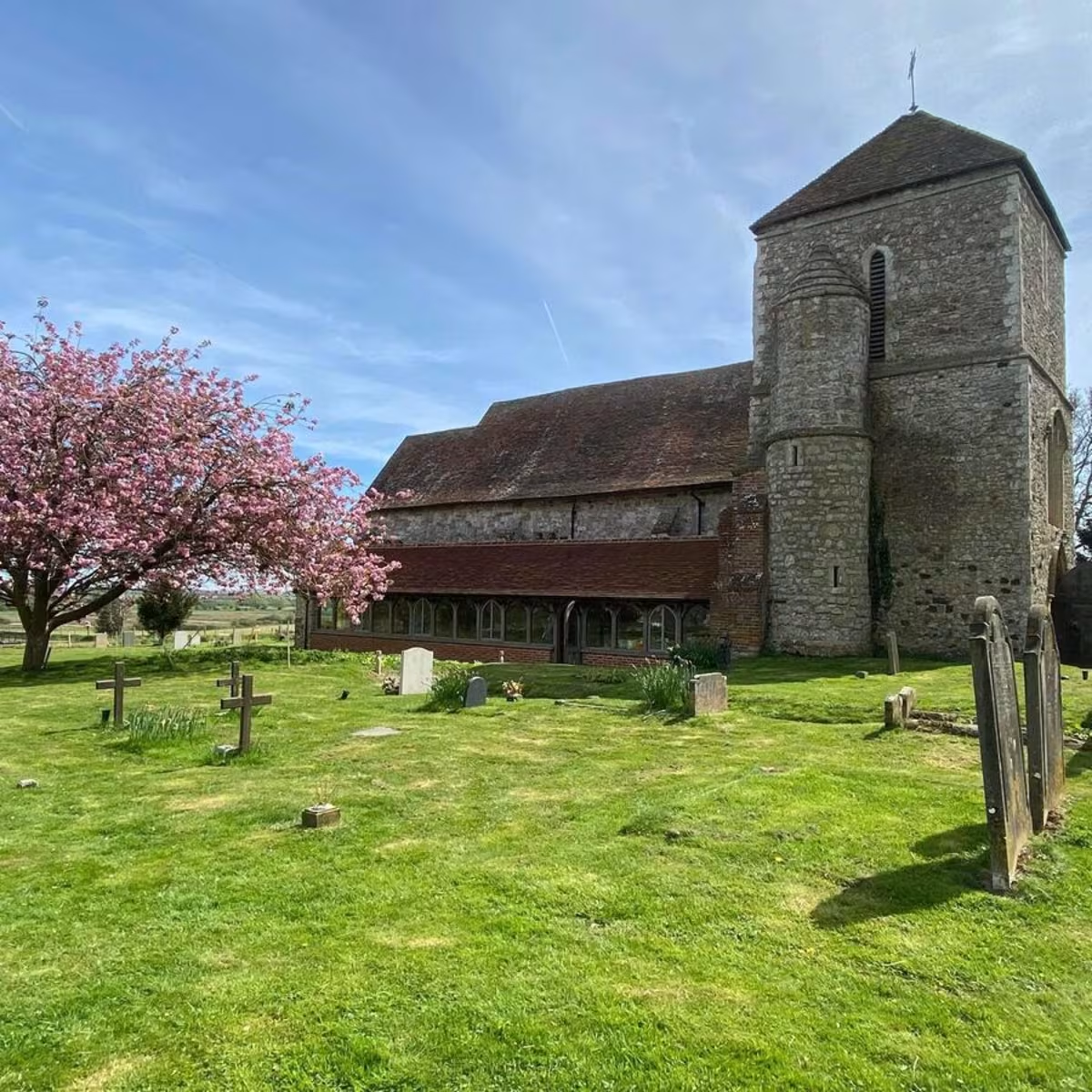
There are many musicians whose PhD allows them to prefix their name with Dr. Few though have juggled the two professions of medical doctor and high quality musician and impresario as expertly at Dr Stephen Coles.