

Feature
Philippe Jaroussky: Shifting spotlights from stage to score
Share this

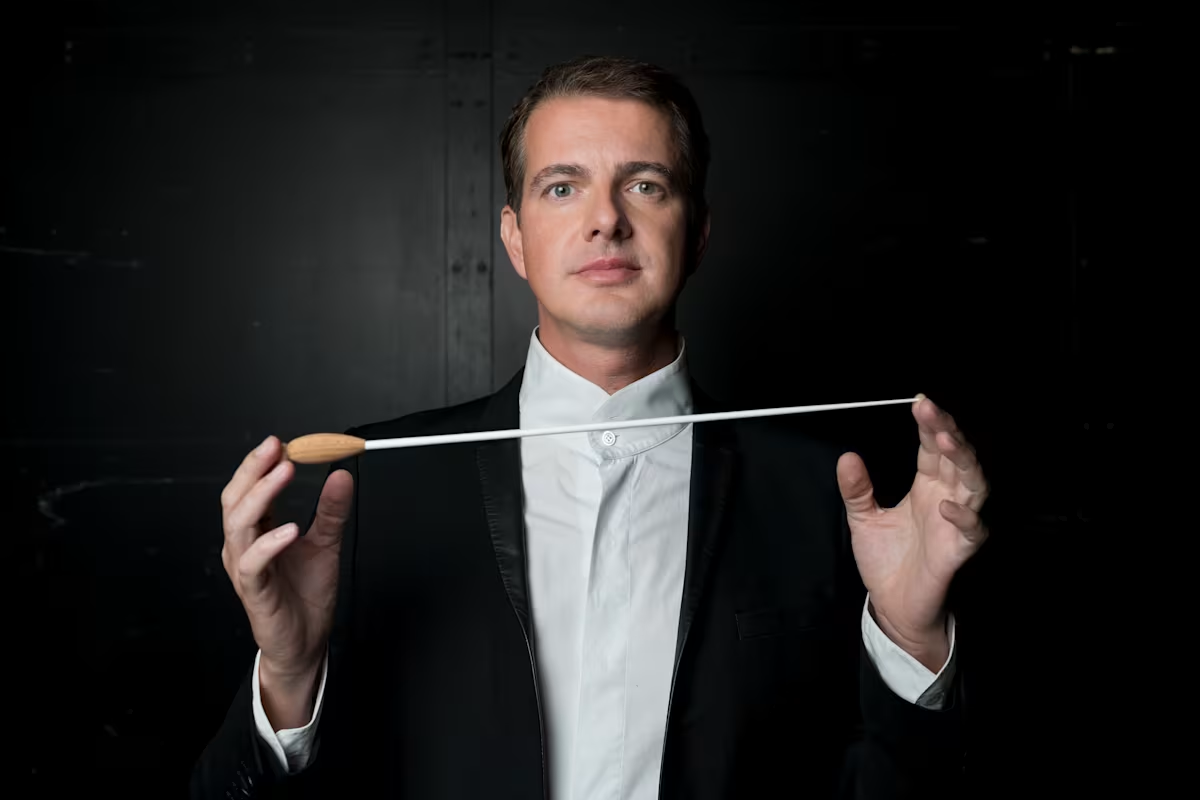
BY SIMON MUNDY | FIRST PUBLISHED 19 MAR 2026
𝄞 Why not accompany your reading with our playlist The Art of Philippe Jaroussky?
Star French countertenor Philippe Jaroussky has been one of the defining voices of the Baroque repertoire, celebrated for his luminous tone and interpretative insight. Renowned for his commitment to rediscovering and championing rarely-performed works, he has collaborated with some of the foremost conductors and ensembles in Early Music, while also building up a prolific discography. In recent years, Jaroussky has expanded his artistic horizons to include conducting, bringing his stylistic explorations to the podium. In this exclusive interview with Simon Mundy for Continuo Connect, he reflects on this new chapter in his career, and discusses his Zurich Opera debut as a conductor in Handel’s ‘Aci, Galatea e Polifemo’ as part of the inaugural Zürich Barock festival.
With singers who take on conducting duties, it is often assumed that the career falls neatly into two halves – first, the singer’s life, and, when that becomes less attractive or there are vocal challenges, conducting becomes a viable option for staying in music. It is even possible for the two roles to overlap for a while – the Belgian René Jacobs, and Harry Christophers, being thriving examples – and for many, that may be true. It was certainly the accepted pattern for previous generations, but these days it is not that simple, especially in Early Music. Singers who side-slip onto the podium at the highest level while still performing superbly include Paul Agnew, Jonathan Sells and now Philippe Jaroussky.
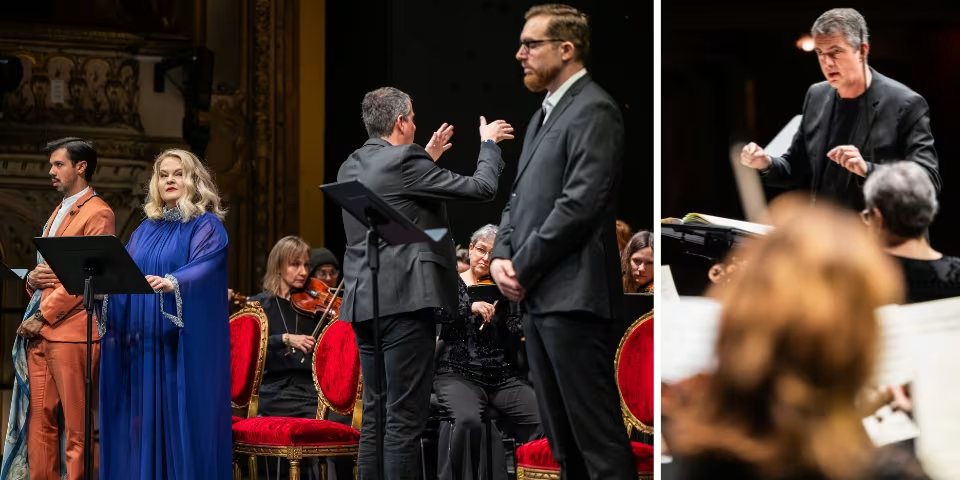
Jaroussky is conducting a staging of Handel’s cantata-serenata from 1708, Aci, Galatea e Polifemo, at Zurich Opera House as part of its inaugural Zürich Barock festival. The libretto by Nicola Giovo is in Italian, rather than the much better-known version of the same story in English, Acis and Galatea, which has largely different music and a libretto by John Gay. Sopranist Bruno de Sá, soprano Elizabeth DeShong and bass Nicholas Brooymans sing the parts, respectively.
 ▶
▶Philippe Jaroussky & Nathalie Stutzmann sing the Cornelia-Sesto duet, ‘Son nata a lagrimar’ from Handel’s Giulio Cesare in Egitto
Jaroussky has been prominent in the music scene for so long that it is remarkable that he is still only 48 years old. In 2025, he celebrated his silver anniversary as a professional singer. Handel has been at the heart of his career, in particular Giulio Cesare in Egitto, and his urge to conduct the operas was evident early on. ‘I've sung in Giulio Cesare and Alcina so much, but when I did my first Giulio Cesare with Cecilia Bartoli [in her first season as the Artistic Director of Salzburg Whitsun Festival in 2012], she said, “You will conduct.” I always thought I would. Even when I was not conducting physically, I had Ensemble Artaserse [which Jaroussky co-founded in 2002], where I was always testing.’
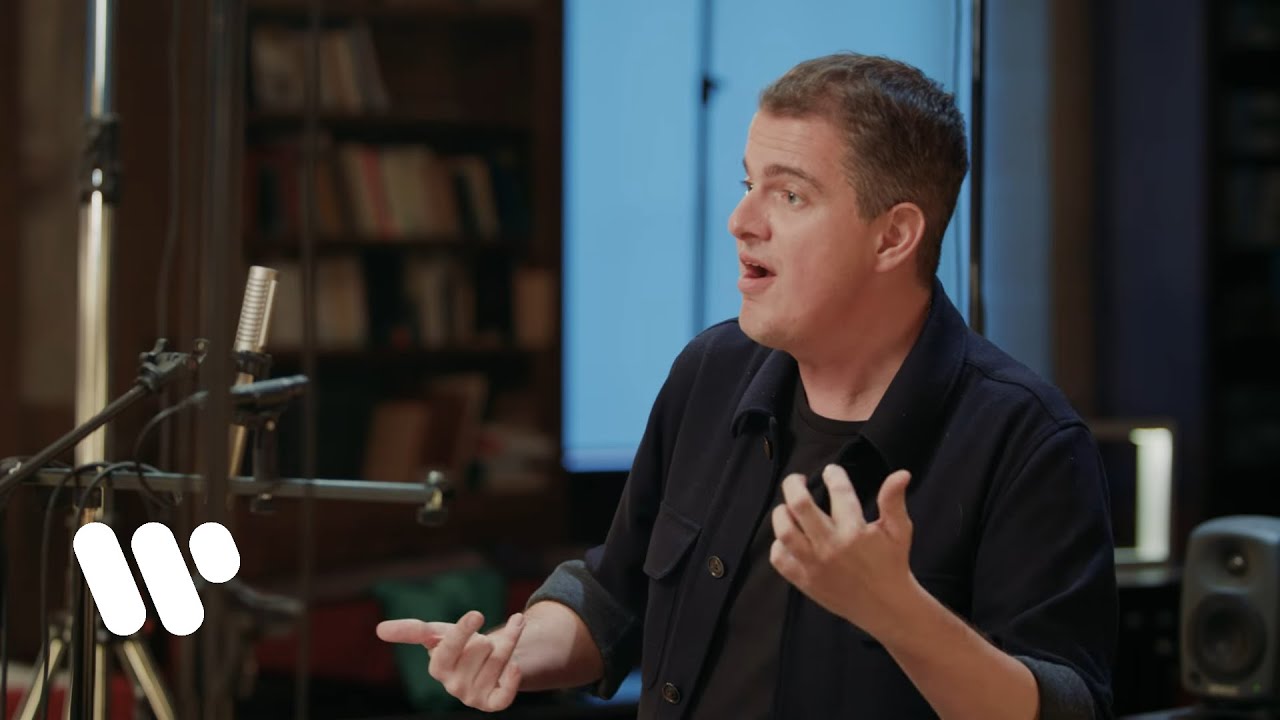 ▶
▶Philippe Jaroussky sings the aria ‘Ho tanti affanni in petto’ from Handel’s cantata, Mi palpita il cor, with Ensemble Artaserse
Jaroussky feels that his abilities have been honed not just by his experience as a vocal soloist, but by starting as a violinist and a pianist even before that, only beginning to train his countertenor voice when he was 18. ‘From my first Scarlatti during the pandemic, I felt at home and that I could help when giving thoughts on things like ornamentation, and I could talk about bowings. But when I look at the video now, it feels so inflexible. I hope I’ve improved!’
That Scarlatti was his debut as conductor: a production of Il primo omicidio (‘The First Murder’, based on the Biblical story of the killing of Abel by his brother Cain) in March 2021 with Ensemble Artaserse for Montpellier Opera, resulting in a residency for Jaroussky and the ensemble for the following three seasons. This was followed the next year by Giulio Cesare, which Jaroussky conducted both there and at the Théâtre des Champs-Élysées in Paris.
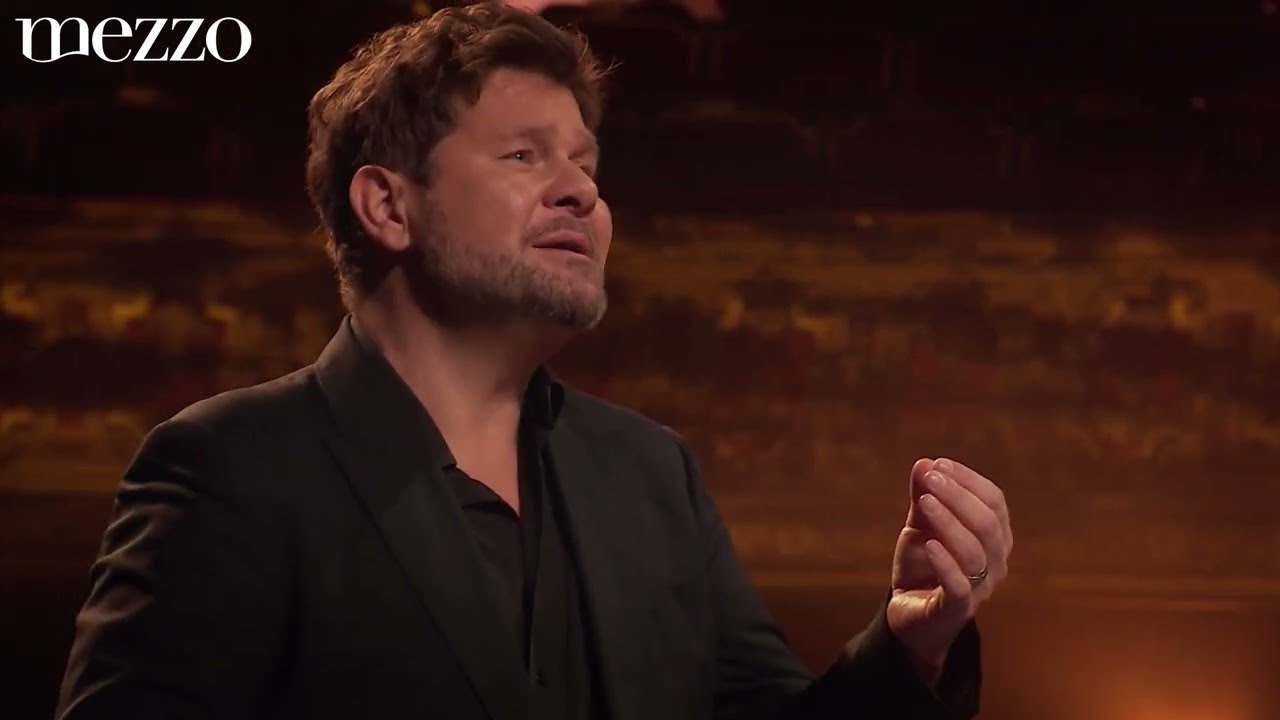 ▶
▶Philippe Jaroussky conducts Ensemble Artaserse and soloists Sandrine Piau and Kresimir Špicer in ‘Mio sposo al cor mi sento’ from Scarlatti’s Il primo omicido
‘I was given conducting advice from friends and my assistant in Montpellier. I think I’m more “horizontal” than “vertical” in my gestures. You can see I’m not a harpsichordist. I realise that this job is about helping musicians enjoy themselves – to show with gestures without telling them. A conductor is the guardian of their time, helping everyone to rehearse in the best way – I need to give the dark voices more time than the coloratura. I was shocked at the difference in sound on the podium compared to standing as a soloist or on stage. I realised it was good advice to not follow the singers too much, but instead keep the tension and not be too influenced by them.’
In Montpellier last year, ‘I was conducting my first Mozart, Mitridate, re di Ponto. I wanted to start with this and follow his chronology and dream of doing Don Giovanni in about ten years’ time.’ The production of Aci, Galatea e Polifemo is his first conducting collaboration with Zurich Opera, and he feels it is a natural way to start. ‘The story is so strong and so clear. Handel’s music is sculpted in marble – the natural way he develops an aria from just a few notes. I’m pretty sure he must once have been a singer, too, and then a teacher.’
Handel wrote the work for a wedding in Naples between Beatrice, Princess of Acaya, a town in Puglia which was part of the Kingdom of Naples, and Tolomeo, Duke of Alvita, a small duchy to the east of Rome. Handel was given the commission by Beatrice’s aunt, Aurora Sanseverina, not only a princess in her own right but also a poet and one of the most celebrated intellectuals and patrons in Neapolitan and Roman society. The librettist Giovo was her secretary. Its short duration means it needs extra music for a modern theatre evening. ‘Since there is no overture, like many other conductors, I’m using movements from a concerto grosso to fill it out.’
Instead of the tenor Handel uses for the later Acis, in Aci the title role is given to a castrato (sung in Zurich by the sopranist Bruno de Sá), whose voice is much higher and lighter than Galatea’s alto. ‘I feel there’s more balance – we have the balance of extremes from bass Polifemo to top soprano. The high cadenzas are magical. It’s a luxury having a huge voice like Elizabeth’s for Galatea. I sang a lot with Natalie Stutzman when hers was the deeper voice.’
‘While this is my first collaboration with Zurich, I want to do more and more conducting’, says Jaroussky. He is preparing more Handel for next season, only this time a full-length opera. ‘Duration is one of the most impressive things about Baroque opera. If you cut it too much, you do not just miss the music; you risk the audience losing their understanding of the characters and the plot. I want it to be the full four hours.’
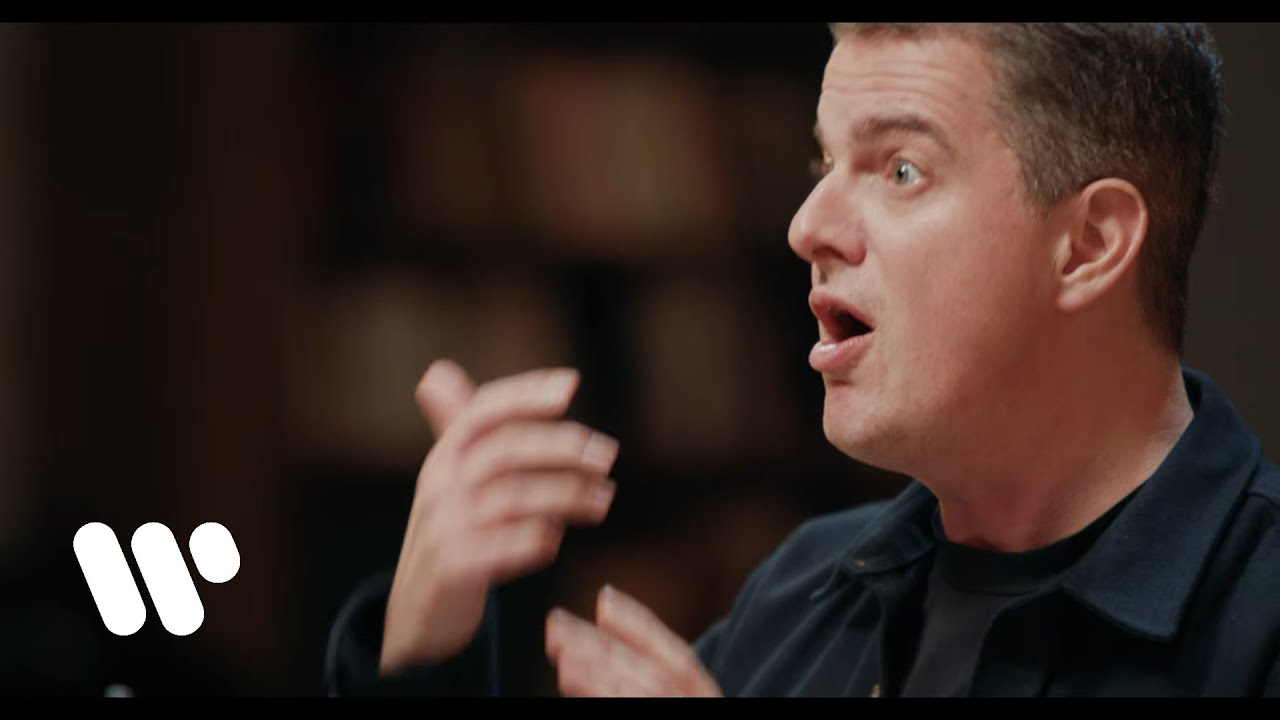 ▶
▶Philippe Jaroussky sings Vivaldi’s tender lament, ‘Ah ch’infelice sempre’ from the cantata, Cessate, omai cessate, RV 684
Jaroussky’s energies are not only taken up by singing and conducting. Ten years ago, he founded an academy bearing his name at the music complex La Seine Musicale on the Île Seguin (Seguin Island) in the town of Boulogne-Billancourt on the outskirts of Paris. It provides a link between amateur and professional music, as well as helping young people discover music earlier than he did, aged 11. In Jaroussky’s case, while it may have denied the world a virtuoso instrumentalist, it instead gave us a truly distinguished countertenor – and, now, a conductor with a fast-growing reputation.
Philippe Jaroussky conducts La Scintilla, Zurich Opera’s period-instrument orchestra, in a performance of Handel’s ‘Aci, Galatea e Polifemo’ on 20 & 29 March 2026. Full details on Opernhaus Zürich website.
Share this
Keep reading
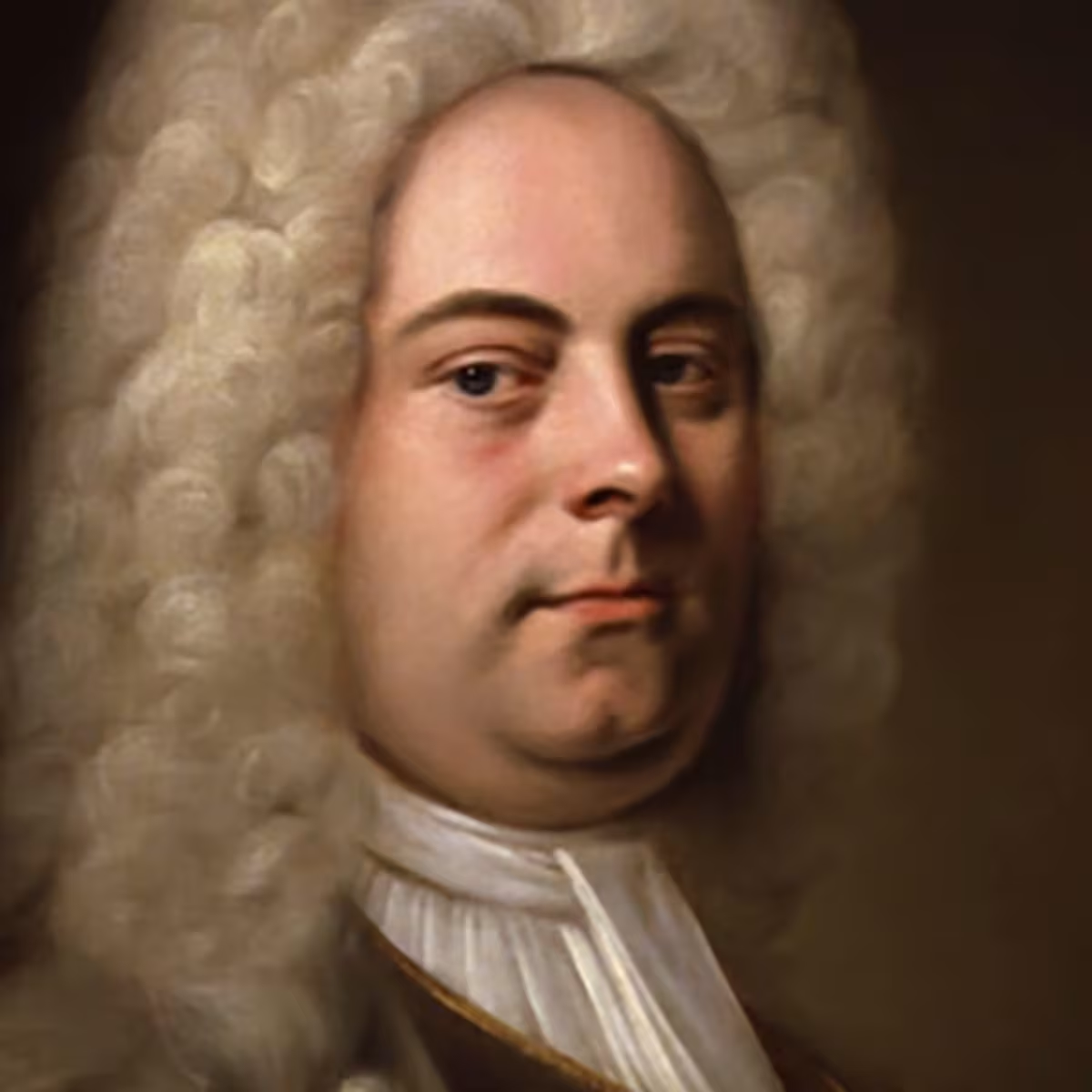
Handel’s Messiah – the Salisbury connection
There is an oddly persistent local story that a performance of Messiah was given in the chapel room over St Anne’s Gate when Handel stayed in Salisbury in 1739 with his friend James Harris of Malmesbury House in the close.
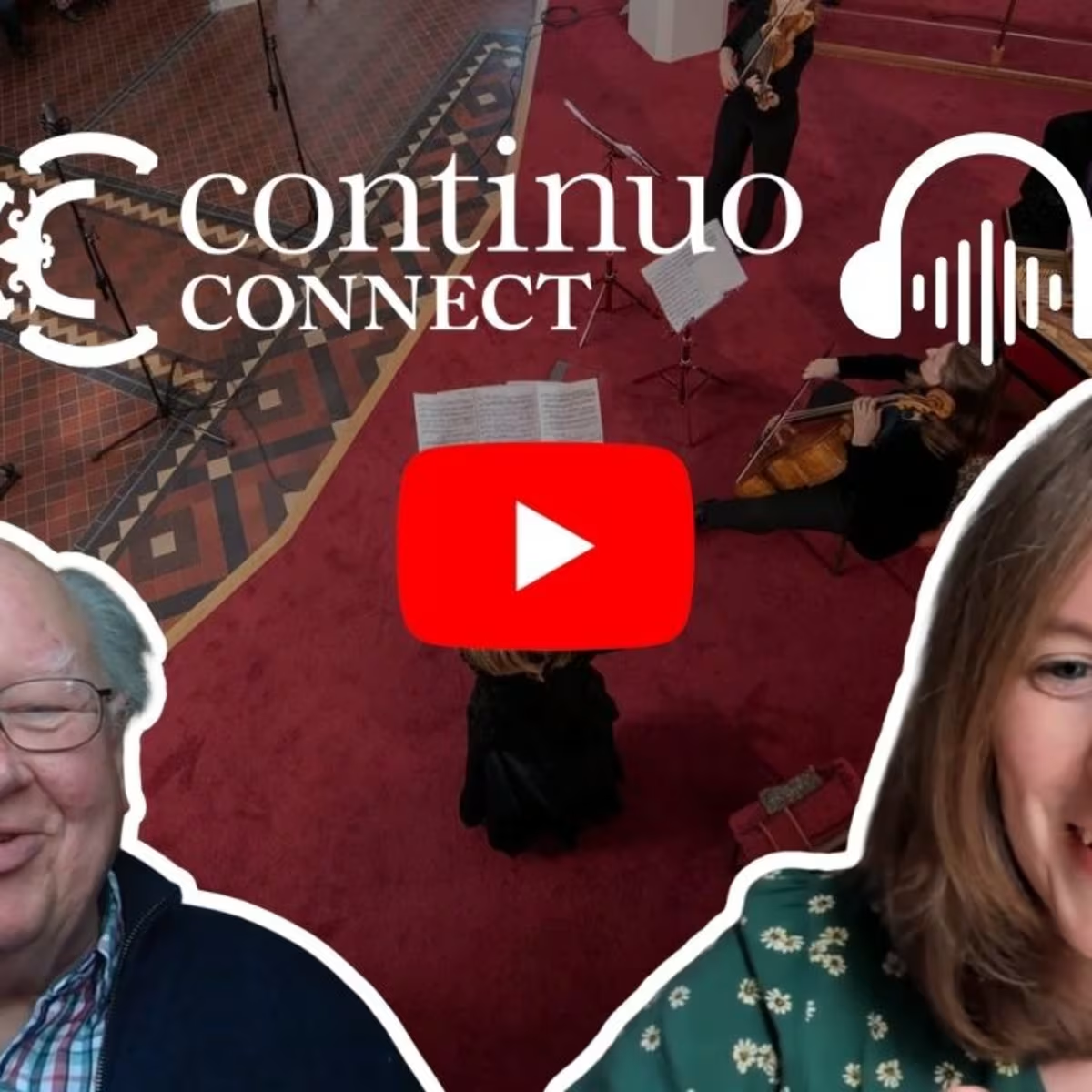
Mary-Jannet Leith on collaborating with the Buskaid Soweto String Ensemble
In the first of a new series of Continuo Connect podcasts, Simon Mundy talks to Mary-Jannet Leith of Ensemble Hesperi about their collaboration with the Buskaid Soweto String Ensemble, and the music that once filled Scotland's country houses.
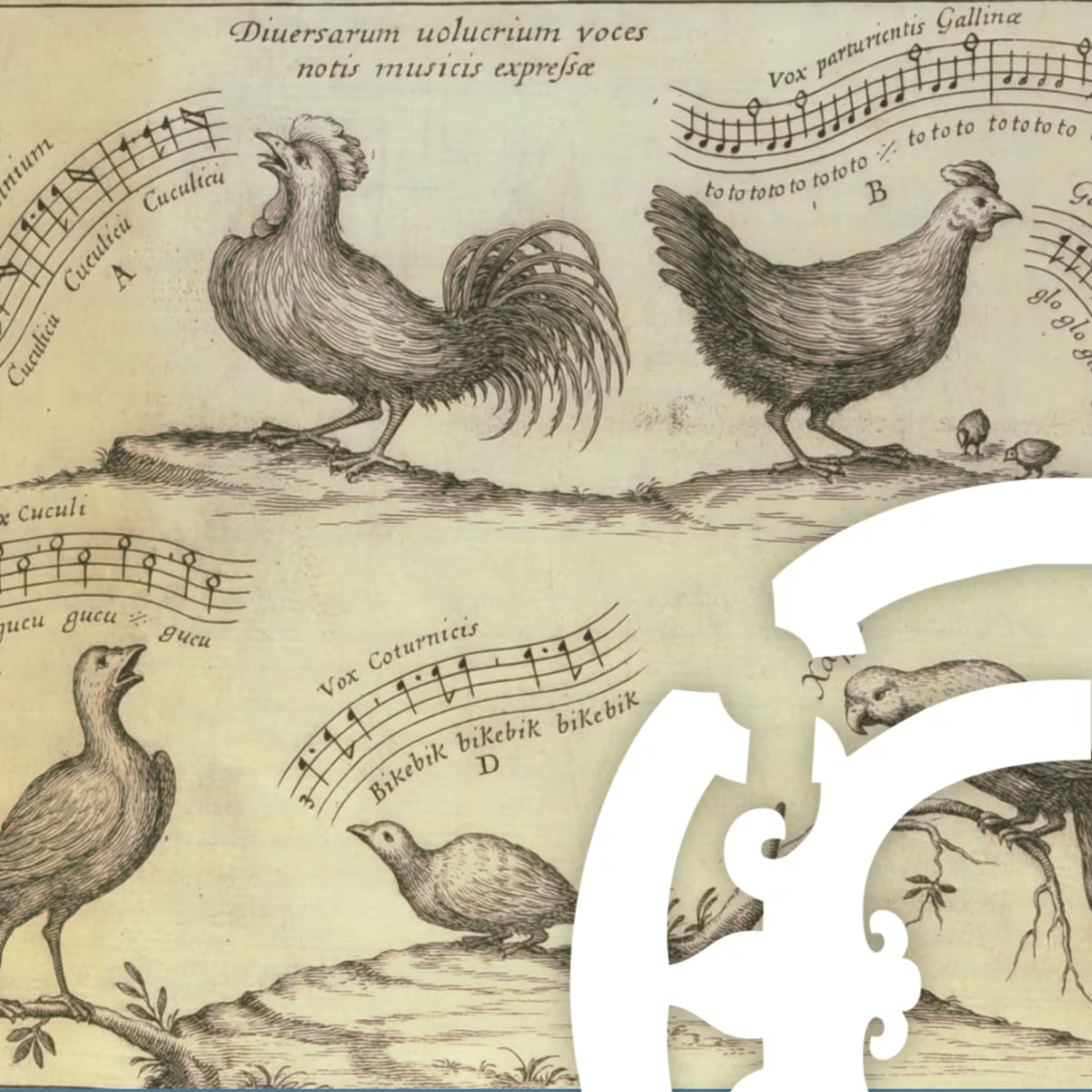
Playlist: Birds in Early Music
A playlist that explores how birds and birdsong inspired composers from Rameau and Couperin to Handel and Haydn and beyond.