

Feature
Murder, myth and memory: The legend of Saint Henry and Lalli
RE – Seeking the truth about an ancient Finnish mystery
Share this

BY AINO PELTOMAA | FIRST PUBLISHED 18 APR 2026
Ensemble Gamut! is an experimental collective redefining Early Music through bold, genre-crossing performances. Led by Aino Peltomaa, the trio fuses medieval chant, Finnish folk traditions, improvisation, and electronic soundscapes into a distinctive sonic world. Their critically-acclaimed albums have drawn international attention. For their Welsh debut at Early Voices Festival, they explore one of Finland’s most enduring legends: the story of St Henry and Lalli, where history, myth, and music intertwine.
The title of our programme, RE, refers to remaking, readjusting, reposting, retuning and reinterpreting both the past and the future. Our music looks back to a time before Finland existed as a country. For centuries, Eastern Orthodox and Western Catholic influences met and competed in this area, shaping its culture and traditions until they separated on the eve of the First Crusade. RE explores some of the earliest music preserved in Finland. Our sources include the rhymed office of St Henry, the Piae Cantiones collection, the Brigittine Cantus Sororum chantbook, and ancient runosong melodies.
The area of what is known today as Finland has always been an interesting ‘melting pot’ between East and West. The first Christian influences are likely to have been brought to Finland by the Eastern Orthodox Church. This is reflected in Finnish words such as risti (cross), pappi (priest), and pakana (pagan), which derive from an early Russian dialect dating back to around the 9th century.
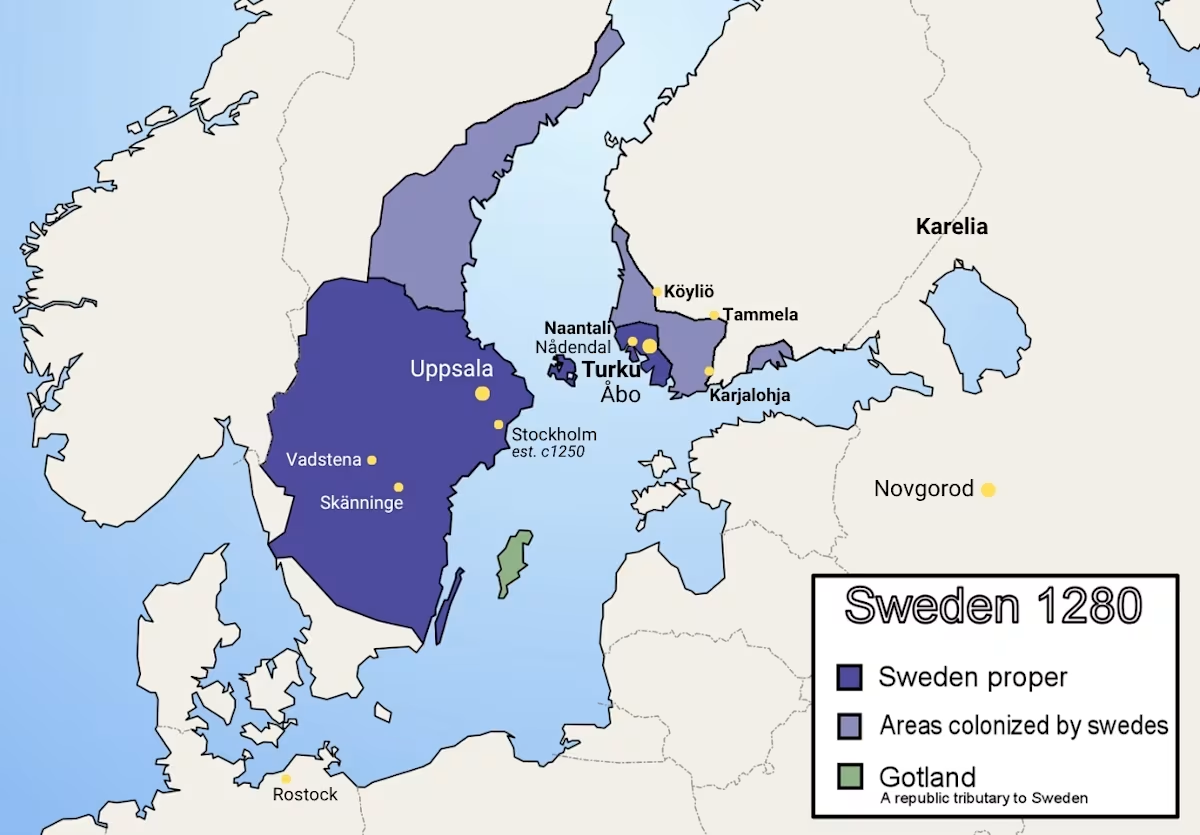
Comprising more than 9,000 parchment leaves from circa 1,400 medieval books, the Fragmenta membranea collection at the National Library of Finland preserves the earliest surviving manuscripts containing musical notation in Finland. These remains have been found in southwestern Finland where the coastal city of Turku (Åbo), the intellectual and musical centre of medieval Finland, is located. The Turku Cathedral School was founded in the 13th century, exerting a strong influence on the Dominican Order, in contrast to the prominence of Orthodox Christianity in eastern regions, which were then under the power of the city-state of Novgorod.
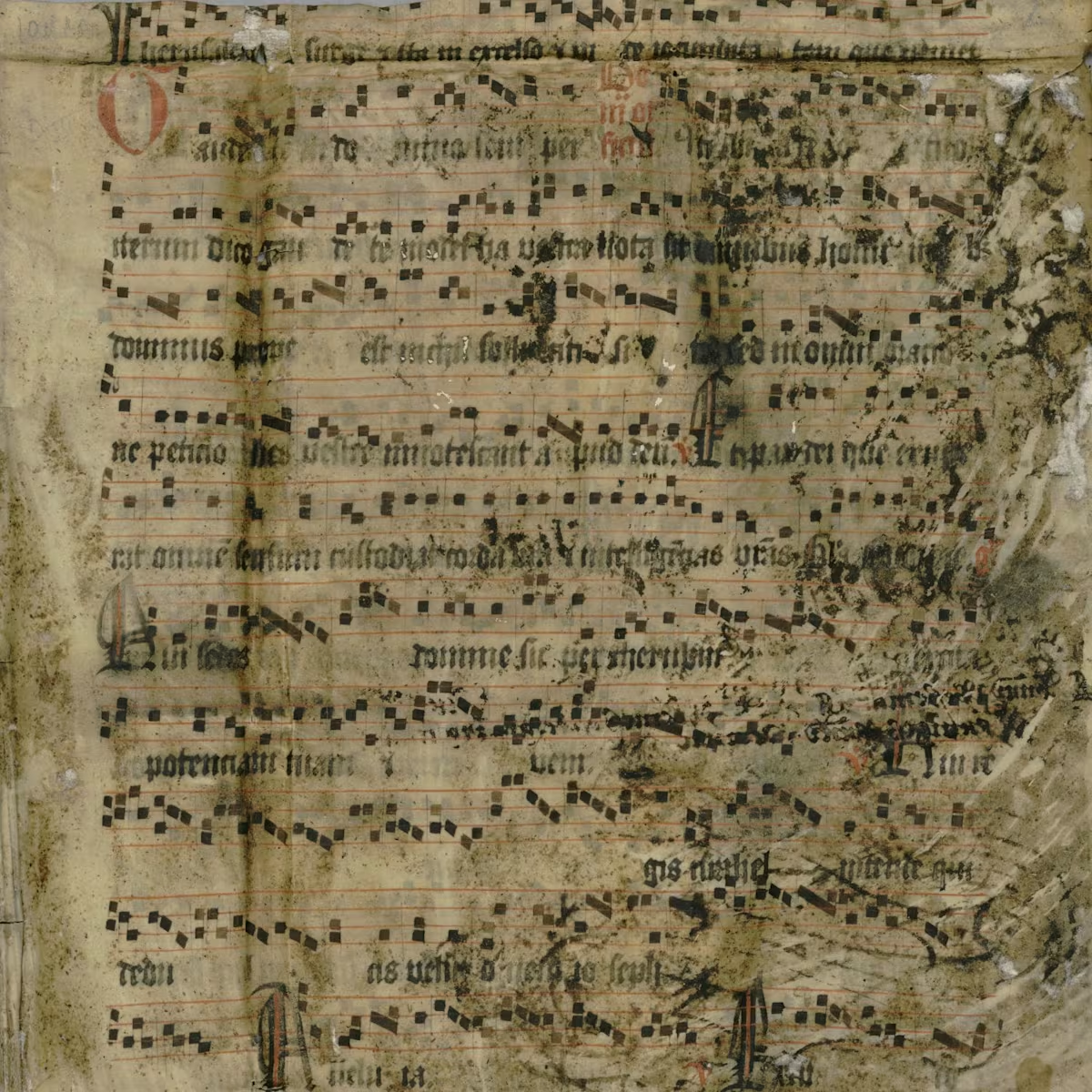
Surviving medieval musical sources from Finland are relatively scarce, largely due to limited urban development compared to Central Europe. Historians generally date Finland’s medieval period from the 13th to the 16th century. During this time, Finland was part of the Kingdom of Sweden, until it was ceded to the Russian Empire in 1809. Turku was one of Sweden’s most important towns, and cultural exchange with Europe was active. Finnish students are recorded at the Sorbonne as early as the 14th century, and a Dominican document from 1254 mentioning Tuomas of Skänninge provides the earliest written evidence of a musician working in Finland. Early Turku liturgical books also include hymns and chants from centres such as Maastricht, Paris and Utrecht.
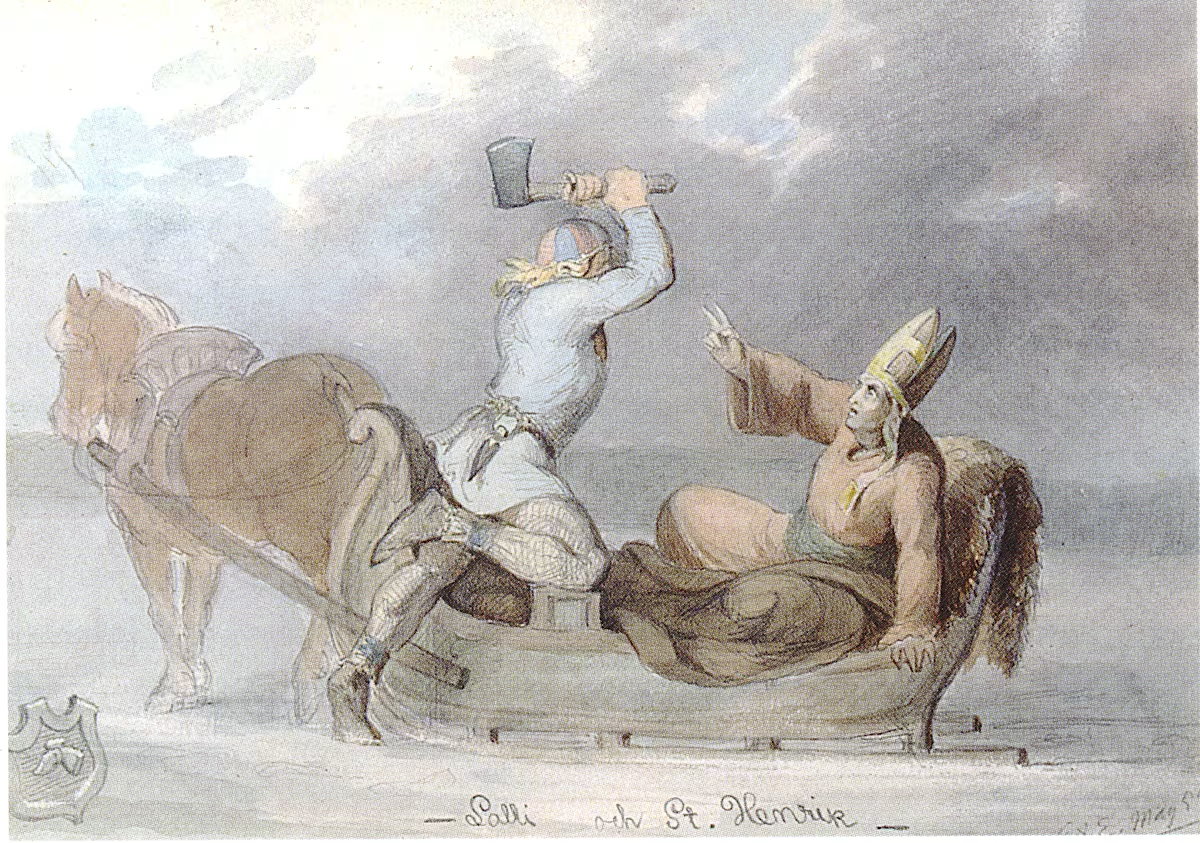
The Legenda Sancti Henrici (The Legend of St Henry), dating from the late 13th century, is the earliest surviving collection of medieval music from Finland. Henry, an English missionary based in Uppsala, the religious centre of Sweden, was sent to Finland in the 1150s to convert the Finns to Catholicism. The mission was a military one, led by King Eric IX of Sweden. After the king returned home, Henry remained to organise church life, but was brutally killed by a local peasant. A yeoman farmer called Lalli, who received a church penance for manslaughter, so the legend goes, felled St Henry with an axe on the frozen Lake Köyliö on 20 January 1156. This legend is very prominent in Finnish folklore, as well as in the ecclesiastical cult of St Henry, which was probably initiated in the 13th century as part of Swedish political and religious propaganda. Indeed, Henry was a popular saint in the region around Turku, and was considered the protector of the whole eastern part of Sweden – with memorial feasts in his honour carried out biannually until the 17th century.
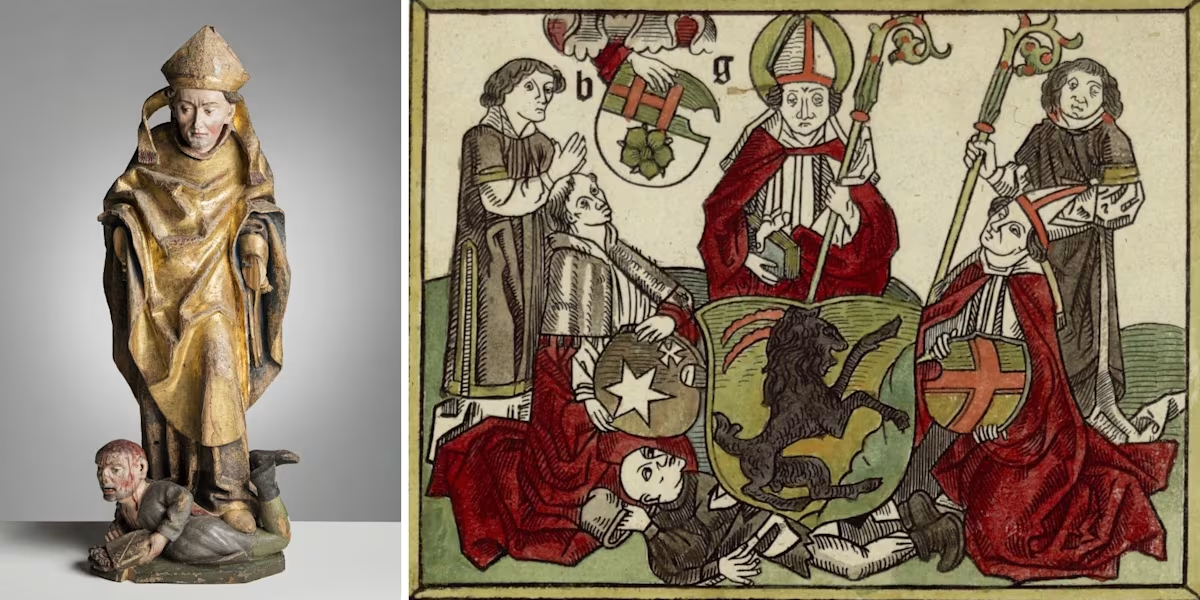
The rhymed office Missa et officium Sancti Henrici contains chants and poetic texts describing the life and miracles of Henry as a martyred figure. This type of repertoire was common across late medieval Europe until it was largely discontinued following the Council of Trent (1545–1563). The Reformation subsequently led to the rapid decline of Catholic traditions in Finland. Used on feast days and saints’ days, the texts for these chants and hymns were often newly written for the canonical hours, set to borrowed (or sometimes newly-composed) chants, some of which were occasionally attributed to specific composers, who might be local priests, cantors or cathedral school teachers.
One melody from this office, the antiphon, Perfecte desiderium sui, also appears in the rhymed office of St Bridget. The Brigittine Order had a strong presence in western Finland, particularly in Naantali (Nådendal; aka ‘Vallis gratiae’ [The Valley of Grace]), which developed around a Brigittine monastery. St Bridget of Sweden (c.1303–1373), a mystic and mother of eight, founded the order, whose main centre was Vadstena Abbey near Linköping, Sweden. She was also recognised as a saint in Turku.
Ensemble Gamut! | ‘Cum lucri magnitudin’ – ‘Perfecte desiderum sui’ – ‘Pre clari patris sanctitas doctrinam’ from Missa et officium Sancti Henrici
Our programme combines chants from the Missa et officium Sancti Henrici – including antiphons, introits and graduals – with traditional runosongs and improvisation. Brigittine chant adds a Marian dimension since Mary is very prominent in the vernacular runo-singing tradition, on account of the Orthodox influence in the eastern areas of Finland (i.e. Karelia), while Piae Cantiones reflects the musical life of students at Turku Cathedral School.
Runo-singing was the principal form of vernacular artistic expression among Baltic-Finnic peoples, developing over centuries in Finland, Karelia, and Estonia. It often featured instruments such as the bowed lyre (jouhikko) and shepherd’s flute (soittu). Karelian runo-singing, with its distinctive – at times, 5/4 – poetic metre, represents one of the oldest surviving oral traditions in Finland. The arrival of Christianity into these song traditions can be seen in the appearance of words like ‘Maria’, ‘Jesus’ and ‘God’, especially in the coastal areas where agriculture started to take place. Mythical and religious characters together are invoked to help with cattle, providing prey, or to help with diseases such as the plague. Luojan virsi is an example of medieval legendary poetry where the birth of Jesus is described from the perspective of Mary as she eats an apple (or a nut) from a tree in a forest, becomes pregnant, and seeks for a place to give birth.
Ensemble Gamut! | Luojan virsi (The Creator’s hymn)
Besides St Birgitta’s instructions for chant, there is little known about how early written music in Finland was performed. The strong oral tradition of runo-singing, however, likely dates back to pre-Christian times. These traditions were later documented during the early national Romantic movement and the late 19th-century Karelianism. In our programme, runosongs recount themes such as the slaying of St Henry, the miseries of life, enchantments and pleas to Mary for healing, bringing together written and oral traditions. While we do take inspiration from historical sources, we present the songs though our own interpretation, arrangements and electronic soundscapes.
Cantus Sororum is a collection of chant, a weekly cycle of prayers, antiphons, psalms, hymns and responsories sung by the Brigittine sisters. The cycle of the Liturgy of Hours was sung throughout the week, with a theme for each day. It was formulated by St Bridget and her confessor Petrus of Skänninge, and influenced by traditional Gregorian repertoire (Hartker, Hesbert and Worcester antiphoners), but altered to the Brigittine rule. The collection was used in Sweden-Finland’s Brigittine monastery in Naantali/Nådendal. The Finnish manuscript sources from the Turku area are the Karjalohja and Tammela antiphoners. The collection travelled to Naantali from the Vadstena monastery, and the manuscripts that survived in Finland have only few variations from the Vadestna sources. The hymn Trina caeli hierarchia was sung on Saturdays in Compline (‘Ad completorium’) and dedicated to Mary’s death amidst the Apostles and her Assumption.
 ▶
▶Ensemble Gamut! | ‘Trina caeli hierarchia’ from Cantus Sororum
Possibly the best-known Early Music treasure from Finland is Piae Cantiones, a collection of 74 medieval religious Latin songs for cathedral school students. Music was an important part of the education of the Turku Cathedral school students, who were required to practice daily. Piae Cantiones was compiled by a Finnish student in Rostock, Theodoricus Petri, in 1582 with the intention of preserving “ancient hymns of the fatherland”. The collection is one of the rare representations of musical activities in medieval Finland. Piae Cantiones also demonstrates Finland’s link to other medieval cultural centres. Although the collection was strongly influenced by musical material from Central Europe, many of its songs are of Scandinavian origin.
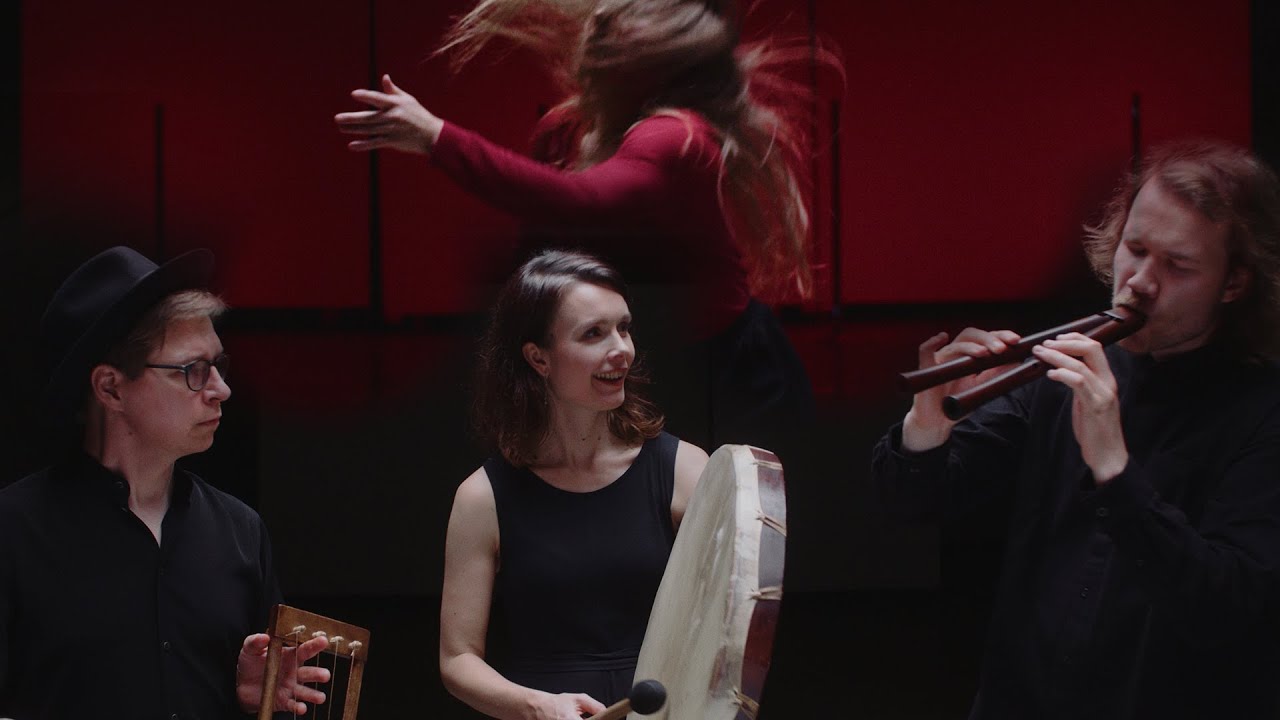 ▶
▶Ensemble Gamut! | ‘Lapsed caicki laolacatt’ (‘Let all children sing’) from Piae Cantiones
The legend of St Henry and Lalli is one of the most enduring and enigmatic narratives in Finnish cultural history. On the surface, it tells of the killing of an English bishop by a local farmer. Yet its significance extends far beyond a simple martyr story. For centuries, the legend functioned as a foundational myth of Christianisation in Finland, reinforcing the authority of the Church and its Swedish patrons. At the same time, Lalli – cast in ecclesiastical sources as a violent criminal – has, in later interpretations, been reimagined as a symbol of local resistance, even a proto-national figure, opposing foreign rule. This duality makes the legend particularly compelling: it exists simultaneously as propaganda, folklore, and contested memory. The historical facts remain uncertain and much of what survives was written generations later, shaped by political and religious agendas. In oral tradition, the story takes on further layers, blending humour, tragedy and the supernatural. It is precisely this ambiguity – between history and invention, victim and aggressor, sanctity and rebellion – that lies behind the story’s lasting appeal.
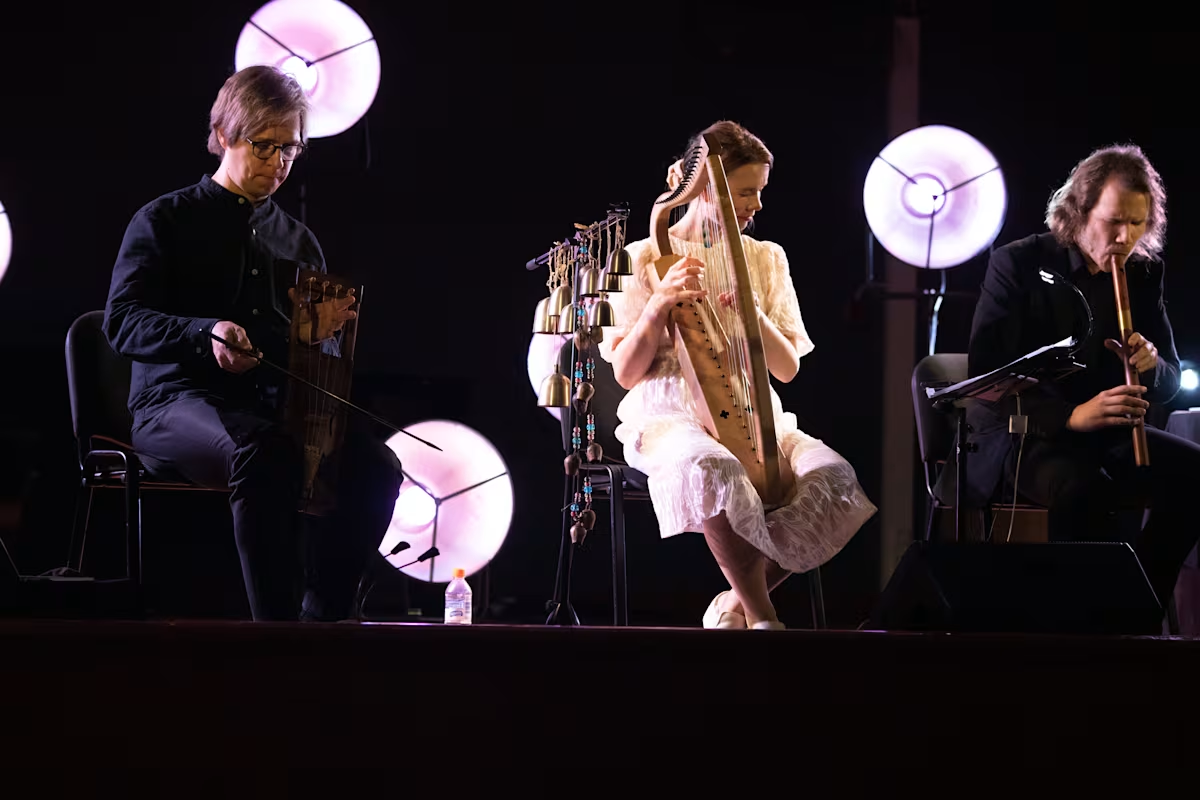
In RE, we approach the legend not as a fixed narrative, but as a shifting story, continually reinterpreted through music, memory and perspective. We explore what is true and what is fiction, what is mythology, trolling, or legend – how stories and facts are altered by the narrator’s perspective. Performing this programme at Llantwit Major’s historical St Illtyd’s Church, one of the oldest in Britain dating from the 11th century, will add a powerful sense of atmosphere.
Ensemble Gamut! will present RE as the closing performance of Early Voices Festival at St Illtyd's Church in Llantwit Major near Cardiff on Sunday 10 May. This concert will feature an acoustic performance with Marco Ambrosini on nyckelharpa, replacing Ilkka Heinonen for this occasion. The ensemble’s albums, UT, RE, and MI, are available for purchase on Bandcamp and streaming on all major platforms.
Share this
Keep reading
Exploring the golden age of the ‘City of Dreams’
‘City of Dreams’ is an exploration of two centuries of Renaissance Florence at Brighton Early Music Festival. We spoke to Oliver Webber, founder of Monteverdi String Band, and writer Saria Steyl about how the project came together.
In conversation: Samuel Ng
Continuo Connect catches up with Samuel Ng, cellist and gamba player with the newly formed Republic of Viols and Liturina.
JS Bach, and a cabinet of curiosities: Jorge Jiménez
Violinist, director and composer Jorge Jiménez talks to Simon Mundy about his latest album Curiosa: Lost & Found Tunes, his new Bach weekend in Ipswich, and his freelance career balancing life in rural Essex with regular work in Spain.