

Review
Legrenzi: A forgotten genius full of surprises
A report from the Musica Mirabilis 2025 festival in Clusone
Share this

BY ASHUTOSH KHANDEKAR | FIRST PUBLISHED 10 JAN 2026
In the town of his birth, the Musica Mirabilis ‘Giovanni Legrenzi’ Festival is reviving the long-neglected legacy of a composer who links the polyphonic traditions of the Renaissance with the expressive drama of the Baroque. Ashutosh Khandekar visited the Bergamesque town of Clusone to attend a performance by Christophe Rousset and the members of Les Talens Lyriques, entitled ‘The Forgotten Genius’.
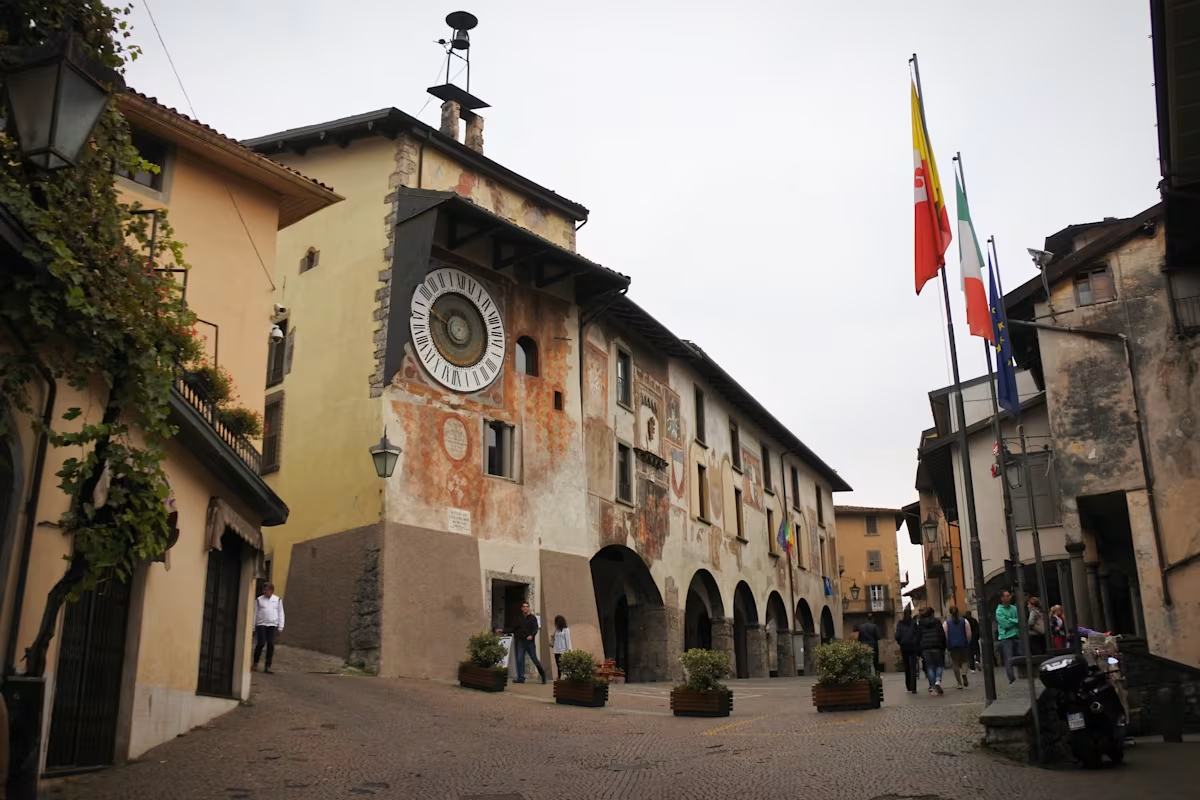
Somewhat off the beaten track, Clusone is an easy town to linger in. Set in the Seriana Valley at the edge of the Orobic Alps, north of Bergamo, it is sometimes called una città dipinta – a painted town, full of buildings and churches layered with frescoes that surface unexpectedly as you move through the winding, picturesque streets in the historic centre. The most famous of these vivid depictions, the stark Danza macabra in the Oratorio dei Disciplini, next to the imposing Basilica of Santa Maria Assunta, stops visitors in their tracks. So, too, does the 16th-century Fanzago planetary clock in the medieval town hall, still wound by hand each day.
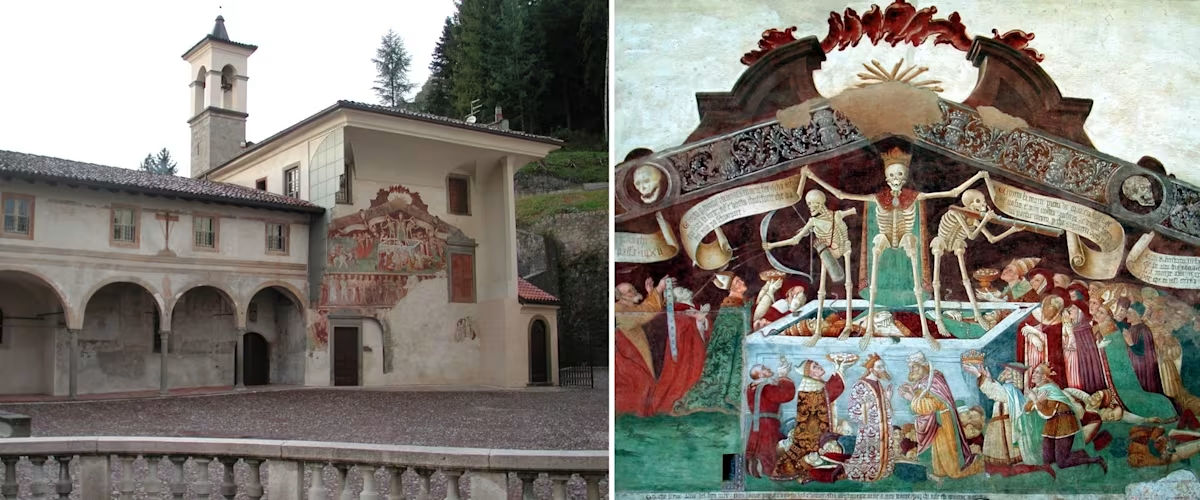
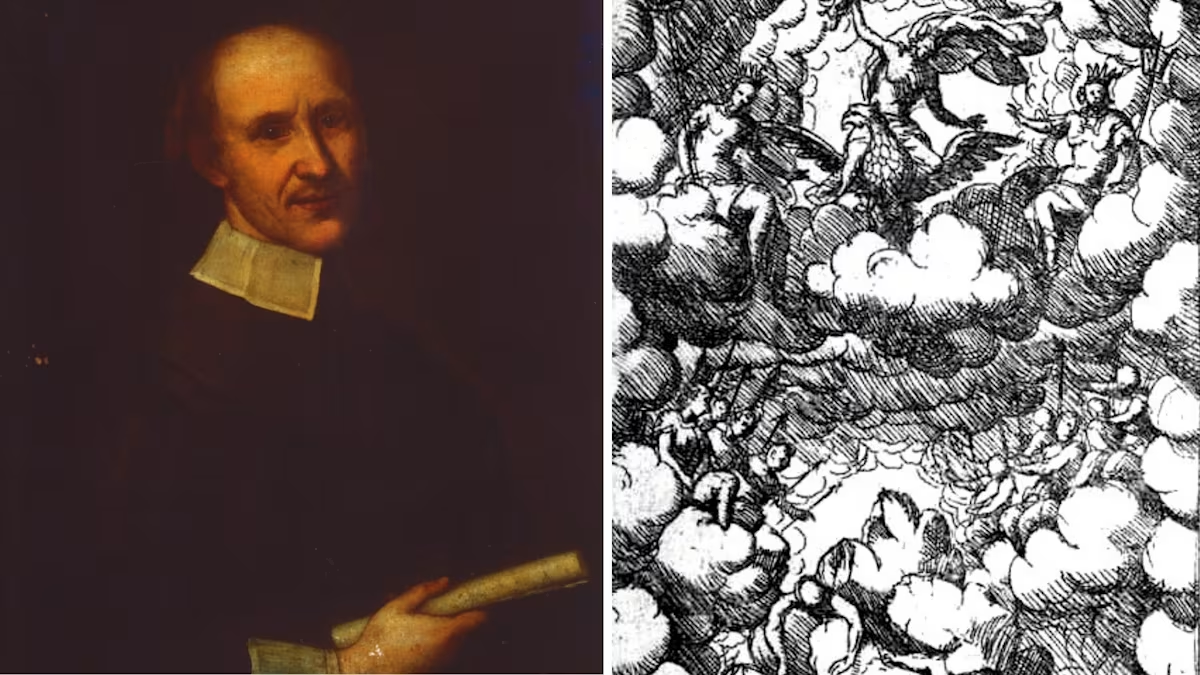
Adding to its cultural credentials, Clusone is home to an unexpected musical legacy. In 2026, the town will be celebrating the 400th anniversary of the birth of the once-influential 17th-century composer Giovanni Legrenzi (1626–1690), whose reputation is finally catching up with his historical importance.
Legrenzi was a major figure in Italian music, especially in Venice, where his works were printed, circulated and quickly exported across Europe. They reached London, Hamburg and Amsterdam within months of being created. Bach and Handel almost certainly knew his music; but beyond the Baroque era, he was forgotten. That neglect is now being addressed as Clusone turns itself into the headquarters of a modern musical renaissance.
The engine driving this revival is the Musica Mirabilis International Music Festival ‘Giovanni Legrenzi’, established in 2022 with the support of the Municipality of Clusone and its dynamic young mayor, Massimo Morstabilini. The artistic and intellectual heft is provided by co-directors Ivana Valotti, Professor of Organ and Organ Composition at the Conservatorio Giuseppe Verdi in Milan, and Giovanni Acciai, a choral conductor and formerly Professor of Musical Palaeography, also in Milan. The festival has a single focus: to explore Legrenzi’s music in depth, using original sources and period instruments, and to set it alongside the work of his contemporaries. All concerts are free. The aim, Acciai says, is simple: ‘to make this extraordinary heritage heard again’.
Acciai’s motivation is as much cultural as musical. Italy, he points out, was once the musical centre of Europe. ‘We all know Monteverdi, Gabrieli, Frescobaldi, Cavalli,’ he says. ‘But many other great Italian composers disappeared from memory. I kept asking myself, how could this happen?’ Legrenzi, born in Clusone, but later active in Venice, seemed an ideal place to start undoing that historical amnesia.
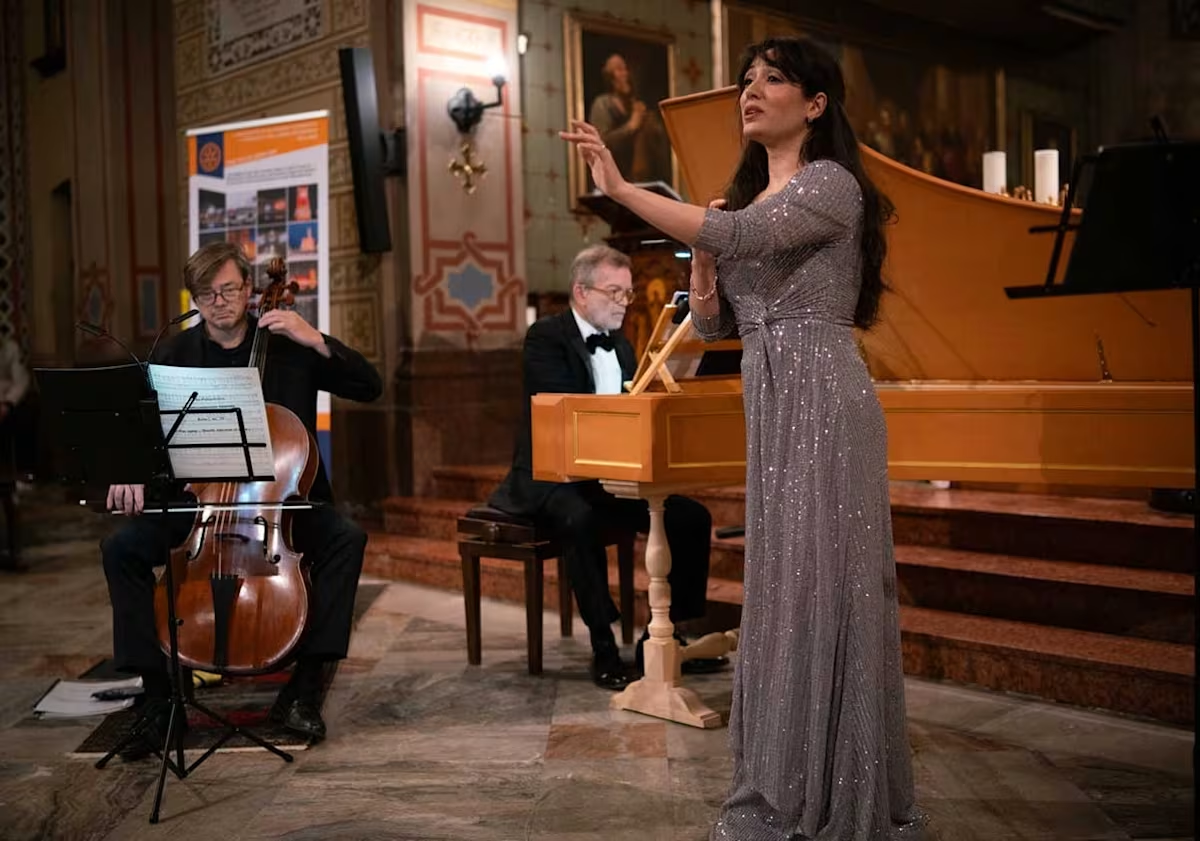
A key step on the road to the 2026 anniversary came last October, when Christophe Rousset brought a small ensemble from Les Talens Lyriques to Clusone with a programme called Il genio dimenticato di Giovanni Legrenzi – ‘the forgotten genius’. More than a premature birthday celebration, the evening provided a clear-eyed reassessment of Legrenzi’s significance within the cultural landscape of the Venetian Baroque.
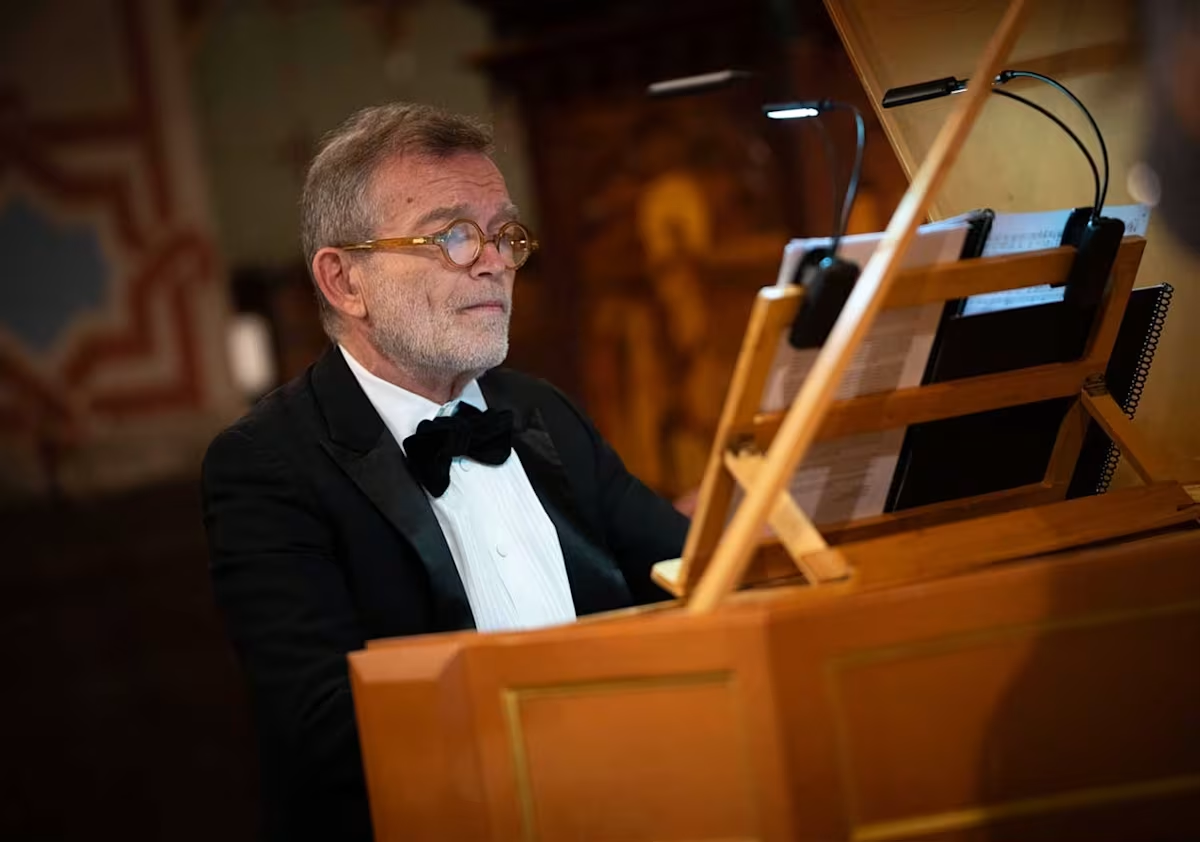
Directing his chamber ensemble from the harpsichord, Rousset’s approach was characteristically measured, keeping the textures light and the delivery precise and unfussy. Works by Barbara Strozzi, Stefano Landi and Domenico Gabrieli were placed around Legrenzi’s music not as padding, but to provide context for his stylistic influences.
Soprano Francesca Aspromonte was central to the evening’s success. Her singing combined dramatic flair and vivid word-painting with an easy, well-supported line. In excerpts from Legrenzi’s operas, La divisione del mondo, and Eteocle e Polinice, alongside the Cantate e canzonette, Op. 12, she moved naturally between speech-like declamation and extended lyricism. She also brought a relaxed, engaging rapport with the audience.
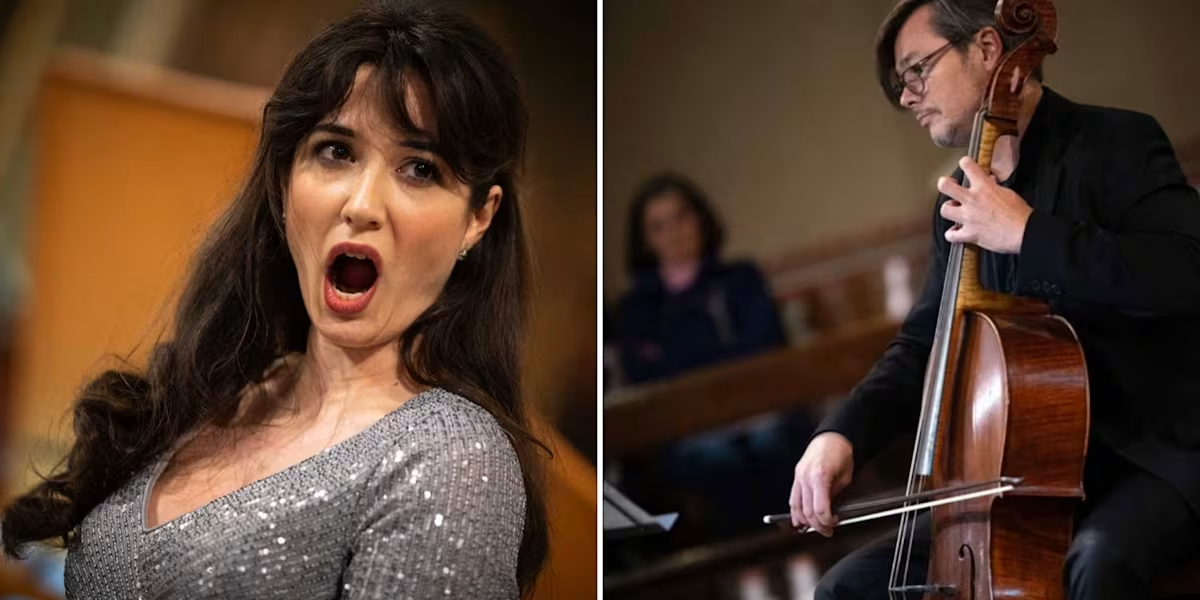
The instrumental contributions were equally thoughtful. Cellist Emmanuel Jacques, performing Domenico Gabrieli’s extraordinary Ricercari for unaccompanied cello, shaped a series of variations with breathtaking virtuosity and calm authority. Placed alongside Legrenzi’s music, the piece highlighted a fascination with form and balance pointing the way to Bach.
For Acciai, this kind of programming reflects how Legrenzi himself worked: ‘He begins in the Palestrina tradition, but very quickly absorbs the new concertato style.’ Legrenzi wrote across genres – sacred and secular music, oratorios, operas, instrumental sonatas – and constantly experimented with vocal groupings and instrumental roles. ‘He gave the violin and basso continuo a new importance,’ Acciai says. ‘You can already hear in his music where the next generation is going.’
That sense of transition is central to the festival’s thinking. Legrenzi is not presented as a lone genius, but as a bridge figure: someone whose music shows the shift from Renaissance polyphony to Baroque gesture and melody. ‘In his sacred concertos and his Vespro della Beata Vergine,’ Acciai notes, ‘there is energy, rich harmony, and a real dramatic instinct. It surprises people.’
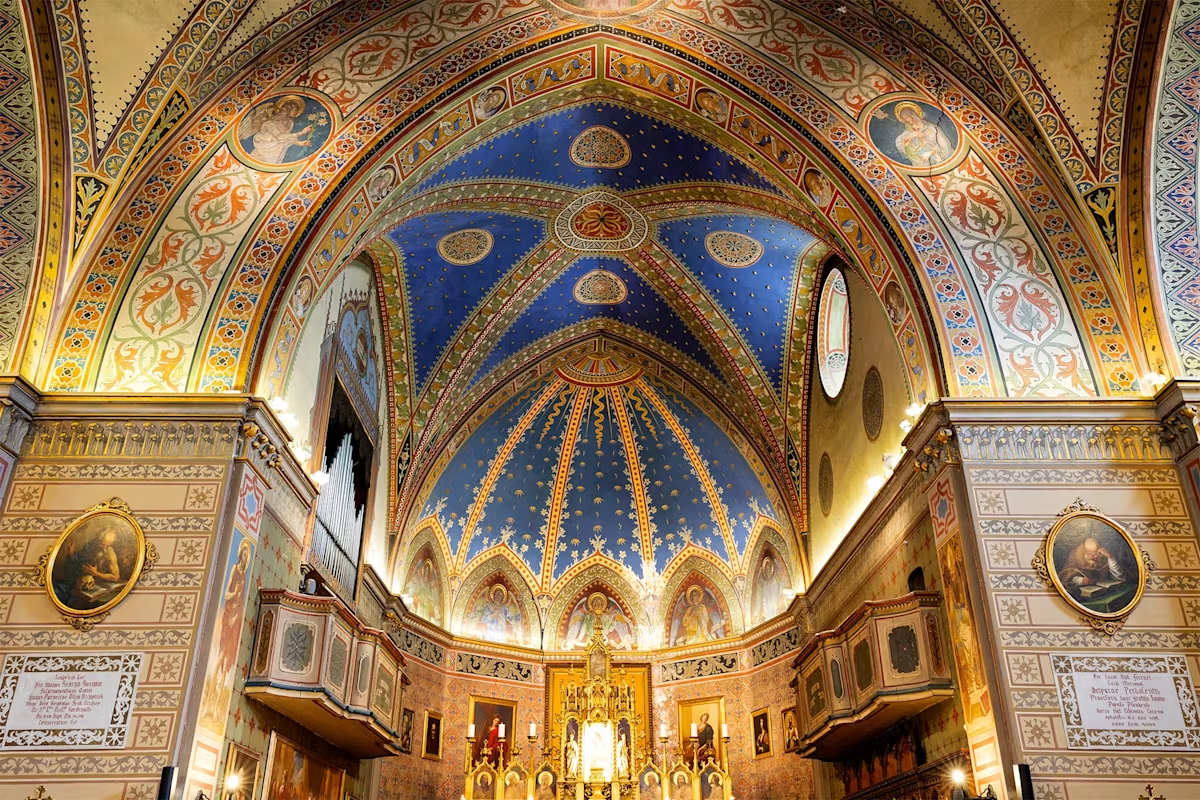
Surprise, in fact, is one of the festival’s quiet strengths. Many in the audience arrive expecting a worthy but academic excavation from the dusty depths of 17th-century repertoire. They leave struck by how fresh it all sounds. ‘People don’t expect this music to feel so direct,’ Acciai says. ‘But Legrenzi is elegant, inventive and emotional. He speaks very clearly to modern ears.’
The work that goes into giving life to this music is substantial. Scores are prepared from original Venetian prints and manuscripts held in Bologna, Venice, and abroad, including the British Library. Much of the repertoire has required new transcription. ‘Many of these pieces had simply never been performed in modern times,’ Acciai says. ‘For us, this is both research and performance. You cannot separate the two.’
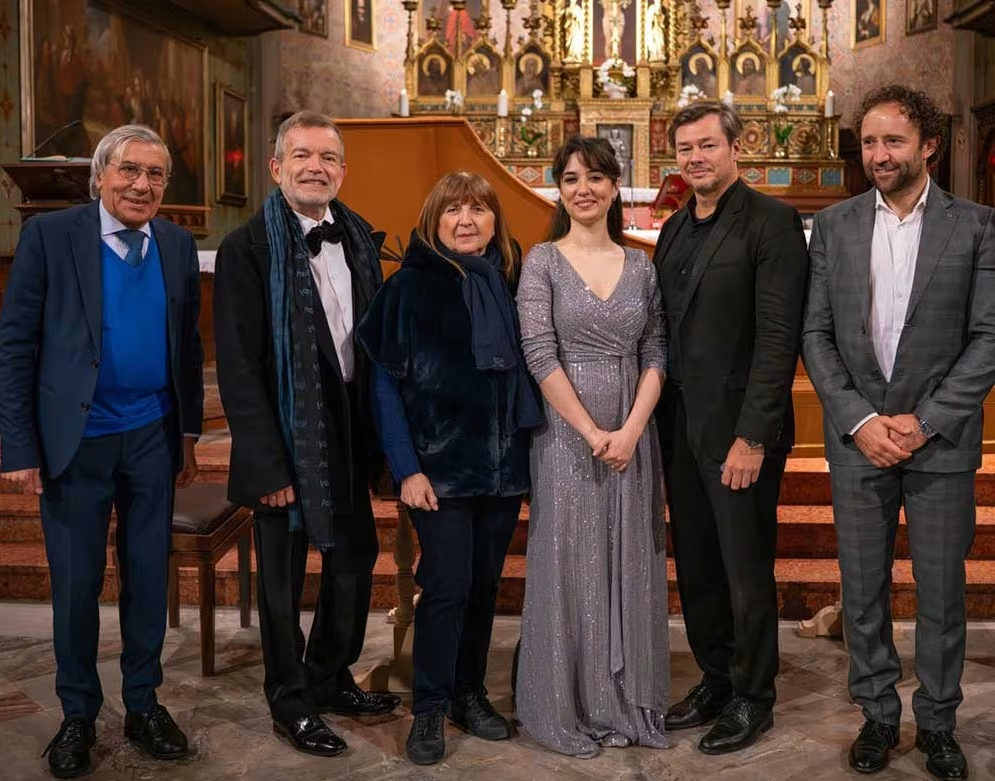
Future plans look beyond the anniversary itself. Recent editions of the festival have included an oratorio, La vendita del core umano, reconstructed from two manuscripts held in libraries in Modena (Biblioteca Estense) and Rome (Biblioteca Vaticana). The next season will focus on Legrenzi’s instrumental sonatas, among the earliest Italian examples of what later became the trio sonata – a genre further developed by Corelli and Vivaldi. Recording and publication are part of the longer-term plan, aimed at giving musicians elsewhere access to the material.
What makes Musica Mirabilis all the more convincing is its lack of hype. No one is claiming Legrenzi as a ‘new Monteverdi’ or rewriting the history books overnight. Instead, the festival makes a more modest, but nonetheless compelling argument: that Legrenzi was a highly-skilled, imaginative composer whose music deserves to be heard again, and whose absence from today’s repertoire is more a question of historical oversight than critical judgment.
As the 400th anniversary of Legrenzi’s birth in Clusone approaches, the project feels well-timed. The Baroque canon is no longer fixed, and audiences are increasingly open to unfamiliar names. Giovanni Legrenzi’s name is finally being recognised as a lively voice in a musical conversation that was for centuries interrupted, and is now, patiently and persuasively, being resumed.
The fifth edition of Musica Mirabilis Festival ‘Giovanni Legrenzi’ will take place in Clusone in Autumn 2026. Details of this year’s 400th anniversary programme will be published on Continuo Connect in the coming months.
Share this
Keep reading
The Best of Rachel Podger
This playlist celebrates 'the unsurpassed British glory of the baroque violin' (The Times) - that is of course Rachel Podger.
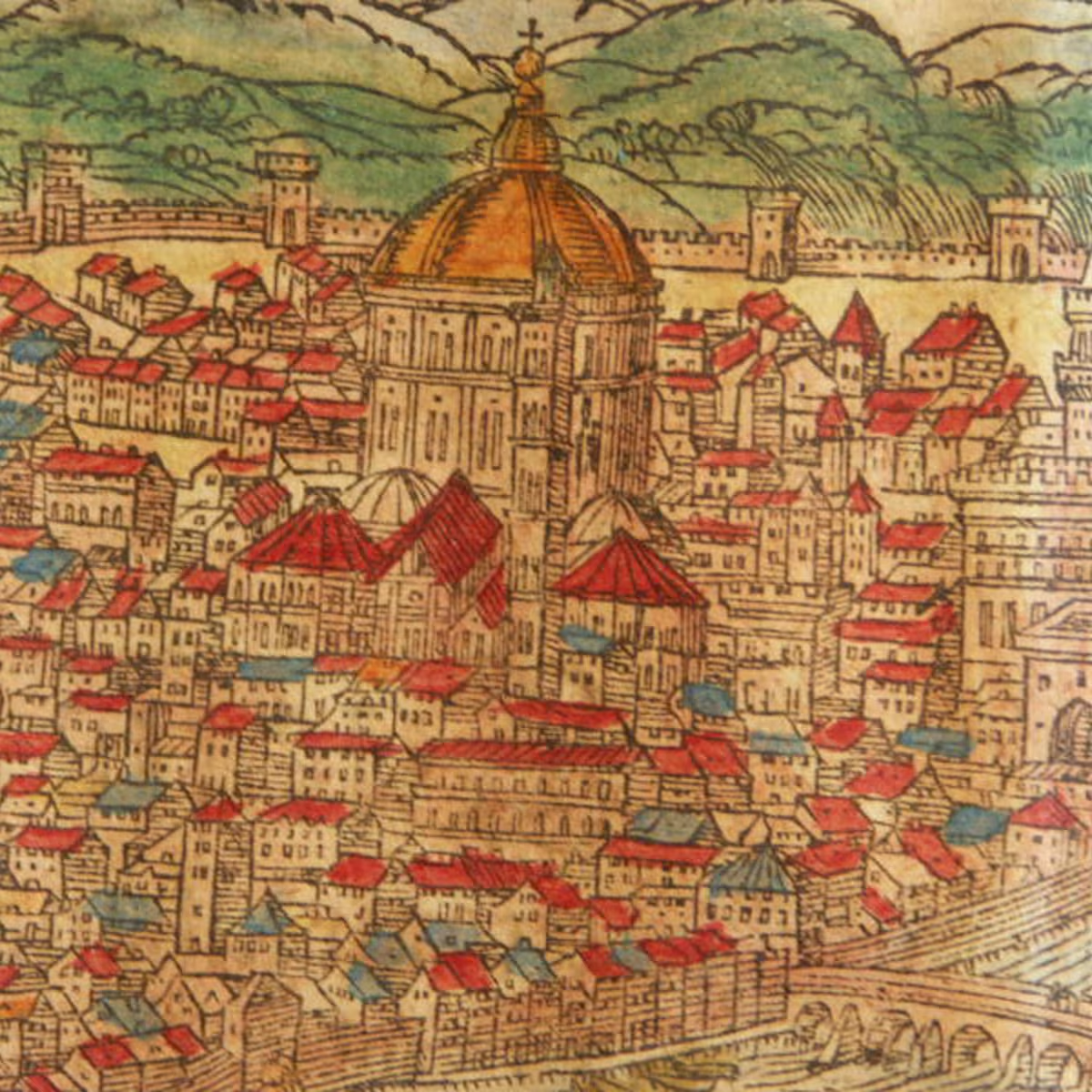
Exploring the golden age of the ‘City of Dreams’
‘City of Dreams’ is an exploration of two centuries of Renaissance Florence at Brighton Early Music Festival. We spoke to Oliver Webber, founder of Monteverdi String Band, and writer Saria Steyl about how the project came together.

Sam Brown on Dowland and filtering history through a modern lens
Lutenist Sam Brown of Dowland's Foundry chats with Simon Mundy about how we interpret John Dowland, the formation of the ensemble around Emma Kirkby's kitchen table, and an exciting recording project in the pipeline.