

Feature
Jordi Savall: The Art of Being Authentic
The Jordi Savall Interview | Part II
Share this

FIRST PUBLISHED 18 APR 2025
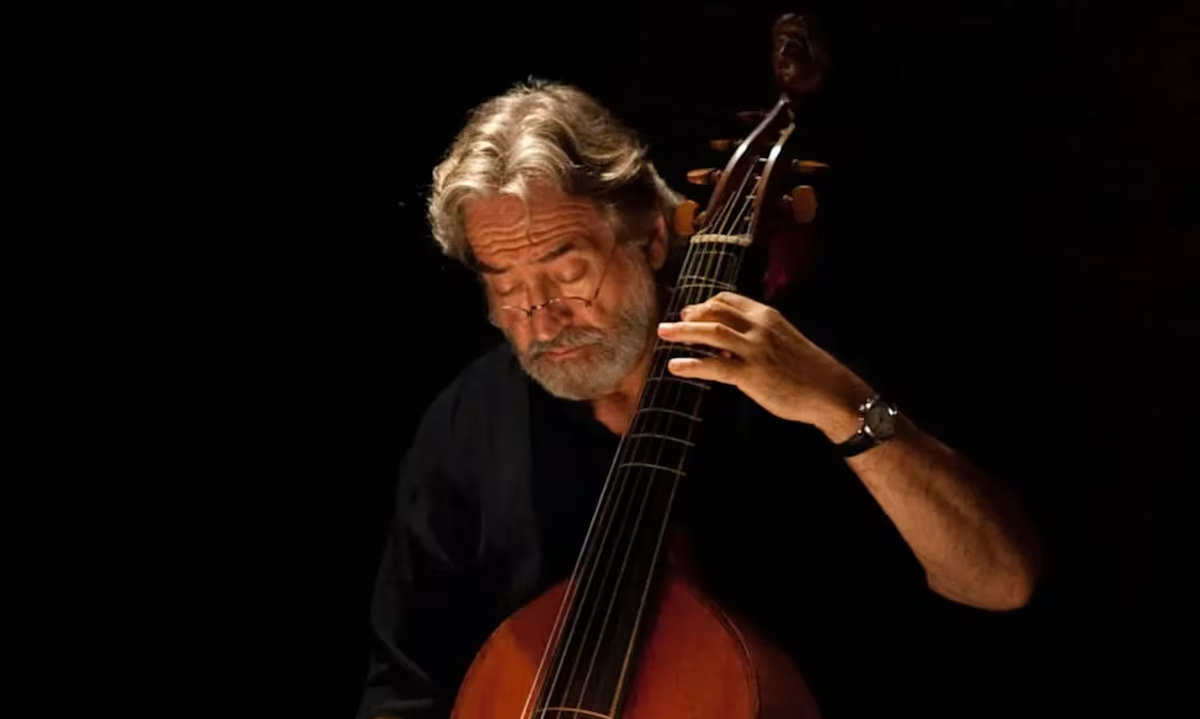
In our second excerpt from Ashutosh Khandekar's interview with Jordi Savall for Continuo Connect, he gets to the heart of one of the period instrument movement’s most hotly-debated topics: Authenticity.
Jordi Savall has devoted his musical life to the pursuit of authenticity. Nevertheless, he is the first to admit that ‘authentic’ isn’t always easy to grasp in its musical sense. ‘There is some confusion about the term,’ he says. ‘You have to separate the practical and technical aspects from something deeper, more emotional. So, you can be authentic by using the right instrument, with the right technique and the right expression. By “right”, I mean performing the music as closely as possible to what the composer wrote on the page. Composers often give you a lot of information in their score, so whenever possible, I have a facsimile of the original manuscript in front of me when I perform – whether it’s playing a piece by Bach or Marais for the viola da gamba, or conducting a symphony by Beethoven or, as I am at the moment, a work by Schumann.'

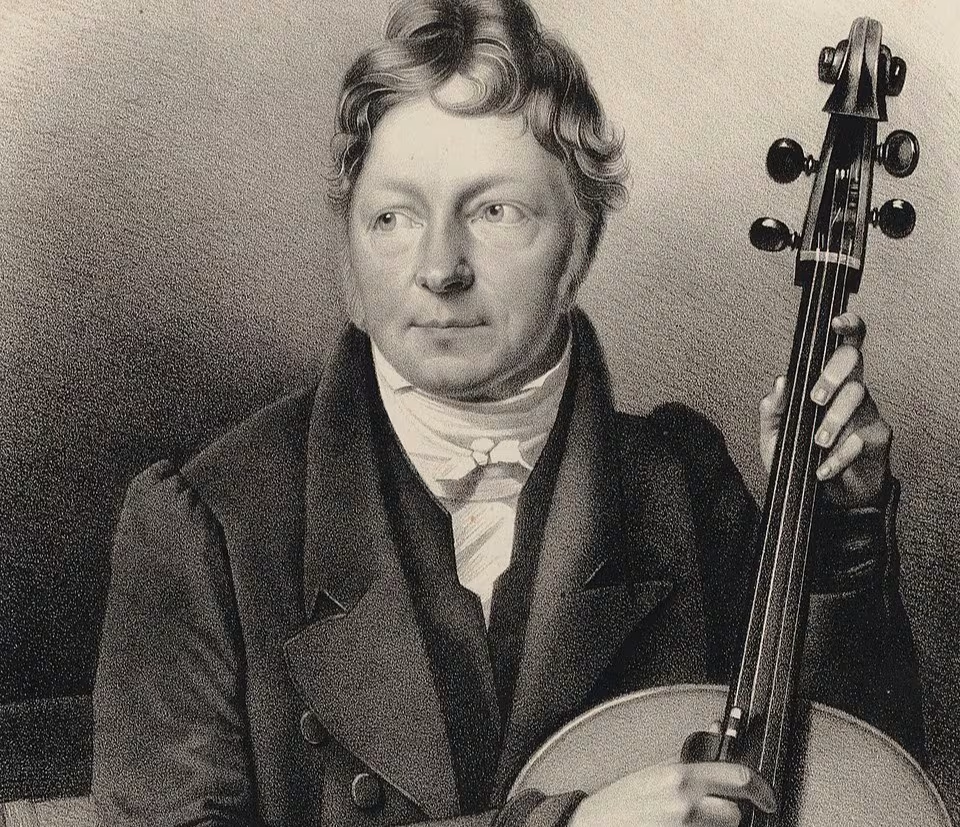
‘Let me give you an example that illustrates how I find authenticity in my playing. One of the pieces I performed when I was a student in Barcelona was a concerto for cello by the German composer Bernhard Romberg, a near-contemporary of Beethoven. Certain sections of that concerto have the instruction to the cellist to play ‘alla gamba’, in other words, the cello should mimic the sound of its predecessor, the viola da gamba. You have to bring the bow very close to the bridge to produce sound full of vibrant tension and intensity. Nowadays, I incorporate that sound into the Beethoven symphonies I conduct. When you have long, fast-moving phrases, modern string players often break up the bowing into two or three strokes, which is not what Beethoven wrote. If you play such passages alla gamba, however, you not only have an intensity of sound, but you can also play a long phrase within a single stroke of the bow. This completely changes the character of the music – and I believe it brings an authenticity to the sound world, taking it nearer to the composer’s intentions.'
‘So, you have to feel the essential idea behind the music and understand the history and traditions of your instrument, the roots of how it evolved, to bring out its authentic sound. Beyond this, there’s also something metaphysical about the quest for authenticity. When I play pieces by Marin Marais, there’s a part of me that becomes Marin Marais. In fact, I sometimes find myself thinking, "I am Marin Marais!" Authenticity is not just academic. It should be a deep, personal thing.’

In 2009, Jordi Savall was named a UNESCO Artist for Peace, for his ‘outstanding musical commitment to intercultural dialogue’. In tomorrow’s excerpt, Savall explains how navigating the depressing litany of war and political turbulence in our world continues to be one of his main concerns as a musician. The full interview will be published on Continuo Connect on Sunday 20 April.

Share this
Keep reading
Vache Baroque summer magic
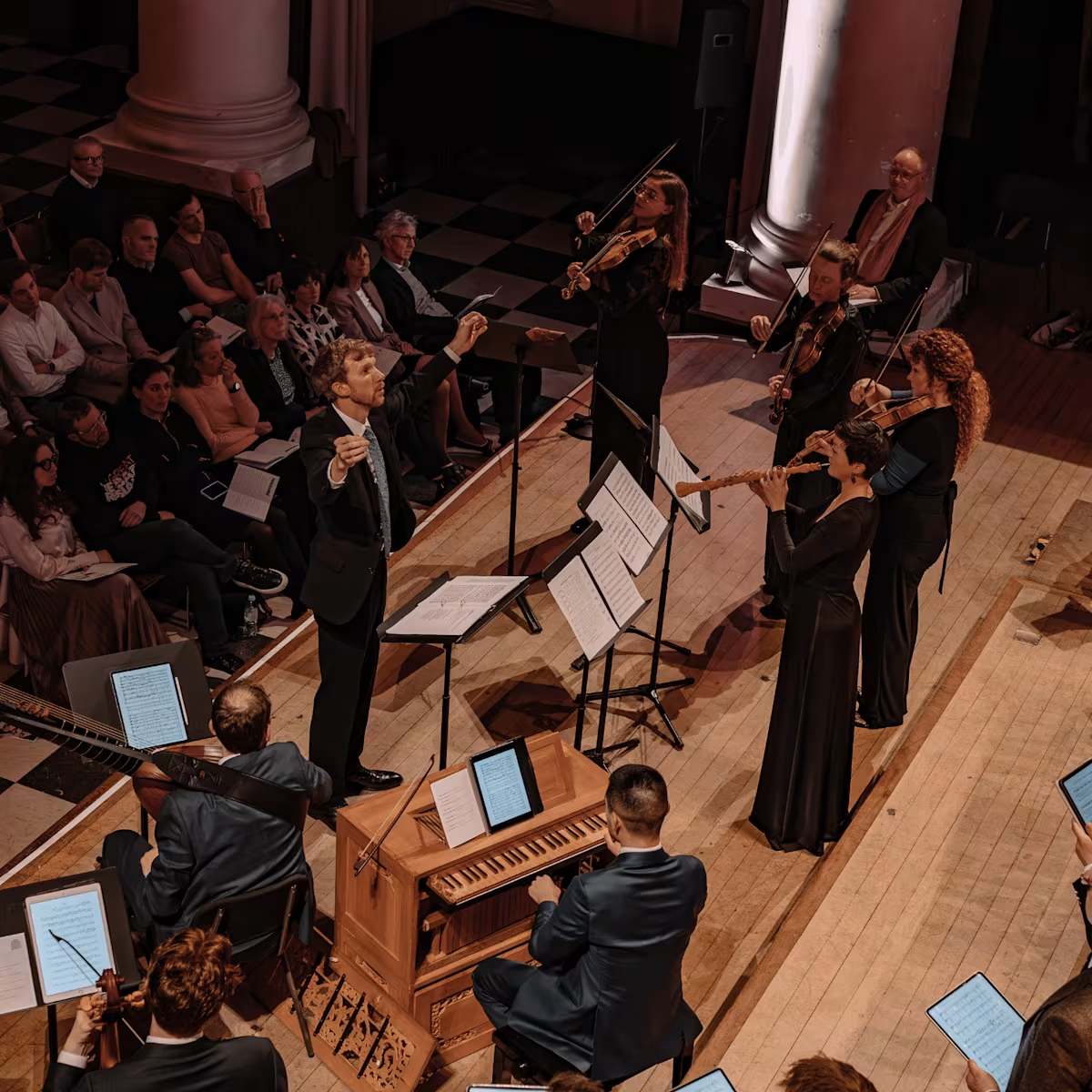
Jonathan Darbourne, co-founder and Artistic Director of Vache Baroque, talks to Continuo's Simon Mundy as the company returns to Buxton with Francesca Caccini's 'La liberazione di Ruggiero', the first opera known to have been composed by a woman.
Baroque Operas by Women Composers
This playlist from Continuo Connect explores little-known operatic masterpieces by women composers from the Baroque era, from Caccini to de la Guerre.
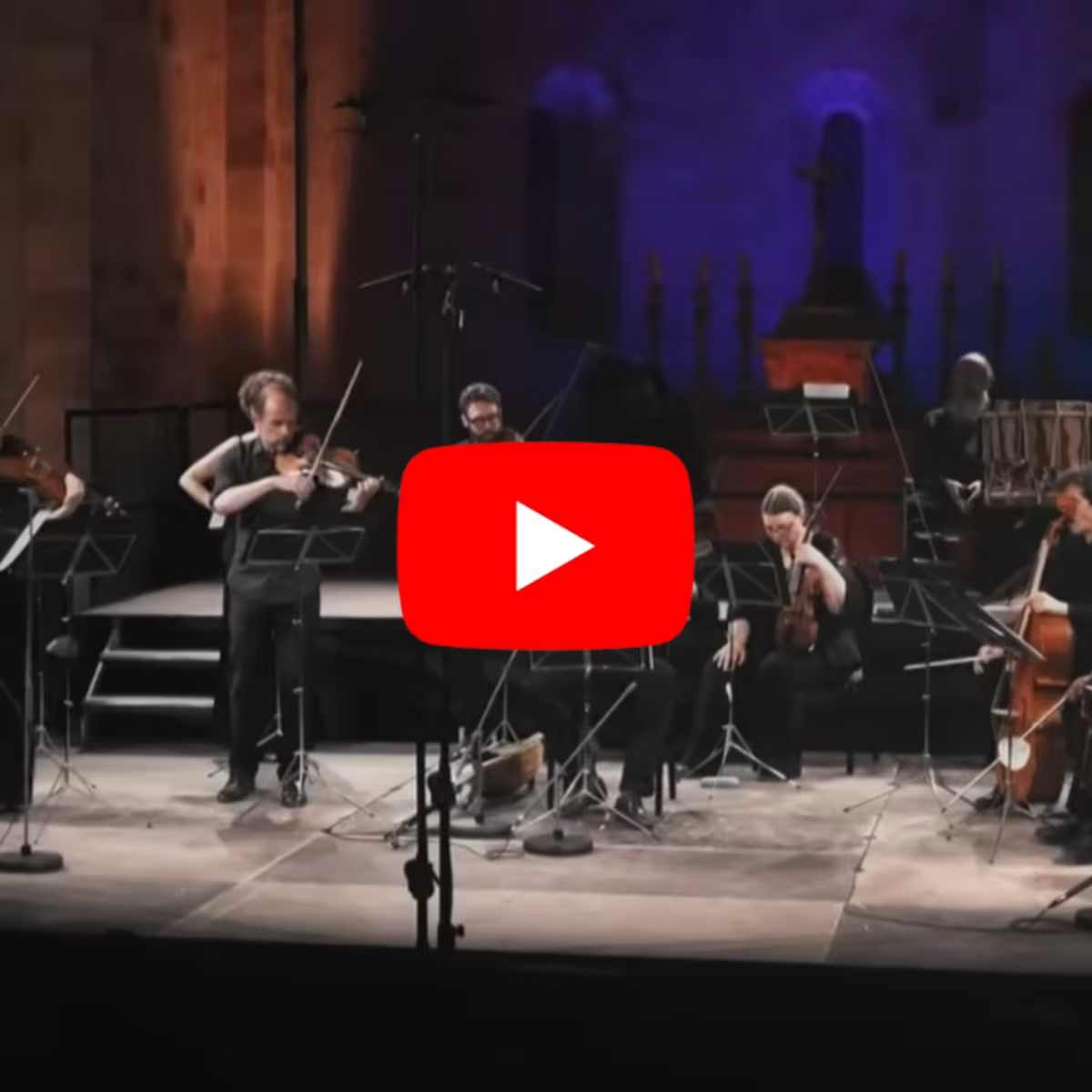
Jordi Savall & Le Concert des Nations | Les Goûts Réunis
Performed by Jordi Savall and his celebrated orchestra, Le Concert des Nations, this concert, entitled Les Goûts Réunis (The Reunited Styles), takes you on a musical journey through France, England, Germany, Austria, Italy and Spain.