

Feature
It's made from what?!?
Share this

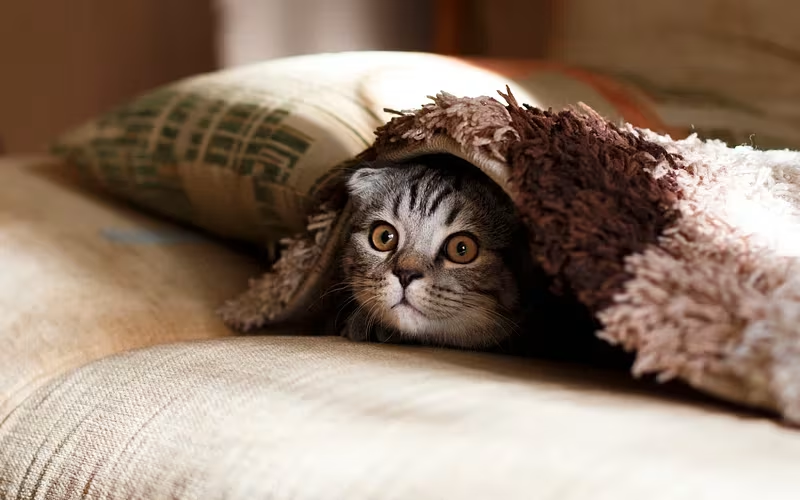
Catgut!
That’s right - violin strings are made from catgut. The guts of cats? Terrible, right?
Not so fast. Violin strings today - that is, the strings of modern violins - are not made from catgut; they are made from various different materials, none of which is catgut. Since the early 20th century, steel has been used; they are either solid or stranded steel, or a synthetic polymer such as perlon (a kind of nylon) and wound with various metals (including steel), and sometimes plated with silver. Cats and their guts are, today, quite safe.
But was this always so? What was the miserable lot of medieval moggies and mousers? Were pusses pursued by pitchfork-brandishing peasants for their miaow-sical intestines?
Calm down - don’t worry! Strings on violins (and other stringed instruments) were, in fact, made of sheep gut. So cats were quite safe, at least from luthiers. Sheep and goats, on the other hand, were not; but plenty of their innards were available as a by-product of other lines of business in the various shambles of the towns and cities of yesteryear. Indeed, since the time of the Romans, sheep intestines were sought after for a variety of uses, not least - it should be noted - as a sheath to guard against venereal disease (and later, although interestingly not at first, as a means of contraception).
But we digress…
Catgut, then - why the name? Can we be sure that our feline friends had nothing to fear from the predations of frantic fiddlers?
In short - yes; but the slightly longer explanation is also worth hearing.
Catgut is made from the natural fibre found in the walls of animal intestines, which are stretched, wound, and dried, and it has been made from the digestive tracts of various animals including cows, horses, mules, and donkeys, as well as sheep and goats. Therein lines a clue, for the word catgut was originally cattle-gut, according to one plausible theory.
Another theory holds that catgut was originally kitgut or kitstring, the word “kit” meaning a small bowed string instrument descending from the Old English cythere, which came from the Latin cithara, and in turn from the Greek kithara. This is also the origin of the word “guitar”! It’s easy to see, then, how “kit” may be confused with “cat”.
Catgut was used not only for violins, but also harps, lutes, violas, cellos, double basses, guitars, and many other stringed instruments over the centuries, as well as the heads of drums. Gut strings - yes, still made from guts, but not those of cats! - are still favoured by baroque string players and by harpists for the richer, darker sound they offer. Guitarists moved away from gut strings in the early 20th century to steel strings (for greater volume) and later also to nylon strings for their superior smoothness, durability, and stability of intonation.
The stability of intonation is, as any baroque string player will attest, the main drawback of catgut strings, and they are not durable nor do they offer a great dynamic range, but they do have a wonderfully sweet, warm, rich sound that brings out the harmonics of the instrument more clearly than steel core strings, and of course they provide us with a modern-day means of accessing the authentic sounds of the past. Gut strings, being a natural product, also have much greater variability than synthetic strings (whether nylon or steel-based); as such, they can have a much stronger sense of “personality”.
But you may be wondering if - in the many centuries of the weird, wonderful, and frequently terrifying innovations of humankind - cats’ guts were ever used…
Fear not! The intestines of ruminant herbivores were ideal because they are very long - sufficient to digest grass - unlike those of carnivores, especially small carnivores such as cats, which are simply too short.
And that’s that!
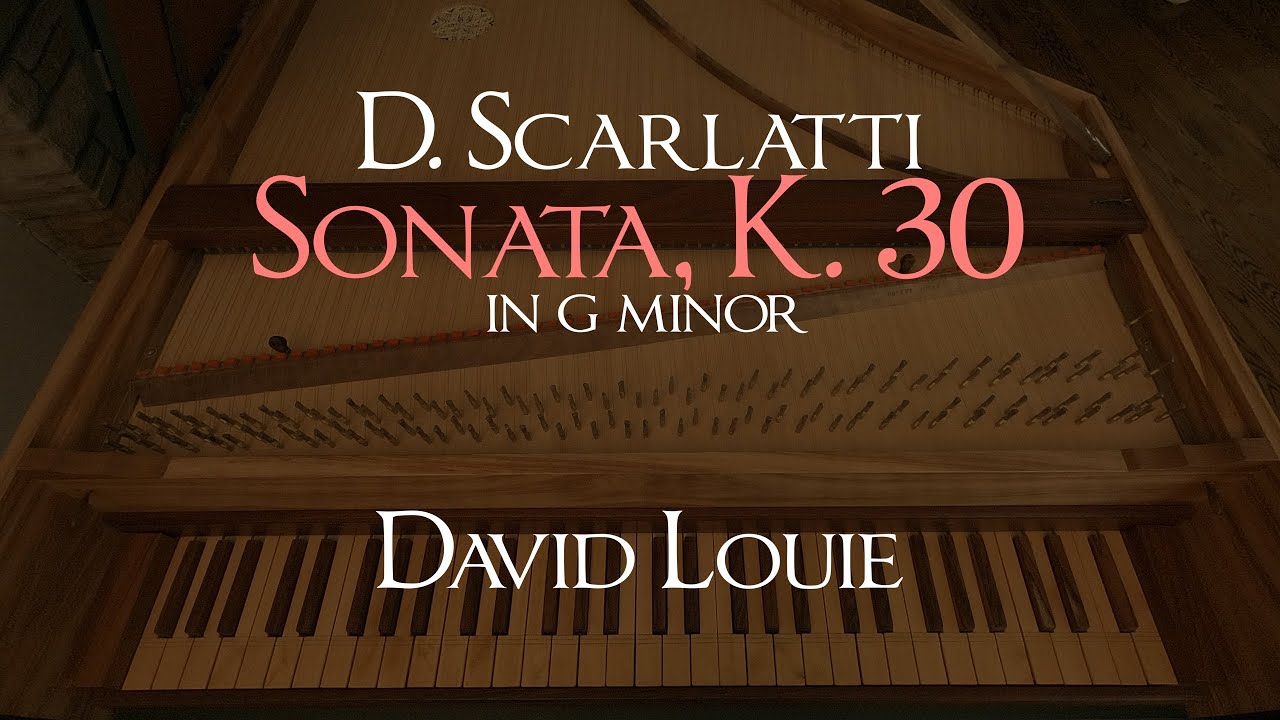
We’ll leave you with a performance by Toronto harpsichordist David Louie of Scarlatti’s “Cat Fugue” from his Sonata in G minor, so called (in a story of somewhat doubtful origins) because of a theme played out - accidentally, one imagines - on Scarlatti’s harpsichord by his cat Pulcinella.
 ▶
▶Share this
Keep reading

Peter Holman: Curiosity and the making of Early Music
Peter Holman reflects on a distinguished career – from his academic work on Purcell and early English music and his artistic work with Leeds Baroque.

From the Heart | Sabi Ensemble
Sabi Ensemble releases its debut album, 'From the Heart', featuring chamber works by Coleridge-Taylor and Louise Farrenc.

Playlist: Women in Music
Continuo's latest playlist celebrates International Women's Day through tracks by women composers from the 11th century to the present day.