

Feature
Šarovít, duende, meraki… Inside Nocturnalia’s musical language
Share this

BY SIMON MUNDY | FIRST PUBLISHED 5 SEP 2026
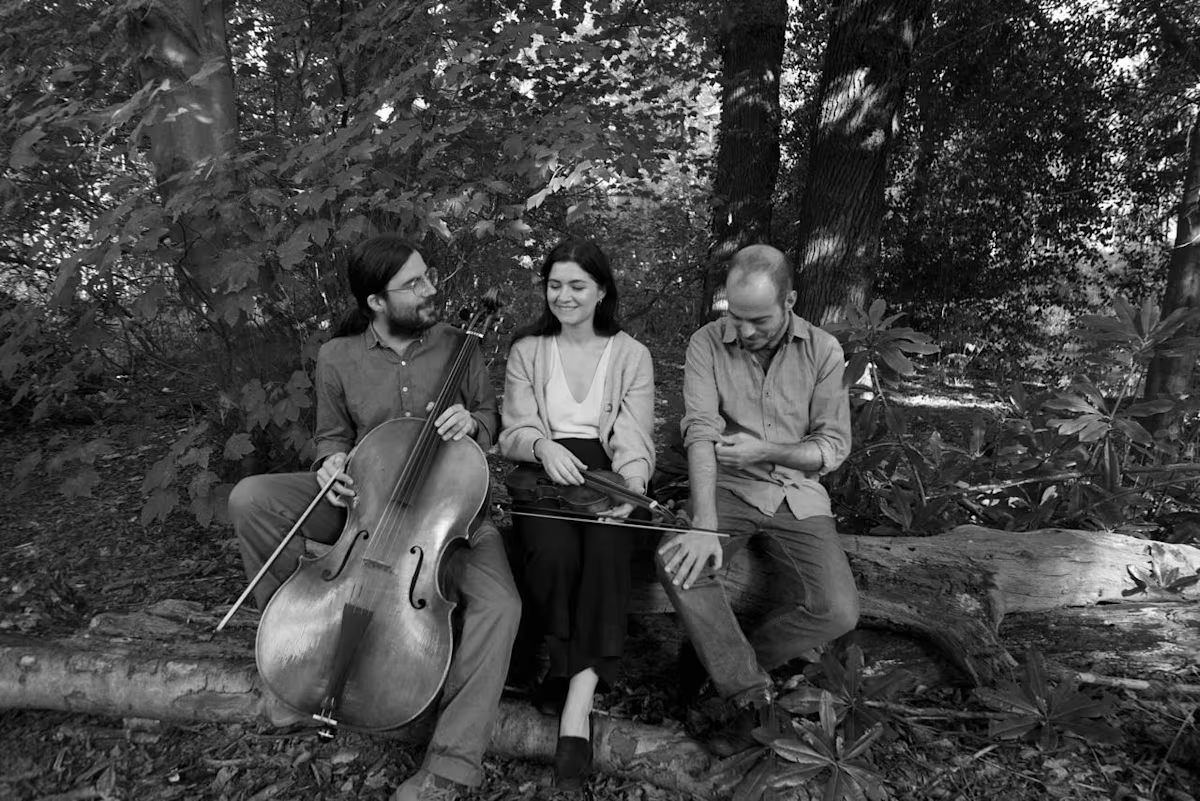
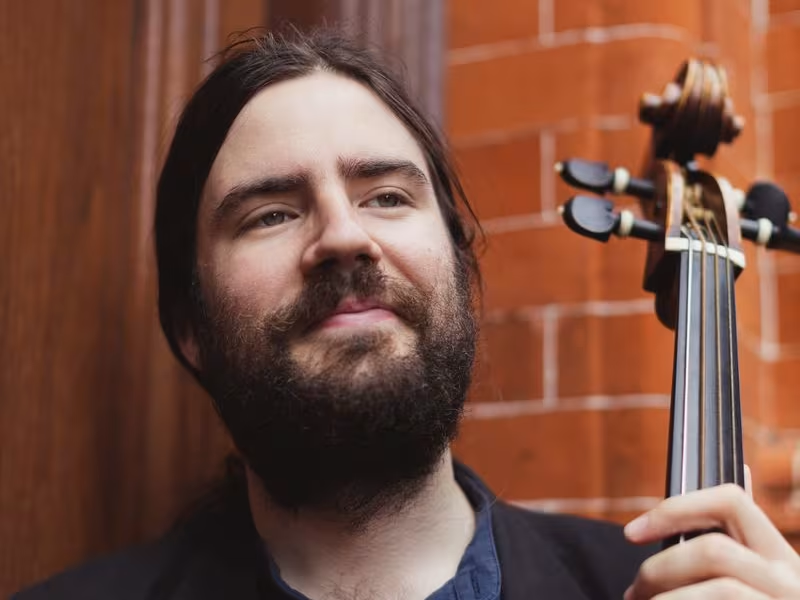
That Nocturnalia exists as an ensemble at all is a statement about the interconnectedness of the Early Music movement and its ability to draw people together across political and geographical divisions. As a trio, it consists of Mojca Jerman (baroque violin), Pablo Tejedor-Gutiérrez (baroque cello and viola da gamba) and Alex Mastichiadis (early keyboard instruments). As Pablo explains, ‘I am in London hailing from Spain, Alex is in The Hague, and comes from Athens, Mojca is from Ljubljana, having studied in Bologna.
‘We met in 2021 at the Baroque Academy in Ambronay, right after COVID, playing music all day and all night. During the day, we rehearsed Carissimi and Charpentier with the orchestra and choir, and at night, we would jam together, playing trio music from Schmelzer to Mozart.’ Lying between Lyon and Geneva, Ambronay is a small town in central eastern France which has a vast deconsecrated abbey that has been turned into a centre of Early Music – the monks’ cells being now very convenient bedrooms for resident musicians. It hosts a month-long festival every September, with the concerts being televised, and runs the important EEEmerging schemes, bringing together a network of Early Music festivals (including York and Brighton) all over Europe. ‘It wasn’t until two years later that we met up again and got Nocturnalia going, and our first concert was in January 2023 in Athens at the Music Hub Conservatory,’ Pablo told me.
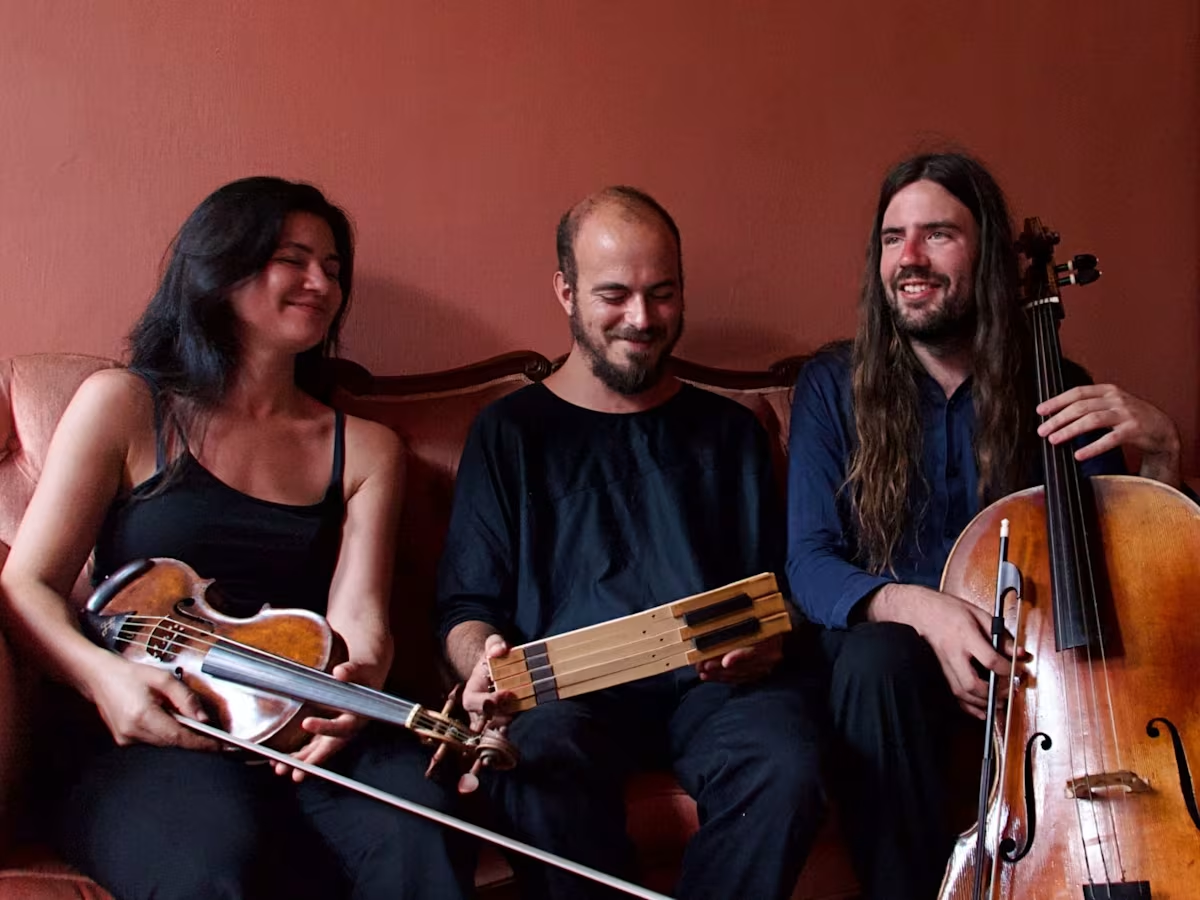
Since its inception, Nocturnalia has been exceptionally busy, giving almost 40 concerts in more than eight countries and appearing at leading festivals and venues such as Torroella, Utrecht, Contratemps Catalunya, Tarentaise and Chios, and the BBC’s In Tune. I speak with Pablo amidst a busy summer agenda, including an appearance in Spain following the ensemble’s recent award of First Prize in the chamber music competition Nuevas Resonancias, part of the Música Callada Festival.
Nocturnalia’s cosmopolitan membership and activity is reflected in the ensemble’s artistic approach, which embraces ‘concepts from our respective languages that define us’, explains Pablo: ‘the Slovenian Šarovít (colourful and picturesque), the Spanish Duende (the creative struggle to create profound art), and the Greek Meraki (Μεράκι, meaning passion or doing something with soul).’
‘Mojca’s place in Slovenia and Alex’s in Athens led us to the Tartini programme.’ Tartini came from the coastal town of Piran, now in Slovenia but, in the 18th century, an outpost of the Venetian Republic. Among his students were the Greek composer Michele Stratico and the virtuoso violinist, composer and singer Maddalena Laura Sirmen. ‘We are playing the programme Scuola delle nazioni at the Tartini Festival in Piran on 2 September – a mixture of trio, violin, and cello sonatas.’ It will also be heard this autumn at Salisbury Musick (3 October) and in London at St Peter’s, Belsize Park (23 October). The following night, Tartini’s music will be performed in Brighton under the title, ‘Whispers in the Night: Tartini, the Devil, and the Poetry of Dreams‘ (24 October), referencing Tartini’s fame based on his story of the Devil’s Trill Sonata coming to him as though dictated in a devilish dream – possibly true, or equally possibly a clever piece of 18th-century marketing.
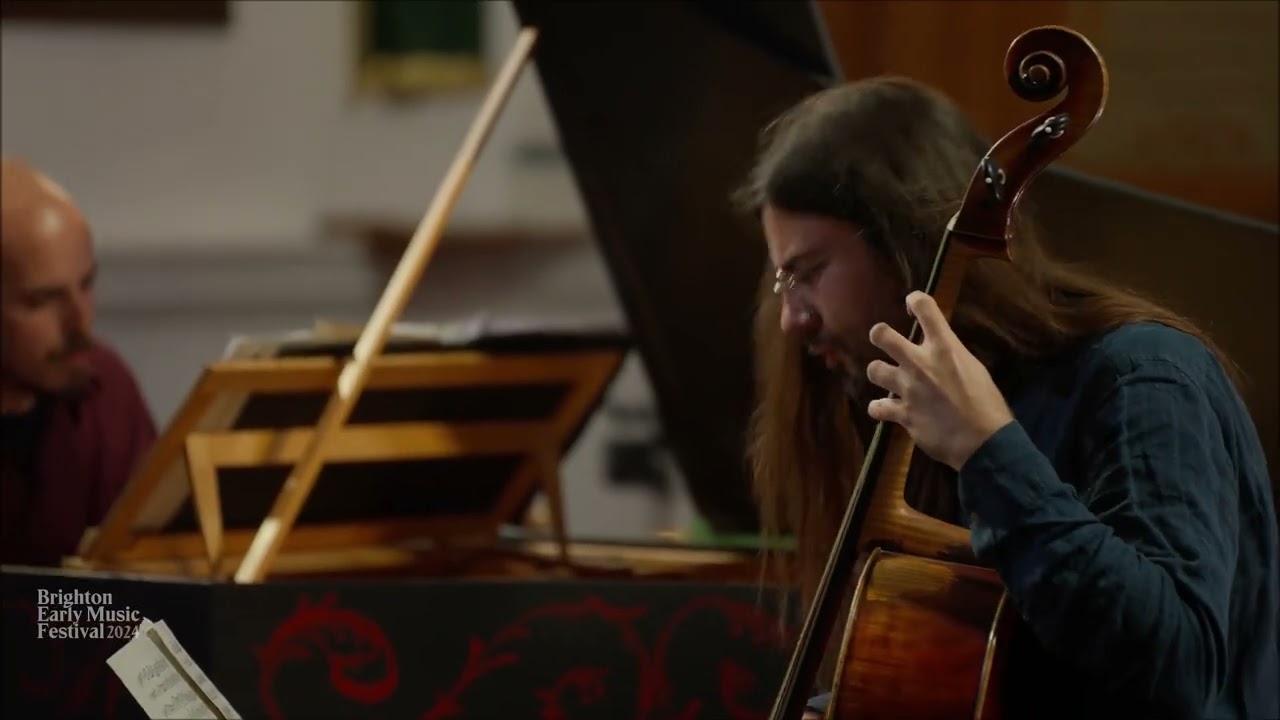 ▶
▶Nocturnalia performing Tartini’s Devil’s Trill Sonata at Brighton Early Music Festival 2024
Another autumn programme that will be a mainstay of Nocturnalia, now a first-time Continuo grantee, is Wit and Mirth, taking its cue from 1698 lyrics of the playwright Thomas d’Urfey as ‘pills to purge melancholy’. It includes works from the 17th century by Matthew Locke and Gottfried Finger, who lived in London but was from Moravia. One of the nice trivia facts about Chelsea is that the building now called Lindsey House at the north end of Battersea Bridge was the Moravian Embassy in Finger’s time and was next door to Josiah Priest’s dancing school, the venue for an early performance of Purcell’s Dido and Aeneas.
Nocturnalia’s programme also includes the modern premiere of a violin sonata by William Viner, who was Master of the Queen’s Music in Ireland during the reign of Queen Anne (the post held in England by John Eccles). Wit and Mirth can be sampled at Roman River Festival in Colchester (22 October), as part of the York Early Music Christmas Festival at the NCEM (11 December), presented in association with Continuo Foundation, and next May at the Dulwich Festival.
While autumn is busy for Nocturnalia as an ensemble, each of its members has an equally frenetic schedule away from the others. Mojca plays with the ‘period approach’ orchestra Musica Aeterna in Belgium and with the Slovenian National Ballet and Opera Orchestra, as well as making some appearances with her medieval group, Philomena. Alex is busy in the Netherlands and Greece with ensembles such as Scaramuccia and Ex Silentio, while also finishing his PhD on organ pedal toccatas at the Ionian University and collaborating with the Greek avant-garde MMMD group.
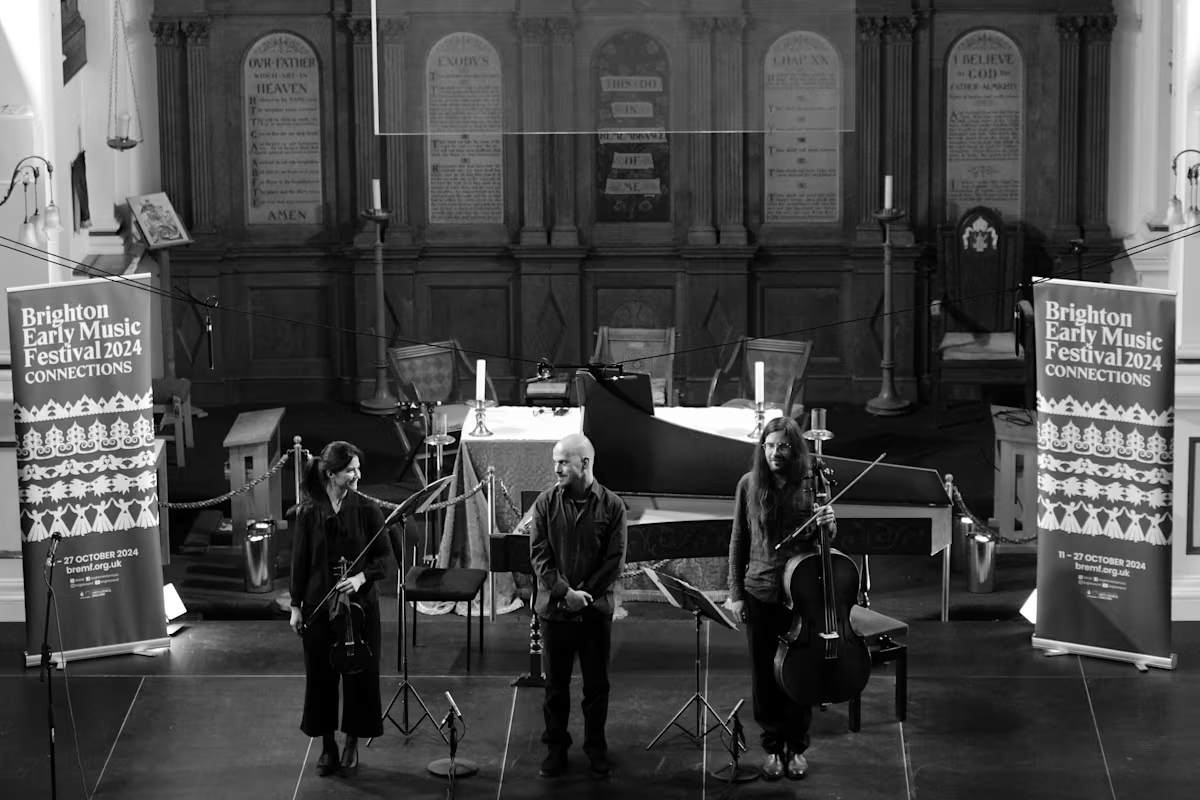
Nocturnalia at Brighton Early Music Festival 2024
‘Besides collaborating with various UK and international ensembles, I also direct my ensemble, La Tirana,’ Pablo says. ‘La Tirana was a great Spanish actress and singer at the end of the 18th century and the beginning of the 19th century, which is the period of the music we play. She was painted by Goya, and I studied art history, so using her name brings everything together, allowing us to consider a holistic vision of the arts. We have plans for concerts in London, including collaborating with the Spanish Embassy on a residency, and playing the Christmas concert at the Cervantes Institute.’
As Nocturnalia’s autumn season carries them from Piran to York via Salisbury, London and Brighton, it is inspiring to know that three musicians who might never have crossed paths without a deconsecrated abbey in eastern France have built something that feels less like a side project than a shared calling – proof that the connections forged in a post-pandemic rehearsal room can still be heard, years later, on stages across a continent.
Nocturnalia’s tour of the Tartini programme this autumn is supported by a grant from Continuo Foundation. To find out more about each concert, visit the ensemble’s Continuo Connect profile page.
Share this
Keep reading
From kitchen to cathedral: the accidental art of festival-making
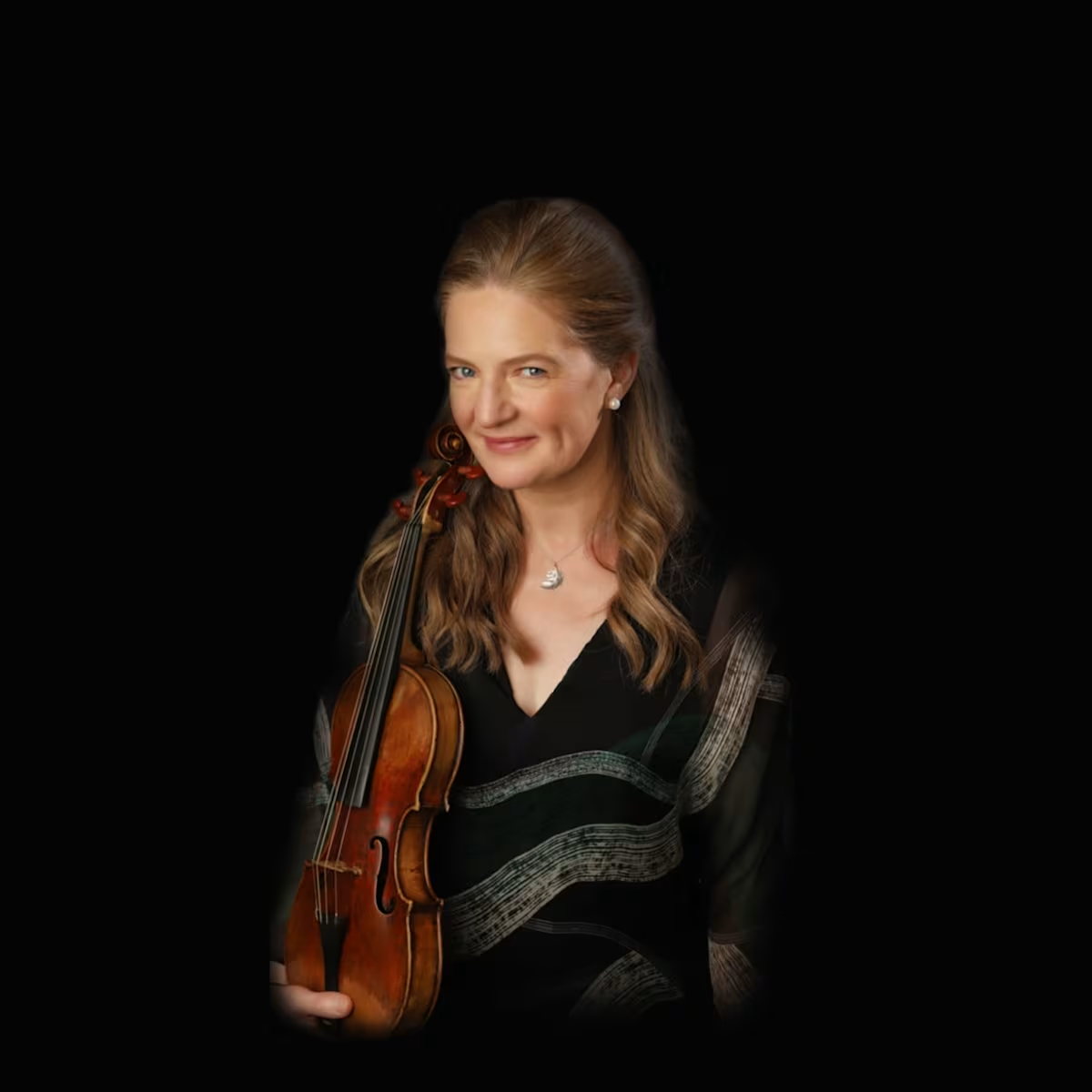
Rachel Podger, a Continuo Foundation Patron, has spent two decades creating a festival as open-hearted and inquisitive as her own music-making. She tells Ashutosh Khandekar how the Brecon Baroque Festival evolved almost by chance.
Tallis: ‘Spem in alium’ – a forty-part motet
A favourite among choral fanatics, Tallis' 'Spem in alium' has a fascinating history and has more recently been used in an unexpected context.

Sam Brown on Dowland and filtering history through a modern lens
Lutenist Sam Brown of Dowland's Foundry chats with Simon Mundy about how we interpret John Dowland, the formation of the ensemble around Emma Kirkby's kitchen table, and an exciting recording project in the pipeline.