
Spotlight
In conversation: Bolette Roed
Share this

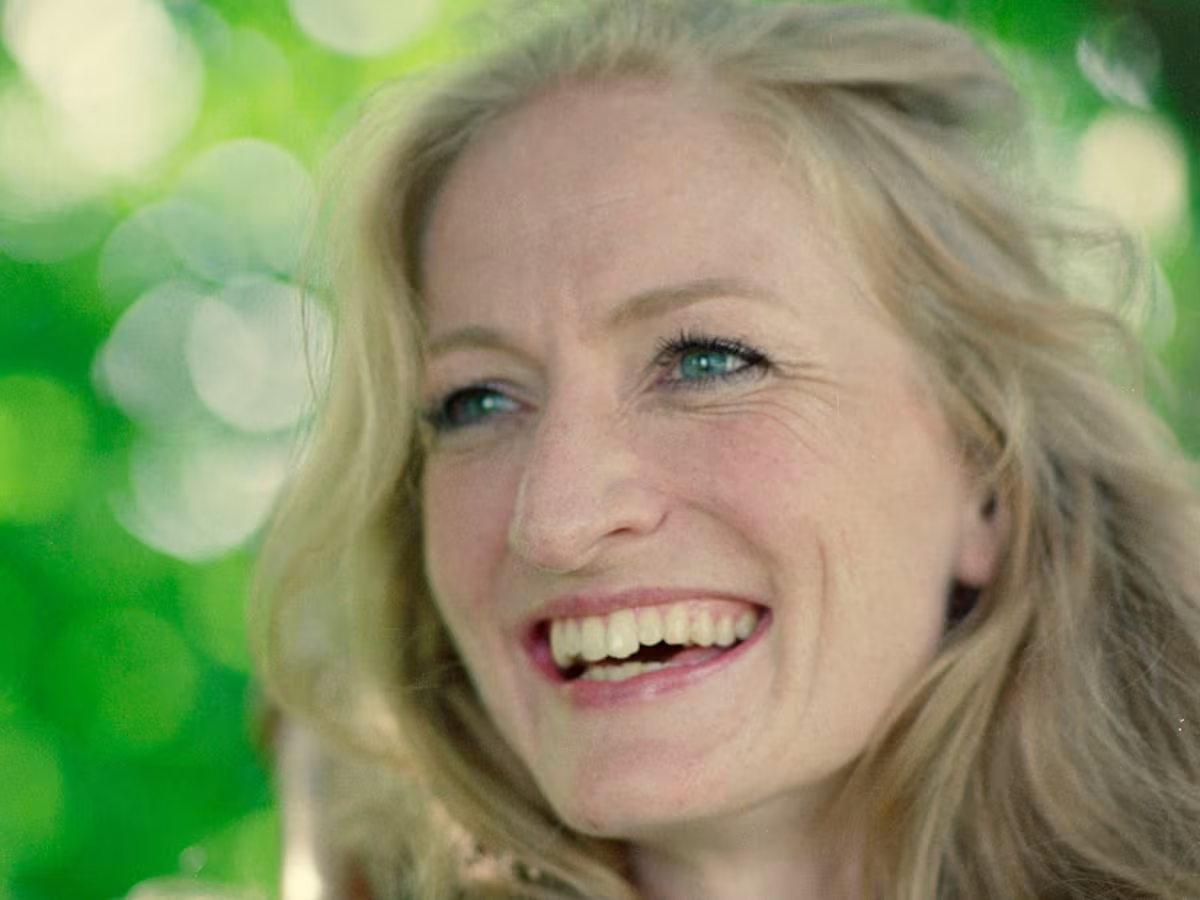
Danish recorder player Bolette Roed is a genre-defying musician, working not only with the classical repertoire for the recorder but also with improvisation, folk and world music. Her repertoire ranges from Medieval through Renaissance and Baroque to contemporary music, and she has premiered a large number of new works. Bolette is also the founder of Copenhagen Baroque Festival, now in its eighth year, which takes place in late August. We asked her about the city she calls home, her career so far, and the festival's strong link to British period-instrument musicians.
What first drew you to the recorder, an instrument that's often overlooked next to Baroque strings and voice?
I think I simply loved playing the instrument from the very first time I encountered it as a young girl. My older brother had to play it at school, so naturally I wanted to play it too. At an instrument demonstration at my local music school, I was also captivated by the teacher, Kirsten Rehling, who introduced the recorder so enthusiastically. I started lessons when I was about seven years old, and I've loved playing it ever since.
Your Elephant House Quartet is an international affair – tell us about the history of the group and what makes it unique.
As I remember it, the quartet was formed during a festival that Allan Rasmussen (harpsichord and organ) founded in Denmark called Midsommerbarok. The room where we rehearsed was called 'The Elephant House', and during one of those familiar brainstorming sessions about what to call the ensemble, Allan suddenly suggested the name. We all loved it because it was different from anything else and somehow represented the four of us – four musicians standing strong, all very grounded individuals.
I think what makes the quartet unique is the long-lasting friendship between all the members but also our very different personalities. We complement one another beautifully, and we're all curious and eager to keep developing our skills while inspiring each other. It's always a great pleasure to work and perform together. We care deeply about our sound, about what is actually written in the music, and we simply love rehearsing for hours and hours.
I feel deeply honoured to perform with Reiko Ichise, Aureliusz Goliński and Allan Rasmussen, who are not only some of the finest musicians I know but also some of my closest friends. It truly is a precious gift.
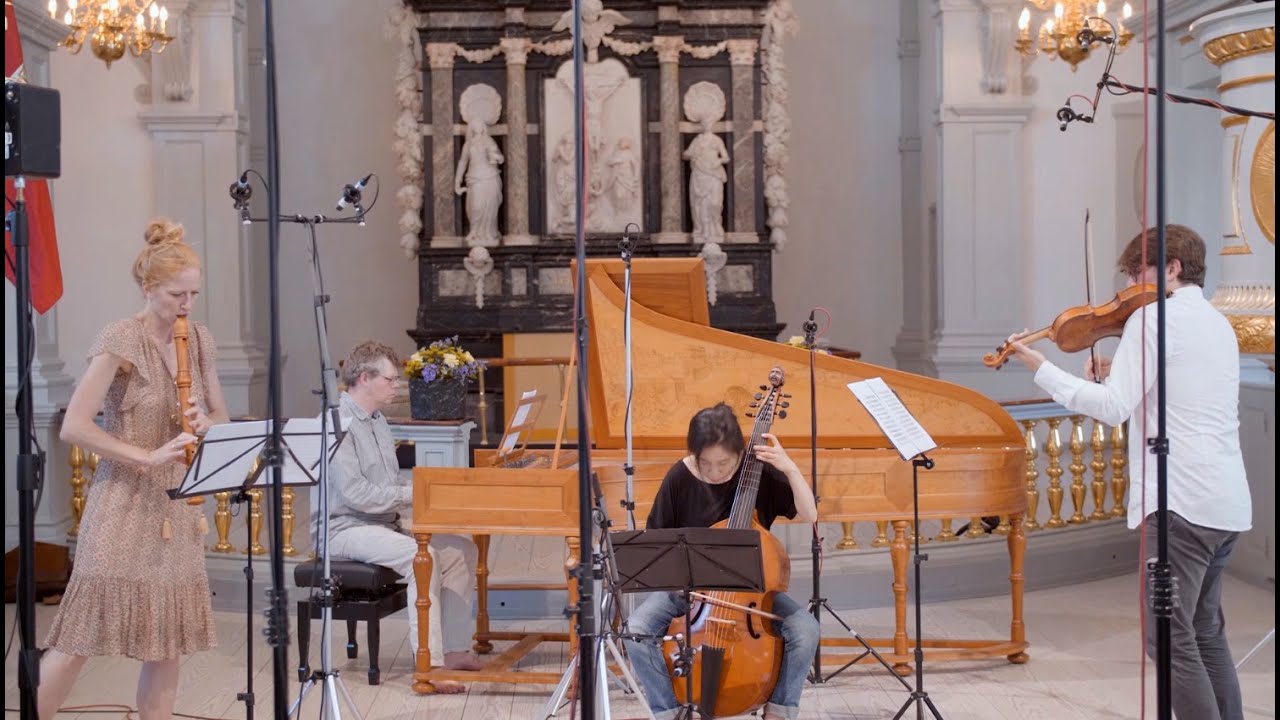 ▶
▶Elephant House Quartet performs the second movement Legerement from Telemann's Paris Quartet in G Major.
Tell us about some of the collaborations you've undertaken with contemporary musicians and DJs in your career.
During my studies at the Royal Danish Academy of Music in Copenhagen, I was always curious about creating new ensembles and collaborations, and about using the recorder in every possible context. I studied with Dan Laurin, who was an enormous inspiration through his open-minded approach and his remarkable work performing contemporary music.
I wanted to show just how much the recorder is capable of: how flexible the instrument is and how beautiful it can sound. So I commissioned new works and began collaborating with accordion, saxophone, percussion and bass players. I also met DJ Katrine Ring, who has an extraordinary musical ear, and together we created beautiful soundscapes and improvisations.
I continued exploring improvisation during my Erasmus exchange at the Conservatoire National Supérieur Musique et Danse (CNSMD) in Lyon, where I studied with Pierre Hamon. I loved the way dancers and musicians worked together there, and that environment gave me a great deal of inspiration.
More generally, I've always been inspired by other instrumentalists and singers and by what their instruments or voices demand of them. Throughout my career, I've tried to transfer those different challenges and qualities into my own work with the recorder.
Alongside your work in music, are you still a practising doctor?
No, I no longer practise as a medical doctor. For several years I did both, and I genuinely loved both worlds – the world of music and the world of medicine. I find many similarities between them, first and foremost the simple wish to give something of yourself to others.
I'm very grateful to have become a doctor and for the years I spent practising, and I believe that experience enriched my musicianship as well.
After several years of balancing both careers, I met my husband. Our wish to build a family together eventually led to the difficult decision to work solely as a musician, alongside being a wife and now the mother of our beautiful boy.
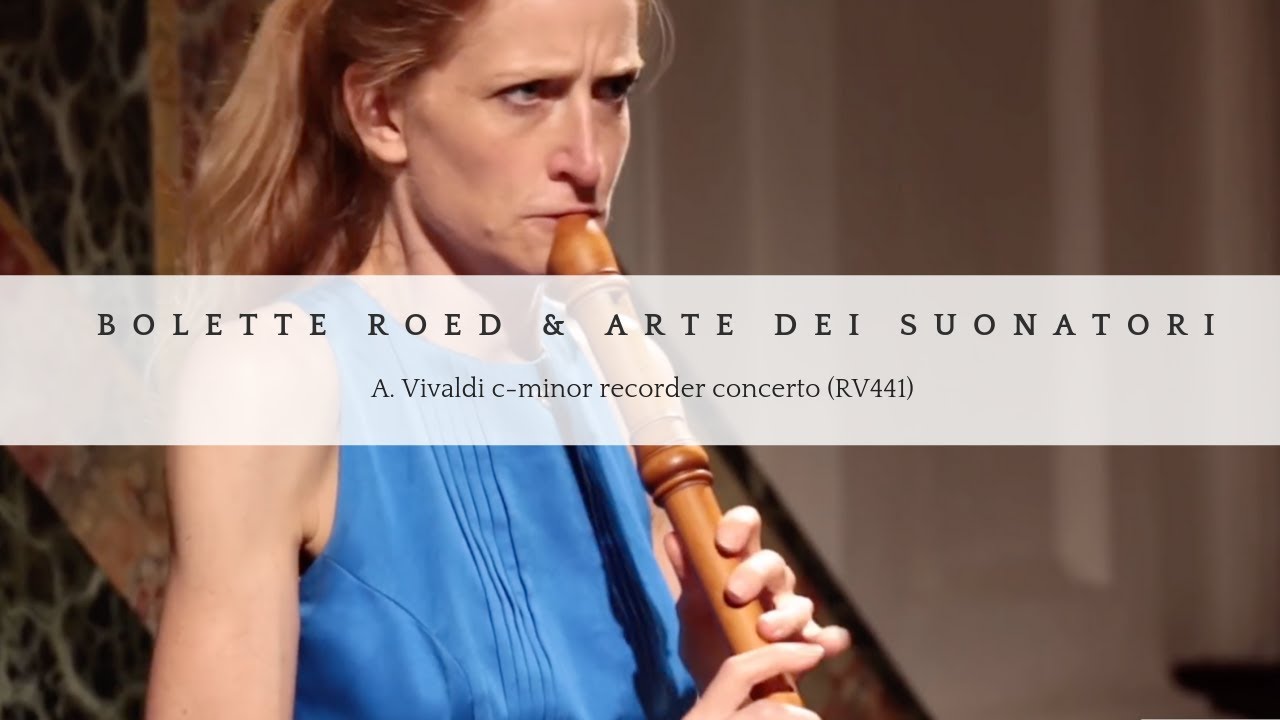 ▶
▶Bolette Roed and Arte dei Suonatori perform Vivaldi's C minor Recorder Concerto at Midsommerbarok.
Copenhagen has a wealth of atmospheric venues – how do you go about choosing where each concert takes place?
It has happened little by little. Eight years ago, when we started the festival, Trinity Church kindly agreed to include it in their programme. They have hosted us ever since, providing space for rehearsals, meals and many of our concerts. Their wonderful staff help with everything, and it's always a pleasure to return year after year.
Once we had established that platform, it felt natural to approach nearby historic venues such as Rosenborg Castle, the Round Tower, the Church of the Holy Spirit and Our Saviour's Church.
I'm very grateful that we can present concerts in these remarkable historic settings, which complement the music so beautifully.
Some years, a particular festival theme calls for something different. We might collaborate with Regensen, King Christian IV's famous student residence in the heart of Copenhagen, perform in the King's Garden, or work with Kanalhuset, a wonderful hotel in Christianshavn where community engagement is a central value. Sometimes, if the weather allows, we simply perform in the square outside Trinity Church to bring the music even closer to our audience.
Above all, though, the venue's historical connection to the music and its acoustics are among the main reasons we choose it.
What are you most excited for in this year's festival?
I never really find myself more excited about one event than another. Every programme and every musician is wonderful, and I simply look forward to everyone arriving – to the musicians, the volunteers and the moment the festival truly begins. That's when the excitement starts for me, because ultimately it's all about sharing.
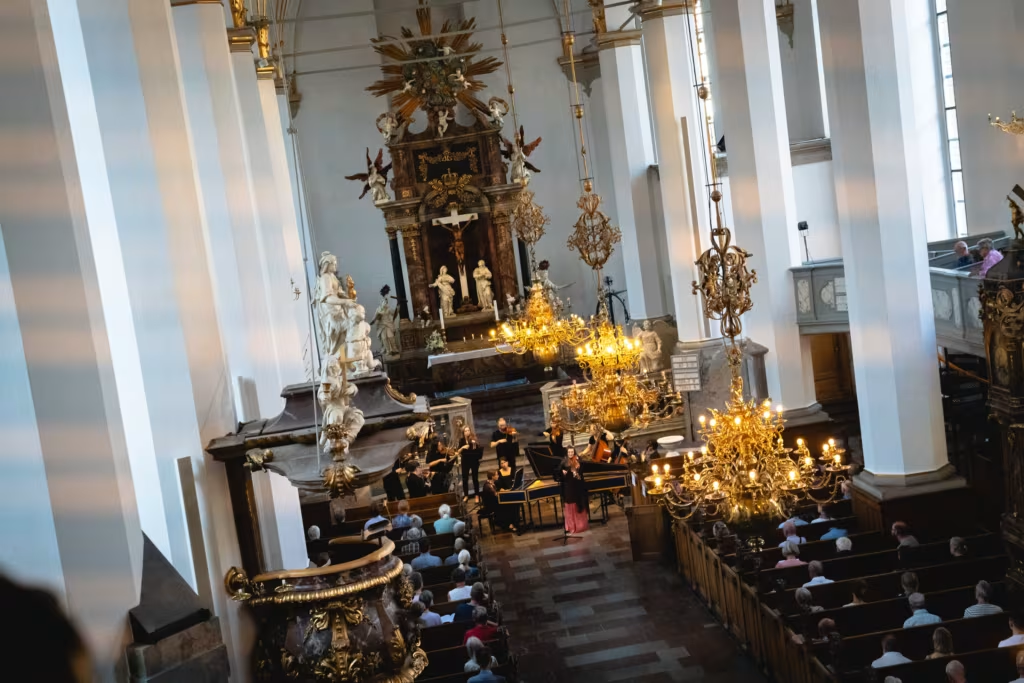
This year's programme has a strong British presence among the performers. Could you tell us a bit more about who's involved and what draws them to the festival?
This year we're delighted to welcome four outstanding British or London-based musicians: Iestyn Davies, Clare Wilkinson, Elizabeth Kenny and Reiko Ichise. It feels like a very happy coincidence.
The festival opens with an intimate concert featuring Reiko Ichise and Elizabeth Kenny. Reiko has been a regular guest at the Copenhagen Baroque Festival for many years, and before that, she also appeared at the Midsommerbarok festival. Elizabeth and Reiko have collaborated for many years, and I've wanted to present them together at the festival for a long time. Finally, we managed to find dates that suited everyone's calendars, and I'm especially pleased they can join us during this Dowland anniversary year, marking 400 years since his death.
They'll perform alongside the wonderful Danish soprano Clara Cecilie Thomsen, who is currently one of the shining stars of the Royal Danish Opera. Clara has been part of the festival since its very beginning, appearing in many different settings, including with our festival orchestra, Arte dei Suonatori, who have been performing in Denmark for eighteen consecutive years—first at Midsommerbarok and now at the Copenhagen Baroque Festival.
We're also delighted to welcome Clare Wilkinson in the programme Ballads within a Dream, together with Hille Perl, Andreas Arend and Veronika Skuplik. I discovered their recording by chance and fell in love with it immediately. Andreas is a close friend and colleague, so it was easy to ask whether they would consider bringing the programme to Copenhagen. We were very fortunate that these outstanding and much sought-after musicians were all available this summer.
Finally, we're delighted that Concerto Copenhagen was preparing to record with Iestyn Davies at the end of August and wanted to perform the programme before entering the studio. That naturally led to a collaboration with the festival, allowing us to present their programme The Staircase, which combines Purcell songs with a new work by the Danish composer Signe Lykke.
So there's a great deal to look forward to!
How do you think about programming for newcomers versus long-time Early Music audiences – is that a balance you feel you need to navigate?
Actually, I don't think about that very much when I'm programming the festival. As a musician myself, I tend to focus primarily on the artists, and I give them a great deal of freedom to choose the repertoire and programme that feels most meaningful to them at that particular moment.
The result is usually a wonderful mixture of different ensemble sizes, styles and programmes. I hope every concert has something to offer every type of listener, because we all seek different emotions in music, and we all come to it from different starting points.
For someone coming to Early Music for the first time, is there one concert in this year's programme you'd point them towards?
I honestly couldn't choose just one. I think every concert will offer a wonderful experience, and I feel incredibly fortunate to be able to present such outstanding artists in Denmark.
It also depends entirely on what you're looking for: an intimate setting or a larger orchestral sound, a girls' choir or a solo singer, an enchanting flute recital or a musical church service—or perhaps all of them.
One concert, on Friday 28 August at 19:30 CEST, will also be broadcast live by Danish Radio. So for international readers who can't make it to Copenhagen, it will be possible to tune in to DR P2 Klassik and enjoy the concert from afar.
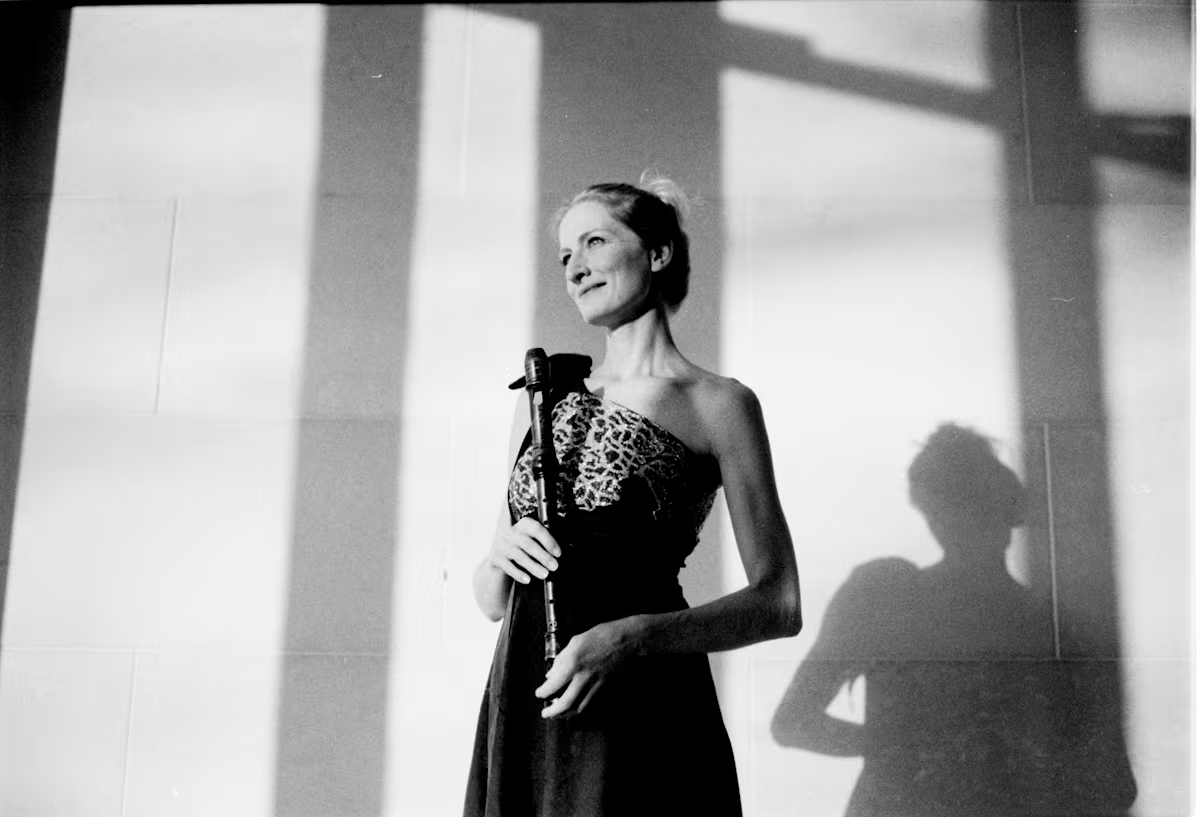
Looking ahead, what are your ambitions for where the festival goes next, and how would you like Danish audiences to engage with Early Music in the years to come?
Perhaps I'm a slightly unusual kind of festival director. More than anything, I simply hope to present beautiful music for people in beautiful settings.
Through my own career I've had the privilege of discovering so much wonderful music and meeting extraordinary musicians, and I felt Copenhagen was missing a platform where Early Music could truly take centre stage, bringing together specialists in the field and a wide variety of programmes. That's what I've been trying to create.
I hope to open Danish audiences' eyes and ears to the beauty of both the music and the city's architecture – to create a greater awareness of Copenhagen's history and Europe's musical heritage, to encourage curiosity about music people may not know at first, and to inspire audiences to come with open minds, trust the choices we've made, and allow themselves to experience whatever emotions the music may awaken.
This year's Copenhagen Baroque Festival takes place from 26-30 August in venues around Denmark's capital city. Full programme details in English can be found on the festival's website.
Share this
Keep reading
The soundtrack of imagination: David Yardley and Green Dragon Guild of London
Medieval countertenor David Yardley, Artistic Director of Green Dragon Guild of London, discusses Medieval music, Southwark’s layered history, and how imagination and meticulous research meet in performance in our latest podcast.

Guitar Meets Square Piano: Nathaniel Mander and Declan Hickey
Continuo Connect talks to guitarist Declan Hickey and harpsichordist Nathaniel Mander about their upcoming “Dukatenkonzert” in London and the instruments they will be playing.
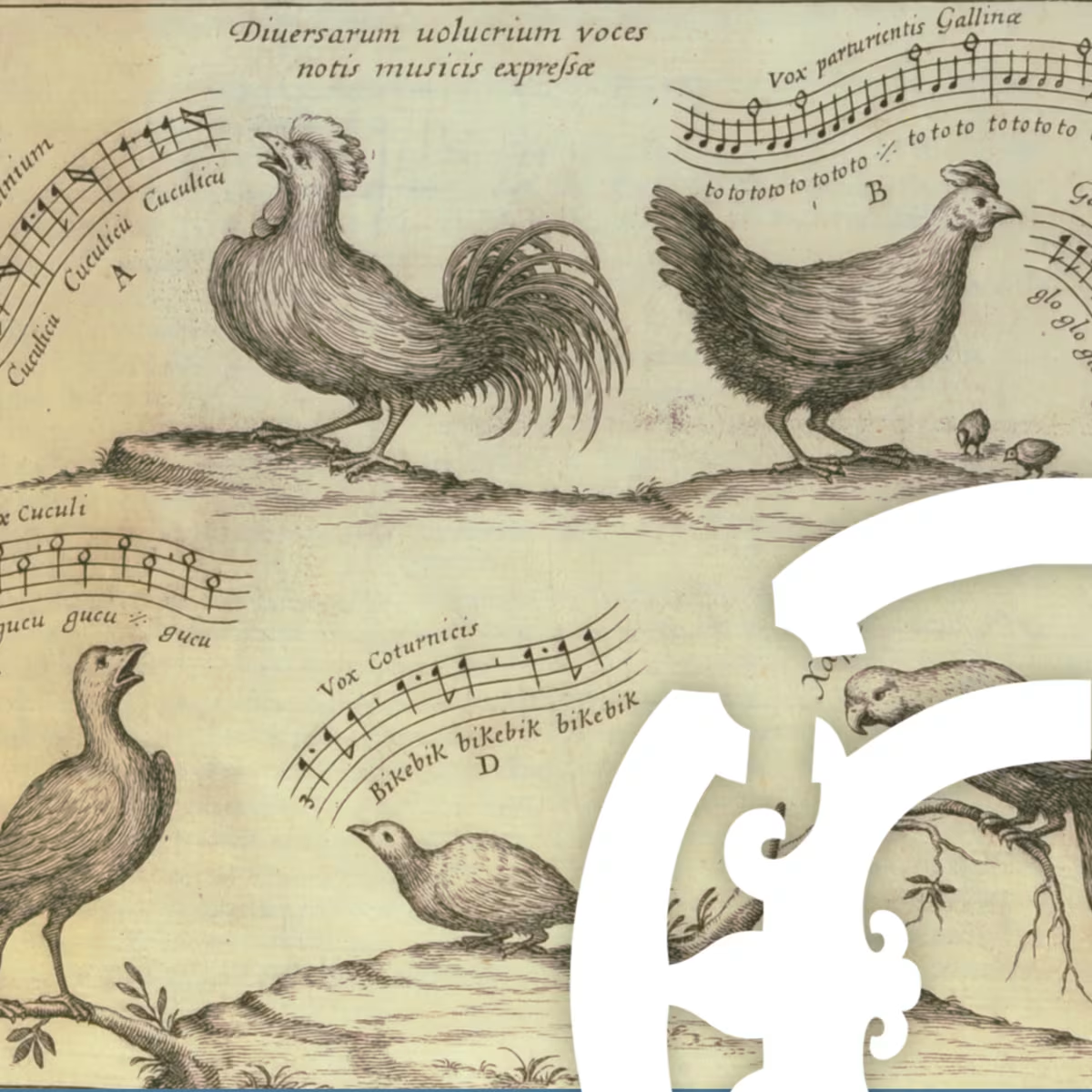
Playlist: Birds in Early Music
A playlist that explores how birds and birdsong inspired composers from Rameau and Couperin to Handel and Haydn and beyond.