

Feature
A gift for your garden: Telemann’s floral friendships
Share this

BY DR MARY-JANNET LEITH | FIRST PUBLISHED 4 APR 2026
Recorder player and musicologist Dr Mary-Jannet Leith enjoys a varied career as a performer, researcher and teacher specialising in historical performance. In this piece for Continuo Connect, she explores the research and development of Ensemble Hesperi’s programme, ‘A Gift for your Garden’, which celebrates Telemann’s passion for plants and gift-giving among friends.
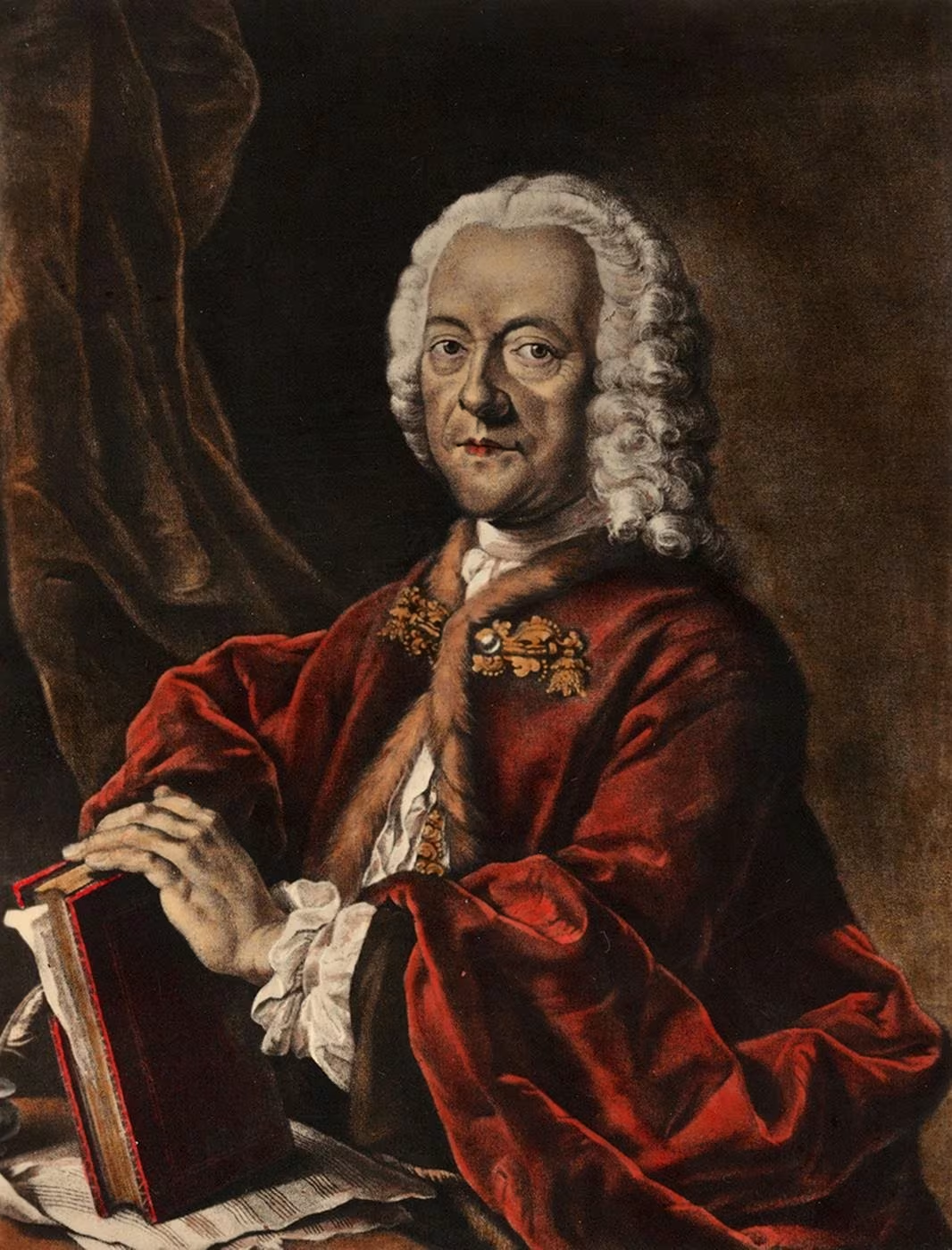
When creating new programmes for Ensemble Hesperi, I’m always looking for ways to help audiences to connect with the humanity of the composers whose music we play, and to feel that they can identify with their passions and quirks. A few years ago, I came across a brief reference to the fact that Baroque composer Georg Philipp Telemann (1681–1767) was near-obsessed with collecting plants in later life. He wrote to his friend Friedrich Armand von Uffenbach in 1742: ‘While music is my field and plough, and serves to give me many of my keenest pleasures, over the past few years I have found a new companion, namely the love of flowers.’
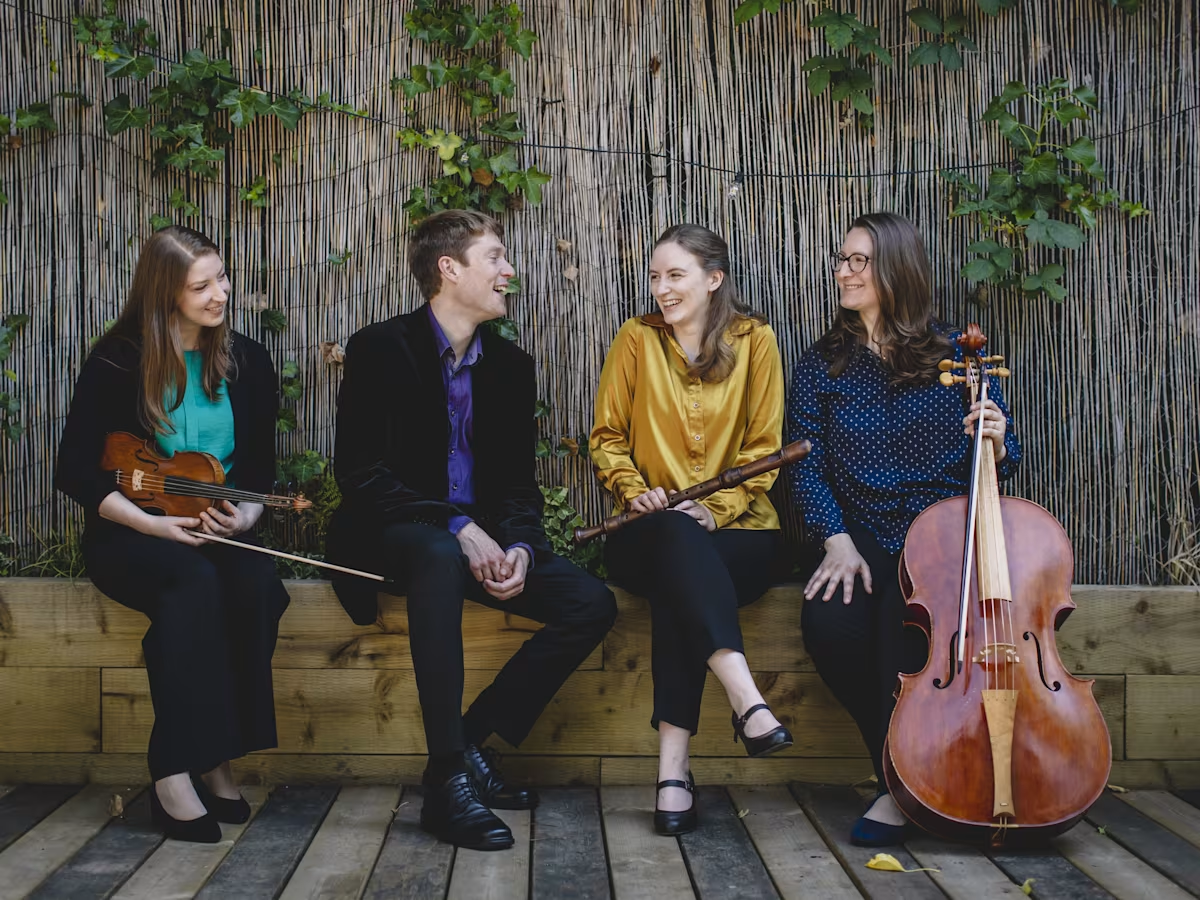
Intrigued, I found my way to German scholar Ralph-Jürgen Reipsch’s short article ‘Dokumente zu Georg Philipp Telemanns “Bluhmen-Liebe”’, which tells the story of Telemann’s enthusiastic participation in a lively network of plant exchange across Germany and beyond. The love and care Telemann bestowed on his garden, and the relationships he forged in his keen desire to expand his collection, really spoke to me as expressive of the warm and welcoming community of artists and audiences that is the historical performance scene in the UK. With this in mind, I set about designing a programme which would capture Telemann’s horticultural friendships and explore his plant collecting in the fascinating context of a huge craze for botany sweeping 18th-century Europe.
First, I put together a list of composers and musicians with whom Telemann corresponded on the subject of plants. An obvious choice was Telemann’s childhood friend, George Frideric Handel (1685–1759), whose finely-crafted trio sonatas were already in our repertoire. The two men corresponded in December 1750, when Handel promised Telemann a shipment of plants: ‘If the passion for exotic plants can prolong your days and sustain the liveliness that is so natural to you, I am delighted to offer to contribute in some way. I therefore send you a present of a case of flowers, which the connoisseurs of these plants assure me are carefully chosen and of a charming rarity. If what they tell me is true, you will have the best plants in all England.’ Handel’s words reinforce what we know of Telemann’s energetic personality and zest for life – but, amusingly, this shipment of plants was never sent, for Handel was mistakenly informed that Telemann had died! It was not until four years later that Handel received another wish-list of plants from Telemann, which he enthusiastically supplied: ‘I took this opportunity with great pleasure, and I took care to find these plants, and you will have almost all of them’.
Some of Telemann’s horticultural correspondents were new to us, including the composer Johann Georg Pisendel (1688–1755). Telemann asked Pisendel for aloe vera plants and cacti from Dresden, but Pisendel, having no knowledge of plants at all, outsourced the request. ‘As I don't know how to do it myself,’ he wrote, ‘I gave the commission to an honest and experienced gardener, who expressly forbade me to let anything get wet.’ Did the cacti stay dry on the 500km journey to Hamburg? Sadly, we shall never know.
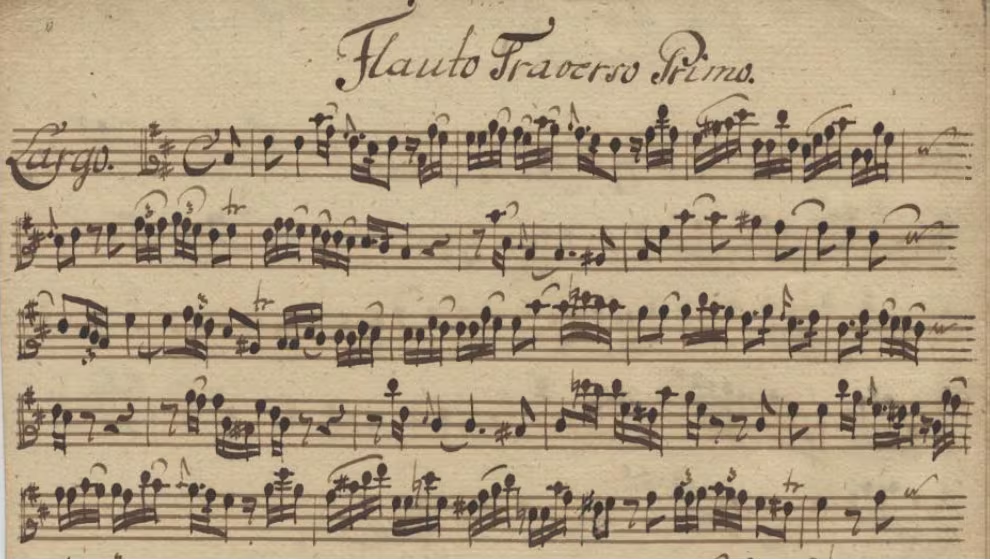
Ensemble Hesperi performs ‘Largo’, the opening movement from Sonata in D, WV Cv XV:99 by Johann Gottlieb Graun
Telemann also begged for plants from the Berlin Kapellmeister Carl Heinrich Graun (1704–1759). Both Carl and his brother, Johann Gottlieb Graun (1703–1771) wrote a huge number of trio sonatas, many of which are sadly rarely performed today. We chose a sparkling Sonata in D by Johann Gottlieb, which I first heard performed by our brilliant colleagues, Postscript, when we competed together in the Graun Brothers competition in Bad Liebenswerda in 2018. This sonata embraces the light, decorated ‘galant’ style, and the two solo lines work perfectly on violin and recorder, or in this case a voice flute in D.
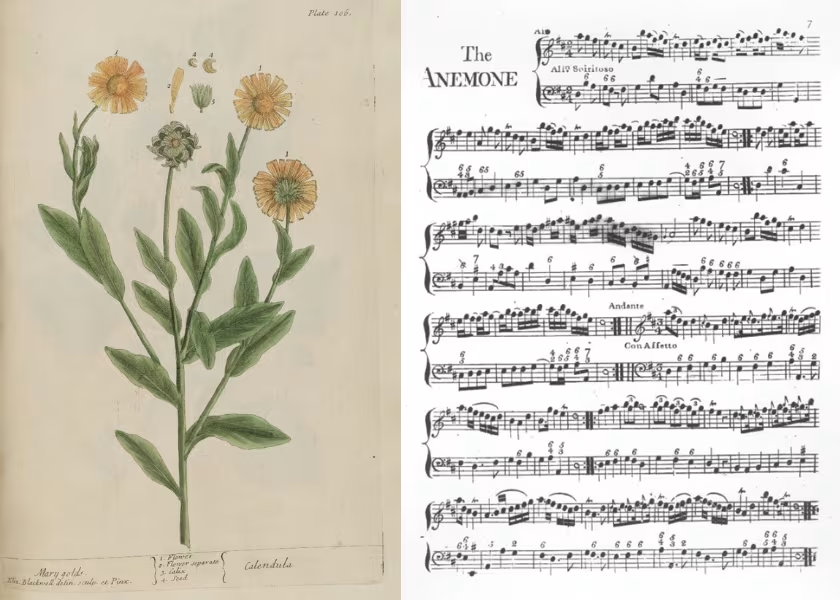
Preserved in the University of Göttingen is a ‘Blumenliste’ of the plants growing in Telemann’s garden, reflecting his collection in its early stages. I find it quite incredible that this list has survived, and it certainly gives us the inside track on a part of Telemann’s life that he failed to feature in his autobiography! A significant number of the plants on his ‘Blumenliste’ are spring flowers, and in his letter to Uffenbach, Telemann confessed his ‘insatiability for hyacinths and tulips, greed for ranunculi, and especially for anemones.’ I introduced these flowers in the programme in the form of floral airs by the Scottish composer James Oswald (1710–1769). Oswald, resident in London since the early 1740s, capitalised on the fashion for all things botanical with his Airs for the Seasons, published in four collections throughout 1755. Airs for the Spring features twelve floral miniatures – and, by great coincidence, all four of Telemann’s favourites! Each flower is encapsulated in three short movements, showcasing Oswald’s genius for captivating melodies reminiscent of his native Scotland.
Ensemble Hesperi performs ‘Air’, the opening movement of ‘The Anemone’ from Airs for the Spring by James Oswald
Featuring James Oswald’s airs in the programme also gave me the opportunity to bring the fruits of my own research to a wider audience. In my PhD, ‘From Caledonia to the Capital’, which explores the lives of Scottish musicians in 18th-century London, I argue that Oswald’s career success in London was likely bolstered by the patronage of Frederick, Prince of Wales (1707–1751), and his wife, Princess Augusta (1737–1813). The royal couple, like so many others of their class, shared a love of botany, and after Frederick’s untimely death in 1751, Augusta sought expert advice to expand their already substantial botanical collection at Kew Palace. By 1768, Augusta had an herbaceous collection of over 2,700 species, and its legacy can still be found, planted in strict Linnean order, in Kew Gardens today. There is much evidence to suggest that James Oswald was a member of a flourishing artistic circle surrounding Frederick and Augusta, and he was later appointed Chamber Composer to the King by Augusta’s son, the young George III, in 1761. I very much like to think that Oswald knew the gardens at Kew well, and that it was Augusta’s impressive collection that inspired his unusual floral compositions.
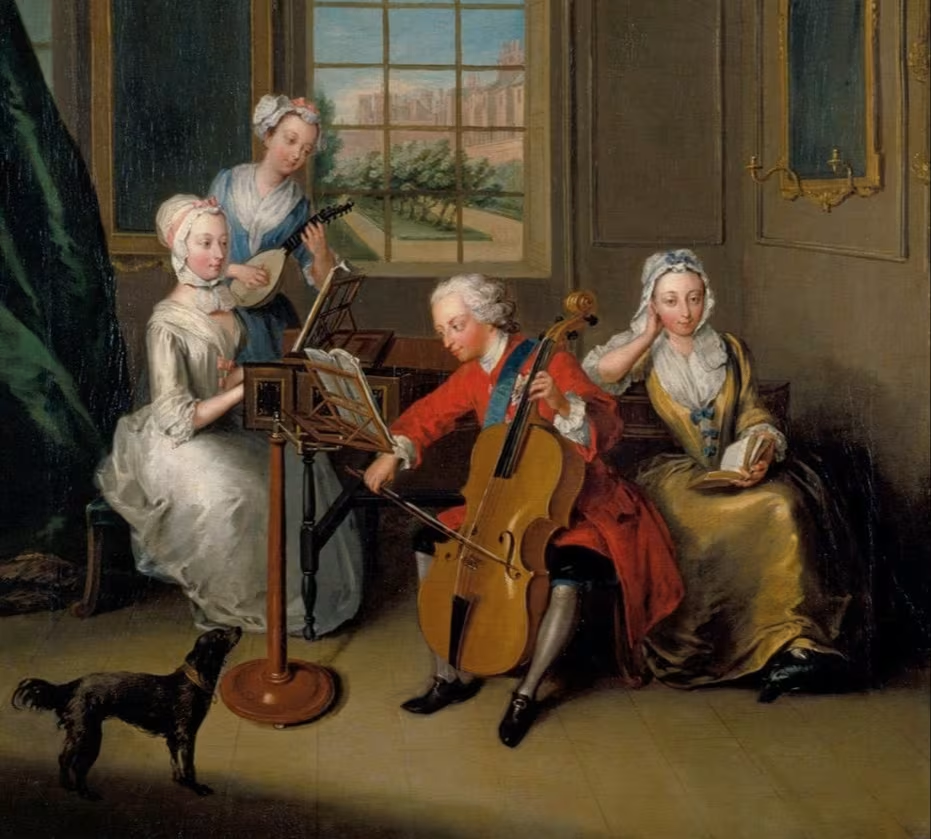
At the very heart of ‘A Gift for your Garden’ is the music of Telemann himself. As a recorder player, I always find his works hugely enjoyable to play, particularly the flute fantasias, which are packed with ingenuity and organic writing. For this programme, we set ourselves the challenge of learning two of his ‘quatuors’, now known colloquially as the ‘Paris Quartets’. Although several were published earlier in Telemann’s hometown of Hamburg, these quartets took Paris by storm, and in his autobiography, Telemann wrote with pride of the ‘astonishing manner’ in which they were performed by Michel Blavet (1700–1768), Jean-Pierre Guignon (1702–1774), violinist, Jean-Baptiste Forqueray (1699–1761) and a mysterious cellist, Prince Édouard. It is so moving to know the names of the musicians Telemann chose for these landmark performances: the distance between us and the virtuosi of the late 1730s vanishes in our shared love of these dazzling pieces of music.
Ensemble Hesperi performs 'Vivace', the final movement of Telemann's Sonata I in A, TWV 43:A1
In 2024, Ensemble Hesperi recorded A Gift for your Garden for BIS Records, and we have been delighted with the response from audiences around the world. In early 2025, the album was featured on BBC Radio 3’s Record Review and as record of the week on Essential Classics - and the floral airs often brighten up the morning on the BBC breakfast show. Travelling with ‘A Gift for your Garden’ over the past few years has brought us so much joy and friendship, and we are so grateful to all those who have supported us along the way.
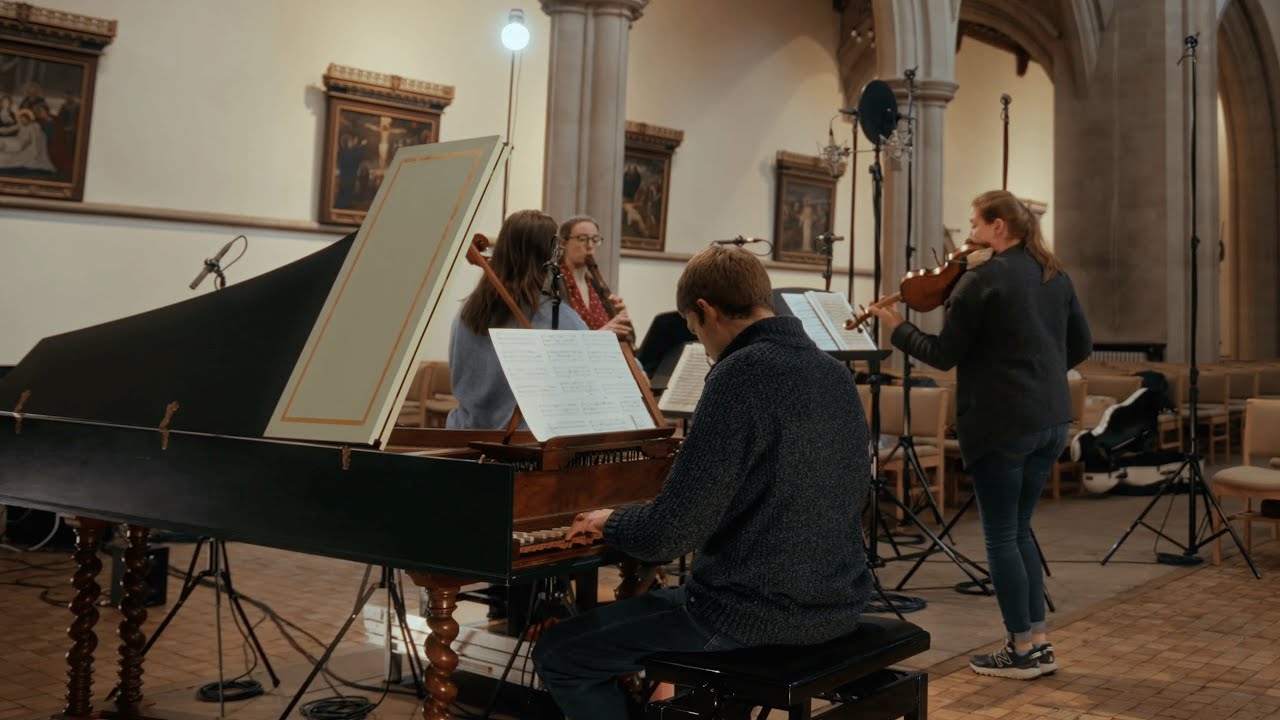 ▶
▶In December 2024, Ensemble Hesperi released their second recording, ‘A Gift for your Garden’ with BIS records. Enjoy this behind-the-scenes video, filmed by Tom Mungall during the recording process in February 2024.
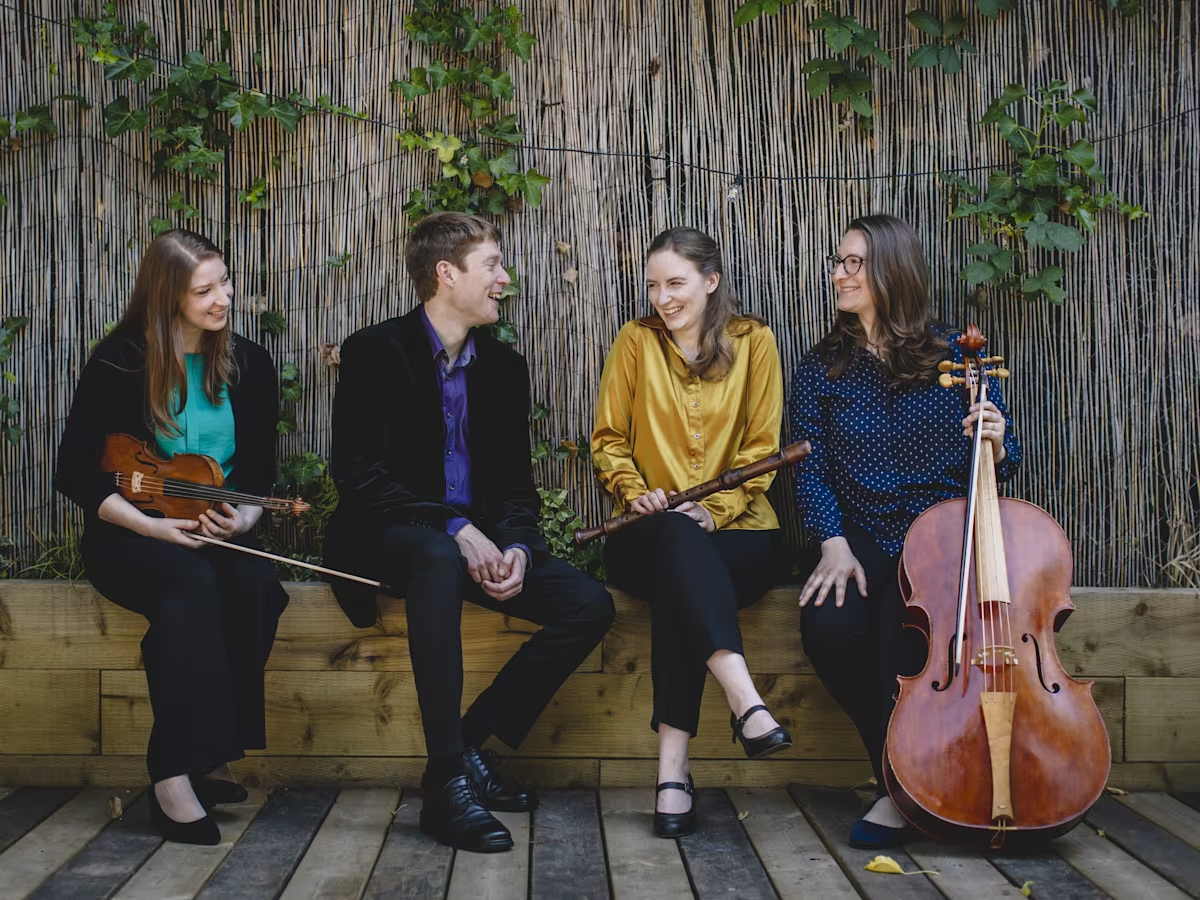
Ensemble Hesperi will perform ‘A Gift for your Garden’ across the UK in Spring/Summer 2026. To find a concert near you, head to the ensemble’s tour page on Continuo Connect. You can also buy the CD here.
Share this
Keep reading

Mary-Jannet Leith on collaborating with the Buskaid Soweto String Ensemble
In the first of a new series of Continuo Connect podcasts, Simon Mundy talks to Mary-Jannet Leith of Ensemble Hesperi about their collaboration with the Buskaid Soweto String Ensemble, and the music that once filled Scotland's country houses.
In conversation: Bolette Roed
Continuo Connect talks to the Danish recorder player Bolette Roed about her group, the Elephant House Quartet, and Copenhagen Baroque Festival.
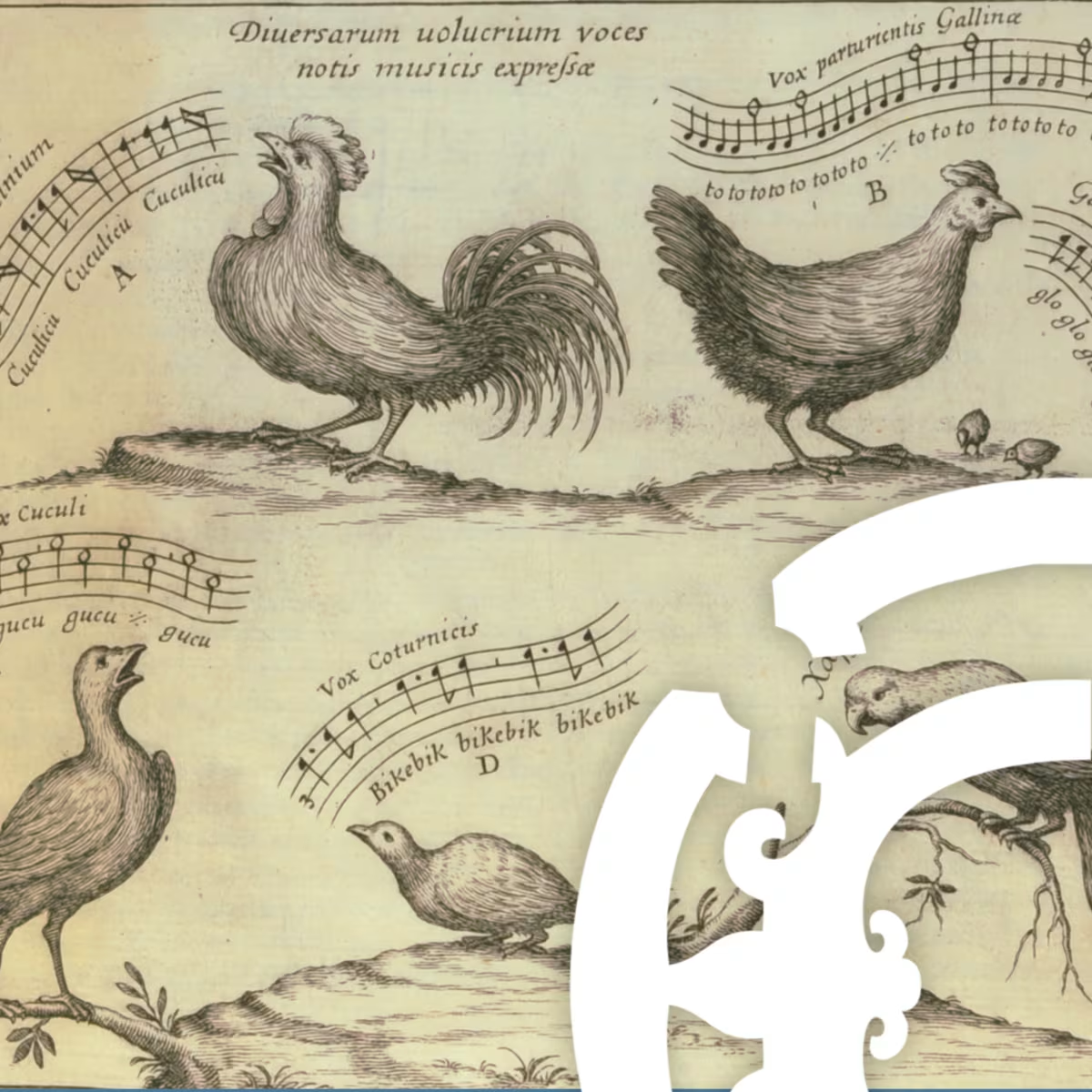
Playlist: Birds in Early Music
A playlist that explores how birds and birdsong inspired composers from Rameau and Couperin to Handel and Haydn and beyond.