

Revolutionary Wind Machine
Beethoven: Octet in E flat
Mark Baigent (oboe), Cait Walker (oboe), Emily Worthington (clarinet), Fiona Mitchell (clarinet), Richard Bayliss (horn), Claire Reynolds (horn), Robert Percival (bassoon), William Gough (bassoon)
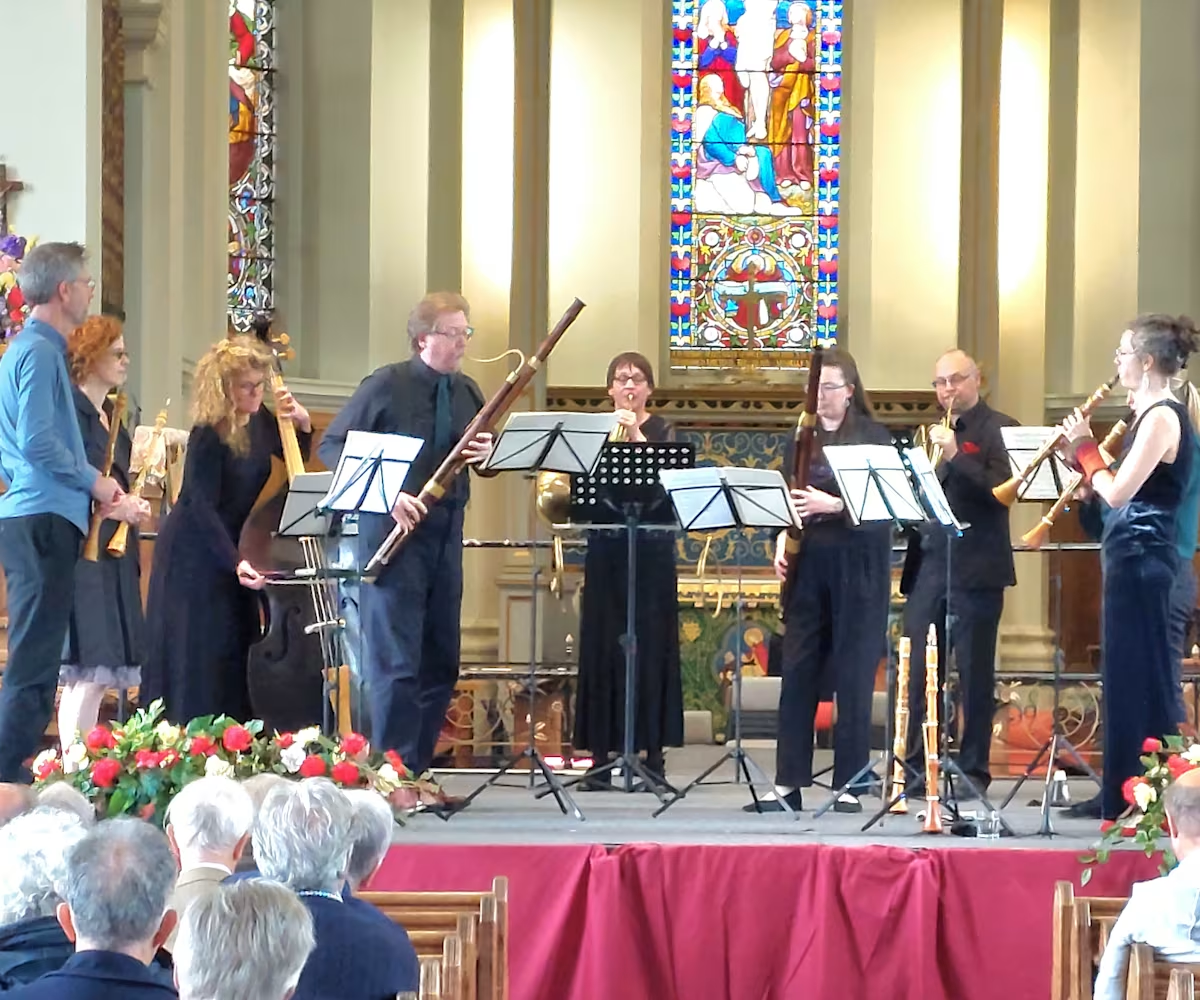
THURSDAY 11th JUNE 2026St Mary's Church, East Castle St, Bridgnorth. 12.30pm
LUNCHTIME CONCERT
THE REVOLUTIONARY WIND MACHINE on period instruments
Mark Baigent - oboe
Cait Walker - oboe
Emily Worthington - clarinet
Fiona Mitchell - clarinet
Richard Bayliss - horn
Claire Reynolds - horn
Robert Percival - bassoon
William Gough - bassoon
Georg Druchetzky: Arrangement of Joseph Haydn’s ‘The Seasons’. Sedlak.
Paul Wranitzky: Octet in F (Previously attributed to Haydn) (1803)
Beethoven: Octet in E flat Opus 103 (1792)
DRUCHETZKY: (1745 - 1819) studied oboe with the noted oboist and composer Antonio Besozzi in Dresden. He then joined the band of an infantry regiment in Cheb. It is believed he started writing music in the 1770s, most of it for his band. He also wrote chamber music and music for orchestra, including 27 Symphonies and Concertos for various instruments. A couple of his operas survive. Druschetzky is credited with one of the earliest uses of the BACH motif.
WRANITZKY: (1756 - 1808) studied at the Theology Faculty of the University of Olomouc, Czech Republic, and later in Vienna. From 1790, he conducted both royal Viennese theatre orchestras. He was highly respected by Mozart, Haydn and Beethoven; the latter two preferred him as conductor of their new works.
BEETHOVEN: (1770- 1827) Op. 103, is a work for two oboes, two clarinets, two bassoons, and two horns. Beethoven wrote the work in 1792 in Bonn before he established himself in Vienna. He reworked and expanded the Octet in 1795 as his first String Quintet, Op. 4. The Octet was not published until 1834 by Artaria, thus explaining the high opus number despite its date of composition.
 English Haydn Festival
 Thu, 11 Jun 2026
 St Mary Magdalene Church, Bridgnorth
 12:30pm
 £28
£28
Full Event Details

THE REVOLUTIONARY WIND MACHINE
THURSDAY 11th JUNE 2026St Mary's Church, East Castle St, Bridgnorth. 12.30pm
LUNCHTIME CONCERT
THE REVOLUTIONARY WIND MACHINE on period instruments
Mark Baigent - oboe
Cait Walker - oboe
Emily Worthington - clarinet
Fiona Mitchell - clarinet
Richard Bayliss - horn
Claire Reynolds - horn
Robert Percival - bassoon
William Gough - bassoon
Georg Druchetzky: Arrangement of Joseph Haydn’s ‘The Seasons’. Sedlak.
Paul Wranitzky: Octet in F (Previously attributed to Haydn) (1803)
Beethoven: Octet in E flat Opus 103 (1792)
DRUCHETZKY: (1745 - 1819) studied oboe with the noted oboist and composer Antonio Besozzi in Dresden. He then joined the band of an infantry regiment in Cheb. It is believed he started writing music in the 1770s, most of it for his band. He also wrote chamber music and music for orchestra, including 27 Symphonies and Concertos for various instruments. A couple of his operas survive. Druschetzky is credited with one of the earliest uses of the BACH motif.
WRANITZKY: (1756 - 1808) studied at the Theology Faculty of the University of Olomouc, Czech Republic, and later in Vienna. From 1790, he conducted both royal Viennese theatre orchestras. He was highly respected by Mozart, Haydn and Beethoven; the latter two preferred him as conductor of their new works.
BEETHOVEN: (1770- 1827) Op. 103, is a work for two oboes, two clarinets, two bassoons, and two horns. Beethoven wrote the work in 1792 in Bonn before he established himself in Vienna. He reworked and expanded the Octet in 1795 as his first String Quintet, Op. 4. The Octet was not published until 1834 by Artaria, thus explaining the high opus number despite its date of composition.
Venue Details & Map
Location
St Mary Magdalene Church, Bridgnorth
East Castle Street, Bridgnorth WV16 4AQ