

Find A Concert
New Elizabethan Award
Winners Concert (New Elizabethan Award 2025)

lines are blurred as these ideas appear in both their modern and historical contexts.
The opening of our set has been inspired by Will yow Walke the Woods soe Wylde, a Tudor song that is quoted by Dowland in his enduringly popular Can she excuse my wrongs. Using an initial phasing motif, we aim to capture the frantic sounds of the city, arriving eventually at the solitude of nature, where exile becomes a refuge. Can she excuse my wrongs was first published in 1597. With text attributed to Robert Devereux, the second
Earl of Essex, we hear a personal plea from a courtier exiled in affection from his patroness,
Elizabeth I.
Some of the most talented English musicians of the Renaissance chose a life of exile abroad, such as John Dowland and William Brade. Dowland’s The King of Denmark’s Galliard appears in the 1604 publication of Lachrimae, or Seven Teares. Dowland worked in the court of King Christian IV from 1598–1606, and the King’s interest in
music is reflected not only in the high salary paid to Dowland, but also reciprocated by Dowland’s grand galliard dedicated to him. William Brade, who was also employed in the Danish court, was dismissed at the same time as Dowland (possibly in relation to his reputation as a “wanton, mischievous fellow”). A talented violinist, his surviving catalogue, mostly of dances, is a feast for strings. His Scottish Dance is a lively, folk inspired tune, which nods to the European taste for music from foreign shores; this piece was published in a collection of dances in Germany in 1617 composed for the court at Hamburg.
These excellent composers were influenced by their time abroad; their travel impacted their playing and their compositional style, and allowed dissemination of musical ideas from around Europe, in turn impacting English musical style. Inspired by this rich tradition of player-composers, we have commissioned a world premiere to award winning composer Owen Spafford. ‘Threshold’, dedicated to Londinium Consort, is a song that is deeply routed in English folk music and the lyric is about immigration and have to leave your land. While the period of the Renaissance is recognised as a time of profound cultural rebirth, this piece discusses the more intimate new beginnings experienced by many immigrants, and the impact of those stories of personal evolution on our culture, just as in Dowland and Brade's time.
 Early Music at Wigmore Hall
 Sat, 1 Feb 2025
 Wigmore Hall
 1:00pm
 £18
£18
Full Event Details

Our programme today blends repertoire from Elizabethan London with contemporary compositions, creating moments of liminality where the two worlds meet, are reimagined, and become something altogether new. Each work in today’s programme explores a theme of journeys: how do these transitions help us embark on quests for meaning? From stories of relationships, exile, and immigration, to the sounds of commuting in the city, historical
lines are blurred as these ideas appear in both their modern and historical contexts.
The opening of our set has been inspired by Will yow Walke the Woods soe Wylde, a Tudor song that is quoted by Dowland in his enduringly popular Can she excuse my wrongs. Using an initial phasing motif, we aim to capture the frantic sounds of the city, arriving eventually at the solitude of nature, where exile becomes a refuge. Can she excuse my wrongs was first published in 1597. With text attributed to Robert Devereux, the second
Earl of Essex, we hear a personal plea from a courtier exiled in affection from his patroness,
Elizabeth I.
Some of the most talented English musicians of the Renaissance chose a life of exile abroad, such as John Dowland and William Brade. Dowland’s The King of Denmark’s Galliard appears in the 1604 publication of Lachrimae, or Seven Teares. Dowland worked in the court of King Christian IV from 1598–1606, and the King’s interest in
music is reflected not only in the high salary paid to Dowland, but also reciprocated by Dowland’s grand galliard dedicated to him. William Brade, who was also employed in the Danish court, was dismissed at the same time as Dowland (possibly in relation to his reputation as a “wanton, mischievous fellow”). A talented violinist, his surviving catalogue, mostly of dances, is a feast for strings. His Scottish Dance is a lively, folk inspired tune, which nods to the European taste for music from foreign shores; this piece was published in a collection of dances in Germany in 1617 composed for the court at Hamburg.
These excellent composers were influenced by their time abroad; their travel impacted their playing and their compositional style, and allowed dissemination of musical ideas from around Europe, in turn impacting English musical style. Inspired by this rich tradition of player-composers, we have commissioned a world premiere to award winning composer Owen Spafford. ‘Threshold’, dedicated to Londinium Consort, is a song that is deeply routed in English folk music and the lyric is about immigration and have to leave your land. While the period of the Renaissance is recognised as a time of profound cultural rebirth, this piece discusses the more intimate new beginnings experienced by many immigrants, and the impact of those stories of personal evolution on our culture, just as in Dowland and Brade's time.
Venue Details & Map
Location
Wigmore Hall
36 Wigmore Street, London W1U 2BP
Related upcoming events

Art of the Mandolin
Avi Avital
- Mon, 26 Oct 2026
- Wigmore Hall, London
- 7:30pm
- £18 - £50
- Early Music at Wigmore Hall
An English Baroque Journey I: Sacred Music – ‘The Music More Full Than It Was’
Arcangelo
- Fri, 30 Oct 2026
- Wigmore Hall, London
- 7:30pm
- £18 - £50
- Early Music at Wigmore Hall
John Dowland: Another Retrospective
Ensemble Jupiter
- Wed, 4 Nov 2026
- Wigmore Hall, London
- 7:30pm
- £18 - £50
- Early Music at Wigmore Hall

Discord to Harmony
Stile Antico
- Wed, 11 Nov 2026
- Wigmore Hall, London
- 7:30pm
- £18 - £40
- Early Music at Wigmore Hall

Il Filo d’Arianna
Josè Maria Lo Monaco
- Fri, 13 Nov 2026
- Wigmore Hall, London
- 7:30pm
- £18 - £50
- Early Music at Wigmore Hall
Cavalli: Missa Pro Defunctis
il Pomo d’Oro Choir
- Mon, 23 Nov 2026
- Wigmore Hall, London
- 7:30pm
- £18 - £50
- Early Music at Wigmore Hall

Monteverdi Madrigals
Les Arts Florissants
- Thu, 26 Nov 2026
- Wigmore Hall, London
- 7:30pm
- £18 - £60
- Early Music at Wigmore Hall
Trevor Pinnock’s 80th birthday
The English Concert
- Wed, 2 Dec 2026
- Wigmore Hall, London
- 7:30pm
- £18 - £50
- Early Music at Wigmore Hall
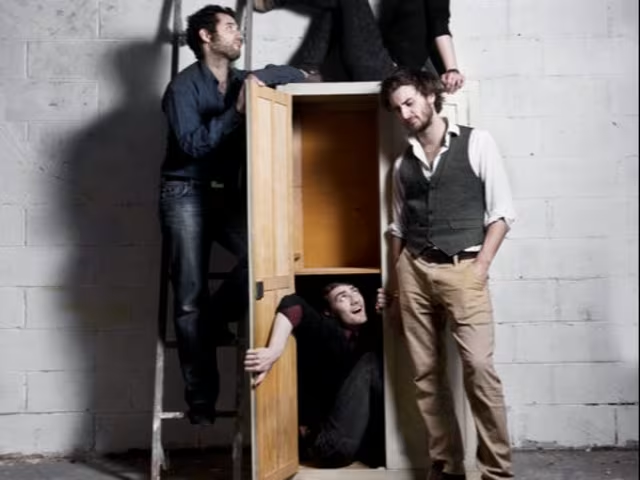
CPE Bach
Nevermind
- Mon, 7 Dec 2026
- Wigmore Hall, London
- 7:30pm
- £18 - £40
- Early Music at Wigmore Hall
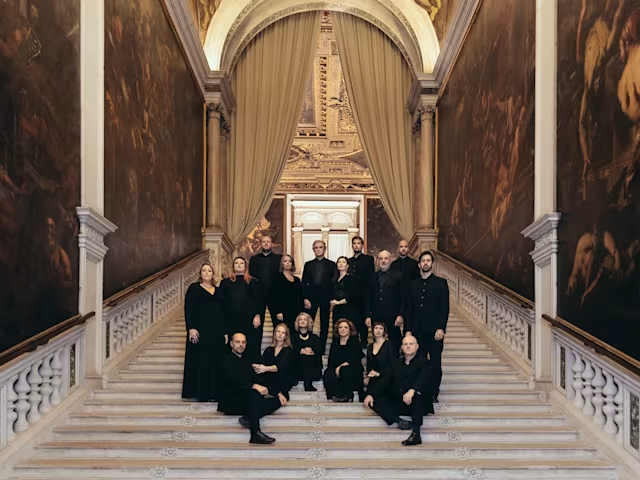
A Venetian Christmas
il Pomo d’Oro Choir
- Wed, 16 Dec 2026
- Wigmore Hall, London
- 7:30pm
- £18 - £50
- Early Music at Wigmore Hall
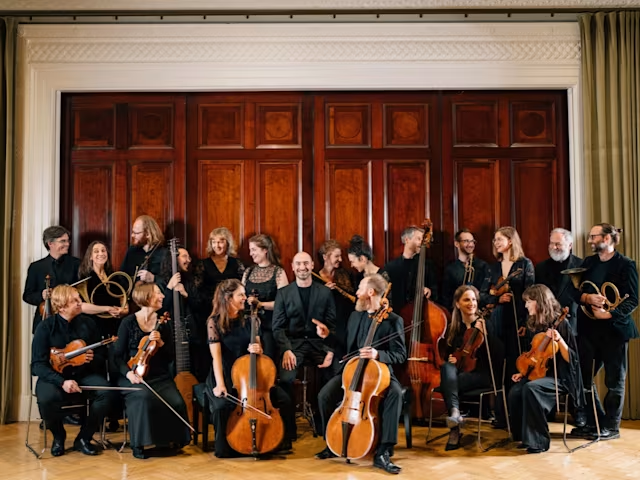
1742 Dublin Messiah
Irish Baroque Orchestra
- Fri, 18 Dec 2026
- Wigmore Hall, London
- 7:00pm
- £18 - £50
- Early Music at Wigmore Hall
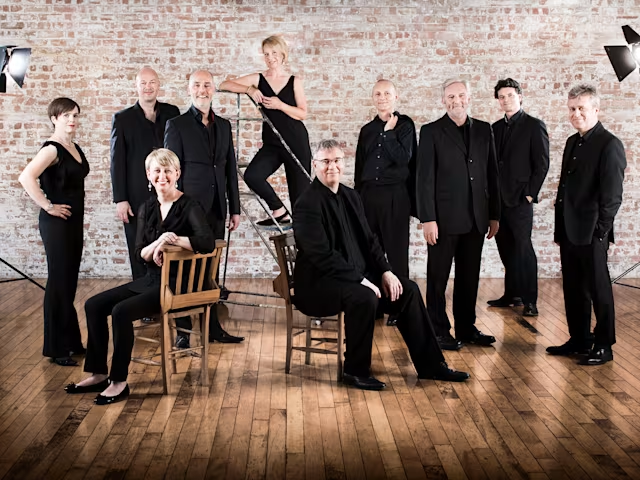
Heaven and Earth in Little Space
The Cardinall's Musick
- Mon, 21 Dec 2026
- Wigmore Hall, London
- 1:00pm
- £18 (consession £16)
- Early Music at Wigmore Hall
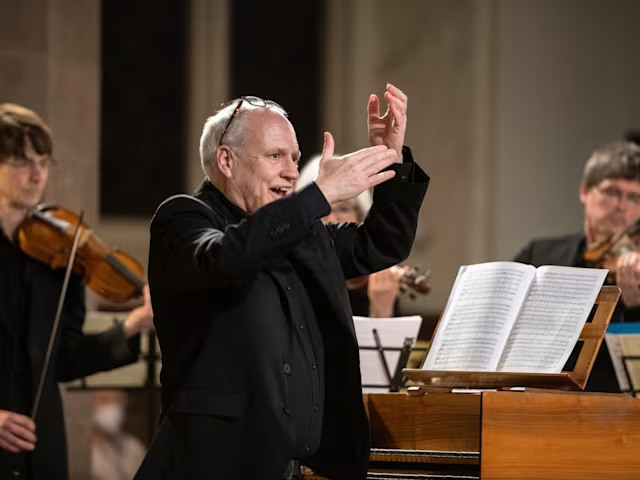
An Early German Christmas
Dunedin Consort
- Wed, 23 Dec 2026
- Wigmore Hall, London
- 7:30pm
- £18 - £50
- Early Music at Wigmore Hall

Vidala: Traditionelle Südamerikanischer Musik
Luciana Mancini | Bach Consort Wien
- Wed, 6 Jan 2027
- Wigmore Hall, London
- 7:30pm
- £18 - £55
- Early Music at Wigmore Hall

An English Baroque Journey II: Chamber Music – ‘Delicae Musicae’
Arcangelo
- Fri, 8 Jan 2027
- Wigmore Hall, London
- 7:30pm
- £18 - £55
- Early Music at Wigmore Hall

F Scarlatti and Vivaldi
Christopher Monks
- Thu, 14 Jan 2027
- Wigmore Hall, London
- 1:00pm
- £18 - £45
- Early Music at Wigmore Hall