
Fiddlers Three: Charles I's 'Private Musick'
 Supported by a grant from Continuo Foundation
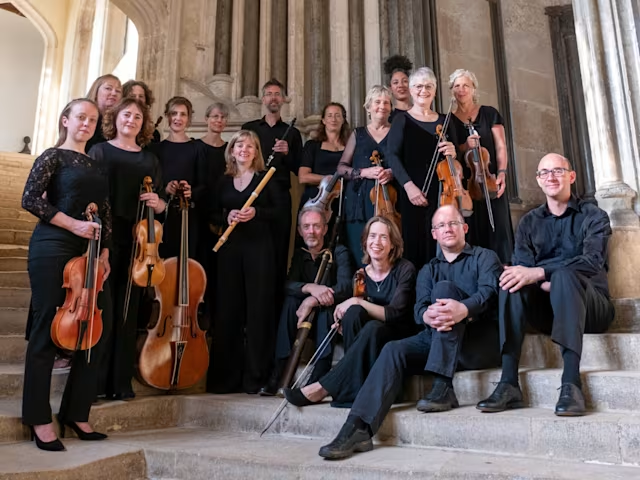
Kate Fawcett, Catherine Martin and Anna Palmer - violin
Jonathan Rees - bass viol and bass violin
Lynda Sayce - theorbo and guitar
Martin Perkins - harpsichord and organ
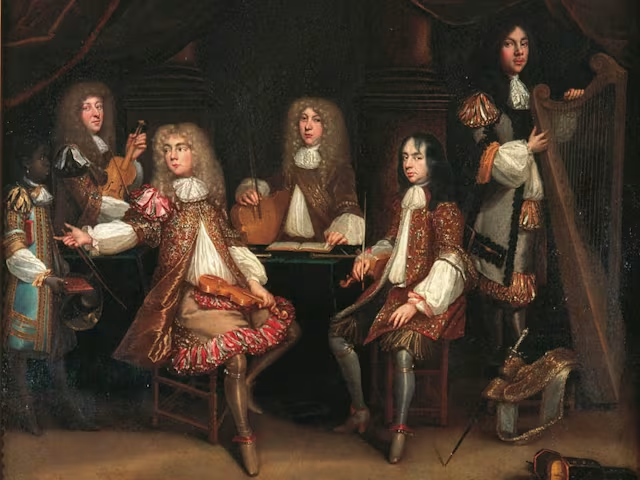
At the restoration of the monarchy in 1660, Charles I reappointed many of the court musicians who had served his father. Yet, years in exile in France had changed his own tastes and preferences and this influenced the reformed musical organisations and the music written for them. This period saw the decline in consorts of viols and winds, and the emergence of the violin as the instrument of choice. The arrival in England of German virtuoso violinist Thomas Baltzar had an undoubted impact on the direction of musical landscape and the flourishing of the unusual combination of three violins and continuo for court ensembles. His masterful Suite in C led to a small flourishing of works for the same forces, by Mattes, Finger, and (undoubtedly the crowning achievement of the genre) Purcell.
 Thu, 17 Jul 2025—Sun, 20 Jul 2025
- ➕0 performances
Share this

Full Details

Musical & Amicable Society:
Kate Fawcett, Catherine Martin and Anna Palmer - violin
Jonathan Rees - bass viol and bass violin
Lynda Sayce - theorbo and guitar
Martin Perkins - harpsichord and organ
At the restoration of the monarchy in 1660, Charles I reappointed many of the court musicians who had served his father. Yet, years in exile in France had changed his own tastes and preferences and this influenced the reformed musical organisations and the music written for them. This period saw the decline in consorts of viols and winds, and the emergence of the violin as the instrument of choice. The arrival in England of German virtuoso violinist Thomas Baltzar had an undoubted impact on the direction of musical landscape and the flourishing of the unusual combination of three violins and continuo for court ensembles. His masterful Suite in C led to a small flourishing of works for the same forces, by Mattes, Finger, and (undoubtedly the crowning achievement of the genre) Purcell.
Performances
Past
Fiddlers Three: Charles II's 'Private Musick'
- Thu, 17 Jul 2025
 All Saints Church, Culmstock
 7:00pm
 £15, Students £10, u12s free
 Blackdowns Early Music Projects
Fiddlers Three: Charles II's 'Private Musick'
- Sun, 20 Jul 2025
- Royal Birmingham Conservatoire
- 12:15pm
- £15 (£10 over 60s)