

Feature
Touching Bach: an immersive experience of the St John Passion
Share this

BY BETTINA VARWIG | FIRST PUBLISHED 16 OCT 2026
In JS Bach’s time, music was widely experienced as a kind of touch, flowing between bodies and affecting listeners inside and out. Bettina Varwig, co-director of a recent project on Bach’s ‘St John Passion’, reflects on recovering that sense of music’s touching power.
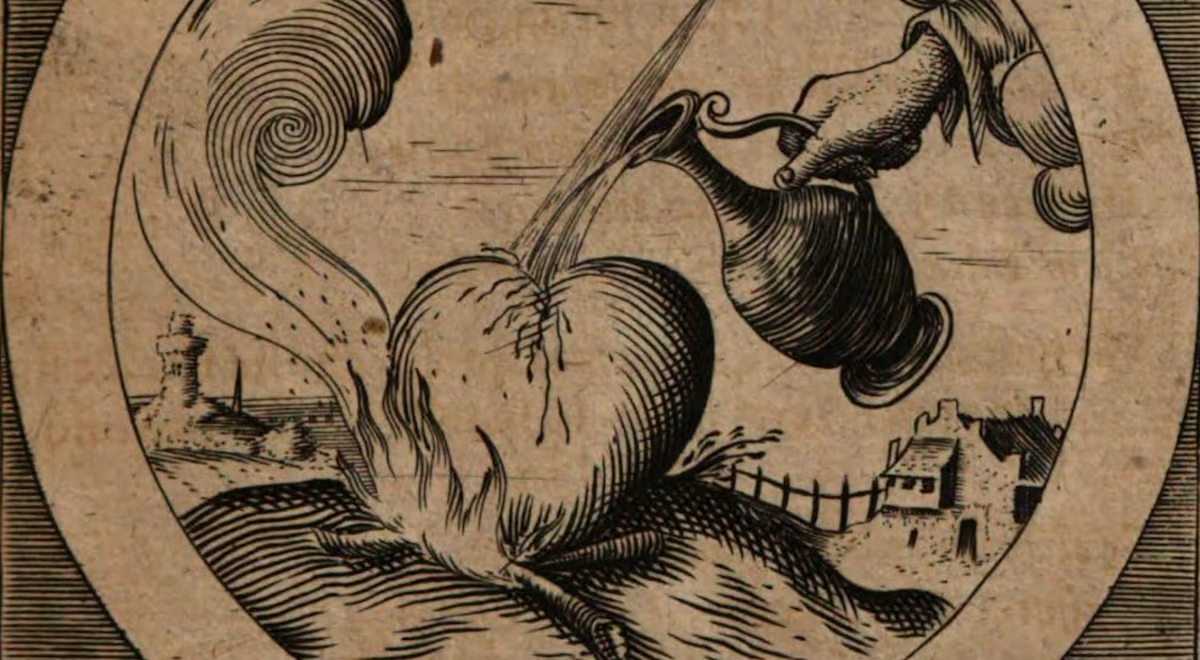
When we say that music ‘touches’ us, we usually mean that metaphorically: if we find a piece of music ‘touching’, it means it makes us feel something rather than making physical contact. But, like most metaphors, this one has a literal dimension, which becomes very evident when you dig into its history. Looking at testimonies from JS Bach’s time, we find that music was widely experienced as a quasi-material substance – an affectively charged stream of sound, somewhere between air and spirit, that flowed out of musicians’ bodies and penetrated the bodies of those around them. And so music could literally touch people inside and out; it could feel hard (dissonances) or soft (pleasant concords) on the skin; it could line your ears with honeyed sweetness or deliver a painful stab to your heart.
To some, the idea that music, as it passes between people, might constitute a kind of actual touch may seem deeply distasteful. What if I don’t want your music stroking my innards? This discomfort is symptomatic of a wider profound shift in Western culture over the past couple of centuries, where intercorporeal contact has come to be regarded as inherently suspicious. Nowadays we tend to view our bodies as intensely private and closed off from others; they are the carefully guarded, untouchable property of our individual selves. On the flipside, however, there is a vast array of research that confirms the human need for touch as essential and formative in early childhood development, mental and physical wellbeing, emotional regulation and social integration. Have we lost something by sidelining music’s capacity to act as a form of interpersonal touch that can connect and transform us as people?
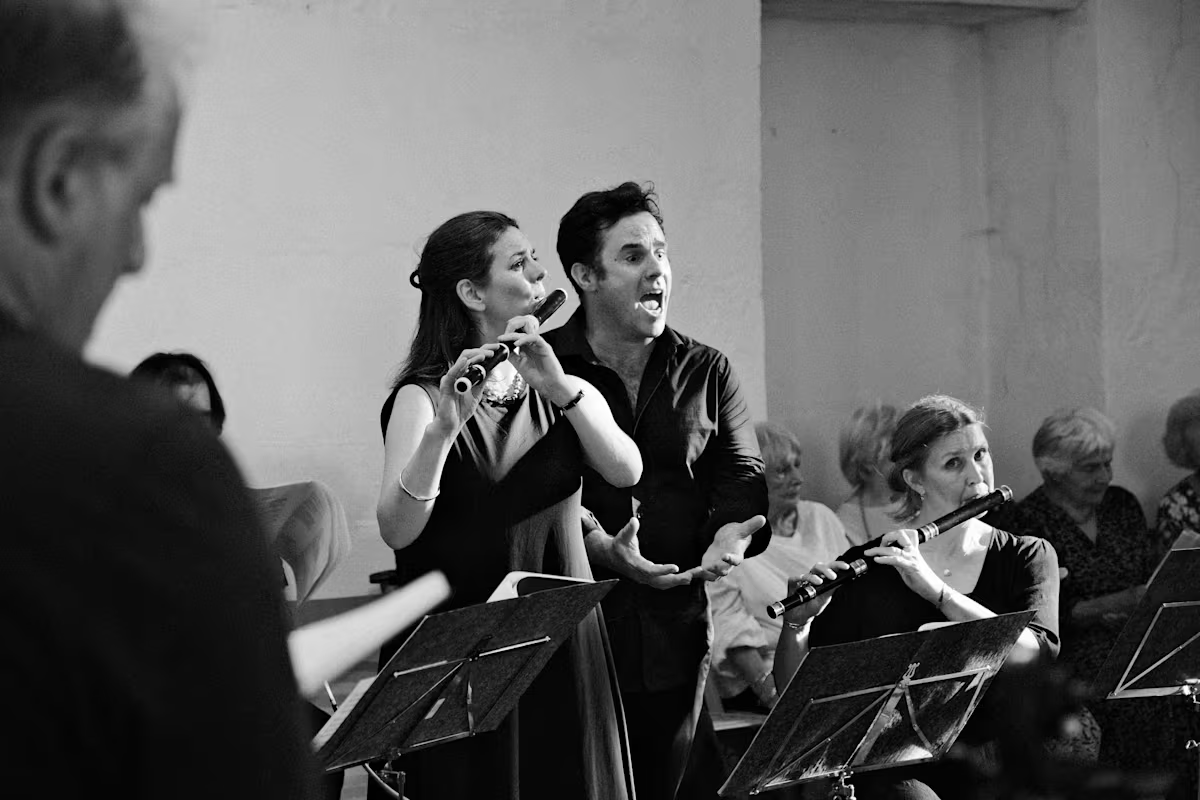
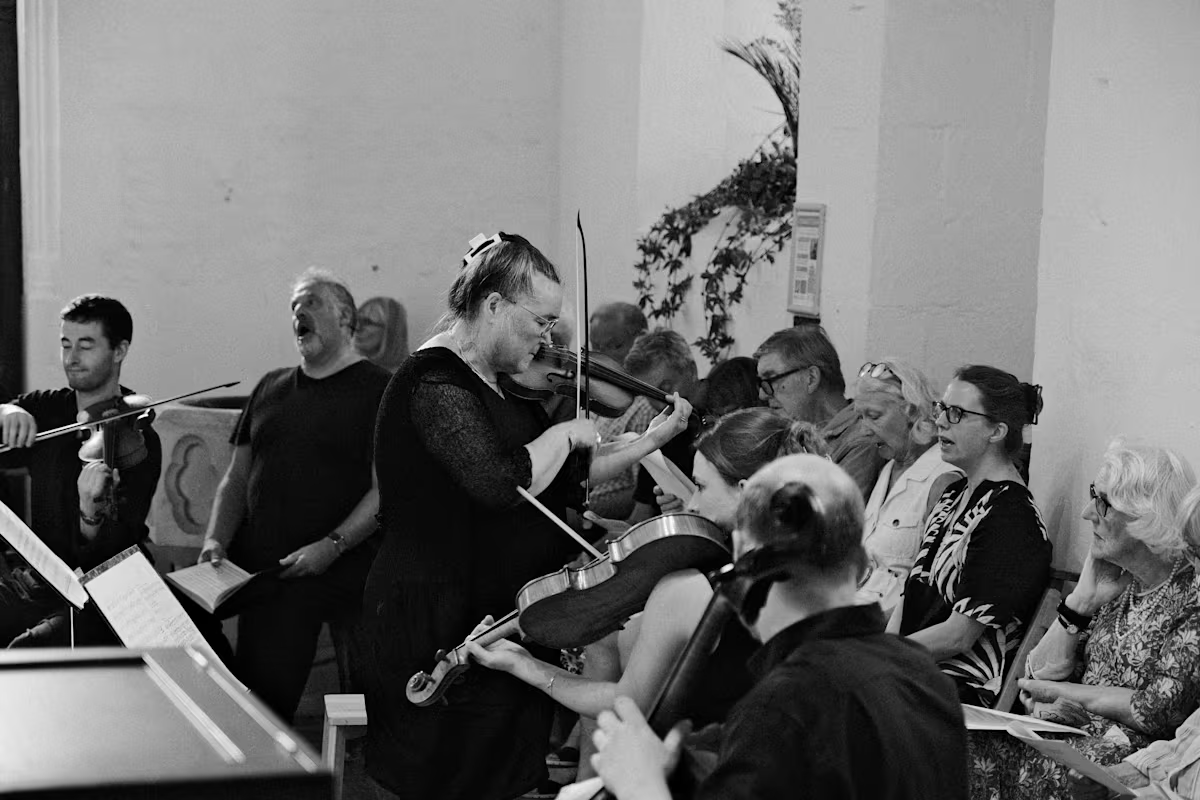
In a recent project on Bach’s St John Passion, we set out to recover some of this touching power of music. The project was co-directed by violinist Margaret Faultless, tenor Nicholas Mulroy and myself. Our collaboration, which stretches back almost ten years now, culminated last year in a two-day workshop at the Royal Academy of Music in London and a performance at All Saints’ Church in Alton Priors, Wiltshire, generously supported by the Continuo Foundation. We invited our performers and audience to feel their way into a porous, open bodily disposition, to allow themselves to be infiltrated and infected – physically touched – by the musical outflows of those around them.
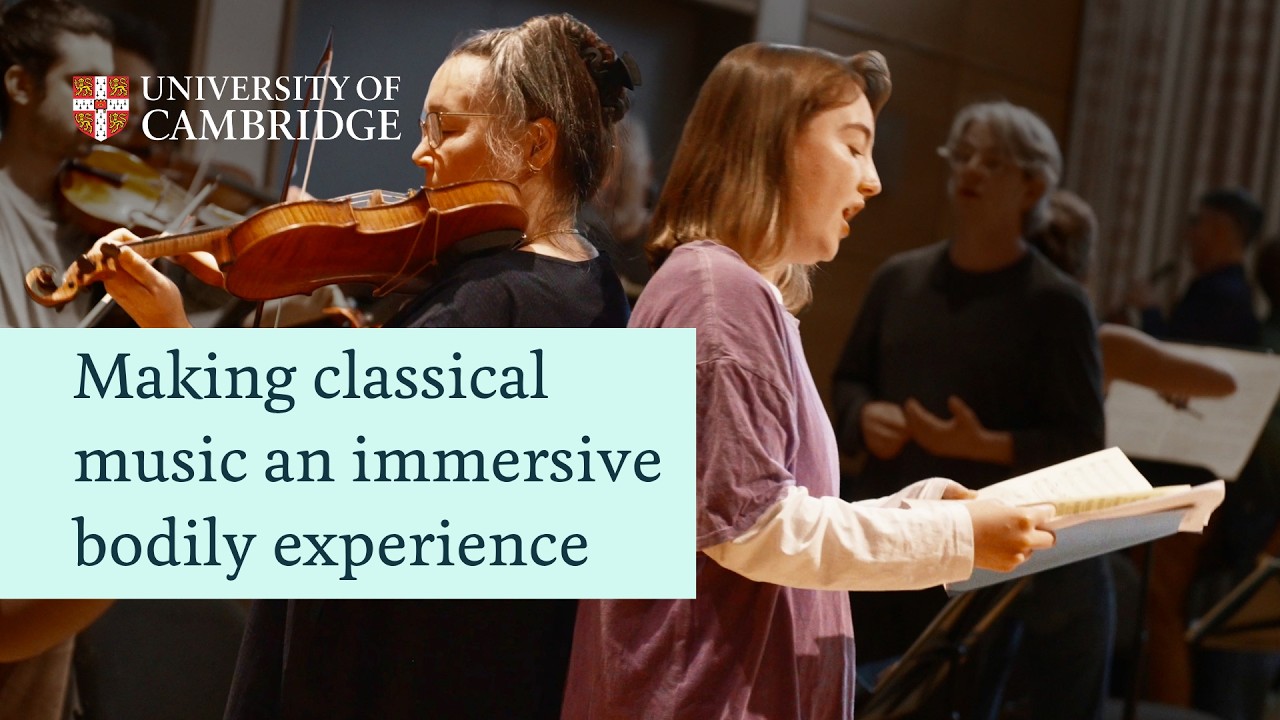 ▶
▶A documentary about the project (embedded above), which was released earlier this year, reveals the striking effects that this approach had on those who took part. We used some historical images and quotes to feel our way into this porous bodily state and then let the music take shape from there. There was no conductor and no choreography, only an invitation to flow, to be contagious, and to move when you felt moved. We experimented with actual touch (singing/playing back-to-back), eye contact, dance, and collective moving and breathing, as ways to boost our ability to listen through our skin and resonate with our whole bodies.
The results were truly remarkable. 'The most engaging and moving musical occurrence I've ever been part of,' said one of our student participants. One singer reported: 'I can honestly say that I've never experienced anything quite like it. I've never felt emotions so close to the surface while performing. I was on the verge of tears so many times and a bit of a wreck at the end, really. I think we all felt something indescribable in that room. I don't think I've ever felt in such close proximity to the music itself, and for weeks afterwards I couldn't stop telling people about it, and it's been on my mind ever since.' Another one wrote, 'I honestly find it hard to put into words what an extraordinary experience it was. It felt as if I were discovering the St John Passion all over again, with the excitement and wonder of a child. There were so many moments of pure beauty, of deep emotional and spiritual connection. It’s remarkable how far music can reach, emotionally and spiritually, when artists are given a safe space where they are allowed to truly embody what they are performing – it really changes everything.'
Speaking personally, I was deeply affected by what emerged over the course of the project. I don’t think I’d ever witnessed collective music making of quite such intensity, candour, intimacy, vulnerability and affective force. I felt like I finally got to experience viscerally the full cathartic potential of this Passion setting, and to do so in close accord with those around me. This, surely, is why this music matters, now – because it can help us transcend the prickly individualism that Western modernity has instilled in us. This music can touch us, for real, and thereby can make us resonate with others to feel our shared humanity in our hearts and bones. As one musician said afterwards, 'It was a truly life-changing experience. I have no idea how, but I suspect the world would be a better place if all concerts could allow me to feel even a small part of what I did after this project.'
Watch the complete performance of 'Bach in the Flesh' at All Saints’ Church, Alton Priors, here. A follow-up project, 'The Heart of Bach', is scheduled for the 2026-27 season, with a performance on 19 March 2027 at Emmanuel College Cambridge, hosted by the Cambridge Festival (details TBC). Visit the Music in the Flesh website to register your interest and be notified of future performances.
Black & white images by Nathan Giorgetti.
Share this
Keep reading

Guitar Meets Square Piano: Nathaniel Mander and Declan Hickey
Continuo Connect talks to guitarist Declan Hickey and harpsichordist Nathaniel Mander about their upcoming “Dukatenkonzert” in London and the instruments they will be playing.
The Best of Rachel Podger
This playlist celebrates 'the unsurpassed British glory of the baroque violin' (The Times) - that is of course Rachel Podger.
Sam Brown on Dowland and filtering history through a modern lens
Lutenist Sam Brown of Dowland's Foundry chats with Simon Mundy about how we interpret John Dowland, the formation of the ensemble around Emma Kirkby's kitchen table, and an exciting recording project in the pipeline.