

Review
Lully’s first triumph of ‘tragédie lyrique’
‘Cadmus et Hermione’ by Christophe Rousset & Les Talens Lyriques
Share this

BY SIMON MUNDY | FIRST PUBLISHED 27 APR 2026
When Giovanni Lulli left Florence at the age of 14 in the service of the aristocratic Guise family, it was as an Italian-speaking companion to a young princess. Five years later, he managed to befriend the even younger Louis XIV, his junior by six years, because both young men loved dancing. The court had been in love with Italian culture since the days of Catherine de Medici, but there were plenty of French composers anxious to make their mark in the palace at St Germain-en-Laye, in the country northwest of Paris and its unpleasantly mediaeval odours. The court was the best-equipped in Europe and – unlike many capital cities at the time (1653) – was relatively insulated from the wars raging to the east. By then, Lulli had made his name as a violinist (the court had an orchestra of violins, mainly made by the Amati family in Cremona) and guitarist, another newly fashionable instrument.
The same year, the young king made Giovanni a royal composer of instrumental music, largely for the dance evenings they both enjoyed so much. In 1661, everything changed. Following the death of his chief minister Cardinal Mazarin, who had remained in charge for another ten years after the end of the regency of his Spanish mother, Anne of Austria, 23-year-old Louis XIV announced that he would take charge of France himself. Lulli was made superintendent of the royal music and soon became a French citizen, changing his name to Jean-Baptiste Lully.
A decade later Lully was experimenting with a new form of musical theatre in French, different from Italian opera in that it was more linear in structure (less broken up between recitatives and arias) and involved more dancing. One of the first, devised with the poet Philippe Quinault, was Cadmus et Hermione, an almost pantomimic melodrama, involving a naughty and continually hungry dragon taken on by Europa’s brother (Cadmus), and a tasty morsel (Hermione). Unlike the great lyric tragedies that followed, this one was a bit of tearful fun.
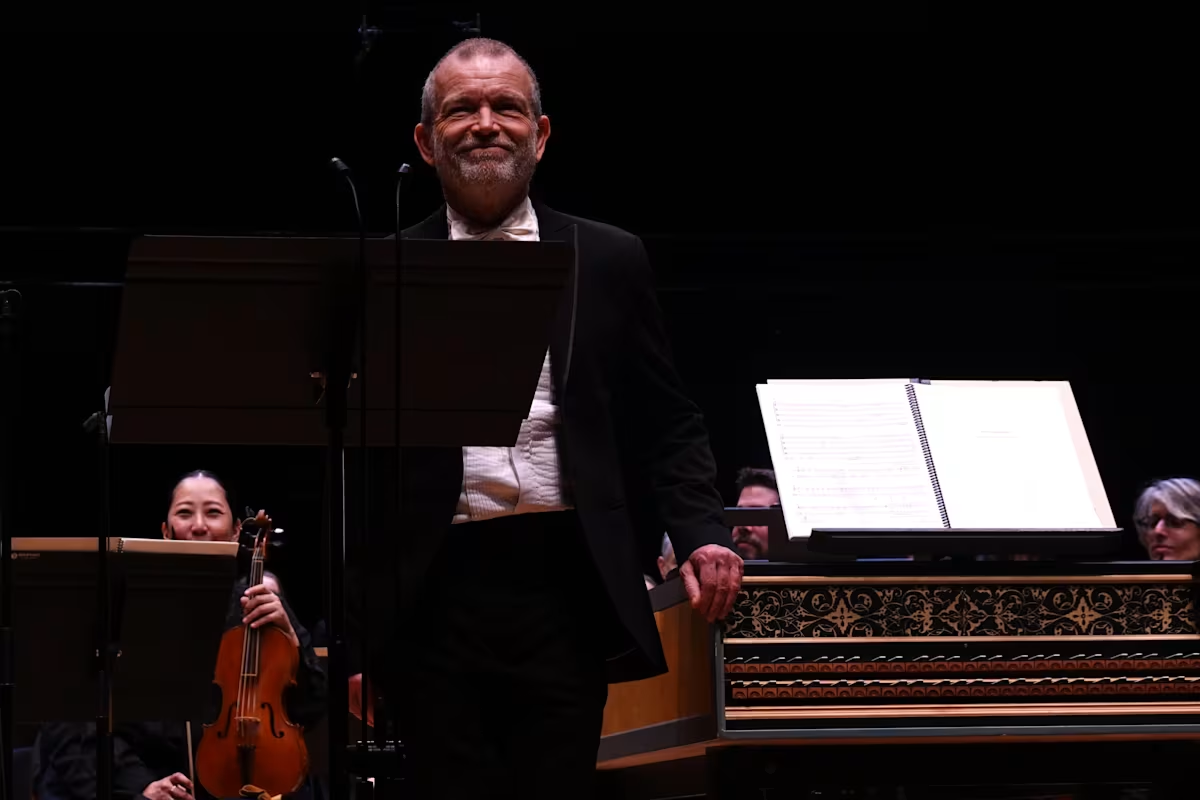
Christophe Rousset and his period-instrument ensemble, Les Talens Lyriques, have been devoting many years to performing and recording all of Lully’s extant works for music theatre – it seems inaccurate to call them operas; I keep thinking of their modern equivalent being the genre of Stephen Sondheim. With nice symmetry, they have saved the first till last. They began the recording process of Cadmus at a public concert in the Philharmonie de Paris on 25 January.
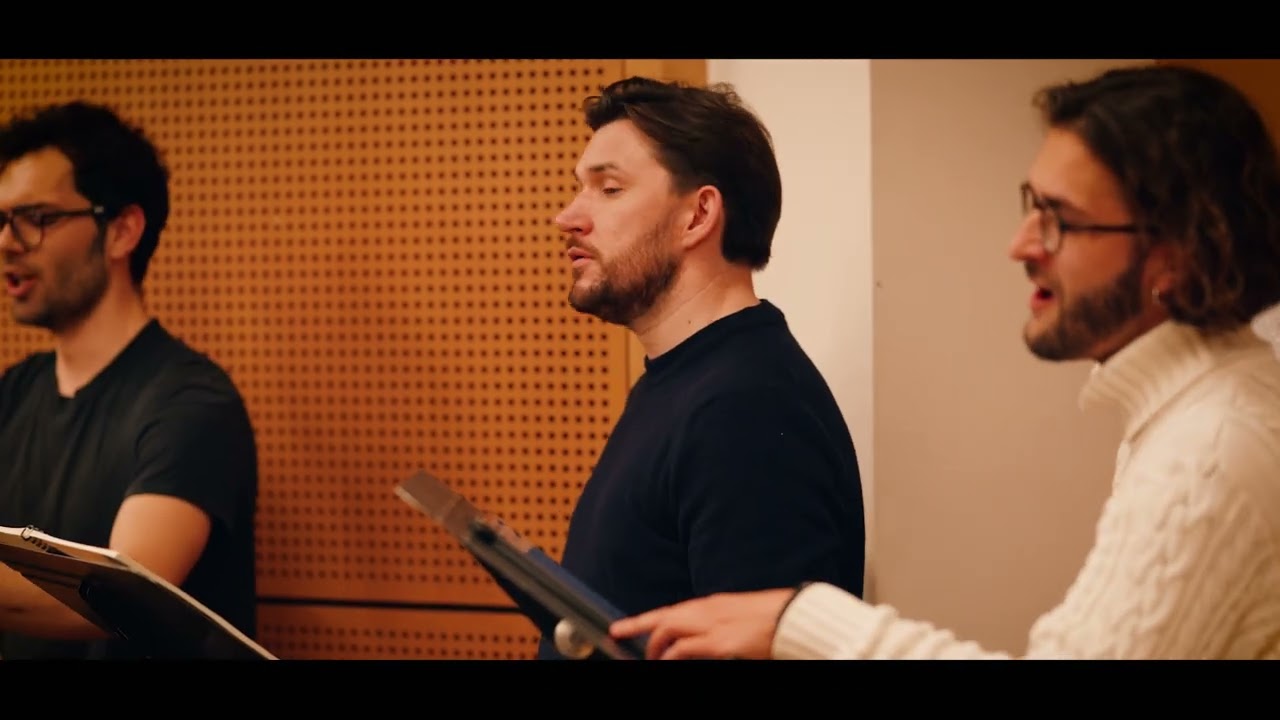 ▶
▶Christophe Rousset introduces ‘Cadmus et Hermione’ (in French with auto-subtitles/closed captions in English)
The series has been a triumph of scholarship and consistency, released on both the Aparté and Versailles Spectacles record labels. Much of the scholarship has been undertaken with the help of the Centre de musique baroque de Versailles (CMBV). Cadmus et Hermione will not be released until next year; first, the recording of Proserpine needs to rise from the underworld.
As recordings, one can rely on the excellence once the performances are bedded in. In concert, the Philharmonie presented a rather challenging acoustic environment. Certain nuances of the string and continuo sections were barely audible from the back of the stalls, while colleagues nearer the front, several from BBC Radio 3, enjoyed perfect clarity (later confirming to me the instrumental playing was just as accomplished as the voices). Surtitles, not identifying which character was singing, left the audience to do a good amount of detective work.
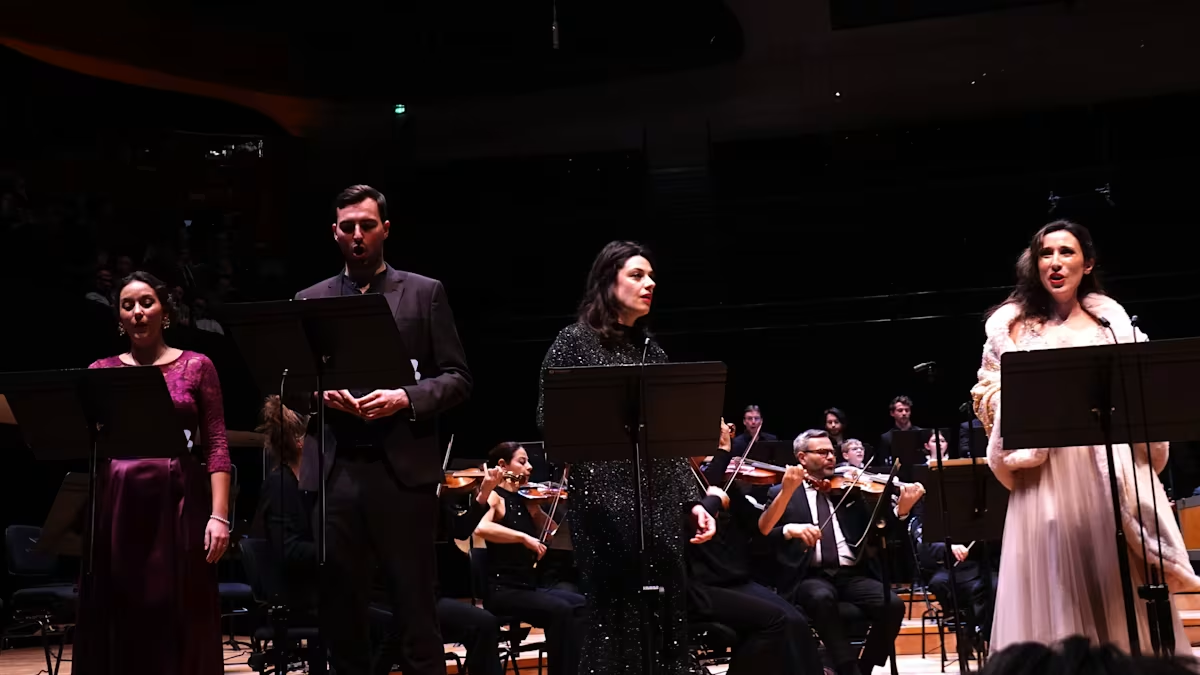
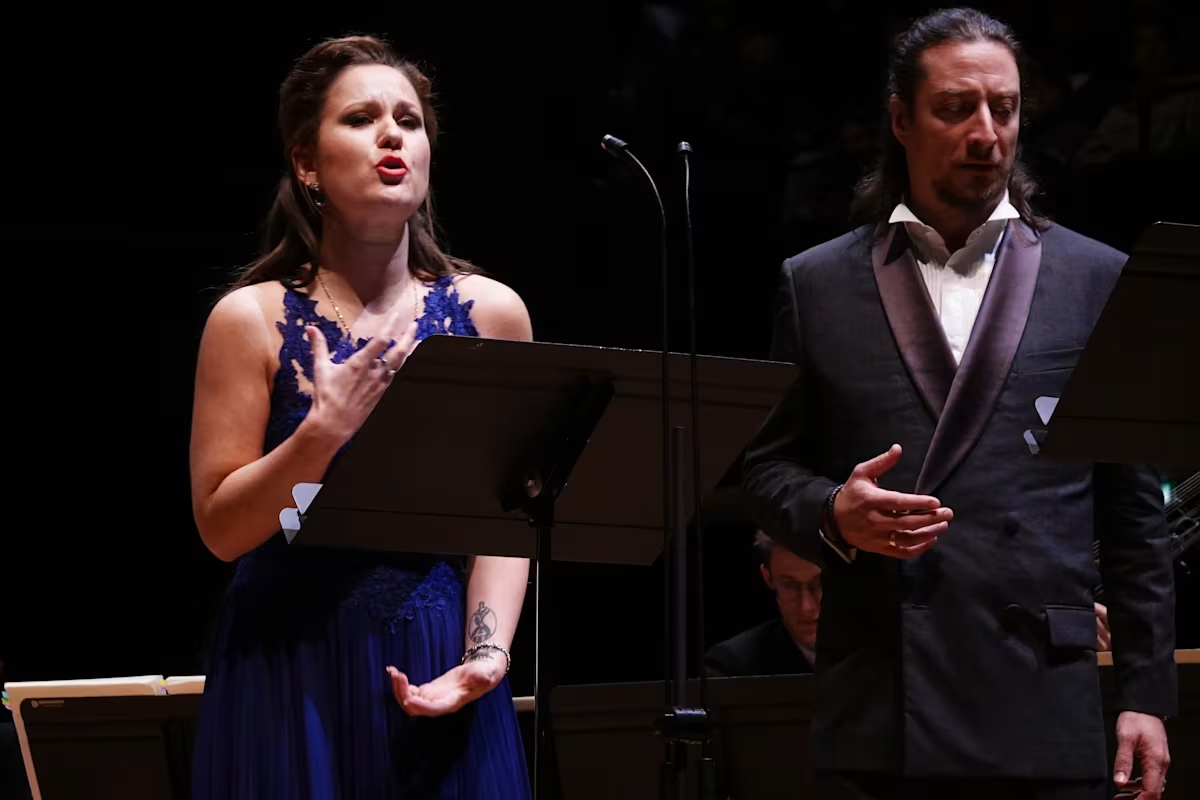
None of this diminishes the achievements of Rousset and his exceptional ensemble, nor the fine singers, led by Jérôme Boutillier as Cadmus, Eléonore Pancrazzi as Hermione, Marie Lys in her multiple roles as goddesses, and Lysandre Châlon as Arbas and Pan. Thaïs Raï-Westphal’s Venus shines as brightly as ever, echoing her performances in Monteverdi madrigals last summer in Cremona. Extending to two and a half hours for the five acts, the evening is rewarded with moments of stunning beauty, particularly the Chaconne at the end of Act I – a hymn to love delivered by three male voices, leaving a lasting impression of Lully’s inventive brilliance.
Christophe Rousset and Les Talens Lyriques will be at The Grange Festival to perform Mozart’s La clemenza di Tito on 9 & 10 June 2026. The ensemble will return to the UK in 2027 for a concert performance of Rameau’s first opera, Hippolyte et Aricie, at the Barbican on 19 April 2027.
Share this
Keep reading
LIFEM 2026: Interview with Eun Sol Lee
The Early Music Shop caught up with Sol to find out more about her year since she won the competition, and what we have to look forward to in her performance at LIFEM this year...
Exploring the golden age of the ‘City of Dreams’
‘City of Dreams’ is an exploration of two centuries of Renaissance Florence at Brighton Early Music Festival. We spoke to Oliver Webber, founder of Monteverdi String Band, and writer Saria Steyl about how the project came together.

The soundtrack of imagination: David Yardley and Green Dragon Guild of London
Medieval countertenor David Yardley, Artistic Director of Green Dragon Guild of London, discusses Medieval music, Southwark’s layered history, and how imagination and meticulous research meet in performance in our latest podcast.