

Feature
Inside the first performances of Vivaldi’s ‘The Four Seasons’
An exclusive excerpt from Hannah French’s book, ‘The Rolling Year: Listening to the Seasons with Vivaldi’ (Faber, 2025)
Share this

EXCERPT REPUBLISHED 25 JULY 2026 | WITH KIND PERMISSION FROM FABER & FABER
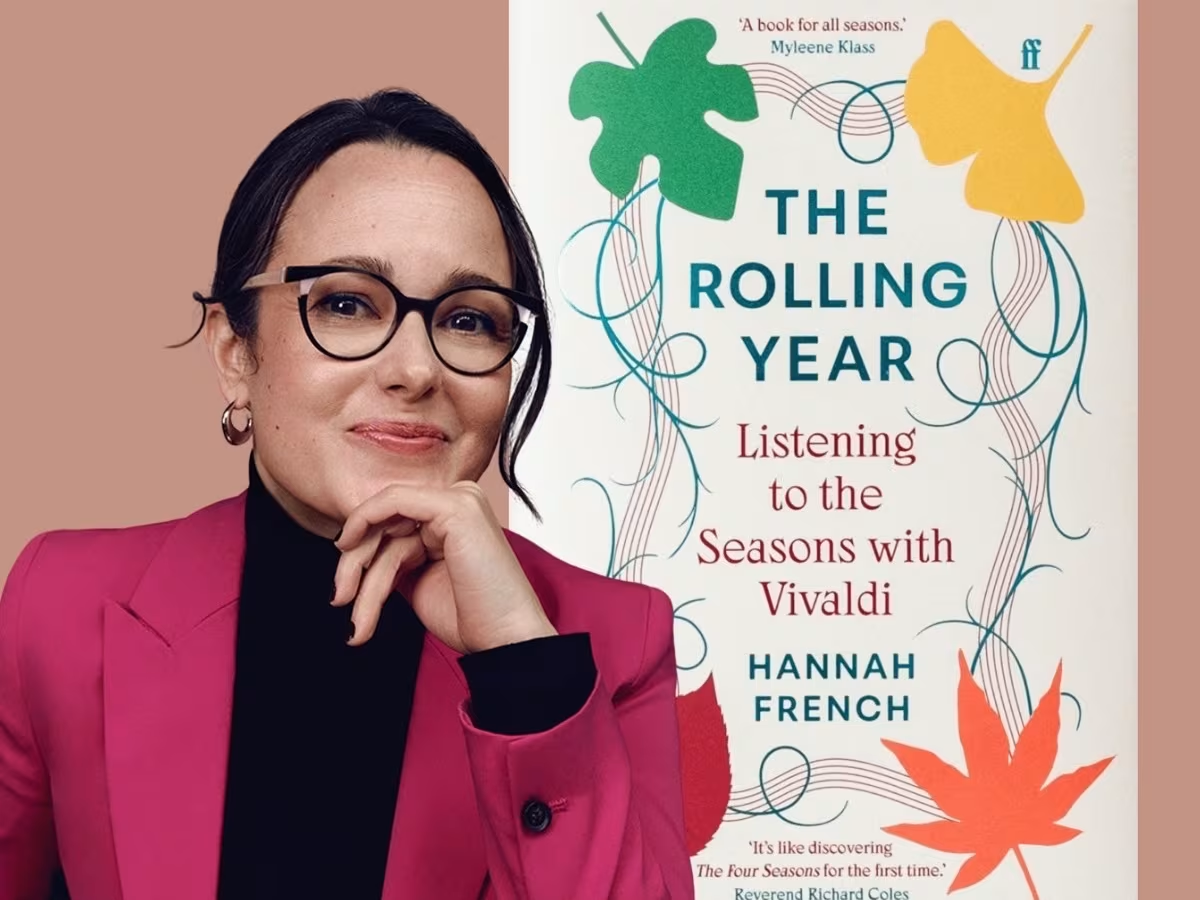
‘The Rolling Year: Listening to the Seasons with Vivaldi’ by Dr Hannah French is a fascinating deep dive into the stories, perceptions and humanity behind ‘The Four Seasons’. Following its launch in November 2025, Continuo Connect shares an exclusive excerpt from the book. In it, Hannah traces the life cycle of the concertos back to their roots: from Vivaldi’s years at Mantua’s ducal court to the Grand Tourists, court violinists and Parisian audiences who carried them across Europe, reminding us just how far ‘The Four Seasons’ travelled before becoming the ubiquitous classic we know today.
Continuo readers can get 20% off when buying a copy of the book. See the details below.
𝄞 Why not accompany your reading with our playlist, The Seasons? And we have illustrated the chapter with more music to listen to as you go.
The Rolling Year
From PART ONE: SPRING
Roots and Shoots: The First Performances
Vivaldi’s Four Seasons took root in the eighteenth century with performances he gave himself. From there it grew shoots from manuscripts he sent to musicians or copies of published editions that found their way into numerous institutions – shoots that continue to spring up today. We like to imagine Vivaldi at the Pietà, and in Venice. It fits a convenient image of the composer, but in reality he spent huge amounts of time away from his home: he was renowned in cities across Italy and north of the Alps as a composer of operas and concertos.
Vivaldi’s first opera Ottone in villa received its premiere in May 1713 in Vicenza, a city forty miles to the west, and part of the Republic of Venice. A year later, the composer cemented his fascination with all the facets of production by joining his father at Venice’s Teatro Sant’Angelo. This was the start of a career not just as an opera composer – his initial role – but also, eventually, as an impresario. Over the years, the Sant’Angelo became known as ‘Vivaldi’s Theatre’, a small, rather unfashionable opera house on the Grand Canal, but one in which he had the opportunity to get involved in every aspect of productions. This was a time in which the composer of an opera was ranked lower than the singers and often the librettist, so Vivaldi relished the habit of playing violin concertos in intervals – another chance for this showman to draw in the crowds and dazzle in his own right.
Could Sant’Angelo have been the setting for the first performances of The Four Seasons? We don’t know when exactly he began writing these concertos or how long they percolated through his musical mind. We also don’t know whether he produced prototype versions, or if they emerged as the finished product. A set of manuscripts has come to light revealing that La tempesta di mare (The Storm at Sea), a violin concerto from the op. 8 collection that included The Four Seasons, was written in 1716. This was while Vivaldi was still at both the Pietà and Sant’Angelo, so perhaps that’s where the seasonal seeds were sown. However, it’s more likely the project began in the comparatively rural setting of nearby Mantua where, in spring 1718, Vivaldi took up a position at the court of Prince Philip of Hesse-Darmstadt directing the music of official occasions.
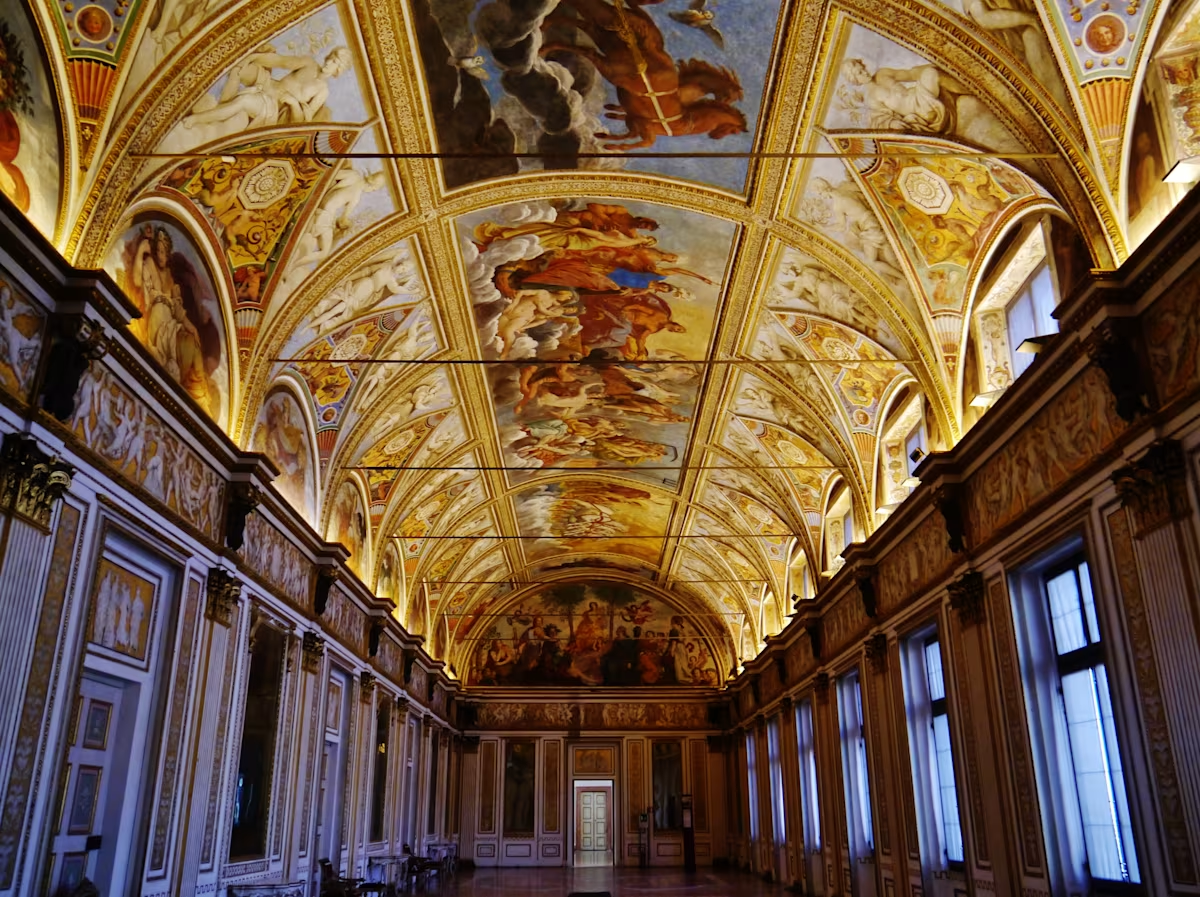
The famous Hall of Mirrors, Ducal Palace, Mantua. At the start of the Habsburg period in the early 1700s, under the governorship of Philip of Hesse-Darmstadt, the palace was extensively refurnished with paintings, sculptures and furnishings from the former ducal residences of the Pico family in Mirandola.
For centuries, Mantua had been a dukedom ruled by the Gonzaga family. The last duke, Ferdinando Carlo IV, had always been more interested in theatres of art than theatres of war, and lost both his possessions and his city to the Austrian Empire. On his death in 1708, Mantua was declared a hereditary duchy of the House of Austria, and by 1714 it was in the governing hands of the aforementioned Prince Philip. Like a giant hermit crab, Philip’s court moved into a new home, a palace stripped of its artwork and furniture; however, the prince had grand schemes to restore its former artistic glory, especially when it came to music and theatre. Such was his enthusiasm and investment that in 1735 he was recalled to Vienna on account of his extravagance. Vivaldi would be long gone by then, but on his arrival in spring 1718 he could enjoy the prince’s considerable injection of cash into the arts. It would prove to be the only time that he took a court position and the only regular employment he held outside Venice. He stayed little more than two years, leaving on excellent terms in 1720 when the court went into mourning for the Dowager Empress Eleonore Magdalene and all the operas were cancelled. However, in these two years, Mantua offered connections to other courts, a lifelong link to Vienna, and the hands-on experience Vivaldi longed for.
As Mantua’s maestro di cappella da camera (director of chamber music), Vivaldi was the man in charge of everything, from daily instrumental chamber music to large-scale celebrations and, within a year, opera. It was a secular post, so he didn’t write any church music in Mantua, but his compositions flowed freely for the twenty-three members of the court orchestra.
[. . .] Mantua’s rural location plays into the musical landscape of Vivaldi’s seasonal violin concertos, combined perhaps with his memories of Venice. Add to this his commitment to set designs for Mantua’s Archducal Theatre; Vivaldi brought the artist Antonio Meneghini with him from Venice, and the pair experimented with new visual effects in his Mantuan productions. This artistic role brought Vivaldi new perspectives, and in The Four Seasons we can see him easily bridging the gap between the action on stage and the musicians in the pit. The solo violinist takes a position previously held by a storytelling singer, and the string band become set designers, painters, architects of special effects. The fact that Vivaldi borrowed music from his operas for these concertos and vice versa shows how his musical mind flitted with ease between instrumental and vocal genres, and how visually he conceived The Four Seasons. For example, he adapted the opening swinging melody of Spring for his 1724 opera Il Giustino, where it appears in the same key and with the same uplifting effect, forming the Sinfonia to Scene 5 of Act I, a vision of the Goddess Fortune as she makes her entrance and steps out into the light.
Assuming Vivaldi was living in Mantua when he wrote The Four Seasons, it stands to reason that the concertos were played there. [. . .] We know for certain that an early performance of them made an impression on the Bohemian Count Wenzel von Morzin. He and his sons made stops in both Venice and Mantua on their Grand Tour of Italy, and heard what must have been a prototype version of The Four Seasons with Vivaldi as soloist. As a result of his seasonal encounter with Vivaldi, Morzin took a score of The Four Seasons – quite the Grand Tour souvenir – home to his palace in the Malá Strana district of Prague, where he maintained an orchestra of some ten to twelve players. In return for this and the promise of more concertos, Morzin made Vivaldi his maestro di musica in Italia, and records show that throughout the 1720s Vivaldi sent him numerous creations in return for handsome sums of money.
Performances spread far and wide once the concertos were published in 1725 in Amsterdam. They quickly became test pieces for leading violinists of the age and instantly appealed to the duelling virtuosos of La Serenissima. Vivaldi’s fellow Venetian Giuseppe Tartini set up a violin school there in 1726, attracting students from all over Europe including Domenico Ferrari and André-Noël Pagin, and anyone who came to study with him would have encountered the solo parts of The Four Seasons as they became central to the standard repertoire of the day.
While Tartini anchored himself in Venice, Vivaldi was on the move. After a couple of years in Mantua, he briefly returned home before travelling to Rome, where he spent three Carnevale seasons, played for the Pope, and met Corelli’s former patron Cardinal Pietro Ottoboni. Ottoboni would play a significant part in the dissemination of The Four Seasons, as we shall see when we come to look at Summer, and before that, the concertos became known in Rome after Vivaldi took the opportunity to furnish the cardinal with bespoke manuscript parts.
By 1752, the Berlin-based composer and flautist Johann Joachim Quantz was writing that Vivaldi ‘supplied almost half the world with his concertos’, which might have been a slight exaggeration, but perhaps it felt that way. Not only did they find their own routes across Europe in print, but Vivaldi’s excellent connections ensured they became known to a whole network of musicians, headed up by the leader of the renowned Dresden court orchestra, Johann Georg Pisendel. Pisendel had originally studied with the violin virtuoso Giuseppe Torelli before settling in Dresden in 1712, and during a tour to Venice and Rome in 1717–18 he caught up with Vivaldi. Pisendel was interested in both violin and composition and eventually returned to Dresden with numerous concertos by Vivaldi that he’d copied out while studying with him. Over the years, he acquired many more, and continued to champion the Italian composer’s music after his return to Dresden, where he became leader of the court orchestra in 1729.
It’s very likely The Four Seasons was played in Dresden with Pisendel as soloist, and that Johann Sebastian Bach heard the work there. Almost as confirmation, in 1726, the year after the concertos were published, an echo of the first movement of Spring appeared in Bach’s church cantata Wer weiß, wie nahe mir mein Ende? (Who knows how near to me my end?) BWV 27. Vivaldi’s theme is clearly identifiable in the opening alto aria with accompanying organ and oboe da caccia, setting the words: ‘Welcome! I will say when Death steps to my bed. I will joyfully follow, when he calls, into the tomb, I will take all my troubles with me.’ That Bach should choose to refer to Spring when setting words about death might appear a little contradictory, but his Lutheran faith made him see death not as the end but a new beginning.
JS Bach – Aria 'Willkommen! will ich sagen, wenn der Tod ans Bette tritt' from Cantata: Wer weiß, wie nahe mir mein Ende, BWV 27 | Matthew White (alto), Collegium Vocale Gent, Philippe Herreweghe
If Vivaldi’s fame and The Four Seasons were rapidly spreading through Saxony, he had really taken off in France. A veritable Vivaldi fever gripped the French capital, and captivated both court and king. Vivaldi was heralded in the Mercure de France as: ‘le plus habile compositeur qui soit à Venise’ (the most accomplished composer in Venice), and these concertos further propelled his success. In 1725, their year of publication, the Concert Spirituel was established. One of the first public concert series, it was designed to provide entertainment during the Easter fortnight and similar religious holidays, when other venues such as the Paris Opéra were closed. The Concert Spirituel’s programmes featured sacred choral works and virtuosic instrumental pieces, so Vivaldi’s recently published seasonal concertos fitted the bill perfectly. Records show that audiences had to wait until February 1728 for a performance of the full set, but as testament to their immediate popularity Spring and Summer were heard again two months later, and Spring alone some twelve times over the next few decades.
Spring was a particular French sensation. King Louis XV himself requested to hear it in 1730, when it was played at a concert by a band made up of members of the nobility. There was something about this music that captured the Parisian vogue for optimism – and held it for an unusually long time, too. In 1739 Nicolas Chédeville published – under his own name – Le printems ou les saisons amusantes – concertos d’Antonio Vivaldy [sic.] (Spring or the Seasons of Amusement – Antonio Vivaldi’s Concertos), arranged for musettes (bagpipes) and hurdy-gurdies, with accompanying parts for violin, flute and continuo. Really playing up the pastoral associations with more traditional shepherds’ instruments, Chédeville’s version comprised half a dozen three-movement mash-ups of The Four Seasons with Vivaldi’s other op. 8 concertos, but crucially left out any disagreeable depictions of harshness or anxiety. Chédeville was keen to reframe the seasons to reflect the general French attitude, which exaggerated the sunnier aspects of the year, so sprightly spring, as opposed to stormy summer, was brought to the fore. Even by 1775 this feeling was still in the ether as the composer, writer and philosopher Jean-Jacques Rousseau published a version of Spring for unaccompanied flute.
Chédeville – Le printemps ou Les saisons amusantes - concertos d'Antonio Vivaldy [sic.] | Ensemble Danguy, Tobie Miller
Perhaps the most eyebrow-raising of all the French spin-off performances and arrangements of the time was Michel Corrette’s 1765 grand motet Laudate Dominum de coelis (Praise the Lord from the heavens), in which he set words to Spring to bring the concerto into a religious sphere. The first two movements (of six) are Corrette’s original music, hinting at what’s to come with pastoral motifs and intricate wind and string parts. But then, in the first full chorus, the strains of Spring begin. Singing ‘Laudate Dominum’ (Praise the Lord), the voices and instruments present every note of Vivaldi’s score, and Corrette adds more. He includes harmonies Vivaldi only implied, filling out the textures and occasionally meandering off into new pastures as the mood takes him – especially with more intimate break- out vocal solos and duets. However, the very identifiable music of the concerto keeps returning with full effect, and includes all the virtuoso solo violin lines in the string parts. In the middle movement, ‘Montes et omnes colles’ (The mountains and all the hills), Corrette sets his take on the sleeping shepherd for tenor and chorus; there’s no sign of the dog in the text, but it’s still there in the music. Then, after two more solo numbers, the full chorus strikes up the final movement, mirroring the celebration of Vivaldi’s nymphs and shepherds with young and old men and women praising the name of the Lord.
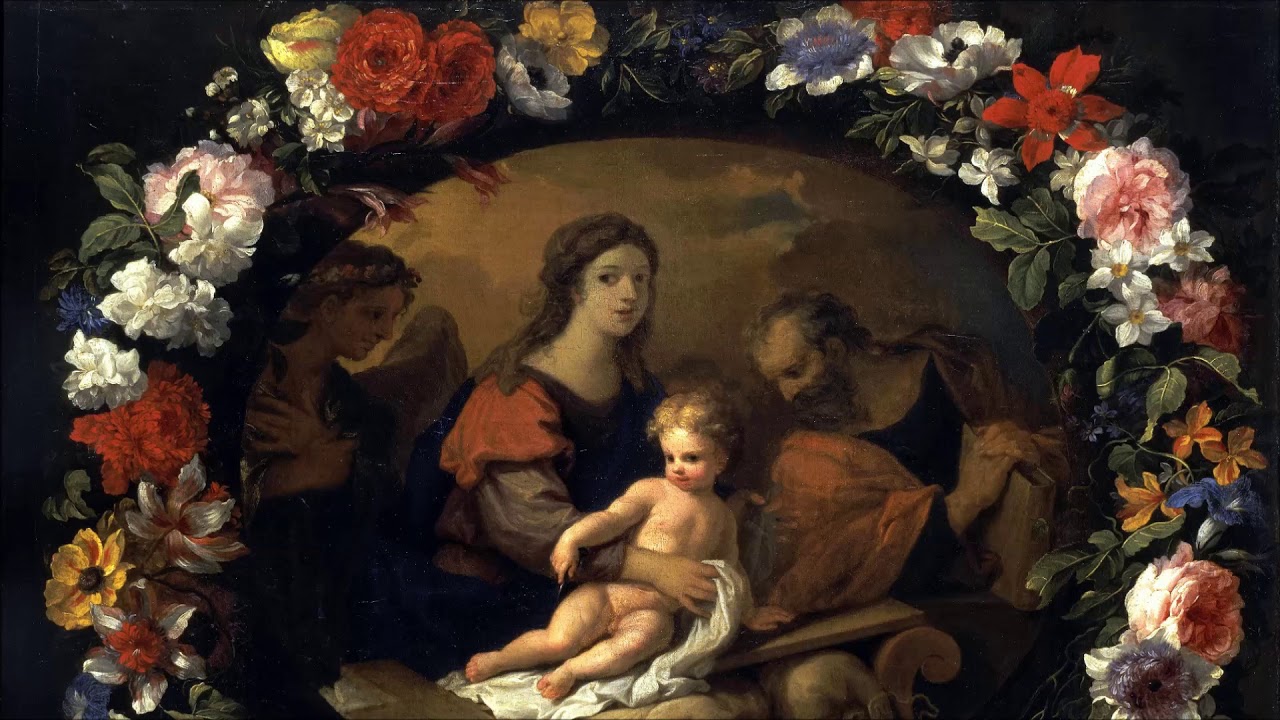 ▶
▶Corrette – Grand Motet: Laudate Dominum after Vivaldi's ‘Spring’ | Le Parlament de Musique, Martin Gester
It’s fair to say Vivaldi took France by storm – in spirit and music, though not in person. In July 1723, still two years before The Four Seasons appeared in print, Antonio returned to Venice from his post-Mantuan travels, and secured a new contract with the Pietà. He agreed to resume his position as maestro de’ concerti (director of concertos), and supply two concertos every month, by post if travelling. Vivaldi agreed to direct rehearsals and performances, and also instigated a commitment to purchasing two new instruments each month to increase the range and scope of the orchestra. Writing in 1739, the French jurist and polymath Charles de Brosses recalled hearing the women play violin, lute, organ, oboe, cello and bassoon, concluding, ‘There is no instrument, however unwieldy, that can frighten them.’ Vivaldi’s concertos were the mainstay of concerts given on weekends and solemn feast days, which not only brought in a good deal of money for the Pietà but were a focal point in the Venetian social calendar. The Pietà’s accounts confirm payment for over 140 concertos throughout the 1720s, but were The Four Seasons among them? No information about the pieces survives in the archives, but it’s unlikely Vivaldi would have withheld them, especially as they spearheaded his next publication. You can just imagine him playing his concertos with the women in his charge on his return to the city – a postcard from his years away in Mantua. Personally, I like to imagine him selecting four soloists from among the women in future performances too – a living allegory of each season.
This excerpt has been published with kind permission from Faber & Faber and may not be reproduced elsewhere. The videos, audio tracks and images featured above do not form part of the book; Continuo Connect has added these for illustrative purposes.
Special offer for Continuo Connect readers
Continuo Connect readers can get 20% off when purchasing the book from the Faber & Faber website. Simply add the item(s) to your basket, proceed to checkout, enter CLASSICAL20 in the ‘Order Summary’ field, and click ‘Apply Coupon.’ The total should update automatically.
The discount applies to the hardback edition only; it does not apply to the e-book, audiobook, or any other items in the basket. Shipping to UK and EU only. UK orders under £35 will incur a £3 standard shipping fee. EU standard delivery cost calculated at checkout. The offer ends 31 August 2026, and Faber & Faber reserves the right to end or extend it at any time.
Share this
Keep reading
From kitchen to cathedral: the accidental art of festival-making
Rachel Podger, a Continuo Foundation Patron, has spent two decades creating a festival as open-hearted and inquisitive as her own music-making. She tells Ashutosh Khandekar how the Brecon Baroque Festival evolved almost by chance.
In conversation: Samuel Ng
Continuo Connect catches up with Samuel Ng, cellist and gamba player with the newly formed Republic of Viols and Liturina.
The Best of Rachel Podger
This playlist celebrates 'the unsurpassed British glory of the baroque violin' (The Times) - that is of course Rachel Podger.