

Find A Concert
A Woman’s Instrument
The Art of the Renaissance Lute Player
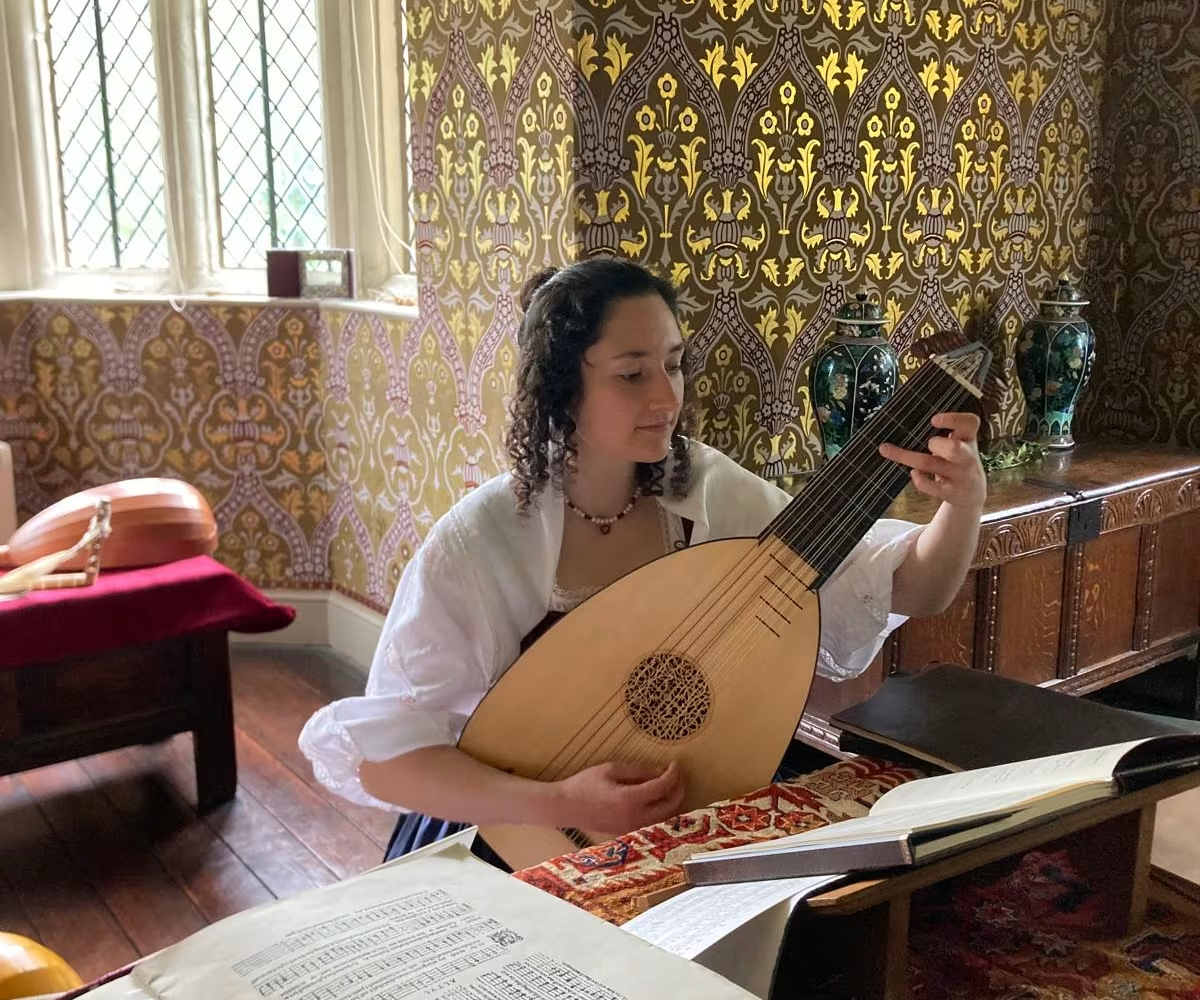
Audiences today are often surprised to learn that the lute was considered 'a woman's instrument' in the Renaissance – yet these were the exact words used by the 17th-century musician and author Thomas Mace in his book, Musick's Monument (1676), which contains a valuable and detailed description of 17th-century musical practices. The skilful playing of the lute was deemed a highly desirable accomplishment at this time, and this made it an especially useful tool for unmarried women who sought wealthy husbands.
The scholar Robert Burton (1577–1640) even remarked it was 'the way their parents think to get them husbands', because 'to hear a fair young gentlewoman play [the lute] must needs be a great enticement'. In the early 17th century, many parents spared no expense to secure the best musical educations for their daughters. Many young women took lessons from the most famous lutenists of their day, including the celebrity composer John Dowland (1563–1626). Surviving lute lesson books show Dowland's handwriting alongside that of his female students, whose personal books preserve Dowland's most popular music, as well as several unique pieces the composer wrote out to specifically test his talented female students.
Sara strives to demonstrate the art of the Renaissance female lute player to new audiences today. Her performance will include readings from historical texts and letters, which provide fascinating insights about the lute in Renaissance England. These readings are woven seamlessly into a carefully chosen programme of pieces by celebrity lutenist-composers (such as John Dowland and John Johnson), as well as many exquisite anonymous pieces, all sourced from female-produced and female-owned lute books.
 Lunchtime Concerts at St John’s, Whitby
  Fri, 14 Aug 2026
 St John the Evangelist, Whitby
 11:45am
 Free (retiring collection)
Full Event Details

Lutenist Sara Salloum invites you to step back in time and experience the captivating scenes of a young woman practising and performing her lute in early 17th-century England. With meticulously reconstructed period instruments and dressed in specialist tailor-made Renaissance-period clothing, Sara will perform music from the female-produced lute books which survive from England's golden age of lute music (c.1590–1630).
Audiences today are often surprised to learn that the lute was considered 'a woman's instrument' in the Renaissance – yet these were the exact words used by the 17th-century musician and author Thomas Mace in his book, Musick's Monument (1676), which contains a valuable and detailed description of 17th-century musical practices. The skilful playing of the lute was deemed a highly desirable accomplishment at this time, and this made it an especially useful tool for unmarried women who sought wealthy husbands.
The scholar Robert Burton (1577–1640) even remarked it was 'the way their parents think to get them husbands', because 'to hear a fair young gentlewoman play [the lute] must needs be a great enticement'. In the early 17th century, many parents spared no expense to secure the best musical educations for their daughters. Many young women took lessons from the most famous lutenists of their day, including the celebrity composer John Dowland (1563–1626). Surviving lute lesson books show Dowland's handwriting alongside that of his female students, whose personal books preserve Dowland's most popular music, as well as several unique pieces the composer wrote out to specifically test his talented female students.
Sara strives to demonstrate the art of the Renaissance female lute player to new audiences today. Her performance will include readings from historical texts and letters, which provide fascinating insights about the lute in Renaissance England. These readings are woven seamlessly into a carefully chosen programme of pieces by celebrity lutenist-composers (such as John Dowland and John Johnson), as well as many exquisite anonymous pieces, all sourced from female-produced and female-owned lute books.
Venue Details & Map
Location
St John the Evangelist, Whitby
Brunswick Street, Whitby YO21 1BL