

Royal Baroque
Sounds of Wonder: Stylus Fantasticus
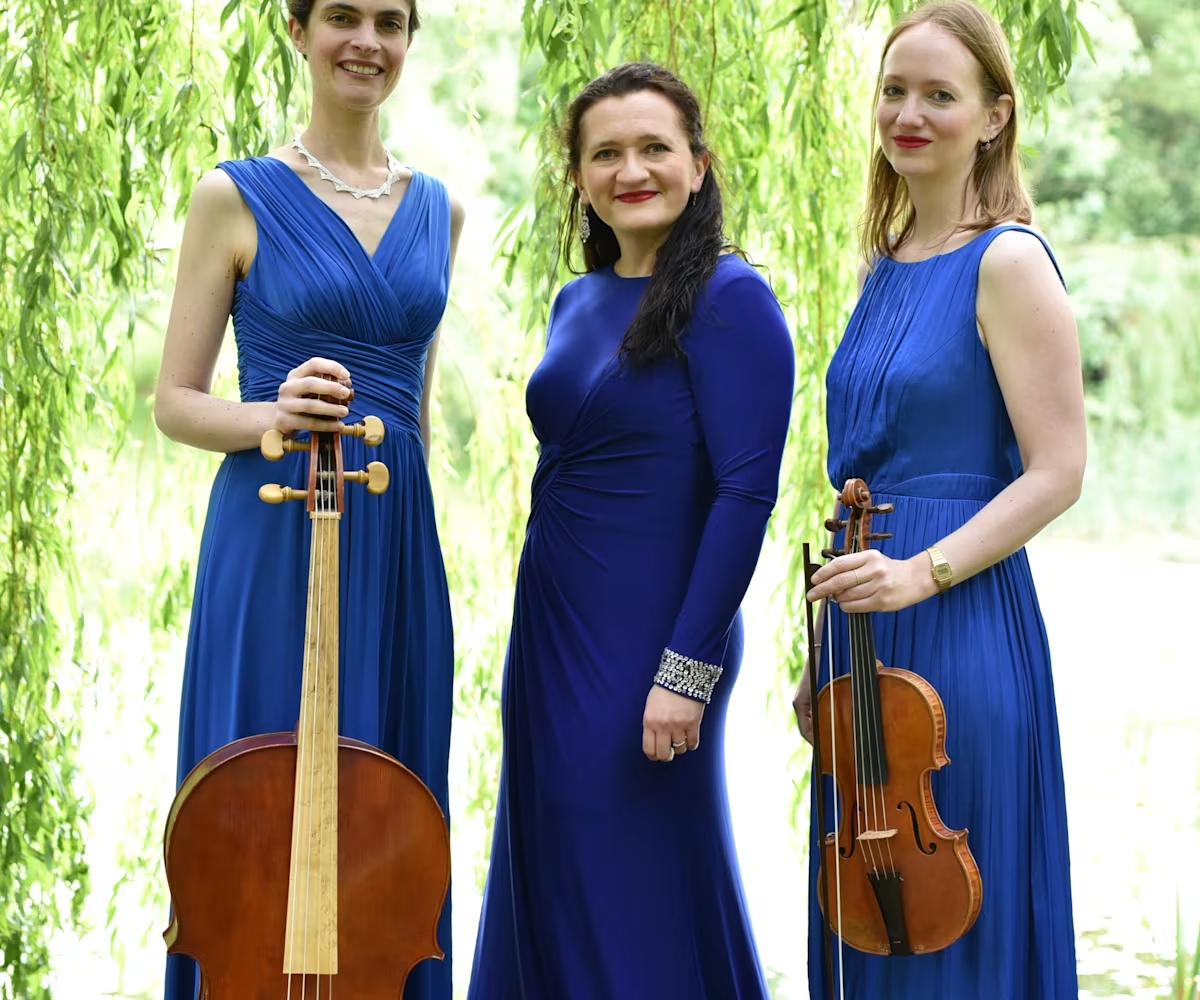
The works by Buxtehude and Heinrich Ignaz Franz Biber in this programme are written in the stylus phantasticus, a highly expressive and improvisatory style characterised by rhetorical gestures, dramatic contrasts, and formal freedom. Biber's Sonata Representativa is a particularly striking and early example of programmatic music, depicting a series of animals through vivid musical characterisation and instrumental effects. Set alongside these works, Handel's sonatas reveal a contrasting aesthetic of balance, clarity, and melodic elegance. Together, the programme highlights a vibrant period of stylistic exchange at the turn of the 18th century, tracing the evolution from imaginative freedom toward emerging Baroque formal refinement.
Programme:
Buxtehude Trio Sonata in D minor, Op. 1, BuxWV 257
Biber Sonata Representativa in A major
Handel Sonata in G minor, HWV 364
Handel Sonata in D major, HWV 371
Buxtehude Sonata in D major for viola da gamba and continuo, BuxWV 268
Buxtehude Trio Sonata in G minor, Op. 2 No. 3, BuxWV 261
 Buckingham Music Festival
  Mon, 13 Jul 2026
 Radcliffe Centre, Buckingham
 7:30pm
 £20
£20
Full Event Details

Dietrich Buxtehude was one of the most influential composers of the late 17th century, admired by his contemporaries and revered by later figures such as Johann Sebastian Bach and George Frederic Handel. From his post at the Marienkirche in the Free Imperial City of Lübeck, he enjoyed an exceptional degree of artistic freedom, shaping a career that became a model for later Baroque masters. In 1673, Buxtehude revitalised the celebrated Abendmusik concerts, attracting musicians from across Europe. His reputation was such that in 1703 both Handel and Johann Mattheson travelled to Lübeck to meet him, and in 1705 the young JS Bach famously walked over 400 kilometres to hear him perform and to 'comprehend one thing and another about his art.'
The works by Buxtehude and Heinrich Ignaz Franz Biber in this programme are written in the stylus phantasticus, a highly expressive and improvisatory style characterised by rhetorical gestures, dramatic contrasts, and formal freedom. Biber's Sonata Representativa is a particularly striking and early example of programmatic music, depicting a series of animals through vivid musical characterisation and instrumental effects. Set alongside these works, Handel's sonatas reveal a contrasting aesthetic of balance, clarity, and melodic elegance. Together, the programme highlights a vibrant period of stylistic exchange at the turn of the 18th century, tracing the evolution from imaginative freedom toward emerging Baroque formal refinement.
Programme:
Buxtehude Trio Sonata in D minor, Op. 1, BuxWV 257
Biber Sonata Representativa in A major
Handel Sonata in G minor, HWV 364
Handel Sonata in D major, HWV 371
Buxtehude Sonata in D major for viola da gamba and continuo, BuxWV 268
Buxtehude Trio Sonata in G minor, Op. 2 No. 3, BuxWV 261
Venue Details & Map
Location
Radcliffe Centre, Buckingham
University of Buckingham, Church Street, Buckingham MK18 1EG