
Orchestra of the Age of Enlightenment
Vienna 1897: Brahms' Last Concert
featuring Steven Isserlis (cello) and Maxim Emelyanychev (conductor)
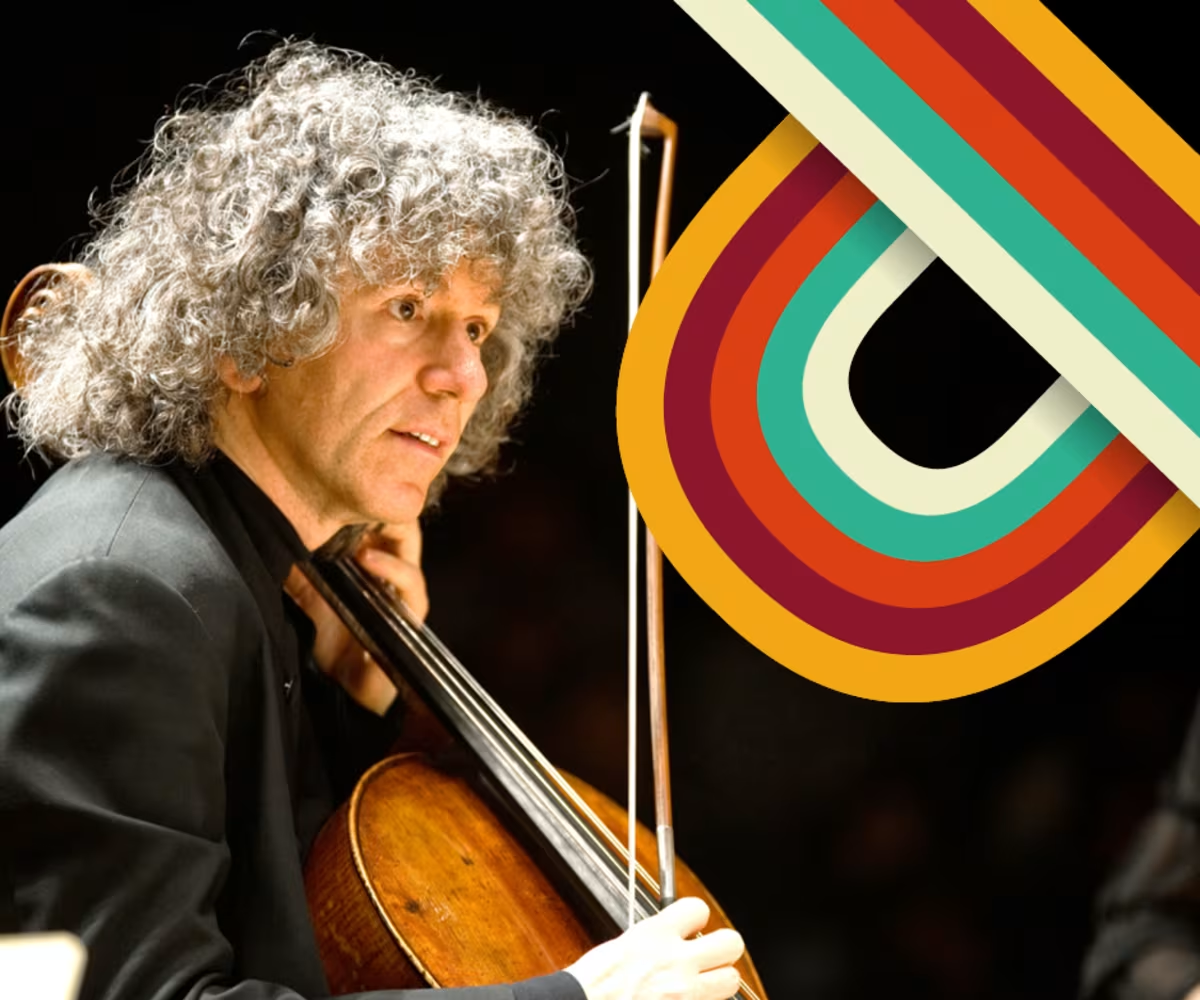
Tonight’s event “reconstructs” the programme of a concert on 7 March 1897. It was the last time Brahms attended a public performance of his own music. That evening the Vienna Philharmonic, conducted by Hans Richter, were to play the three pieces here in what may seem like a curious order to modern audiences (particularly given the ending of ‘La Chasse’…)
Vienna in 1897 was one of the world’s great cultural capitals and the centre of a fractious empire divided along ethnic and linguistic lines. At the end of the century it was a rapidly expanding city moving towards more liberal attitudes with the emergence of an anti-commercial artistic movement led by Gustav Klimt. In musical circles, Mahler was appointed as Music Director at the Court Opera and Brahms remained a voice of authority. He had done much to promote Dvořák as his successor, although the Czech composer had resisted a permanent move.
"I love the Dvořák Concerto because it is a masterpiece - one that contains everything: beauty, heroism, poetry, joy, pathos, profundity. It is the work of a master at the height of powers, who takes us on a powerful emotional journey." - Steven IsserlisBrahms’ Fourth Symphony was premiered in 1885 when Brahms was in his early fifties. It is music that “is some of the darkest and deepest in the 19th century” according to Tom Service in The Guardian. In fact, Brahms’ inner circle had advised him against releasing it publicly and it was only the positive reception that it received at its first performance in Thuringia that gave him the confidence to put it out into the world. At the concert in 1897, there was reportedly rapturous applause after each movement.
Steven Isserlis says of Dvořák’s Cello Concerto in B Minor that it “contains everything: beauty, heroism, poetry, joy, pathos, profundity. It is the work of a master at the height of powers, who takes us on a powerful emotional journey. It was my favourite piece of music when I was about 11; but I think that I love it even more now!”
Haydn’s career had bridged the gap between the worlds of the late Baroque and the early Romantic era. The Symphony No. 73 dates from 1782 and a century later, whilst not as in fashion as he once was, his music was still able to take its place alongside Vienna’s modern masters in the orchestral repertoire. Brahms undoutedly saw himself as musical successor to Haydn – indeed, he had paid tribute to him with his Variations on a Theme of Haydn (although it turns out the theme may not be by Haydn).
 Southbank Centre
 Wed, 24 June 2026
 Queen Elizabeth Hall, London
 7:00pm
 £17-£95 | £11 students
Full Event Details

“Today you will hear a real piece!” So declared Brahms to his companion of Dvořák’s Cello Concerto before attending what we believe was his last concert, which also included his own Fourth Symphony. Two good friends of the OAE, Steven Isserlis and Maxim Emelyanychev, join for the finale of our season in celebration of the OAE’s 40th Anniversary.
Tonight’s event “reconstructs” the programme of a concert on 7 March 1897. It was the last time Brahms attended a public performance of his own music. That evening the Vienna Philharmonic, conducted by Hans Richter, were to play the three pieces here in what may seem like a curious order to modern audiences (particularly given the ending of ‘La Chasse’…)
Vienna in 1897 was one of the world’s great cultural capitals and the centre of a fractious empire divided along ethnic and linguistic lines. At the end of the century it was a rapidly expanding city moving towards more liberal attitudes with the emergence of an anti-commercial artistic movement led by Gustav Klimt. In musical circles, Mahler was appointed as Music Director at the Court Opera and Brahms remained a voice of authority. He had done much to promote Dvořák as his successor, although the Czech composer had resisted a permanent move.
"I love the Dvořák Concerto because it is a masterpiece - one that contains everything: beauty, heroism, poetry, joy, pathos, profundity. It is the work of a master at the height of powers, who takes us on a powerful emotional journey." - Steven Isserlis
Brahms’ Fourth Symphony was premiered in 1885 when Brahms was in his early fifties. It is music that “is some of the darkest and deepest in the 19th century” according to Tom Service in The Guardian. In fact, Brahms’ inner circle had advised him against releasing it publicly and it was only the positive reception that it received at its first performance in Thuringia that gave him the confidence to put it out into the world. At the concert in 1897, there was reportedly rapturous applause after each movement.
Steven Isserlis says of Dvořák’s Cello Concerto in B Minor that it “contains everything: beauty, heroism, poetry, joy, pathos, profundity. It is the work of a master at the height of powers, who takes us on a powerful emotional journey. It was my favourite piece of music when I was about 11; but I think that I love it even more now!”
Haydn’s career had bridged the gap between the worlds of the late Baroque and the early Romantic era. The Symphony No. 73 dates from 1782 and a century later, whilst not as in fashion as he once was, his music was still able to take its place alongside Vienna’s modern masters in the orchestral repertoire. Brahms undoutedly saw himself as musical successor to Haydn – indeed, he had paid tribute to him with his Variations on a Theme of Haydn (although it turns out the theme may not be by Haydn).
Venue Details & Map
Location
Queen Elizabeth Hall, London
Belvedere Road, London, SE1 8XX
Related upcoming events
Monteverdi: L'Orfeo
- Sun, 14 June 2026
- Glyndebourne Festival Opera, Sussex
- 3:50pm
- £30 - £280
- Glyndebourne Festival Opera
- ➕12 other performances

The French Connection
- Sat, 4 July 2026
- Acland Burghley School, London NW5
- 2:30pm
- £25
- The Secret Garden Cafe Concerts

Mozart: Die Entführung aus dem Serail
- Fri, 31 July 2026
- Glyndebourne Festival Opera, Sussex
- 3:50pm
- £30 – £265
- Glyndebourne Festival Opera
- ➕1 other performance