

Find A Concert
Who was John Dowland?
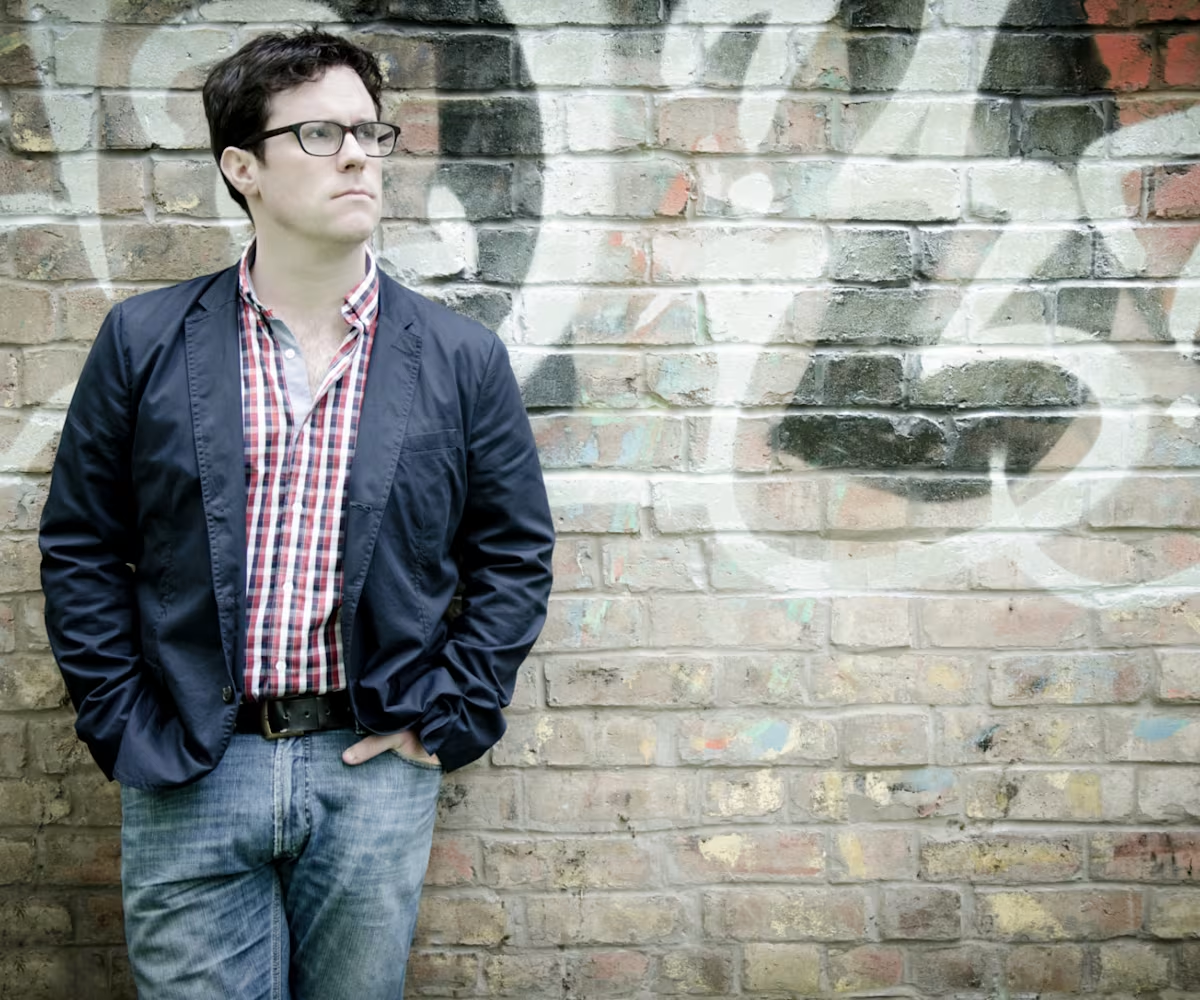
Semper Dowland semper dolens (always Dowland, always mournful) was his motto. And yet Thomas Fuller claimed, 'A cheerful person he was, passing his days in lawful merriment’ (The History of the Worthies of England, 1662). Was the melancholy persona real, along the lines of Burton’s influential Anatomy of Melancholy, or was it a carefully constructed 'brand'?
We can imagine his voice in the extremely personal texts, some of which may (but also may not) be written by him. The more Dowland appears to be present, the more he disappears, his secrets closely guarded. In 1595, he wrote a long, self-exculpating letter to Sir Robert Cecil, claiming accusations of Catholicism had unfairly prejudiced the Queen against him. As well as Italian songs that he may have given his son Robert to publish in A Musicall Banquet (1610), tonight will feature music by his contemporary William Byrd, whose recusancy was maintained in a more transparent manner, despite the risks in Elizabethan England.
You never quite know where you are with Dowland – the intensity of his secrets, hints, and symbols remains an enduring part of his appeal.
★★★★★ 'The sheer expressivity of [Nicholas Mulroy’s] singing was a thing of wonder here' – Simon Thompson, The Times
'A triumph […] Kenny’s performances are superb, technically assured in the trickiest variations, and always with a sense of spontaneous re-creation' – Instrumental Choice, BBC Music Magazine
 Oxford Early Music Weekend
 Sun, 21 Jun 2026
 Grove Auditorium, Magdalen College
 6:00pm
 £5 - £20
Full Event Details

Oxford Festival of the Arts continues its celebration of the 400th anniversary of John Dowland with an evening with two of the most respected and exceptional musicians performing Elizabethan music today.
Semper Dowland semper dolens (always Dowland, always mournful) was his motto. And yet Thomas Fuller claimed, 'A cheerful person he was, passing his days in lawful merriment’ (The History of the Worthies of England, 1662). Was the melancholy persona real, along the lines of Burton’s influential Anatomy of Melancholy, or was it a carefully constructed 'brand'?
We can imagine his voice in the extremely personal texts, some of which may (but also may not) be written by him. The more Dowland appears to be present, the more he disappears, his secrets closely guarded. In 1595, he wrote a long, self-exculpating letter to Sir Robert Cecil, claiming accusations of Catholicism had unfairly prejudiced the Queen against him. As well as Italian songs that he may have given his son Robert to publish in A Musicall Banquet (1610), tonight will feature music by his contemporary William Byrd, whose recusancy was maintained in a more transparent manner, despite the risks in Elizabethan England.
You never quite know where you are with Dowland – the intensity of his secrets, hints, and symbols remains an enduring part of his appeal.
★★★★★ 'The sheer expressivity of [Nicholas Mulroy’s] singing was a thing of wonder here' – Simon Thompson, The Times
'A triumph […] Kenny’s performances are superb, technically assured in the trickiest variations, and always with a sense of spontaneous re-creation' – Instrumental Choice, BBC Music Magazine
Venue Details & Map
Location
Grove Auditorium, Magdalen College
Oxford OX1 4AU
Related upcoming events
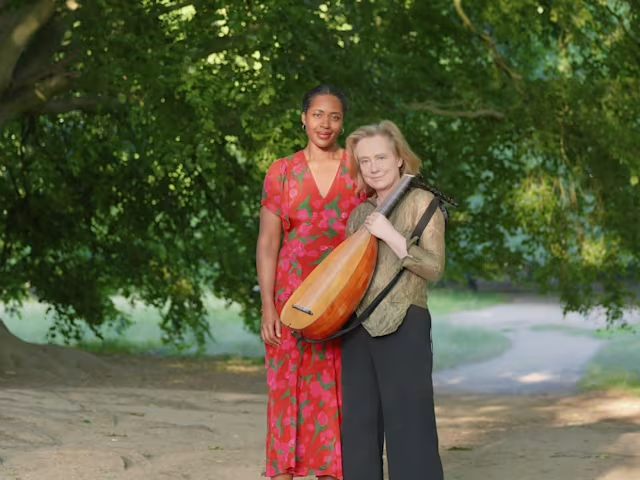
Shut the Gate Against My Thoughts
- Fri, 30 Oct 2026
- Smith Square Hall, London
- 6:00pm
- £15 - £20
- London Festival of Baroque Music

A Play of Passion
- Sun, 1 Nov 2026
- Duke's Hall, Royal Academy of Music, London
- 12:00pm
- £20
- Royal Academy of Music: Resounding Shores
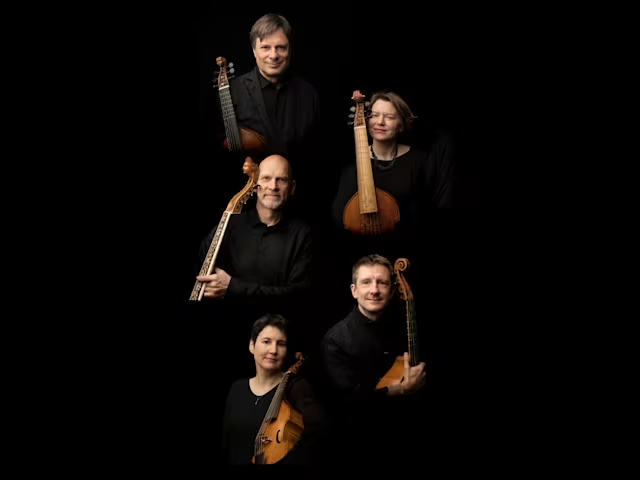
Dowland Lachrimae
- Thu, 12 Nov 2026
- St Michael & All Angels Church, Blackheath
- 7:30pm
- £35 (conc. available)
- London International Festival of Early Music
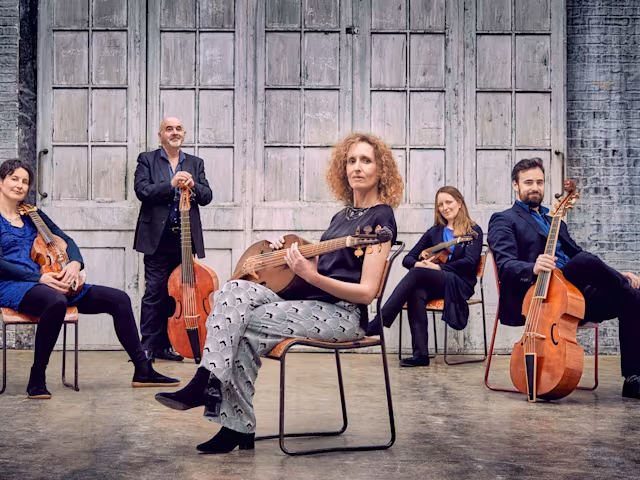
Dowland's Lachrimae
- Tue, 8 Dec 2026
- Stapleford Granary, Cambridge
- 7:45pm
- £12 - £24
- Stapleford Granary