

Find A Concert
Barocco splendente
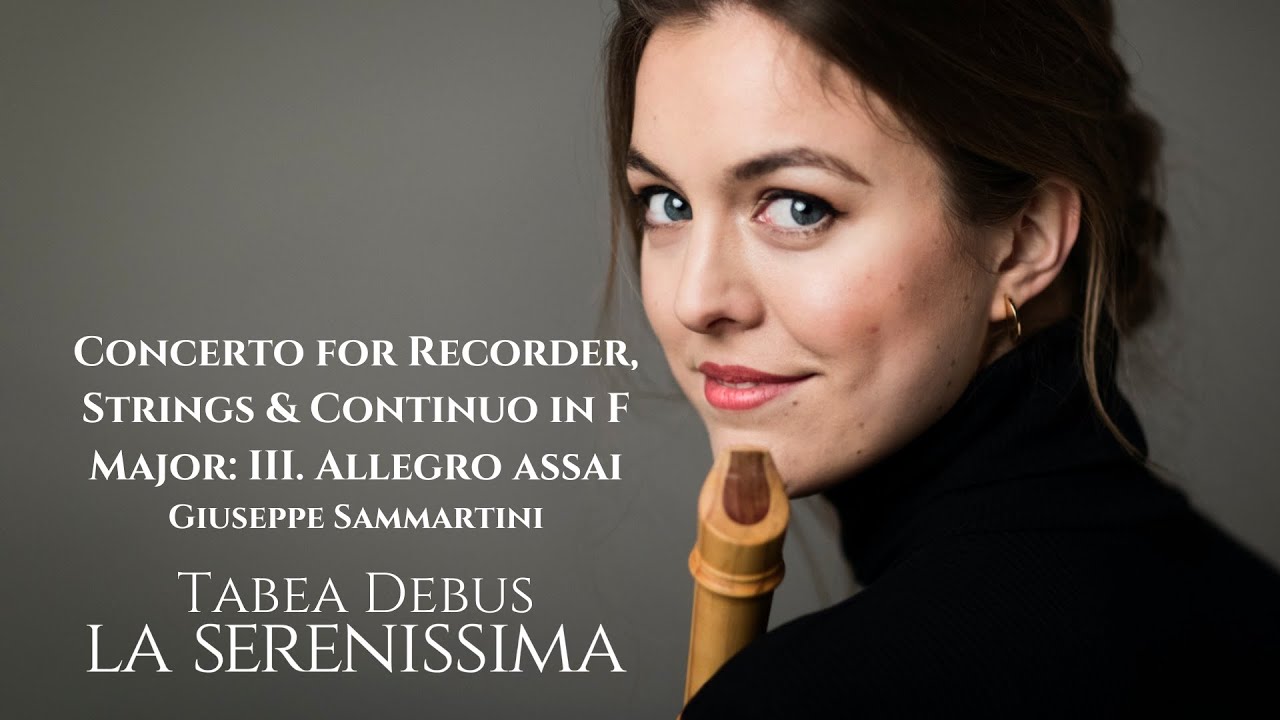
Tabea Debus (recorder), Adrian Chandler (director / violin)

From Venice, Vivaldi shaped the music of the era; in Rome, the violin virtuosos Antonio Montanari and Giuseppe Valentini composed. Their work focused on expressive melodies and dramatic impact. This was new. Previously, the concerto had been invented in Italy, the concertare being the interplay and competition between different instrumental groups or between the full orchestra and soloist. The alternation of solo and full orchestra passages, opulent ornamentation, driving rhythms, and basso continuo accompaniment—all these served to heighten the musical emotion.
This captivated the Germans, including the court conductor Heinichen in Dresden, one of Europe's most important musical centers, and the Prince-Archbishop of Anhalt, Fasch, in the small, elegant residential town of Zerbst. Influenced by Italian music, the two invented virtuosic, yet clear and elegant melodies, orchestrated them colorfully, interspersed the orchestral part contrapuntally, and surprised with their harmonics: "Barocco splendente!"
Tabea Debus, one of the leading international recorder players of her generation, with home bases in Hanover and London, and La Serenissima, the most renowned British ensemble for the music of 18th-century Venice and its related composers, make their program sparkle and dance. "Barocco splendente" is vitality and taste, naturalness and perfection all at once. Thus, Classic FM, Great Britain's leading classical music station, is by no means exaggerating in its praise: "They really put the rock into baroque!"
Joh. Friedrich Fasch (1688-1758):
Concerto for recorder, strings, basso continuo in F major
Johann David Heinichen (1683-1729):
Overture Suite for Strings, Basso Continuo in G Major;
Sinfonia to the Opera "Mario" for Recorder, Strings, Basso Continuo
Antonio Montanari (1676-1737):
Concerto for Flautino, 2 Violins, bc in B-flat major
Giuseppe Valentini (1681-1753):
Concerto XI for 4 violins, viola, cello, basso continuo in A minor, Op. 7
Antonio Vivaldi (1678-1741):
Concerto for recorder, strings, and basso continuo in C minor, RV 441
 Summerwinds münsterland
 Fri, 19 Jun 2026
 Apostelkirche Münster, Germany
 8:00pm
 Kategorie A: 34€, erm. 30 €; Kategorie B: 28 €, erm. 25 €
Full Event Details

“Barocco splendente” – radiant Baroque! The “stile moderne” powerfully conquered the North at that time, starting from Rome, the “Eternal City”, and above all from Venice, which still bears the old nickname “La Serenissima”: the Most Serene, Cheerful, Richest and Most Beautiful.
From Venice, Vivaldi shaped the music of the era; in Rome, the violin virtuosos Antonio Montanari and Giuseppe Valentini composed. Their work focused on expressive melodies and dramatic impact. This was new. Previously, the concerto had been invented in Italy, the concertare being the interplay and competition between different instrumental groups or between the full orchestra and soloist. The alternation of solo and full orchestra passages, opulent ornamentation, driving rhythms, and basso continuo accompaniment—all these served to heighten the musical emotion.
This captivated the Germans, including the court conductor Heinichen in Dresden, one of Europe's most important musical centers, and the Prince-Archbishop of Anhalt, Fasch, in the small, elegant residential town of Zerbst. Influenced by Italian music, the two invented virtuosic, yet clear and elegant melodies, orchestrated them colorfully, interspersed the orchestral part contrapuntally, and surprised with their harmonics: "Barocco splendente!"
Tabea Debus, one of the leading international recorder players of her generation, with home bases in Hanover and London, and La Serenissima, the most renowned British ensemble for the music of 18th-century Venice and its related composers, make their program sparkle and dance. "Barocco splendente" is vitality and taste, naturalness and perfection all at once. Thus, Classic FM, Great Britain's leading classical music station, is by no means exaggerating in its praise: "They really put the rock into baroque!"
Joh. Friedrich Fasch (1688-1758):
Concerto for recorder, strings, basso continuo in F major
Johann David Heinichen (1683-1729):
Overture Suite for Strings, Basso Continuo in G Major;
Sinfonia to the Opera "Mario" for Recorder, Strings, Basso Continuo
Antonio Montanari (1676-1737):
Concerto for Flautino, 2 Violins, bc in B-flat major
Giuseppe Valentini (1681-1753):
Concerto XI for 4 violins, viola, cello, basso continuo in A minor, Op. 7
Antonio Vivaldi (1678-1741):
Concerto for recorder, strings, and basso continuo in C minor, RV 441
 ▶
▶Venue Details & Map
Location
Apostelkirche Münster, Germany
Neubrückenstraße 5, 48155 Münster