

Find A Concert
Bach Easter Oratorio and Ascension Oratorio
with Salisbury Cathedral Choir
First performed in Leipzig in 1725, JS Bach’s Easter Oratorio (BWV 249) was later expanded into its full oratorio form in 1738. Drawn from earlier secular and sacred works and likely set to a libretto by Picander, it tells the Resurrection story through vivid musical dialogues among four Biblical characters. With its festive trumpets, expressive instrumental writing, and dramatic pacing, the Easter Oratorio reveals Bach at his most theatrical and inventive.
First performed in 1738, the Ascension Oratorio (BWV 11) completes Bach’s great cycle of festival oratorios. Combining biblical texts from Luke, Mark, and Acts with poetic and chorale settings, it opens with a brilliant chorus in D major and unfolds across 11 movements rich in symbolism and musical colour. Adapted in part from earlier secular cantatas and scored for a dazzling Baroque ensemble, the work captures the triumph and mystery of Christ’s Ascension with both grandeur and deep emotional resonance
The Orchestral Suite No. 3 in D major (BWV 1068) is among Bach’s most popular instrumental works. Its opening movement is bold and spacious, and the lively dances that follow show his gift for rhythm and character. At its centre is the well-known Air, later famously arranged as the Air on the G String. Its long, unbroken melody and steady pulse have made it one of the most widely recognised pieces of Baroque music.
 Sat, 9 May 2026
 Salisbury Cathedral
 7:30pm
 £10 - £28
Full Event Details

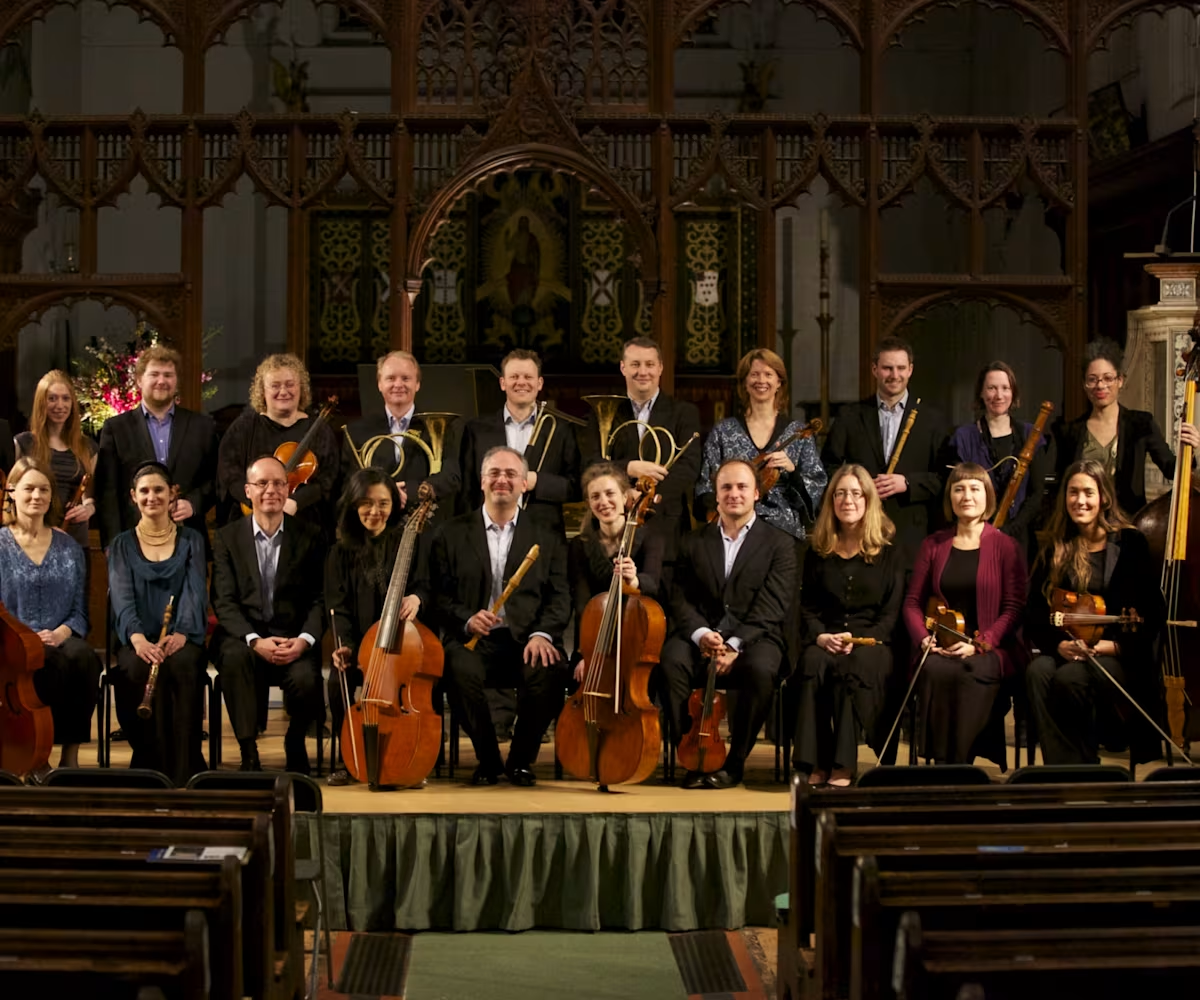
Florilegium joins Salisbury Cathedral Choir and conductor David Halls for a programme of Bach’s music, pairing two celebratory sacred works with one of his most familiar orchestral pieces.
First performed in Leipzig in 1725, JS Bach’s Easter Oratorio (BWV 249) was later expanded into its full oratorio form in 1738. Drawn from earlier secular and sacred works and likely set to a libretto by Picander, it tells the Resurrection story through vivid musical dialogues among four Biblical characters. With its festive trumpets, expressive instrumental writing, and dramatic pacing, the Easter Oratorio reveals Bach at his most theatrical and inventive.
First performed in 1738, the Ascension Oratorio (BWV 11) completes Bach’s great cycle of festival oratorios. Combining biblical texts from Luke, Mark, and Acts with poetic and chorale settings, it opens with a brilliant chorus in D major and unfolds across 11 movements rich in symbolism and musical colour. Adapted in part from earlier secular cantatas and scored for a dazzling Baroque ensemble, the work captures the triumph and mystery of Christ’s Ascension with both grandeur and deep emotional resonance
The Orchestral Suite No. 3 in D major (BWV 1068) is among Bach’s most popular instrumental works. Its opening movement is bold and spacious, and the lively dances that follow show his gift for rhythm and character. At its centre is the well-known Air, later famously arranged as the Air on the G String. Its long, unbroken melody and steady pulse have made it one of the most widely recognised pieces of Baroque music.
Venue Details & Map
Location
Salisbury Cathedral
Salisbury, Wiltshire, SP1 2EF
 Early Music at Wigmore Hall