

Anna Stegmann | Corina Marti
Ganassi’s Vision of the Human Voice
Part of the Sypert Early Music Concert Series
This programme explores that tradition within the rich musical culture of 16th-century Venice, where vocal polyphony and improvisation flourished. From the lyrical simplicity of the frottola to the intricate textures of Franco-Flemish composers, these works invite transformation through instrumental interpretation. Ganassi’s vision unites them: music as persuasive, expressive utterance.
Through this lens, instrumental performance becomes a living language, where breath, imagination, and individuality give voice to written notes, continuing a practice that remains vital and eloquent today.
The harpsichord used in this concert is an original example from the University of Edinburgh's Musical Instrument Collection.
The programme includes original works by Tromboncino, Gombert, Cara, Willaert, and others with diminutions in the style of Silvestro Ganassi.
This series of concerts is generously supported by George and Joy Sypert.
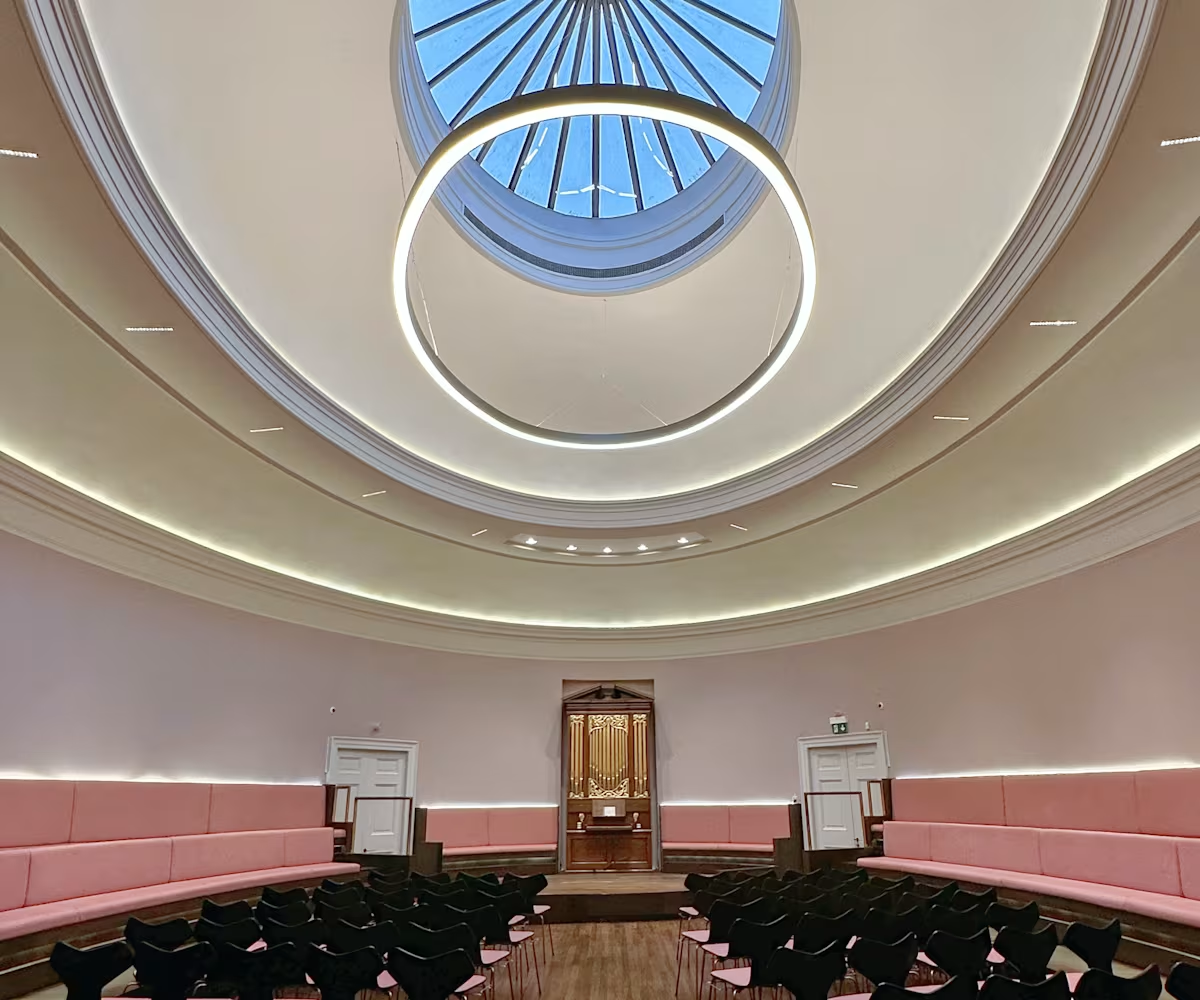
 St Cecilia's Hall
 Sat, 13 Jun 2026
 St Cecilia's Hall, Edinburgh
 7:30pm
 £8 - £23
Full Event Details

Music in the 16th century was closely connected to the human voice, even when played on instruments. The art of diminution, ornamenting a simple line, allowed performers to shape music with expression and individuality. In La Fontegara (1535), Silvestro Ganassi presents the recorder not just as an instrument but as a means of speech, capable of expressing a variety of nuances through graces and diminutions. In his treatise, diminutions become more than decoration—they are gestures of rhetoric, bringing lines to life.
This programme explores that tradition within the rich musical culture of 16th-century Venice, where vocal polyphony and improvisation flourished. From the lyrical simplicity of the frottola to the intricate textures of Franco-Flemish composers, these works invite transformation through instrumental interpretation. Ganassi’s vision unites them: music as persuasive, expressive utterance.
Through this lens, instrumental performance becomes a living language, where breath, imagination, and individuality give voice to written notes, continuing a practice that remains vital and eloquent today.
The harpsichord used in this concert is an original example from the University of Edinburgh's Musical Instrument Collection.
The programme includes original works by Tromboncino, Gombert, Cara, Willaert, and others with diminutions in the style of Silvestro Ganassi.
This series of concerts is generously supported by George and Joy Sypert.
Venue Details & Map
Location
St Cecilia's Hall, Edinburgh
50 Niddry Street, Edinburgh EH1 1LG