
Find A Concert
Alex Rolton
The Baroque Cello
Bach Cello Suites: Concert #1
There are therefore uncertainties about dates but also – more importantly – about interpretation. Other questions include the player for whom he might have written them (perhaps himself – although there's only limited evidence he played cello – or for another at the Köthen court) and even the actual instrument he wrote for.
But perhaps the most striking thing of all is that they were largely forgotten and unplayed until about a century after Bach's death, when the first published edition emerged. And they only really entered the public domain with Casals' 1930s recordings, by which time detailed knowledge of early 18th-century performance practice in Germany (and indeed elsewhere) had largely dissipated.
So assumptions made today about this music have to remain just that – assumptions – and presenting the Suites in three versions therefore seemed a useful way of relating to the strange history of these timeless masterpieces – not timeless in an abstract sense but rather that they've carried a number of both practical and historical possibilities with them ever since they entered the repertoire.
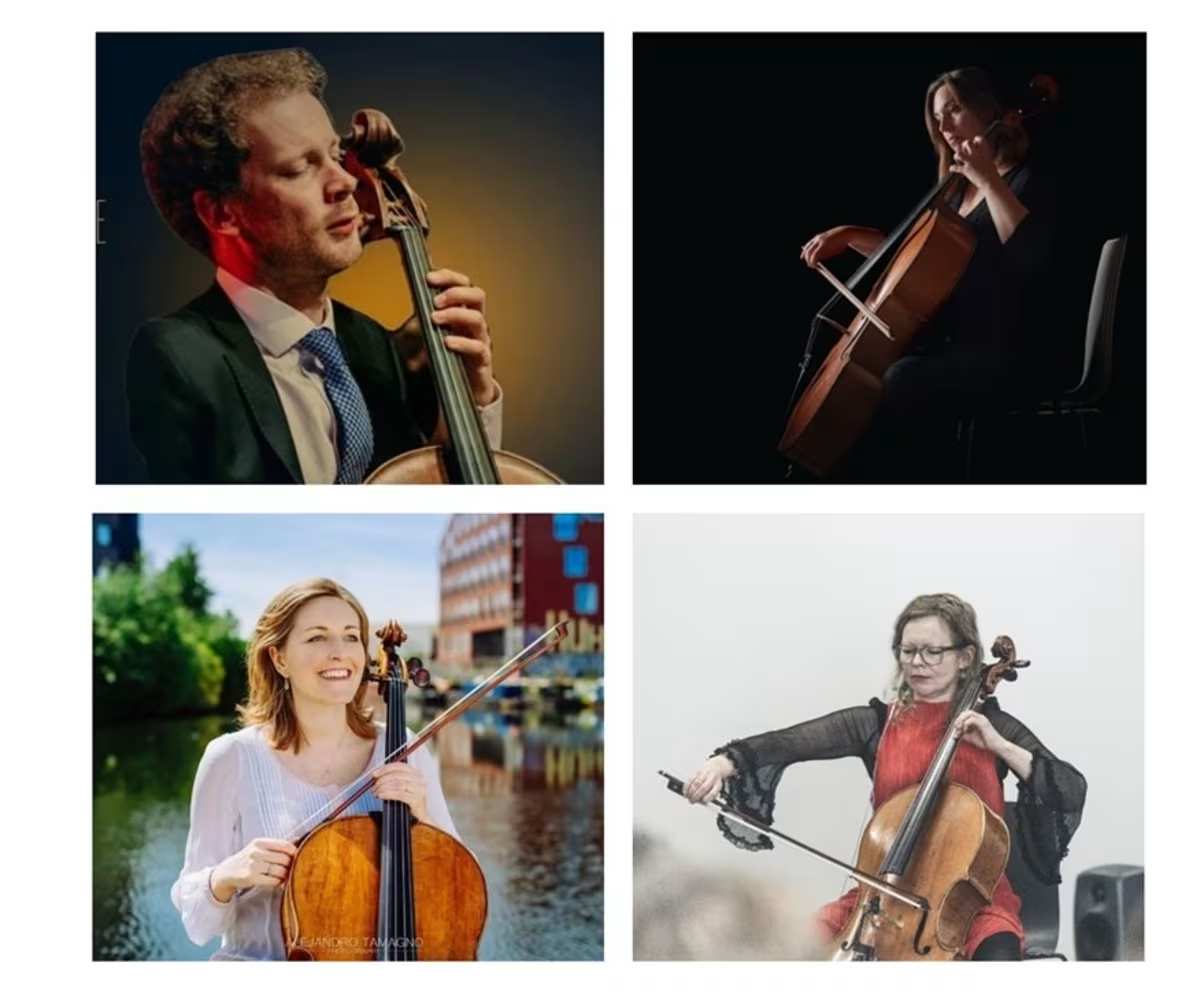
Alex Rolton has been with the Philharmonia Orchestra since 2018 and plays an 18th-century English cello. He'll be switching to a piccolo cello (played on the lap or round the chest) for the D major Suite, which is scored for five strings rather than the normal four.
Programme:
JS Bach Suite No. 4 in E flat major, BWV 1010
Suite No. 5 in C minor, BWV 1011
Suite No. 6 in D major, BWV 1012 (performed on piccolo cello)
 Little Missenden Festival
 Sat, 10 Oct 2026
 St John the Baptist Church, Little Missenden
 3:15pm
 £12 - £30 (bundle discounts available)
Full Event Details

It's thought that JS Bach's six Cello Suites were written when he was employed at the court in Köthen in the 1720s, around the same time as the Brandenburg Concertos and the Violin Sonatas and Partitas. But there's no single definitive manuscript of the Suites, and one theory to account for the discrepancies in the very few manuscript scores that are extant is that Bach continued to work on them and that there may never, in fact, have been a 'final' version.
There are therefore uncertainties about dates but also – more importantly – about interpretation. Other questions include the player for whom he might have written them (perhaps himself – although there's only limited evidence he played cello – or for another at the Köthen court) and even the actual instrument he wrote for.
But perhaps the most striking thing of all is that they were largely forgotten and unplayed until about a century after Bach's death, when the first published edition emerged. And they only really entered the public domain with Casals' 1930s recordings, by which time detailed knowledge of early 18th-century performance practice in Germany (and indeed elsewhere) had largely dissipated.
So assumptions made today about this music have to remain just that – assumptions – and presenting the Suites in three versions therefore seemed a useful way of relating to the strange history of these timeless masterpieces – not timeless in an abstract sense but rather that they've carried a number of both practical and historical possibilities with them ever since they entered the repertoire.
Alex Rolton has been with the Philharmonia Orchestra since 2018 and plays an 18th-century English cello. He'll be switching to a piccolo cello (played on the lap or round the chest) for the D major Suite, which is scored for five strings rather than the normal four.
Programme:
JS Bach Suite No. 4 in E flat major, BWV 1010
Suite No. 5 in C minor, BWV 1011
Suite No. 6 in D major, BWV 1012 (performed on piccolo cello)
Venue Details & Map
Location
St John the Baptist Church, Little Missenden
Village Rd, Little Missenden, Amersham HP7 0RA
Related upcoming events
Through Silence to Sound
Kate Kennedy | Cara Berridge
- Sat, 10 Oct 2026
- St John the Baptist Church, Little Missenden
- 7:30pm
- £12 - £30 (bundle discounts available)
- Little Missenden Festival
The Nordic Cello
Tanja Orning
- Sat, 10 Oct 2026
- St John the Baptist Church, Little Missenden
- 8:45pm
- £12 - £30 (bundle discounts available)
- Little Missenden Festival

The Salt Road
In Echo
- Sun, 11 Oct 2026
- St John the Baptist Church, Little Missenden
- 5:00pm
- £12 - £30
- Little Missenden Festival